
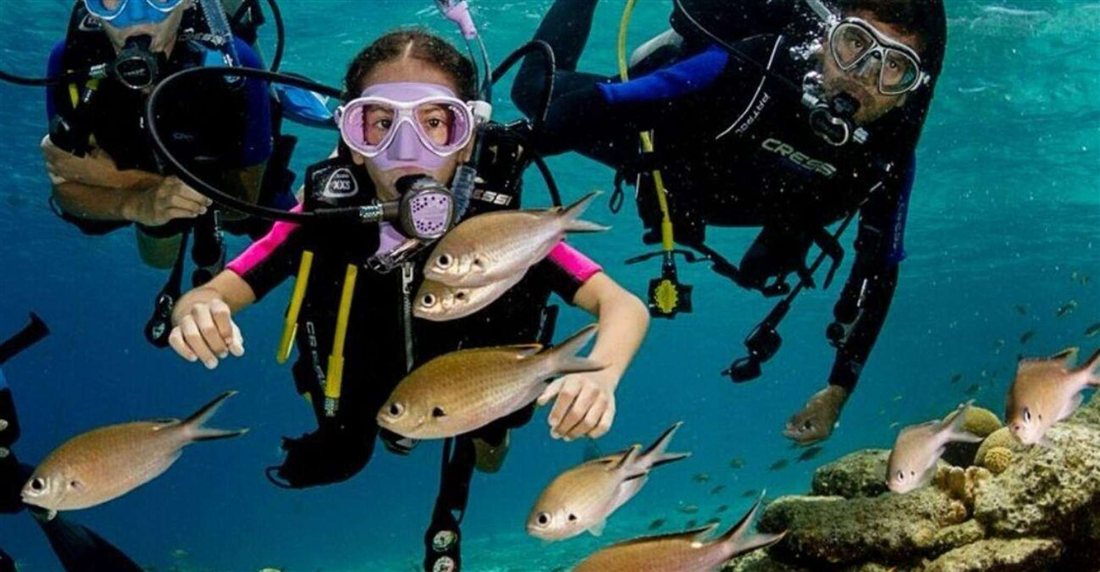
Bodrum scuba diving takes divers by boat to the reefs, walls and wrecks around the Bodrum Peninsula, from first try-dives to certified fun dives. Our wider list of Aegean trips is on the Greece Tours homepage.
This page covers the dive sites, wrecks, try-dives, courses, marine life, a dive day, the rules on age and health, the season, underwater archaeology and how diving compares with snorkelling.
What is Bodrum scuba diving?
Bodrum scuba diving means boat dives from Bodrum harbour and the bays of the Bodrum Peninsula, run by local dive centres. Trips serve first-time divers on a guided try-dive and certified divers on fun dives at reefs, walls and wrecks.
Bodrum is a port town and district in Muğla Province, in the Aegean Region of Turkey. In ancient times it was the city of Halicarnassus. The town looks south over the Gulf of Gökova, a narrow arm of the Aegean Sea. The Greek island of Kos lies about 20 km away.
The town governs the whole Bodrum Peninsula. Its broken shore of islands, coves and capes gives Bodrum scuba diving its spread of sites. Dive centres reach them by boat.
Boats leave from the town harbour and from the Milta, Turgutreis and Yalıkavak marinas. Dive boats for Bodrum scuba diving also sail from Bitez Marina. Dive shops work from Bodrum town and Gümbet.
Bookable trips on GetYourGuide include a guided scuba diving experience with hotel transfer and a scuba diving boat trip with lunch included. Another listing runs a full day of scuba diving in the Aegean Sea. Dive centres also run daily boat trips for certified divers.
Diving has deep roots in the town. Sponge diving once drove the local economy, and at its peak about 150 sponge boats worked out of Bodrum. Disease, artificial sponges and a ban later ended the trade. Our Bodrum tours page covers the other trips on land and sea.
Where are the main Bodrum scuba diving sites?
The main Bodrum scuba diving sites lie around Karaada, the island off Bodrum harbour, and in the Gulf of Gökova. They include Big Reef, Bubble Cave, Smuggler’s Bay, Paçoz Bay and the south cape of Orak Island.
Karaada means “Black Island” in Turkish. It is a small island at the entrance of Bodrum harbour, about four miles off the coast. The ancient Greeks called it Arkonnesos. Its rocky shore holds the reef, wall, cave and wreck dives at the core of Bodrum scuba diving. Depths around the island run from 6 to 35 metres.
- Big Reef: about 20 minutes by boat from Bodrum. The reef top starts at 7 metres, and its wall facing Karaada drops straight down to 34 metres. Divers follow the anchor chain down to the reef top.
- Small Reef: paired with Big Reef on local reef dives, which centres rate as medium to difficult.
- Bubble Cave: a chimney-shaped cave in open water at the back of Karaada, for intermediate divers. The entrance sits at 12 metres, the floor reaches 30 metres and the exit opens at 5 metres. Divers’ bubbles escape through cracks in its ceiling, which gives the cave its name.
- Kaçakçı Bay: also called Smuggler’s Bay, at the rear of Karaada, with depths from 5 to 30 metres.
- Paçoz Bay: a bay on Karaada with a smooth, sloping wall on its right side, small caves and a plane wreck.
- Aksona Bay: a steep descent rated for advanced divers.
Orak Island takes Bodrum scuba diving into the Gulf of Gökova. Orak is an uninhabited island of the Bodrum district, 1,800 metres long. Divers head for the cape on its south coast, a spot known for underwater sports.
The Gulf of Gökova runs about 100 km between the Bodrum and Datça peninsulas. Bodrum sits on its northwest shore and is the only large city on the gulf today. Its old names include the Gulf of Kerme, after the ancient city of Ceramus.
Beyond the named sites, centres also lead dives over pinnacles, drop-offs and rock reefs along the coast. Diving is also available at Yassıada, about 3.5 nautical miles from Turgutreis, and at İnce Burun. Ask the dive centre which of these Bodrum scuba diving sites match your certification level.
Which wrecks can you dive on a Bodrum scuba diving trip?
A Bodrum scuba diving trip can reach three wrecks around Karaada. The Pinar I was a Turkish Navy water tanker. The SG 115 was a coast guard patrol ship. The C-47 Dakota was a Turkish Air Force plane, sunk in a bay of the island.
The Pinar I lies southeast of Karaada. The tanker is 39 metres long and 17 metres high, which makes it the largest of the three wrecks. Its stern sits at 20 metres and its bow drops to 33 metres. Local centres rate this Bodrum scuba diving wreck a medium to difficult dive, open to advanced divers and above.
The SG 115 is 29 metres long and 15 metres high. BOSAD scuttled it on purpose to serve as an artificial reef around Karaada. Its stern rests at 18 metres and its bow at 26 metres. Divers can enter its wheelhouse.
To reach the SG 115, divers leave the rocky shore and cross a meadow of Neptune grass. Centres rate it from entry level to advanced, so newer certified divers can join a Bodrum scuba diving trip to this wreck.
The C-47 Dakota lies in Paçoz Bay. The plane is 20 metres long with a 30-metre wingspan. BOSAD also sank it, as a second artificial reef. The wreck rests between 17 and 32 metres, with one wing at 17 metres and the other at 25 metres.
The Dakota later broke into two pieces. Its body and tail drifted deeper, and the left engine broke off. The rear cabin door at 29 metres is the only way inside the plane. Centres rate this wreck from entry level to advanced, the same as the SG 115.
How does a try-dive work for Bodrum scuba diving beginners?
A try-dive for Bodrum scuba diving beginners starts with a short briefing and a look at the gear. You then practise basic skills in shallow, calm water, with an instructor at your side. The PADI Discover Scuba Diving version goes no deeper than 12 metres.
PADI calls the try-dive Discover Scuba Diving, and others call it trial diving. Aquapro, a dive centre at Bitez Marina, lists it as its first course. Happy Bubbles runs the same idea as a first-time “Try Scuba” dive. No certificate comes at the end. The try-dive is a taste of the sport under supervision, not a qualification.
The briefing comes first, led by a trained PADI Professional. The instructor explains the basic scuba skills and answers your questions. The dive centre supplies all the scuba gear, and the team explains each piece of equipment to try divers. At Aquapro, the dive leaders also give a briefing before each dive.
Your first breaths happen in a pool or a calm, shallow spot in the sea. You breathe from the regulator at the surface first. Then you learn two safety skills: clearing water from your mask, and taking out, replacing and clearing the regulator. A short, shallow swim follows, and the whole try-dive takes two to four hours.
Bodrum scuba diving try-dives keep the instructor close to you for the whole dive. Happy Bubbles runs its first-time dives one-to-one, with one instructor for each guest. Depth caps differ by agency. PADI stops at 12 metres in open water and CMAS at 10 metres. SSI allows 5 metres in a pool and 12 metres in open water.
On GetYourGuide, the “Bodrum: Guided Scuba Diving Experience with Transfer” books a guided dive with the transfer included. The listing runs for 7 to 10 hours. It puts the ride and the dive in one booking, so there is no separate transfer to arrange.
Which Bodrum scuba diving courses can you take?
Bodrum scuba diving centres teach the full ladder of courses. It runs from PADI Scuba Diver and Open Water Diver up to Advanced Open Water, Rescue Diver and Divemaster. SSI and CMAS levels, freediving and specialty courses run alongside them.
Aquapro lists its core Bodrum scuba diving courses in this order. Each step builds on the one before it. Where a CMAS level matches the PADI course, the centre shows both names side by side:
- Discover Scuba Diving, the try-dive for beginners
- PADI Scuba Diver
- PADI Open Water Diver, matched with CMAS 1 Star
- PADI Advanced Open Water, matched with CMAS 2 Star
- PADI Rescue Diver
- PADI Divemaster, matched with CMAS 3 Star
The Open Water Diver course is the entry-level certificate for divers who dive on their own with a buddy. It has three parts: theory, confined water dives and open water dives. PADI teaches the theory through self-study from books or through its eLearning. PADI says you can learn to dive in as little as 2 to 4 days.
The standard PADI Open Water course holds five confined water dives and four open water dives. Once certified, you can dive to 18 metres with a buddy, in conditions like the ones you trained in. This certificate is the entry point for Bodrum scuba diving without an instructor beside you.
Advanced Open Water is the next step in Bodrum scuba diving training. PADI files it under continuing education, after the beginner levels. The course has five dives in total. Two are required: a deep dive and an underwater navigation dive. You pick the other three from specialty dives that match the local water and your own interests.
Beyond the core levels, Aquapro runs PADI specialty courses and Suex underwater scooter courses. Its one-day PADI Discover Rebreather Diving programme uses Poseidon VI and Se7en rebreathers. Happy Bubbles teaches the SSI system instead. Its range covers SSI Open Water Diver, specialty training, instructor training and freediving at three levels: Freediver, Advanced Freediver and Performance Freediver.
What marine life do you see on Bodrum scuba diving trips?
On Bodrum scuba diving trips you see octopus, moray eels, groupers, barracuda, scorpionfish and lionfish. Tuna, dentex, rays and nudibranchs join them in the Aegean waters around Bodrum. Turtles, swordfish and dolphins appear only now and then.
Groupers come first on the Bodrum scuba diving fish lists of both Aquapro and Happy Bubbles. Aquapro names the dusky grouper in particular. Happy Bubbles lists groupers ahead of jack fish, moray eels and barracudas. The Wikipedia article on the Aegean Sea also counts grouper among its fish, next to sea bass and seabream.
The reef dives give Bodrum scuba diving its open-water fish. Aquapro names barracuda, tuna, large groupers and leerfish at the Big Reef and Small Reef, two of its reef dives. Its own photo from those reef dives shows a lionfish, a species it also lists for Bodrum waters.
Octopus and moray eels appear on every centre list checked for this guide. The Go Türkiye diving page names them too, for the dive sites off the Bodrum Peninsula. The same page adds stingrays, barracudas and tunas to the list of animals divers see there.
Small life fills the reefs. Aquapro says the reefs are alive with nudibranchs, urchins, crabs and multicoloured sponges. It ties them to its reefs in general, not to one named site. Starfish, scorpionfish, bass and bream complete its list. Happy Bubbles adds dentex and rays to the fish divers meet on Bodrum scuba diving trips.
Rare visitors make a dive day special. Aquapro lists stingray, turtle, swordfish and dolphin as chance sightings, and Happy Bubbles also names turtles. The Aegean holds protected shellfish too. Wikipedia lists the noble pen shell, the Triton’s trumpet and the date mussel as protected or threatened species in this sea.
What does a Bodrum scuba diving day look like?
A Bodrum scuba diving day starts with a morning hotel pickup. Divers board the boat and go over the dive plan. Certified divers make two dives at two sites, eat lunch on board and return in the afternoon.
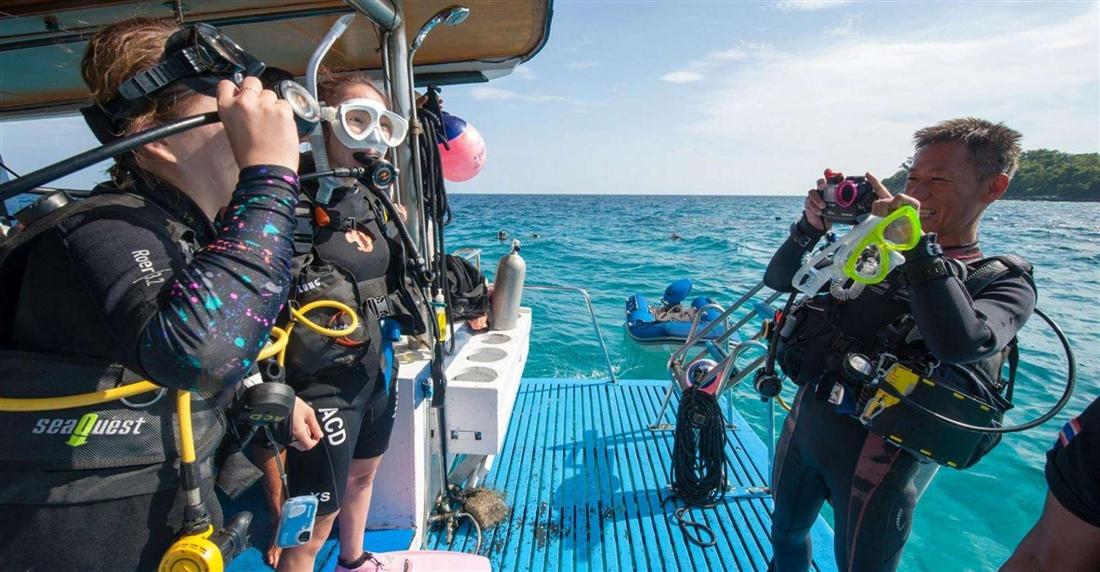
One operator collects guests from their hotels between about 8:30 and 9:30. Its pickup areas are Bitez, Bodrum, Gumbet, Gundogan, Ortakent, Torba and Turgutreis. The GetYourGuide listings for Bodrum scuba diving also offer pickup. Their trips last 7 hours, or 7 to 10 hours. The trip with transfer runs in English and German.
The Viator listing starts at 8:30. Guests can request a pickup or make their own way to the meeting point in Bodrum. It includes shared transfers both ways and lunch. The trip ends back at that same meeting point. The listing notes that the trip is not wheelchair accessible.
Before boarding, divers collect their kit and go over the dive plan. About 20 dive operators work around the Bodrum peninsula. One centre leaves Bitez Marina at 9:00 every day. Its boat takes 30 to 45 minutes to reach the dive sites around Bodrum and Black Island. The crew picks the day’s sites to suit the weather conditions.
On board, the day follows a set pattern:
- A dive leader briefing before each dive
- Two dives at two different sites for certified divers, as one listing and the Bitez centre state
- A guided dive of 25 to 30 minutes, as the Viator listing states
- Lunch served on board, which one listing names as a buffet
- Drinks on board, which the Bitez centre charges as an extra
- Time to sunbathe and swim, as a Bodrum diving article notes
On a Bodrum scuba diving trip, the return time depends on the boat. The Bitez centre is back at its marina between 13:00 and 14:00. Other boats reach the pier between 15:00 and 16:00, after more than 8 hours in total. Both GetYourGuide trips offer free cancellation.
What does Bodrum scuba diving require: age, health and certification?
Bodrum scuba diving requires a minimum age of 12 to 14, set by each listing, and a completed health questionnaire. Certified divers show their card for fun dives. After the last dive, wait 12 to 24 hours before a flight.
Each Bodrum scuba diving listing sets its own minimum age. One listing sets it at 12 years, and a Bodrum diving article names 12 as the recommended age to start. The GetYourGuide boat trip with lunch does not accept ages 11 and younger. The Viator listing sets the minimum at 14.
Every diver completes a health questionnaire before the first dive. Divers declare past health problems and operations on it. A diver who admits no disqualifying condition counts as fit to dive. If an answer raises doubt, the dive company sends the diver to a local doctor for a diving health check. Certain training agencies ask for a doctor’s exam instead.
Heart failure, angina on exertion and epilepsy that needs medication rule diving out. Asthma and diabetes need a doctor’s review of each case. The safe choice in pregnancy is to avoid diving, and the Viator listing advises against the trip for pregnant travellers. After giving birth, the wait is about four weeks, or eight weeks after a caesarean.
For fun dives, certified divers bring their certification card or licence. Dive operators can refuse to let uncertified people dive, hire equipment or fill their cylinders. PADI and CMAS certify both divers and dive companies. Bodrum scuba diving companies must also register with the Turkish Underwater Sports, Life Guarding and Water Ski Federation.
Flying soon after diving raises the risk of decompression sickness. Divers Alert Network guidelines set a 12-hour wait after an introductory dive. The wait grows to 18 hours after certified dives over two or more days, and 24 hours after decompression dives. Leave a full day between your last Bodrum scuba diving trip and your Bodrum airport transfer.
When is the season for Bodrum scuba diving, and how warm is the water?
The Bodrum scuba diving season runs from the end of April to the end of October. Across those months, the average sea temperature climbs from about 17 °C to 26 °C, then eases back to about 23 °C.
A Bitez dive centre sets this season and dives every day through it, about 180 days in all. Bodrum has a hot-summer Mediterranean climate. Its summers are very hot and sunny, and its winters are mild and humid. Air temperatures average about 15 °C in winter and 34 °C in summer.
Average monthly sea temperatures in Bodrum, from seatemperature.info, show the warmest water in August and the coldest in March:
- January to March: 17.9 °C, 17 °C and 16.8 °C
- April to June: 17.4 °C, 19.9 °C and 22.9 °C
- July to September: 24.7 °C, 26 °C and 25.2 °C
- October to December: 23.1 °C, 21.3 °C and 19.4 °C
During Bodrum scuba diving trips, visibility reaches up to 30 metres at times, according to a Bodrum diving article. The same article puts the late-summer water at up to 27 °C and the winter water at around 19 °C.
The warm surface layer of the Aegean Sea is 40 to 50 metres thick. In summer, this layer holds temperatures of 19 to 24 °C across the whole sea. The deep water below it stays at a steady 13 to 14 °C. Salty Mediterranean water flows north along this Turkish coast.
Seatemperature.info says the swimming season lasts until December, two months past the end of the Bodrum scuba diving season. A second centre, moored at Bodrum harbour, also sends its dive boat out every day. Divers planning a trip in November or December contact a centre first to confirm that boats are running.
Why does Bodrum matter for underwater archaeology and diving rules?
Bodrum scuba diving starts beside the largest museum of underwater archaeology, set inside Bodrum Castle. Its halls show cargo raised from ancient wrecks off the Turkish coast. Turkish law protects every artefact on the seabed, so divers look and never touch.
The museum fills the Castle of St Peter, a fortress built by the Knights of St John. Digs by the Institute of Nautical Archaeology supplied the bulk of its collection. A visit before a Bodrum scuba diving trip shows what lies on the seabed once experts raise, clean and date it.
Finds from the Uluburun ship, a Late Bronze Age trader, are on show here. A sponge diver from Yalıkavak, near Bodrum, found the wreck off Kaş. Its cargo held about 10 tons of copper in 354 oxhide ingots, about one ton of tin, glass ingots and gold. Excavating it took 22,413 dives at 44 to 52 metres.
Behind these finds stands George Bass, an early practitioner of underwater archaeology. He adapted land survey methods to the seabed. At Cape Gelidonya he co-led the first expedition to excavate an ancient shipwreck in full. He then founded the Institute of Nautical Archaeology.
Bass brought new tools to the seabed too. He helped develop an underwater “telephone booth” for talking with the surface. He worked on 3D photogrammetry to map sites and side-scan sonar to find wrecks. His National Medal of Science citation credits him with creating a new branch of scholarship, nautical archaeology.
Closer to Bodrum, Bass directed digs at three wreck sites off Yassi Ada. This small island lies between Turgutreis and the Greek island of Pserimos. A dangerous reef off the island has made it a ships’ graveyard. A reconstruction of its Byzantine wreck now stands in Bodrum Castle.
Even a coin matters underwater. One Ottoman-era wreck at Yassi Ada was dated by a single Spanish silver coin. The museum also holds a collection of Islamic glass from an 11th-century wreck at Serçe Limanı. Objects left where they lie keep these clues for archaeologists.
Turkish Law No. 2863 protects cultural and natural assets, and a regulation under it governs recreational scuba diving. The Ministry of Culture and Tourism bans diving in military zones, scientific research areas and protected areas.
A government decree also closes mapped underwater heritage sites to all but scientific teams. On every Bodrum scuba diving trip, divers never touch, lift or keep an artefact, not even a broken amphora handle.
Elsewhere on the Turkish coast, the limits go further. At shallow protected sites such as Kekova, near Kaş, even swimming is forbidden.
How does Bodrum scuba diving compare with snorkelling and boat trips?
Bodrum scuba diving takes you below the surface with a tank, a regulator and an instructor or guide. Snorkelling keeps you at the surface with a mask and fins, and a boat trip mixes cruising with short swim stops.
Depth is the first difference. A snorkeller floats face down and holds each breath for short dips. A diver on a Bodrum scuba diving trip breathes from a tank. They stay down for the whole dive, within the depth limit of their training.
Training is the second difference. Snorkelling needs no lesson beyond a mask that fits. Scuba needs at least a briefing. Divers learn to breathe through a regulator, clear water from the mask and equalise ear pressure.
The equipment differs too, and the dive centre supplies the scuba gear:
- Snorkelling kit: mask, snorkel and fins.
- Air: a snorkeller breathes surface air through a tube, while a diver breathes compressed air from the tank.
- Scuba kit: mask, fins, wetsuit, buoyancy jacket, tank, regulator and weights.
What you see shifts as well. A snorkeller watches the shallows from above. A diver moves at eye level with rocks, ledges and wrecks. A Bodrum boat trip suits groups where not everyone dives. Swimmers and snorkellers both get time in the water at each bay stop.
Snorkelling suits swimmers who want a quick look between bays. Scuba suits travellers who want to stay below and explore a site at its own depth.
After your Bodrum scuba diving days, plan a dry day on land and spend it at a Bodrum cooking class.


Which questions do travellers ask about Bodrum scuba diving?
Can you go Bodrum scuba diving without a certificate?
Yes. Your first Bodrum scuba diving session can be a try-dive, such as PADI Discover Scuba Diving. It needs no certificate and no past experience. A PADI professional explains the basic skills before you enter the water. For the open water part, a PADI Instructor leads the dive, so beginners never descend alone.
How deep does Bodrum scuba diving go?
Depth depends on your training. On a PADI try-dive, the first shallow session stays within 6 metres. The optional open water dive goes no deeper than 12 metres. An Open Water Diver certificate allows dives to 18 metres. Deeper wreck sites off Bodrum are for divers with advanced training, and dive centres list the level each site needs.
Is Bodrum scuba diving suitable for non-swimmers?
Partly. A try-dive does not demand strong swimming. Still, PADI asks that you feel comfortable in water and can stay afloat at the surface. The full Open Water Diver course asks for more: a 200-metre swim, or 300 metres with mask, snorkel and fins, plus a 10-minute float.
Do you need to book Bodrum scuba diving in advance?
Booking ahead lets the dive centre prepare gear in your size and a place on the boat. PADI advises signing up directly with a local dive centre. If you want your try-dive to count towards the Open Water Diver course, tell the centre in advance. You then start the full course within 12 months.