
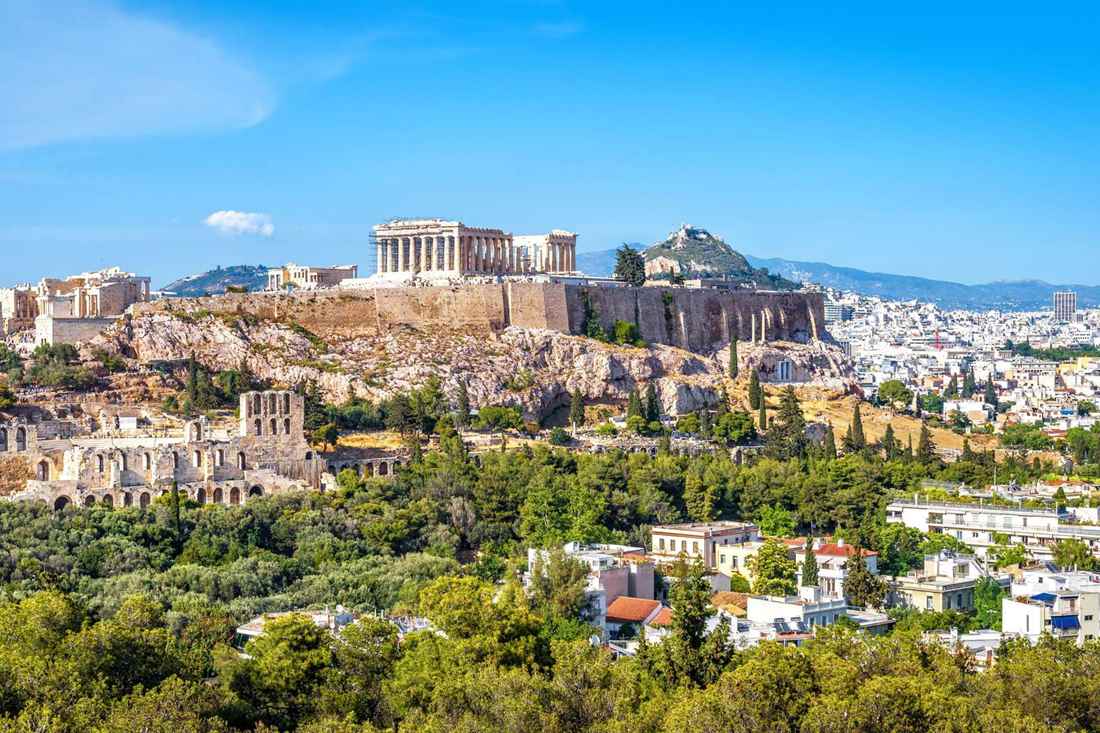
Athens airport traffic swings from 1.75 million passengers in a quiet February to 3.93 million in July, and hotel rooms follow the same curve. Athens cost travel by season splits into three bands: high from June to September, shoulder in April, late spring and October, and low from November to March.
The Hellenic Ministry of Culture runs its sites on a summer period and a winter period that change on 1 April and 1 November, and the buses, metro and tram run a reduced service in summer. Travellers who are still choosing between cities and islands can check which regions fit the same months on the Greece Tours homepage.
Why does Athens cost travel by season shift from month to month?
Demand drives Athens cost travel by season. In one year, Athens hotels ran at 93.2 percent occupancy in June and 58.0 percent in February. The airport counted 3.93 million passengers in the latest July report and 1.75 million in a recent February.
Wikipedia’s article on tourism in Greece charts arrivals for the whole country, month by month, for one recent year. February is the lowest month, with 0.57 million arrivals. August is the highest, with 6.5 million. The busiest month has over eleven times the visitors.
The same article states that about 75 percent of all tourist visits in Greece fall between late spring and September. This national shape is the background for the Athens cost travel by season picture. Athens adds a twist of its own, which the third section explains.
The airport is the first gauge of Athens cost travel by season. Athens International Airport reported 3.93 million passengers for the latest July. That is 4.7 percent up on the July before. Domestic traffic grew 3.4 percent and international traffic grew 5.3 percent. January to July together counted 19.68 million passengers, so July alone carried about one fifth.
A recent February report shows the low end of Athens cost travel by season. The airport counted 1.75 million passengers, and international traffic rose 11.9 percent. An earlier February report gave 1.6 million. The gap between a summer month and a winter month at the airport is wide.
Hotels tell the same story of Athens cost travel by season. The Athens hotel association put average occupancy at 93.2 percent in June, as the trade press reported. July of that year stood at 89.4 percent. In February of that same year, occupancy stood at 58.0 percent.
The next year gives a second winter reading for Athens cost travel by season. January stood at 52.8 percent and February at 66.3 percent. The association gave 59.3 percent for the two months together. A winter month fills a different share of rooms from one year to the next. It stays well below June.
A news report on the national accommodation survey adds a country-wide check on Athens cost travel by season. It states that 59.1 percent of all arrivals and 66 percent of all overnight stays fell from July to October. Four months held two thirds of the nights.
This page sorts the year into three bands: high, shoulder and low. A high month is one where airport traffic and hotel occupancy sit at their yearly top. A low month is one where both sit at the bottom. A shoulder month sits between the two.
Occupancy and passenger counts are the measures here because they show demand with no money figure at all. A traveller who asks why Athens cost travel by season changes gets one answer. More people want the same rooms and seats. The next section places each month in its band.
Which months fall into each season of Athens cost travel by season?
High runs from June to September, shoulder covers April, late spring and October, and low covers November to March. The national arrivals chart backs the split. June to September each count over 4 million arrivals, and November to March each count 1 million or fewer.
Wikipedia’s article on tourism in Greece charts the shoulder band of Athens cost travel by season. April counts 1.4 million arrivals. Late spring counts 2.5 million. October counts 3.1 million. Each sits between the low group and the high group.
The high months in that chart are June at 4.3 million and July at 6.1 million. August stands at 6.5 million and September at 5.1 million. The low months are November at 1 million and December at 0.76 million. January stands at 0.63 million, February at 0.57 million and March at 0.66 million.
School terms fit this split. Wikipedia’s article on education in Greece gives the primary school year. It starts on 11 September and ends on 15 June. The school break covers the high band almost exactly. This is the calendar behind the Athens cost travel by season bands.
Fixed holidays sit in all three bands. The 25 March national day falls in the low band. The 28 October national day falls in the shoulder band. The 15 August holiday falls in the high band. On the encyclopedia list of Greek national and religious holidays, 15 August is the leading celebration of the Virgin Mary.
Moving holidays follow Orthodox Easter. The same article states that Easter Monday falls on the day after Orthodox Easter. Clean Monday and Whit Monday are movable too. No fixed day marks them, so a traveller checks the Easter date for the year of the trip.
The airport plans by season as well. For one summer, it announced 43 new routes on existing services, 6 new airlines and 8 new destinations. New routes arrive with the summer timetable. That timetable sets the pace of the high band.
A month near the edge of a band in Athens cost travel by season behaves like its neighbour. The Athens association reported June above July, so June acts as a high month. October at 3.1 million arrivals sits closer to late spring at 2.5 million than to September at 5.1 million. October stays shoulder.
April, at 1.4 million, sits 0.74 million above March but 1.1 million below late spring. March at 0.66 million is as quiet as January. Travellers who plan by these bands can read budget travel tips for Athens next.
August needs a note. The hotel association put Athens-Attica occupancy at 79.3 percent in one August, up from 77.9 percent a year earlier. The July of that year stood at 83.3 percent. August is a high month for the country. In the capital, it comes in below July.
How does Athens cost travel by season differ from the islands?
Athens has a flatter curve than the islands. In the Cyclades and Dodecanese, 69.8 percent of seasonal hotels had opened by June, and 97.3 percent ran in mid-August. The islands switch on with the summer. The capital stays open.
The islands show the contrast with Athens cost travel by season. A tourism research institute surveyed hotels in the South Aegean each week. It found 94.9 percent of Cyclades and Dodecanese hotels open by 4 July. Occupancy rose from 30 percent in mid-June to 84.7 percent in the week of 9 to 15 August.
The same institute counted hotels in remote regions of Greece in winter. Only 79.3 percent of them operated from December to February. One in five stayed shut. The shares open were 80.7 percent in December, 79.2 percent in January and 78.1 percent in February.
Athens does not close for the winter in the same way. Its hotel occupancy stood at 52.8 percent or higher in the winter months quoted above. It reached 66.3 percent in one February. The Athens cost travel by season curve rises and falls less than the island curve.
Wikipedia’s article on Athens states that the city became the capital of Greece in the nineteenth century. It calls Athens the financial capital of the country. The urban area held 3,059,764 people at the latest census. A city of that size has local business and government traffic in every month.
Students are a second reason for the flat curve. Wikipedia’s article on the University of Athens states that it was founded in the nineteenth century. It has over 69,000 registered students. The article calls it one of the largest universities by enrolment in Europe. Students are residents, not visitors, so they sit outside the tourist chart.
The airport adds a third reason for the flat shape of Athens cost travel by season. Wikipedia’s article on Athens International Airport lists 33,993,746 passengers for the latest full year. It lists 283,589 aircraft movements. Flights run in every month. Only the size of each month changes.
Booking platforms give a direct comparison for the spring stretch of Athens cost travel by season. Eurostat figures, as the press reported, show 3,012,228 overnight stays in short-term rentals in Attica in the second quarter. The South Aegean recorded 2,388,536 in the same quarter. The capital leads before the island summer starts.
Ships add a last contrast. Wikipedia’s article on the Port of Piraeus lists 622 cruise ship arrivals and 1,098,091 cruise passengers in one pre-pandemic year. A port industry report states that Piraeus handled a record 1.85 million cruise passengers in a recent full year. It also reported the opening of the next cruise season in January.
For a traveller, Athens cost travel by season moves in a smaller range than an island trip. A winter city break meets lower demand. A June or July break meets the fullest hotels of the year.
How do hotel rooms and the overnight stay fee change by season in Athens?
Athens cost travel by season starts with hotel demand. In twenty twenty-four, Athens hotels ran at 52.8% occupancy in January and 91.7% in June. The overnight stay fee also has a warm band and a cold band.
The Athens hotel association covers hotels in Athens, Attica and the Argosaronic islands. It publishes occupancy for every month of the year. It reported 52.8% for January and 66.3% for February in twenty twenty-four. June reached 91.7%, the highest month of the first half. July followed at 87.2%.
The cold months show the other side. November averaged 73.8% and December 61.5%. Across the whole year the monthly range ran from 52.9% to 92.6%, with a yearly average of 78%. That gap of almost 40 points is the core of the Athens cost travel by season story for rooms.
Next comes the overnight stay fee, called the climate crisis resilience fee. The tax administration says it is charged per daily use and per room or apartment. It replaced the older accommodation tax from 1 January of twenty twenty-four.
A tax law passed in twenty twenty-three created it. The fee is one more piece of Athens cost travel by season for a hotel stay.
The fee has two seasonal bands. A tax bill from twenty twenty-three set the full rate for March to October. It set a reduced rate for November to February. A hotel software guide for the later rates names April to October and November to March.
The two versions agree on the main months. January and December sit in the lower band. July sits in the higher band. A March stay is the date to confirm on the booking. This band split adds a second layer to Athens cost travel by season for every overnight stay.
Hotel category sets the size of the fee inside each band. The rates are listed for one-star and two-star hotels, then three, four and five stars.
The hotel software guide says the fee excludes hotels in architectural heritage buildings, youth hostels and campsites. The tax administration also lists rented rooms, short-term rentals and villas as liable. The star rating is the second variable in the Athens cost travel by season fee table.
The hotel stock changes by season too. That stock adds its own weight to Athens cost travel by season. Greece has an annual hotel survey, run for the national hotel chamber. It finds that 62% of hotels operate seasonally. Their rooms make up 74% of the room stock. The average seasonal hotel stayed open 5.8 months in twenty twenty-four.
Islands hold 53% of Greek hotels and 63% of rooms. A capital with occupancy figures for January and December sells rooms in the cold months. A seasonal hotel averages under six months of operation. This split explains why a guide to Athens cost travel by season looks different from an island guide.
A pair of months shows the spread. A January stay meets the lower fee band and occupancy close to its yearly low. A June or July stay meets the higher fee band and occupancy at its yearly high. The tax administration collects the fee from hotels through monthly statements.
When do flights and airport routes to Athens change by season?
Flights add the second layer of Athens cost travel by season. The summer schedule runs from the last Sunday of March to the last Saturday of October. Airport traffic in twenty twenty-five peaked at 3.88 million passengers in August.
The air industry splits the year into two seasons. A European air traffic body defines the summer season. It runs from the last Sunday of March to the last Saturday of October. The winter season begins on the last Sunday of October. It ends before the next summer season starts.
Seats follow the same split. An aviation data provider counts about 14.21 million scheduled departing seats from Athens in summer twenty twenty-six. It counts about 7.14 million departing seats for winter twenty twenty-six to twenty twenty-seven. The summer total is roughly double the winter total.
The network is wide across the year. In twenty twenty-five Athens International Airport reported 70 carriers and 166 destination cities in 55 countries. It added 18 new destinations and five new airlines that year. These are annual totals, so they do not split summer from winter.
The airport passenger table shows the monthly shape of Athens cost travel by season demand. January handled 1.83 million passengers and February 1.75 million. March reached 2.22 million and April 2.71 million. June reached 3.45 million, then July 3.76 million and August 3.88 million.
After August the numbers fall step by step. September handled 3.48 million passengers and October 3.14 million. November handled 2.36 million and December 2.31 million. The airport closed the year at 33.99 million passengers, 6.7% above the year before.
February is the quietest month and August the busiest. February handled under half of the August total. The first quarter of twenty twenty-five added up to 5.81 million passengers. These monthly counts anchor the Athens cost travel by season trends for flights.
Domestic flights swing too. The table shows 0.51 million domestic passengers in January and 1.12 million in August. International passengers rose from 1.32 million in January to 2.77 million in August. The busiest single day was Sunday, 10 August, with 132,957 passengers.
For the full year, the airport counted 24.36 million international passengers and 9.63 million domestic passengers.
The winter months are growing. An aviation trade publication reports the highest growth rates of the year in the shoulder period and the winter months. The same report says the airport encourages airlines to extend operations beyond the peak tourism season. More winter routes narrow the gap in the Athens cost travel by season data.
How do holiday weeks like Easter and 15 August move the Athens cost travel by season picture?
Holiday weeks pull Athens two ways. Visitors fill hotels at Orthodox Easter. Over one million residents leave Athens in August, and 15 August closes the centre almost completely.
Orthodox Easter moves from year to year. The Sunday fell on 20 April in twenty twenty-five and falls on 12 April in twenty twenty-six. Good Friday is the day before Easter Sunday, and Easter Monday is the day after. Both are Greek public holidays. Clean Monday and Whit Monday are moveable holidays too.
Easter changes opening days, and that matters for Athens cost travel by season plans. A Greek business guide lists Good Friday to Easter Monday as non-working days for state institutions and banks. By law, shops stay shut on Good Friday before noon. Shops close on Easter Sunday and Easter Monday.
Easter fills the capital. In twenty twenty-five the Orthodox and Catholic Easters fell on the same date. A news site reported hotel and flight occupancy above 90% in Athens and Thessaloniki. One Greek carrier reported Easter seat occupancy between 75% and 85%.
The hotel association president expected more foreign visitors and no major lull. A lull follows when Athenians leave for the countryside. So Easter lifts the Athens cost travel by season level, even while residents travel out.
The 15 August holiday works the opposite way. It marks the Dormition of the Theotokos, a major church feast. The Dormition fast runs from 1 to 14 August. A Greek news site says more than one million residents leave Athens during August.
On 15 August the main streets of Panepistimiou, Stadiou and Akadimias stood empty. Shops and supermarkets were closed. Nothing opens that day in the centre, according to a travel guide. This is the sharpest dip of the year for Athens cost travel by season.
August closures are uneven. Family-run shops, cafes and bars take an August break. Large supermarkets, shopping centres and hotels stay open. Seaside suburbs such as Glyfada, Voula and Faliro are where shops stay open. Museums and archaeological sites follow their published holiday schedules.
Christmas and New Year bring a third pattern in Athens cost travel by season. The public holidays are 25 December, 1 January and 6 January, the feast of Epiphany. A Greek shopping guide says shops close on state holidays and ferry schedules are reduced. The page on Athens public holidays lists the dates in full.
Two national days add short breaks to Athens cost travel by season. 25 March marks the start of the Greek War of Independence. 28 October marks the Greek refusal of the Italian ultimatum. Shops, banks and schools are closed on both. The same guide lists 28 October and Easter Monday as days when museums and archaeological sites stay open.
These holiday weeks complete the Athens cost travel by season map. Easter and Christmas lift demand and shut shops for days at a time. Mid-August empties the centre and keeps tourist areas open. National days close shops but not the main sites.
How do the summer and winter ticket periods of the state sites shape Athens cost travel by season?
The Hellenic Ministry of Culture splits the year at 1 November and 1 April. Winter brings extra free Sundays and a different museum timetable, while summer brings longer hours. The two periods affect Athens cost travel by season through access, not through two ticket classes.
The Ministry’s museum portal lists the Acropolis Museum in two seasons. The winter season starts on the first day of November and ends on the last day of March. The summer season starts on the first day of April and ends on the last day of October. Tickets are sold for both seasons through the museum’s online ticket site.
A tourism-news report on the Ministry’s fee decision says the policy replaces summer and winter rates. One rate now runs throughout the year. So a site has the same ticket class in July and in January. For Athens cost travel by season, what moves is the access around the ticket.
The Acropolis Museum timetable shows that shift. In winter it opens at 09:00 and closes at 17:00 from Monday to Thursday. On Friday it stays open until 22:00. On Saturday and Sunday it closes at 20:00.
In summer only Monday closes at 17:00. Tuesday to Sunday run until 20:00. Last entry is 30 minutes before closing. Readers who treat Athens cost travel by season as a calendar question find the answer in these hours.
The winter table that the Ministry posted on 3 November covers the open-air sites. It lists the Acropolis site at 08:00 to 17:00. The Ancient Agora uses the same hours. The Stoa of Attalos museum opens at 10:00 every Tuesday.
The same table closes the Roman Agora and Hadrian’s Library at 15:30. Kerameikos is open Monday to Friday, 08:30 to 15:30. The Acropolis tickets guide explains how to book the Acropolis slot itself. Closing hours like these decide how much one winter afternoon holds. That is a core part of Athens cost travel by season planning.
Free days follow the calendar. The Ministry lists 6 March, 18 April and International Museums Day in late spring. It also lists 28 October and the closing weekend of September.
From 1 November to 31 March, every first and third Sunday of the month is free as well. A winter visit to the state sites can include two free Sundays in each month. Those Sundays are the winter half of Athens cost travel by season for state sites.
Another seasonal rule is the reduced-ticket window. The Ministry grants a reduced ticket to Greek and EU citizens over 65 from 1 October through late spring. The window is shut in the summer months. This calendar rule touches Athens cost travel by season only for visitors in that age group.
- Free admission for EU children and young people under 25 carries no season on the Ministry’s list.
- Free admission for non-EU children under 18 carries no season either.
- The Acropolis Museum closes on New Year’s Day, Orthodox Easter Sunday, Labour Day, Christmas Day and 26 December.
- On the August full moon and on the European Night of Museums, the museum stays open until midnight.
A Ministry notice on e-tickets states that tickets are to be bought online or at the official ticket offices. That rule holds in every month. Each site has its own closing hour. A visitor who reads the posted table first can pick the right day. That habit settles Athens cost travel by season questions about timing.
How does public transport in Athens change by season?
Athens buses, trolleys, metro, suburban railway and tram run reduced summer frequencies. Winter frequencies return in the first ten days of September. For Athens cost travel by season, transport is a timetable shift, and the airport links stay reinforced.
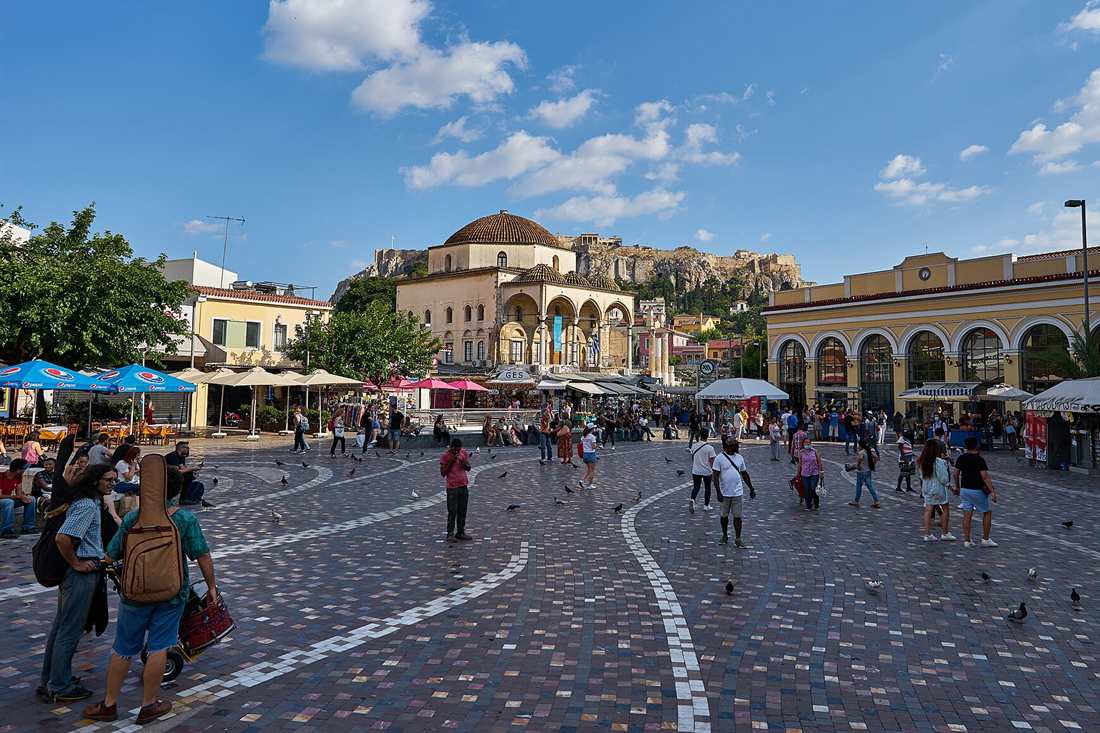
A Greek business-news report from August covers the metro, the suburban railway, the trams and the buses. It says all four run reduced summer frequencies. It says winter frequencies return in the first ten days of September.
A transport information site adds that special schedules apply in July to September. That note completes the Athens cost travel by season timetable for the bus and rail network.
The same report gives the summer gaps behind Athens cost travel by season on the rails. The suburban railway on Line 1 runs every seven to seven and a half minutes on weekdays.
Metro Line 2 runs every four and a half minutes in peak hours, which run from 7 a.m. to 7 p.m. Outside peak hours it runs every five to seven minutes.
Metro Line 3 runs every four and a half minutes in the morning rush. For the rest of the day the gap is five and a half to eight minutes. Trams run about every 12 minutes until 10 p.m. These gaps are the summer side of Athens cost travel by season for getting around.
The report adds that services to Athens International Airport keep their reinforced frequency. So do services to the port of Piraeus and to the coastal zone. A summer visit does not weaken the airport link, which is the steady part of Athens cost travel by season.
Mid-August is the low point of Athens cost travel by season for the timetable. A second news report says buses and trolleys keep their summer timetable until schools reopen. On 15 August they follow the Sunday and public holiday schedule. From 11 to 17 August, Metro Line 1 runs every 12.5 minutes and trams run every 15 minutes.
The same report covers Lines 2 and 3 from 15 to 17 August. Line 2 runs every 15 minutes. Line 3 runs every 10 minutes between 08:00 and 22:00. At other times Line 3 runs every 11.5 minutes.
September brings a step back up. A third report covers tram Line 6, Syntagma to Pikrodafni. From Monday 7 September the morning gap falls from 9 minutes to 7 minutes 30 seconds. Daily services on that line rise from 232 to 244.
On Line 7, the Voula to SEF section, the peak gap falls from 12 minutes to 9 minutes 50 seconds. Daily services there rise from 189 to 205. Such shifts make the Athens cost travel by season picture easy to read in late summer.
One rule stays the same all year for Athens cost travel by season. The metro operator STASY announced that from 1 November the metro runs until 2:00 am every Friday and Saturday. The Athens metro guide covers the lines and stations behind these hours. Wikipedia’s article on the metro totals 66 stations on three lines.
The airport has three rail and bus links, and the sources give no seasonal change for them. Wikipedia says Line 3 and the suburban railway call at a station next to the terminal. An elevated walkway joins the two.
Wikipedia’s article on the suburban railway says trains run from 4:30 am to midnight. Route A1 links Piraeus and the airport in about 1 hour 3 minutes. Route A2 from Ano Liosia takes about 34 minutes. A travel guide says bus X95 runs 24 hours a day, with a departure from the airport every 15 minutes.
Ticket validity is counted in minutes, hours and days, never in seasons. A season does not change a ticket’s length. This keeps Athens cost travel by season simple on the ticket side.
The 90-minute ticket allows unlimited transfers within 90 minutes. The 5-day ticket is valid for five 24-hour periods from validation. The 3-day tourist ticket covers three full 24-hour periods. It also covers one trip to and one trip from the airport.
How do tours and day trips from Athens change by season?
Tours and day trips from Athens follow daylight and sailing counts. The Ministry’s winter table has Sounion open until sunset, near 17:08 on 21 December. Island ferries run all year, with more crossings in summer.
The Ministry’s winter table lists the archaeological site of Sounion as open from 09:30 until sunset. Wikipedia gives the cape’s distance from Athens as 69.5 km, to the southeast. It says the Temple of Poseidon was built in 444 to 440 BC.
Wikipedia calls the sunset over the Aegean, seen from the ruins, a sought-after sight. Sounion is a clear case of Athens cost travel by season following the sun.
A sunrise and sunset calculator for the cape’s coordinates gives the daylight. On 21 December the sun rises near 07:35 and sets near 17:08. That is 9 hours 33 minutes of light. With the 09:30 opening, the winter window is about 7 hours 38 minutes.
On 21 June the sun rises near 06:02 and sets near 20:48. That is 14 hours 46 minutes of light. The same sunset rule gives a late finish in summer. This light gap makes a sunset trip a summer-length day in the Athens cost travel by season record.
Saronic island ferries run on a year-round base with a summer rise. That is a core fact for Athens cost travel by season on the islands.
A ferry booking site counts about 31 weekly crossings between Hydra and Piraeus from June to September. From October to late spring the count drops to about 28. Service runs seven days a week in both periods.
A Greek islands guide counts 5 to 6 daily high-speed connections between Piraeus and Poros. It places them in the high season, from late spring to September. It adds that summer schedules are announced in March. It says high-speed vessels are more easily affected by bad weather. Conventional ferries are rarely delayed by it.
A second guide says all four islands in its list keep ferry service year-round. It says Aegina has up to 14 daily departures. It says the islands can get very busy on summer weekends.
The guide names the shoulder months of late spring, early summer, September and October for quieter trips. That list gives island days a quiet-month answer within Athens cost travel by season.
Wikipedia puts the Aegina hydrofoil at about 40 minutes and the regular ferry at about an hour. It calls the island a popular vacation place in the summer months. For anyone reading Athens cost travel by season as a crowd question, that line points to summer weekends.
Four GetYourGuide listings show how the tours behind Athens cost travel by season are set up. Each detail below comes from the listing’s own booking panel.
- One listing is a night tour by open-top bus. It lasts 50 minutes and offers 14 languages. It admits children from 4 years and does not admit ages 3 and younger.
- One listing is a city pass with museums, a hop-on bus and transport. It offers five languages: English, French, German, Italian and Spanish. Adults are 18 and older, children are 6 to 17, and infants are 5 and younger.
- One listing is a small-group electric bike tour through the Plaka district. It lasts 1.5 to 2.5 hours, offers five languages and takes up to 40 participants per booking. Children aged 4 and younger join for free but must still be added.
- One listing is a day cruise with lunch to Hydra, Poros and Aegina. It lasts 12 hours, offers seven languages and takes up to 85 participants per booking. Adults are 12 and older, children are 4 to 11, and infants are 3 and younger.
Compare those lengths with the daylight. The 12-hour cruise is longer than the 9 hours 33 minutes of light on 21 December. It fits inside the 14 hours 46 minutes of 21 June. The 50-minute night tour depends on the clock, not on the light.
These numbers belong in any Athens cost travel by season plan that mixes the sea and the city. Sailing counts, sunset and booking limits are the seasonal facts that stay the same from year to year.
How do eating out and market shopping change by season in Athens?
Winter stalls carry citrus and greens. Summer stalls carry tomatoes and peaches. Autumn stalls carry grapes and pomegranates. Menus follow the stalls, and that is the food side of Athens cost travel by season.
The official Athens guide says that traditional Athenian food culture still follows the seasons. A large number of residents shop each week at the local laiki. A laiki is a street farmers market, where whole streets turn into produce stalls. Food is the first place where Athens cost travel by season shows up.
Citrus and cabbage mark the winter part of Athens cost travel by season in food. The official guide lists chestnuts, almonds, hazelnuts, fennel, leeks, lemons, oranges and tangerines. A Greek fruit and vegetable trading company lists cabbage, cauliflower and broccoli from October to March. Its calendar lists oranges from October into late spring.
Summer changes the market list again. The same calendar lists tomatoes from June to September and peaches from June to August. Watermelon runs from June to September. Okra and figs both run from July to September. The official guide adds cherries in late spring and fresh vine leaves in June.
Autumn changes the produce list in Athens cost travel by season again. Grapes run from August to October and pomegranates from October to December, according to that calendar. Quince runs from November to January. The official guide adds pistachios, walnuts, mushrooms and new-season olive oil.
Athenians start soaking beans and chickpeas for soups when the first cool days arrive. Restaurant menus follow the same cycle. The official guide says a large number of modern Greek restaurants change menus with the seasons, or even every day.
A menu is where Athens cost travel by season reaches the plate. Wikipedia describes lathera, which are seasonal vegetables stewed with olive oil, herbs and tomato sauce. Okra, peas and spinach are among them.
The central municipal market on Athinas Street holds butchers, fishmongers and fruit and vegetable stands, according to a travel guide. The guide also lists cheese, herb and olive traders. It gives Monday to Saturday as the opening days and 8 am to 6 pm as the hours. Sunday is closed. Individual stalls keep their own times.
The same travel guide has a winter detail. From October until Easter, one tavern inside the market stays open around the clock on Fridays and Saturdays. In winter, the official guide adds, you can still dine outdoors in a large number of Athenian squares.
In summer, courtyards, rooftops, gardens and pavements overflow with diners, says the official guide. Around 15 August, the biggest national holiday, the guide says locals leave for the islands. A large number of bars and restaurants shut their doors. That closure is a fixed part of any August visit.
How do the beaches and the Athens Riviera change by season?
The official Athens guide counts six months of beach swimming. A sea-temperature data site puts the water at 15.0 degrees Celsius in February and 26.3 in August. That gap drives Athens cost travel by season on the Riviera.
The sea sets the swimming window in Athens cost travel by season. A sea-temperature data site lists monthly averages for the water off Athens. January averages 15.4 degrees Celsius, March 15.2 and April 15.7. Late spring reaches 18.5. June reaches 22.6, July 25.7, August 26.3 and September 25.0. October averages 22.2, November 19.1 and December 16.6.
June to October is the warm run, since each of those months averages above 22 degrees Celsius. That span fits the six months of swimming that the official guide counts for the Riviera. Outside it, the mix shifts from beach days toward city days.
Winter swimming adds a cold-water chapter to Athens cost travel by season. The official guide calls Athens a European city where you can swim all year round. It reports 15 to 17 degrees Celsius in a sheltered bay at Vouliagmeni during the winter months. The guide adds that the beach at Stolidi in Alimos is cleanest in winter.
Lake Vouliagmeni is the year-round option. The official guide describes mineral water in a lake that sits beside the sea. Its winter swimming article gives a lowest recorded temperature of 18 degrees Celsius. The normal range is 21 to 24 degrees. A lake swim keeps its place in a trip across Athens cost travel by season.
Our guide to the Athens Riviera beaches covers each stretch of sand. Those stretches sit at the centre of the coast part of Athens cost travel by season. The coast runs from Alimos through Glyfada and Vouliagmeni. Wikipedia lists Lagonisi and Varkiza among the main Riviera areas, citing the tourism organisation of Greece.
Lagonisi has sandy beaches at Pefko, Agios Nikolas and Galazia Akti, according to Wikipedia.
Entry adds a paid-versus-free split to the picture of Athens cost travel by season. Organised beaches charge an entrance and add a second charge for sunbeds and umbrellas. The official guide lists separate weekday and weekend entry bands. Limanakia, a rocky cove with wooden decks, has no entrance charge.
One hotel beach sets a low season to 30 June and a high season from 1 July to 31 October. Each period has its own entry band. One rooftop swimming spot in central Athens opens only between late spring and October, says the official guide.
The coast is easy to reach by public transport. Tram line T7 runs along the coast from Voula to Piraeus, according to Wikipedia. The official guide gives the A2 bus from Syntagma Square to the seaside strip, about 40 minutes. Metro line 2 to Elliniko and then bus 122 lead to the lake, about 55 minutes from Syntagma.
How do festivals and events change Athens cost travel by season?
The Athens Epidaurus Festival fills the summer. The Athens Classic Marathon fills the second weekend of November. Christmas lights fill December. Each one shapes Athens cost travel by season for that stretch of the calendar.
According to Wikipedia, the Athens Epidaurus Festival takes place from late spring to October. Performances at the ancient theatre of Epidaurus run on Fridays and Saturdays across July and August. The programme mixes music, theatre and other arts, including tragedies by Aeschylus, Sophocles and Euripides. Culture sets the summer rhythm of Athens cost travel by season.
The official guide says festival fever takes hold of Athens between June and August. The Athens Open Air Film Festival runs from June to August, with free screenings in archaeological sites, museums and parks. Athens Jazz fills a week in late spring or early June at Technopolis. A large number of its concerts are free.
Outdoor cinema is a summer habit, and the guide counts 65 open-air cinemas in Athens. That habit adds evening choices to the Athens cost travel by season list from June onward. The oldest open-air cinema sits in the National Garden.
The City of Athens Lycabettus Theatre stages concerts on top of Lycabettus Hill in June, according to the official guide. In July, a central concert hall hosts outdoor concerts in its gardens. Both venues add summer evenings to Athens cost travel by season in June and July.
The Athens Classic Marathon takes place on the second weekend of November, says the organiser. Saturday holds the 5 km road races plus a race for kids. The marathon and the 10 km race run on the Sunday. The course ends at the Panathenaic Stadium.
The marathon adds a clear November peak to the picture of Athens cost travel by season. The organiser reports 10,574 overseas runners registered in the latest year, against 9,081 the year before. They came from 126 countries. The organiser estimates that each runner is joined by two more people on average.
Athens International Airport counted 1,306,965 international passengers in one November, 1,512,471 in the next and 1,686,388 in the one after. The organiser says the marathon adds to that rise.
The organiser also links the marathon to high hotel occupancy. The regional hotel association reports an average hotel occupancy of 73.8% in November in the latest year published. That figure belongs in any check of early November within Athens cost travel by season.
Christmas lights start the winter peak. The official guide says the City of Athens lights the large tree on Syntagma Square in late November. LED displays follow on Ermou Street, in the National Garden and at the Omonia Square fountain. Winter lights add a second festival peak to Athens cost travel by season.
Skating rinks pop up in December, and the Christmas season runs from 6 December to 6 January. A majority of Athens restaurants stay open with festive menus.
Which parts of the Athens cost travel by season picture stay the same in every season?
Five things stay fixed in every month. They are the ticket rule, the taxi meter, museum free entry, the free hill sights and the tap water. Athens cost travel by season moves everything else around them.
The City of Athens tourism site gives the ticket rule in minutes. Each public transport ticket lasts 90 minutes on all modes except airport services. A day pass runs for 24 hours. A 5-day ticket runs for 5 days. Children up to age 6 travel free.
These windows are the stable core of Athens cost travel by season. A traveller holds the same ticket rule in January and in August.
A tourist information site says a normal journey in Athens uses the taximeter. A higher tariff applies during night-time hours. The final metered amount depends on distance, the tariff and any lawful surcharges. Passengers can ask for a receipt. The tariff follows the hour of the day, so the season does not change it.
Athens International Airport lists flat-rate taxi trips between the airport and the inner ring of the city centre. The day band runs from 05:00 to 24:00. The night band runs from 00:00 to 05:00, Monday to Sunday. The airport adds that the rate follows the time of arrival and covers all surcharges and extras.
These bands count among the Athens cost travel by season items that stay put.
The Ministry of Culture lists who enters state sites and museums free. Children and young people up to age 25 from European Union countries qualify. Children up to age 18 from non-EU countries qualify too. Escorting teachers and students on school visits also qualify.
Age and status set these categories, not the date. A traveller reading about Athens cost travel by season can rely on them.
Four outdoor places keep the same entry terms all year. The Areopagus is a rocky outcrop northwest of the Acropolis. A visitor guide calls it free and always open, and it warns that the marble steps are slippery. Philopappos Hill rises southwest of the Acropolis, and the same guide says it is free to climb.
The National Garden covers 15.5 hectares between the districts of Kolonaki and Pangrati. It opens from sunrise to sunset, and the guide calls it free. Ponds with ducks, a botanical museum and a playground sit inside. Anafiotika sits northeast of the Acropolis rock. Cycladic workers from Anafi built it, and the guide calls it always free.
Athens cost travel by season never alters the entry terms of these four places.
The tap water in central Athens is safe to drink, says a visitor guide. The city water company checks raw and treated water daily. An ornamental fountain, a garden tap or an old spring is not drinking water. The guide advises the cold tap, run briefly if the room has been empty.
Water is one more item that Athens cost travel by season leaves alone.
These four rules hold for every traveller and can be treated as given:
- A transport ticket lasts 90 minutes from validation.
- A normal taxi trip runs on the meter, with the higher tariff at night.
- The airport flat-rate bands follow the clock, from 05:00 and from 00:00.
- Free entry to state sites follows the Ministry of Culture categories.
How do you pick travel dates with Athens cost travel by season in mind?
Pick the band first, either high, shoulder or low. Then rank two priorities such as heat, daylight, crowds or open services. Then check the holiday weeks. This order turns Athens cost travel by season into a single date choice.
Start with the band. In Athens cost travel by season terms, a band is a stretch of weeks with similar demand. A trade report put Athens-Attica hotel occupancy at 79.3% in August and 66.3% in one February.
A news report on Hellenic Statistical Authority data put national hotel bed occupancy at 81.3% in August. The high band sits near those peaks. The low band sits in winter. The shoulder band sits between them.
Our page on the best time to visit Athens covers the weather month by month. Weather is one priority for Athens cost travel by season planning. Daylight is the other, and a table shows it.
Daylight sets how long a sightseeing day runs. Athens sunrise and sunset times for 1 December are 07:23 and 17:05. On 21 December they are 07:38 and 17:08, a day of 9 hours 30 minutes.
On 21 March they are 06:28 and 18:37, a day of 12 hours 8 minutes. On 21 June they are 06:04 and 20:49, a day of 14 hours 45 minutes. That spread shapes every Athens cost travel by season plan.
Heat and open services follow. An Acropolis visitor site says the Acropolis can close for part of the day when summer temperatures become extreme. From 1 April to 31 August the summer hours run from 08:00 until 20:00. After 1 September the closing time steps earlier, and it reaches 18:00 on 31 October.
Last, check the holiday weeks. Orthodox churches work out Easter on the Julian calendar. A Wikipedia article on the calculation of Easter gives the pattern. The eastern date falls a week after the western date about 44% of the time. It falls on the same day about 30% of the time, and it can land four or five weeks later.
Good Friday and Orthodox Easter Monday move with Easter, and so does Whit Monday. A Wikipedia list of Greek public holidays marks 15 August and 28 October as fixed. The Acropolis visitor site lists Easter Sunday among its closed days.
These checks finish the Athens cost travel by season method. For a low-band trip, the Athens off-peak travel tips page gives the planning side.
Four traveller types show how the three steps work:
- A family in school holidays fits the high band. A summer week gives up to 14 hours 45 minutes of daylight, so the family can split the day around the midday heat.
- A couple fits the shoulder band. A date near 21 March gives 12 hours 8 minutes of daylight, and the Acropolis moves to its longer hours on 1 April.
- A solo walker fits the low band. Winter gives 9 hours 30 minutes of daylight on 21 December. The Ministry of Culture opens state sites free on every first and third Sunday between 1 November and 31 March.
- A group on a fixed week fits any band. The group checks the week against Orthodox Easter and 15 August first, because Easter moves each year and 15 August does not.
What do travellers ask about Athens cost travel by season?
Six questions come up again and again, and each has a dated answer. The answer is a month, a closing hour or a schedule type. Each one rests on a source named by type, so a traveller can check it before booking.
Which month has the highest hotel occupancy in Athens?
August. A news report on Hellenic Statistical Authority data put national hotel bed occupancy at 81.3% in August, the busiest month. A separate trade report put Athens-Attica hotel occupancy at 79.3% in August.
Is winter a full-service season in Athens?
Yes for the city, and Athens cost travel by season shows it. A trade report put Athens-Attica hotel occupancy at 66.3% in one February, and the Acropolis keeps its own winter hours. Daylight is shorter, with 9 hours 30 minutes on 21 December.
Is the Acropolis open in winter?
Yes. Winter does not close the Acropolis. The Acropolis visitor site sets winter opening between 1 November and 31 March, from 08:00 to 17:00. Last admission is at 16:30. It is closed on 1 January, 25 March, Easter Sunday, 25 December and 26 December.
Does Easter week change the city?
Yes. Easter is the holiday week with the biggest effect on Athens cost travel by season. A news report on one Easter said queues began on Holy Thursday, called the big exodus day. It counted 20 ferries leaving Piraeus that day. It named Good Friday as the peak of the departures.
Are the islands or Athens more seasonal?
The islands. For Athens cost travel by season, they swing wider. A travel blog says island hotels, tavernas and shops stay closed from about mid-October until early April. Small islands close longest. It names Crete, Rhodes and Corfu as islands with businesses open all year.
Does public transport run a reduced service in August?
Yes. A news report says the metro, tram, buses and trolleybuses run a reduced service in August. Routes to the airport, Piraeus port and the coast are strengthened. Buses follow the Sunday and public holiday schedule on 15 August.