
Athens is a rewarding treasure-hunt for antiques, centred on the Monastiraki flea market, its Sunday market in Avissinia Square and a handful of long-established antique shops. Browse between skip-the-line sightseeing tickets and tours from My Greece Tours.
Antiques shopping is a characterful pursuit in the Athens travel guide. The sections below cover where to shop, what you can find, the famous antique shops, the Sunday flea market, and tips on haggling and buying well.
Where do you shop for antiques in Athens?
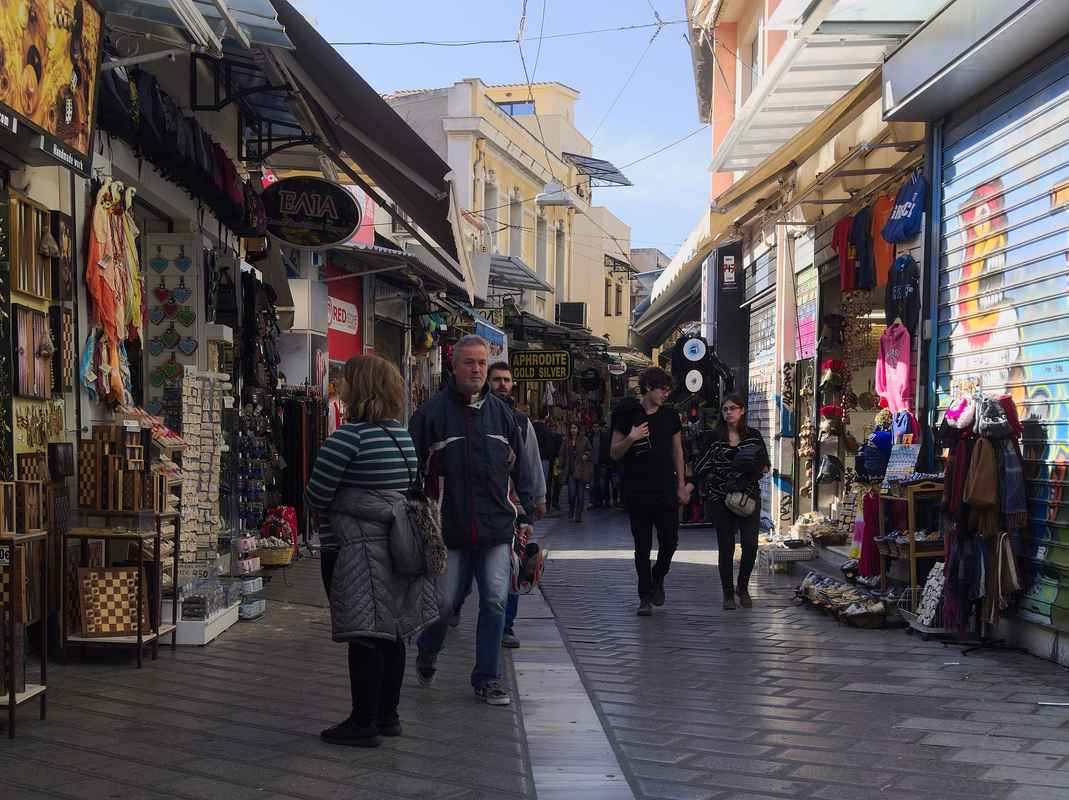
The heart of antiques shopping in Athens is the Monastiraki flea market, in and around Avissinia Square, just off Ermou Street near Monastiraki metro station. This warren of small brocante shops and stalls is where antiques, vintage objects and curiosities are concentrated, with street sellers also gathering along Adrianou Street near Thisio. The area is central, walkable and right beside the Acropolis, making it easy to combine antiques hunting with sightseeing in the historic core of the city.
Antiques shopping in Athens has a clear centre of gravity: the Monastiraki flea market, one of the city’s most energetic and eclectic shopping districts. It lies just off the lower end of Ermou Street, close to the neighbourhoods of Thisio and Plaka, and the Monastiraki metro and railway station sits right at its edge, making it supremely easy to reach.
Within this market, the true heart of the antiques trade is Avissinia Square, a small plaza ringed by brocante shops and dealers that comes most alive on Sundays. The surrounding lanes are lined with little shops selling old and curious goods, while street sellers spread their wares along Adrianou Street and around the Thisio station nearby. Because the whole quarter sits directly beneath the Acropolis and beside Plaka, you can dip into the antiques shops between visits to the ancient sights, which makes a browse here one of the most convenient pleasures in central Athens.
What can you find in the Athens antiques market?
The Athens antiques market offers an eclectic mix: vintage jewellery and silverware, old prints, maps and photographs, ceramics and pottery, Ottoman and Venetian glassware, brass lamps, antique furniture, vinyl records, old cameras, rare books and musical instruments. The diverse history of Athens shows in items ranging from traditional Greek embroidery to Aegean pottery. Quality and price vary widely, from genuine antiques to inexpensive curiosities and reproductions, so there is something for serious collectors and casual browsers alike.
Part of the fun of the Monastiraki market is never quite knowing what you will turn up, because the range of goods is gloriously eclectic. Alongside the antiques proper you find vintage jewellery and accessories, silverware, old prints, maps and photographs, ceramics and pottery, glassware, brass and copper lamps, furniture, vinyl records, old cameras, rare books and even medical and musical instruments.
The layered history of Athens is written into the stock, with pieces reflecting Greek, Ottoman and Venetian influences: traditional Greek embroidery, Ottoman glassware, pottery from the Aegean islands and relics of the city’s neoclassical heyday all turn up among the stalls. Quality and authenticity vary enormously, from genuine, valuable antiques in the established dealers to charming bric-a-brac and outright reproductions on the street tables, so a discerning eye helps. Whether you are a serious collector chasing a specific piece or a casual visitor hunting for an unusual souvenir, the market rewards patient rummaging with the occasional real find.
What are the famous antique shops?
The most famous antique shop in Athens is Martinos, on Pandrossou Street in Monastiraki, a four-floor emporium of rare ceramics, Venetian glass, kilims, antique swords and Art Deco furniture run by the same family for generations. Big Bazaar, on Aristogitonos Street, is a two-storey cave of second-hand curiosities, old instruments and vintage kitchenware. Old Athens Gallery specialises in old prints, vintage Greek photographs and historic maps. These established dealers offer quality and provenance beyond the street stalls.
Among the many small shops, a few established dealers stand out for their quality and reputation, and the most celebrated is Martinos. Found on Pandrossou Street in the heart of Monastiraki and run by the same family across generations, it fills four floors with rare ceramics, Venetian glassware, woven kilims, old swords, icons and Art Deco furniture, a serious dealer where collectors hunt for fine pieces.
A very different experience awaits at Big Bazaar on Aristogitonos Street, a two-storey cavern stacked from the floor up with second-hand oddities, old musical instruments, retro kitchenware, brass lamps and crates of curious bric-a-brac, perfect for happy, aimless rummaging. For those drawn to paper, the Old Athens Gallery deals in old prints, vintage Greek photographs and historic maps of Athens, the Acropolis and the islands, ideal for a framable, easily packed souvenir. These shops offer provenance, expertise and a more reliable guarantee of authenticity than the open-air stalls, and are well worth seeking out.
What is the Sunday flea market like?
The Sunday flea market is when Athens antiques shopping is at its liveliest. Every Sunday morning, the area around Avissinia Square and the Monastiraki market fills with a large open-air market, with dealers and casual sellers laying out antiques, collectibles, junk and curiosities on tables and the ground. Known as the Sunday Market of Athens, it draws crowds of bargain hunters and browsers. Arrive early for the best pickings, and expect a vibrant, chaotic, sociable atmosphere that is an experience in itself, whether or not you buy.
To see Athens antiques shopping at full tilt, come on a Sunday morning, when the Monastiraki flea market expands into a sprawling open-air bazaar. The focus is Avissinia Square and the streets around it, where the permanent brocante shops are joined by a host of casual sellers spreading antiques, collectibles, old records, clothes and outright junk across tables, blankets and the pavement.
This weekly event, long known as the Sunday Market of Athens, draws a colourful crowd of dealers, collectors, bargain hunters, tourists and locals, all sifting through the wares in a buzz of haggling and conversation. The best finds go early, so serious buyers arrive soon after the stalls open, but the real reward is the atmosphere: a chaotic, vivid slice of Athenian street life that is entertaining to experience even if you leave empty-handed. Combined with a coffee in the square and the Acropolis rising overhead, the Sunday market makes one of the city’s most enjoyable mornings.
Knowing the lie of the land helps you shop efficiently. The antiques quarter is compact and walkable, radiating out from Avissinia Square and the lower end of Ermou Street, with the permanent dealers in the surrounding lanes and the open stalls spreading along Ifestou, Pandrossou and Adrianou Streets. Monastiraki metro station sits right at the edge, so you can arrive and leave with ease, and the whole area is overlooked by the Acropolis, making it simple to fold a browse into a sightseeing day.
Timing affects both atmosphere and price. The Sunday morning market is the liveliest moment, with the widest choice and the keenest bargaining, but it is also the busiest, so dedicated collectors come early for the best pickings. On weekdays the permanent shops are calmer and better for unhurried browsing and conversation with the dealers, who often know the history of their stock and can point you towards a genuine find or a fair price.
A little care turns a browse into a good purchase. Inspect items closely for damage, repairs or signs of reproduction, ask the dealer about age and origin, and compare prices between stalls before committing, since similar pieces vary widely. For anything fragile or bulky, ask about packing and whether the shop can arrange shipping, and keep receipts for customs. Approached with patience and a friendly manner, the Athens antiques market rewards you with a characterful, lasting souvenir of the city.
How do you haggle and buy antiques well?
Haggling is part of the experience at the Monastiraki market, especially for antiques and unique items on the street stalls, so negotiate politely and expect to pay less than the asking price. At established shops like Martinos prices are firmer. Buy from reputable dealers for genuine antiques and ask about provenance, as the market also holds reproductions. Be aware that exporting genuine Greek antiquities is restricted by law, so stick to clearly modern, vintage or decorative items, and carry cash for the stalls.
Buying well in the Athens antiques market is partly about attitude. Haggling is an accepted and expected part of the experience at the flea market, particularly for antiques and one-off pieces on the street stalls, so do not be shy about negotiating; offer below the asking price, stay polite and good-humoured, and you will often settle on a lower figure. At the established shops such as Martinos, by contrast, prices tend to be firmer and more closely reflect a piece’s value.
For genuine antiques it pays to buy from reputable dealers, ask about an item’s age and provenance, and remember that the market mixes real antiques with vintage goods and reproductions, so a sceptical eye protects your wallet. One legal point matters: the export of genuine Greek antiquities is strictly controlled, so steer clear of anything claimed to be a true ancient artefact and stick to clearly modern, vintage or decorative items that you can take home freely. Carry cash, as many street sellers do not take cards, and your antiques hunt should be both safe and rewarding. The questions below cover what shoppers ask most.
Frequently Asked Questions
Where can you buy antiques in Athens?
You can buy antiques in Athens at the Monastiraki flea market, centred on Avissinia Square just off Ermou Street near Monastiraki metro station. The area has small brocante shops, street stalls and established dealers such as Martinos on Pandrossou Street and Big Bazaar on Aristogitonos Street. The market is busiest on Sunday mornings, when a large open-air market fills the square with antiques, collectibles and curiosities.
When is the Athens flea market on?
The Monastiraki flea market shops are open through the week, but the market is at its liveliest on Sunday mornings, when the area around Avissinia Square fills with a large open-air market of antiques, collectibles and junk known as the Sunday Market of Athens. Arrive early for the best finds. The permanent antique shops in the surrounding lanes keep their own opening hours on other days too.
Can you take antiques out of Greece?
You can freely take modern, vintage and decorative items bought in Athens out of Greece, but the export of genuine Greek antiquities and archaeological artefacts is strictly controlled by law and generally prohibited without special permits. To avoid problems, buy clearly modern or vintage pieces from reputable dealers and keep your receipts. If a seller claims an item is a true ancient artefact, treat it with caution and do not attempt to export it.