
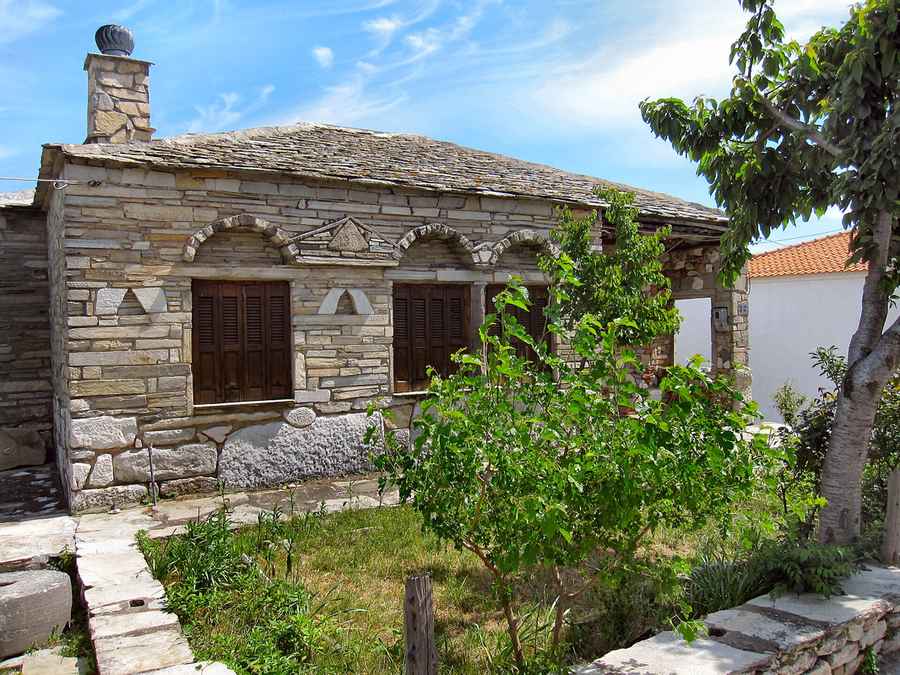
Akamatra is a small, traditional village set on the Rahes plateau in the western highlands of Ikaria, an island in the north Aegean. Stone houses stand among pine and oak forest, near the larger settlement of Christos Raches. The village shares the unhurried, late-running rhythm that makes the Rahes region famous. Springs, gardens and orchards fill the slopes around it. A cool mountain climate sets it apart from the warm coast below. Old stone footpaths thread through the woods and link Akamatra to neighbouring hamlets. Travellers who want quiet, authentic mountain Ikaria can reach these highland villages with My Greece Tours.
Akamatra rewards visitors who slow down and settle into the pace of the plateau. The village stays quiet and authentic, with community life built around gardens, shade and long evenings. Its position on the Rahes network of paths makes it a natural stop for walkers exploring the highlands. This page places Akamatra within the wider western mountains and connects it to the broader Ikaria travel guide. The sections below cover what Akamatra is, its forest setting and cool climate, the distinctive Rahes culture, the walking routes that pass through, and practical ways to visit and combine it with the surrounding highland villages.
What and where is Akamatra in Ikaria?
Akamatra is a traditional village on the Rahes plateau in the western highlands of Ikaria. It sits among pine and oak forest near Christos Raches, well above the coast, and forms part of the island’s famous mountain-village district.
Akamatra belongs to the cluster of settlements known as Rahes, spread across a high plateau in the western part of Ikaria. The village lies inland and uphill, away from the beaches, tucked into forested slopes. Stone houses, small squares and garden terraces define its layout. Its neighbour, Christos Raches, serves as the main hub of the district and holds most of the shops and services. The two sit close together along the mountain road and the old paths. This upland position gives Akamatra a completely different character from Ikaria’s harbours. The forest presses right up to the houses. Walkers who plan a route can start from Christos Raches and reach the village on foot.
The Rahes plateau forms the green heart of western Ikaria. Akamatra sits within it as one of several linked hamlets rather than a standalone resort. Roads climb from the coast in tight bends, gaining height quickly. The change in scenery is sharp. Dry coastal terrain gives way to shaded woodland and running water. This setting explains why the highland villages feel remote and cool even in high summer. Akamatra keeps its farming roots. Vegetable plots, fruit trees and vines fill the ground between houses. Local people still tend these gardens as part of daily life.
The village works best as part of a wider tour of the mountains, and it appears on many lists of things to do in Ikaria.
What is the forest setting and climate like in Akamatra?
Akamatra sits in dense pine and oak forest on a high plateau. The altitude brings a cool mountain climate, with fresh air, shade and running springs. Temperatures stay noticeably milder than on Ikaria’s warm coast.
The forest around Akamatra shapes every part of village life. Tall pines and old oaks cover the slopes and enclose the paths. Shade falls across the houses through much of the day. Springs surface among the rocks and feed small streams and garden channels. This water keeps the gardens green and the air fresh. The altitude of the Rahes plateau produces a climate that stands apart from the beaches below. Nights turn cool. Summer days stay comfortable under the canopy. Mist can settle over the woods in the early hours. Walkers exploring these highlands find the shade a real relief, and many combine a visit with wider hiking in Ikaria across the mountain trails.
The contrast between coast and highland defines a trip to Akamatra. The shoreline can feel hot and bright. The plateau feels green, damp and calm. This difference draws visitors up into the mountains during the warmest months. Forest cover holds moisture in the ground. Gardens and orchards thrive on the spring water and cooler temperatures. The woodland also muffles sound, adding to the sense of quiet. Wild herbs, mushrooms and greens grow in the shade and feature in local cooking. The natural richness of the Rahes forests supports the slow, self-sufficient way of life that the district is known for. This healthy mountain environment ties closely to the island’s celebrated Ikaria Blue Zone tradition.
What is the Rahes culture and late-night rhythm around Akamatra?
Akamatra shares the Rahes region’s famously unhurried, late-running rhythm. Shops and gatherings often open late in the day and continue into the night. Community, gardens and slow living stand at the centre of daily life.
The Rahes district built a reputation across Greece for its relaxed sense of time. Businesses in the area often keep unusual hours, opening late and staying active well into the night. Village life follows the seasons and the gardens rather than a strict clock. Akamatra reflects this rhythm. Evenings stretch out. Neighbours meet, talk and share food without hurry. Community bonds run deep, and older residents remain active in daily work. This social fabric sits at the core of the district’s identity. The pace can surprise first-time visitors used to coastal resorts. The nearby hub of Christos Raches shows this late-opening custom clearly along its small central lane.
Community life around Akamatra grows out of self-reliance and shared work. Families tend gardens, keep animals and preserve food through the year. Cooperation between neighbours has long shaped the highlands. This tradition connects directly to the wellbeing that made Ikaria known worldwide. Slow meals, strong social ties and constant gentle activity define the daily pattern. The village keeps these habits alive without turning them into a show for tourists. Visitors who stay a while sense the difference. The atmosphere stays genuine and low-key. Local festivals in the wider Rahes area, held through the warmer months, bring people together for music, food and dancing that can last until dawn.
This culture is central to the wider Ikaria Blue Zone story.
Which walking routes and Round of Rahes paths pass through Akamatra?
Akamatra sits on the old network of stone paths tied to the Round of Rahes, a signposted circuit linking the highland villages. These footpaths thread through forest and connect Akamatra with Christos Raches and neighbouring hamlets on foot.
The Round of Rahes is a waymarked walking circuit that links the villages of the western plateau. It follows restored sections of the old stone paths once used for daily travel between settlements. These routes climb and dip through pine and oak woodland, past springs, gardens and mills. Akamatra lies on this network and serves as a natural point along the way. Walkers pass through the village, rest in its shade and continue toward the next hamlet. The paths reveal the working landscape of the highlands close up. Stone walls, water channels and terraces line the trail.
This circuit is one of the best ways to experience hiking in Ikaria and to understand how the plateau villages once connected.
The old paths around Akamatra suit walkers who want a gentle, cultural route rather than a hard summit climb. Signposting on the Round of Rahes helps visitors follow the loop between settlements. Sections can run for several hours, with the forest offering shade for most of the way. Sturdy shoes, water and a relaxed pace serve walkers well. The route rewards slow travel and frequent stops. Wildflowers, herbs and birdsong fill the woods in the cooler months. The circuit also passes through the district hub, so a walk can begin or end in Christos Raches.
Combining the paths with a village visit gives a full picture of the highland way of life and ranks among the top things to do in Ikaria.
How do you visit Akamatra and combine it with Ikaria’s highland villages?
Reach Akamatra by driving up from the Ikaria coast into the Rahes plateau, or walk in on the old paths. Combine it with Christos Raches and neighbouring hamlets for a full day exploring the western highlands.
A visit to Akamatra works best as part of a wider highland trip. The village sits close to Christos Raches, the main hub of the Rahes district, so travellers usually pair the two. A car or organised tour brings you up the mountain road from the coast. The drive itself forms part of the experience, climbing through forest with views over the slopes. Parking near the village or the hub lets you continue on foot. From there, short walks link Akamatra to nearby hamlets and springs. Planning a route through the plateau lets you see several villages in one day.
Many visitors build this into a broader plan drawn from the full Ikaria travel guide and its highland suggestions.
Timing helps a visit to Akamatra go smoothly. The Rahes area keeps its own late rhythm, so afternoons and evenings often feel liveliest. A relaxed schedule matches the pace of the plateau. Bring layers, since the highland air turns cool even in summer. Water, walking shoes and a loose plan work best. The village pairs naturally with a section of the Round of Rahes and a stop in the district hub. Travellers wanting a guided experience of the mountains can arrange transport and routes that gather the highland villages into one journey. This approach captures the quiet, authentic Ikaria that coastal resorts miss, and it fits neatly among the wider things to do in Ikaria.
Frequently Asked Questions
What is Akamatra like as a place to visit?
Akamatra is a quiet, traditional mountain village on the Rahes plateau in western Ikaria. Stone houses stand among pine and oak forest, with springs, gardens and orchards on the surrounding slopes. The village feels calm, green and authentic rather than touristy. Its altitude brings a cool climate, with fresh air and shade that contrast sharply with the hot coast below. Life here follows the famous unhurried Rahes rhythm, where days run late and community sits at the centre of daily activity. Neighbours tend gardens, share food and keep old habits alive. Visitors notice the slow pace at once. The village makes a natural stop for walkers on the old stone paths that link the highland settlements.
It suits travellers who want peace, nature and a genuine sense of village life over beaches, resorts and nightlife. The overall mood stays gentle, self-sufficient and deeply rooted in the mountains.
Is Akamatra worth visiting in Ikaria?
Akamatra is worth visiting for travellers who enjoy mountains, forest and traditional village life. The village offers a cool, shaded escape from the summer heat of the coast and a window into the celebrated Rahes way of living. Walkers gain access to the old stone paths and the Round of Rahes circuit that link the highland hamlets. Visitors drawn to the island’s healthy, slow lifestyle find that reputation rooted in villages like this one. The setting among pines, oaks and springs feels restful and green. The pace stays gentle, and the atmosphere remains authentic rather than staged for tourism. Akamatra pairs well with nearby Christos Raches and the wider plateau, making a rewarding half-day or day trip.
Beach lovers looking only for resorts may prefer the coast. Travellers seeking nature, culture and quiet will value the trip. A highland visit adds real depth to any journey across Ikaria.
How do you get to Akamatra in Ikaria?
Reach Akamatra by heading into the western highlands of Ikaria, up onto the Rahes plateau. Most visitors drive from the coast on the mountain road, which climbs through forest in a series of bends and gains height quickly. The village sits close to Christos Raches, the main hub of the Rahes district, so the two are easy to combine. A car or an organised tour gives the most flexibility for reaching the highlands. Walkers can also arrive on foot, using the old stone paths and the signposted Round of Rahes routes that connect the settlements. Parking near the village or the hub allows further exploration on foot.
Bring layers, water and comfortable shoes, since the highland climate stays cool. Planning ahead helps, as the plateau keeps its own late rhythm and services follow relaxed hours. A guided highland route can gather several villages into one smooth journey.