
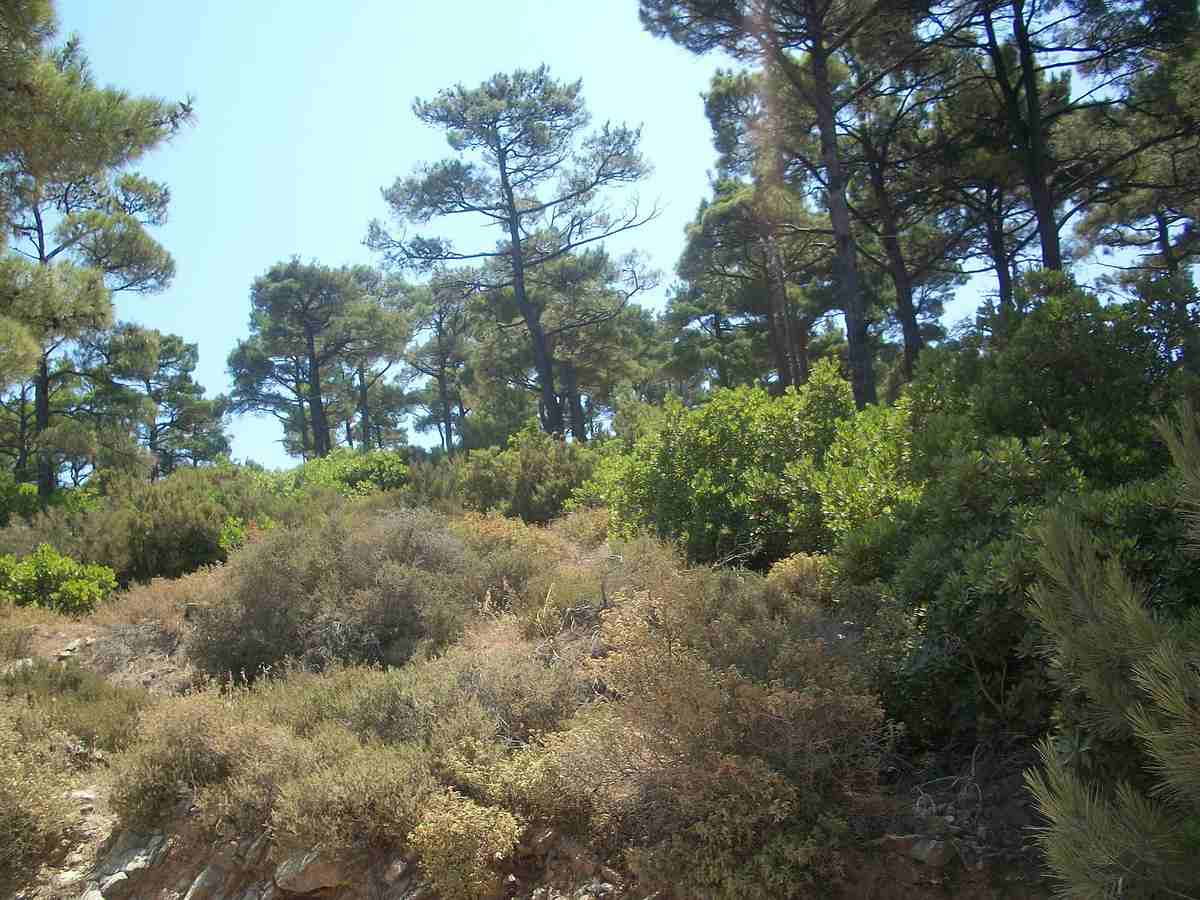
Thassos wears a green cloak that sets it apart from the drier islands of the Aegean. Dense forests of Aleppo pine and black pine climb from the shore to the ridges, broken by sweet chestnut groves, plane trees and terraced olives. Wild oregano and thyme scent the slopes, while golden jackals, tortoises and eagles share the woods and cliffs. Marble bedrock and steady mountain water feed this unusual richness for a small Aegean island. Nature-lovers reach these forests, meadows and shores on a wider island loop with My Greece Tours, whose trips gather the beaches, villages and green interior of Thassos into one journey. Plan the whole trip with Greece Tours.
Forests cover well over half of Thassos, giving the island its old name as the emerald of the northern Aegean. Pine resin, chestnut woods and honey-rich herbs support a web of mammals, birds, reptiles, butterflies and marine life around the coast. The sections below explain what defines the island’s nature, which trees and wildflowers grow here, which mammals and birds inhabit the forests, what swims offshore, how past wildfires reshaped the land, and where visitors can walk into it. Each part links to the trails, peaks, waterfalls and lagoons that let you meet this living landscape across Thassos at first hand.
What defines the nature of Thassos?
The nature of Thassos rests on dense pine and chestnut forests that cover more than half the island, fed by marble bedrock and mountain streams, and home to golden jackals, tortoises, eagles and honey bees across a green, mountainous interior.
Forests blanket Thassos from the coastal fringe to the summit ridges, a rare sight among the bare islands of the southern Aegean. Aleppo pine and black pine dominate the tree cover, mixed with sweet chestnut on the cooler heights and plane trees along the streams. This unbroken canopy earned the island its reputation as the greenest in the north Aegean. The mountainous spine, rising to Mount Ipsarion, traps rain and holds moisture in the soil. Springs and small rivers thread the wooded valleys, feeding the roots through the dry summer. The result is a compact island that feels more like a wooded mainland range than a sun-baked rock.
Marble forms the backbone of Thassos and shapes its plant life in quiet ways. The white stone that made the island famous in antiquity breaks down into pale, mineral-rich soils across the slopes. Rainwater sinks through the porous rock and returns as cool springs lower down the valleys. This steady underground water keeps the forests green when nearby islands turn brown. Bright marble scree also reflects light onto the herb-covered hillsides, warming the aromatic plants that thrive there. The marble gives Thassos both its historic wealth and the freshwater that sustains its woods, meadows and orchards right through the fierce heat of the Greek summer.
Elevation carves Thassos into clear bands of life, each with its own plants and animals. Olive terraces, vineyards and pine woods cloak the warm coastal belt below the villages. Sweet chestnut and denser pine take over the middle slopes, where the air stays cooler and damper. Bare rock, mountain herbs and hardy shrubs crown the ridges around the 1,204-metre peak. Streams cut shaded gorges between these zones, carrying plane trees and ferns down toward the sea. Walkers climbing from a beach to the summit pass through every one of these habitats in a single morning on hiking on Thassos.
Biodiversity on Thassos packs a wide range of species into a small area of roughly 380 square kilometres. Golden jackals patrol the forest edge, while Hermann’s tortoises graze the sunny clearings and green lizards dart across the rocks. Eagles and falcons ride the updraughts above the ridges, and honey bees work the thyme that flavours the island’s prized honey. Offshore, the clear water shelters sea grass meadows, loggerhead turtles and passing dolphins. This blend of woodland, mountain, meadow and sea crowds an unusual variety of life onto one green island. Careful management of the forests and coast now guards this natural wealth for walkers, divers and birdwatchers alike.
What forests and trees cover Thassos?
Forests of Aleppo pine and black pine cover most of Thassos, mixed with sweet chestnut on the heights, plane trees along the streams, and ancient olive terraces near the villages, forming the densest woodland of any north Aegean island.
Pine trees rule the forests of Thassos and give the island its resin-scented air. Aleppo pine, a drought-hardy Mediterranean conifer, covers the warm lower slopes with its open, pale-green crowns. Black pine, a taller and darker mountain species, takes the cooler ground higher up toward the ridges. Together these two conifers form the bulk of the island’s tree cover from the coast to the peaks. Their fallen needles carpet the forest floor and feed the thin mountain soils. Resin tapped from the pines once supported a local trade, and the sticky scent still hangs in the heat along every wooded path across the island.
Sweet chestnut groves crown the damp middle heights of Thassos, especially around the mountain villages. These broad-leaved trees favour the cooler, wetter ground that the marble springs supply, and their autumn nuts feed both people and wildlife. Plane trees line the stream beds and shaded gorges, their wide canopies marking hidden water from far off. Villagers have long gathered beneath old planes in the square at Panagia and other hill settlements for their deep shade. The chestnut woods above the trails offer a green, temperate contrast to the pine below. Walkers on the higher paths toward Mount Ipsarion pass through these cool, broad-leaved groves.
Olive terraces frame the lower slopes of Thassos around every coastal village. Stone-walled tiers of ancient olive trees climb the hillsides, worked for their oil over long generations of island families. Fig, almond and walnut trees stand among the olives near the old settlements, remnants of traditional mixed farming. Below the pines, a scrubby belt of maquis covers open ground with kermes oak, strawberry tree, myrtle and juniper. This tough, aromatic scrub shelters small birds and insects through the fierce summer heat. The patchwork of orchard, terrace and scrub softens the edge between the wild forest above and the beaches and harbours along the shore.
Woodland covers well over half of the island’s surface, a figure unmatched by most Greek islands. This green blanket cools the air, holds the soil on steep slopes and shelters an entire community of animals. Deep pine litter and hollow old trees give homes to insects, reptiles and small mammals. Chestnut and plane groves draw birds to their fruit, nuts and shady branches. The continuous canopy also lets larger animals like the golden jackal move unseen across the island. Protecting this forest cover matters for both the wildlife and the streams, since the roots bind the ground and feed the springs that keep Thassos green.
Which wildflowers and herbs grow on Thassos?
Wild oregano, thyme and sage scent the hillsides of Thassos, joined in spring by orchids, cyclamen, anemones and rock roses. These aromatic herbs feed the bees behind the island’s celebrated pine and thyme honey and flavour its traditional cooking.
Aromatic herbs carpet the open, sunny slopes of Thassos and perfume the summer air. Wild oregano, thyme, sage and marjoram grow thick on the rocky hillsides above the villages. These plants store fragrant oils that guard them against the heat and drought of the Greek summer. Islanders gather oregano and sage from the wild for cooking and herbal teas. Thyme flowers draw clouds of bees to the hills in early summer, driving the local honey trade. The warm marble scree reflects extra light and heat onto these herbs, strengthening their scent and their prized flavour in the kitchen and the honey jar across the island.
Spring transforms the meadows and woodland edges of Thassos into sheets of colour. Wild orchids push up in the damp grass, alongside pink cyclamen, scarlet anemones and yellow rock roses. Poppies and daisies flood the olive terraces and roadsides through the mild weeks before the heat arrives. Purple flowering Judas trees and white-blossomed almonds mark the villages in the earliest warmth. Bulbs and annuals race to flower and seed before the summer dries the ground. The best of this floral show unfolds in April and May, the reason walkers often choose those cooler weeks to explore the island’s paths and terraces.
Honey ties the flowers of Thassos to its tables and its economy. Bees working the thyme, pine and wildflower slopes produce a dark, fragrant honey known across Greece. Pine honey, gathered from the resinous forests, carries a rich, less sweet taste prized by connoisseurs. Thyme honey from the summer hills adds a lighter, more floral note to the island’s output. Village beekeepers set their hives among the pines and herb-covered clearings each season. Buying honey straight from a roadside producer rewards a drive through the hills. The bees and their honey show how directly the wild flora of Thassos feeds the daily life of the island.
Herbs and wild greens have fed and healed the people of Thassos for generations. Villagers gather horta, the edible wild greens, from the terraces and stream banks each spring for the table. Mountain tea, sage and chamomile dry in island kitchens for winter infusions. Caper bushes trail from old stone walls, their buds pickled as a local delicacy. Rock samphire clings to the sea cliffs, gathered for its salty crunch. This living knowledge of useful plants links the islanders closely to their hillsides. The wild flora of Thassos is not only a spectacle for visitors but a working larder and medicine chest for its people.
What mammals and land wildlife live on Thassos?
The golden jackal is the largest wild mammal on Thassos, sharing the forests with foxes, beech martens, brown hares, hedgehogs and wild goats. Hermann’s tortoises, green lizards and the venomous nose-horned viper represent the island’s reptiles among the woods and rocks.
Golden jackals hold the top place among the wild mammals of Thassos. These dog-sized predators, tawny and long-legged, hunt small prey and scavenge along the forest edge at dusk. Their eerie chorus of howls carries across the valleys on still nights, startling visitors unused to the sound. Jackals shelter in the dense pine and scrub by day, emerging to patrol the quiet hills after dark. The island’s thick forest cover and mild climate suit them well, and their numbers have held firm here. Hearing a pack call from the darkened slopes ranks among the wilder experiences the island offers a night-time walker.
Smaller mammals fill the woods and terraces alongside the jackal. Red foxes trot the field margins at night, while beech martens raid henhouses and hunt through the old stone walls. Brown hares break from cover on the open slopes, and hedgehogs shuffle through the leaf litter after insects. Weasels, squirrels and field mice work the forest floor and the orchard ground. Bats hunt moths above the streams and villages once the sun drops. Wild goats pick their way across the highest crags near the summit ridges. This spread of mammals thrives thanks to the cover and water that the green island freely provides.
Reptiles bask across the sun-warmed rocks and paths of Thassos through the long summer. Hermann’s tortoise, a protected land tortoise, grazes the clearings and often crosses forest tracks at a slow pace. Balkan green lizards flash emerald across the stones, while wall lizards dart over the ruins and terraces. The nose-horned viper, the island’s one venomous snake, keeps to rocky scrub and stays clear of people wherever it can. Harmless snakes such as the Aesculapian and whip snakes hunt rodents through the undergrowth. Watching a tortoise plod across a woodland trail rewards the quiet walker. Steady feet and a little care keep both the reptiles and the visitor content.
Insects and amphibians round out the smaller wildlife of Thassos. Cicadas fill the pine woods with their loud daytime drone through the height of summer. Beetles, mantises and grasshoppers work the herb-covered slopes, feeding the lizards and birds above them. Stream pools and springs shelter frogs, toads and the occasional terrapin in the wetter gorges. Fireflies spark over the damp meadows on early summer nights, a fading sight elsewhere in Greece. Dragonflies patrol the water where the streams slow near the coast. This teeming small life underpins the whole food web, feeding the birds, reptiles and mammals that draw naturalists to the island’s forests.
What birds and butterflies can you spot on Thassos?
Golden and short-toed eagles, buzzards and Eleonora’s falcons soar above the ridges of Thassos, while bee-eaters, hoopoes, nightingales and warblers fill the woods. Swallowtails, cardinals and Cleopatra butterflies flit across the herb-rich clearings through spring and summer.
Birds of prey command the skies above the forests and cliffs of Thassos. Golden eagles and short-toed eagles hunt the open ridges, the latter dropping on the island’s snakes and lizards. Common buzzards circle the wooded slopes on broad wings through most of the year. Eleonora’s falcons breed on the sea cliffs and chase migrating birds along the coast in late summer. Kestrels hover over the terraces, and sparrowhawks slip through the trees after small birds. The rugged, wooded terrain and rich supply of prey make the island a stronghold for raptors. Watching an eagle ride the thermals above the peak crowns a summit walk on Thassos.
Woodland and garden birds fill the forests and villages with song. Nightingales pour out their music from the stream-side thickets on spring nights. Bee-eaters flash green, blue and gold as they hawk insects over the open ground. Hoopoes probe the terraces with their curved bills, raising crests when alarmed. Warblers, tits, finches and jays work the pine and chestnut canopy through the seasons. Along the shore, herons stalk the shallows and kingfishers dart above the stream mouths. This blend of forest, farmland and coastal species makes ordinary walks rewarding for anyone who carries binoculars around the island’s paths.
Migration swells the birdlife of Thassos in spring and autumn. The island lies on a flyway between Europe and Africa, drawing tired travellers to its shores. Flocks of swallows, wagtails and pipits pass through the terraces in waves during the crossing seasons. Storks and raptors ride the coastal thermals on their long journeys south and north. Warblers and flycatchers rest and feed in the olive groves before pressing on over the sea. Coastal wetlands and stream mouths give the migrants water and food at a critical point. Timing a visit to these passage months rewards birdwatchers with species absent through the rest of the year.
Butterflies bring flickering colour to the flowery slopes of Thassos. Scarce swallowtails and swallowtails sail across the herb-covered hillsides on broad, patterned wings. The bright yellow Cleopatra and the deep-red cardinal favour the shaded woodland edges and stream banks. Southern white admirals and fritillaries work the clearings where wildflowers crowd the ground. The island’s rich flora feeds their caterpillars, tying the insects tightly to the meadows and scrub. Warm, wind-sheltered gullies gather the widest range of species on a sunny spring day. Watching butterflies drift over a hillside thick with oregano and thyme captures the gentle side of the island’s wild nature.
What marine life surrounds the coast of Thassos?
Clear waters around Thassos shelter Posidonia sea grass meadows, loggerhead turtles, bottlenose dolphins and the rare Mediterranean monk seal. Groupers, octopus, sea bream and sponges live among the rocks and reefs, best seen while snorkelling the island’s coves and marble-fringed bays.
Clear, cool water rings Thassos and supports a rich underwater world. Meadows of Posidonia sea grass carpet the sandy seabed, releasing oxygen and sheltering young fish. This protected sea grass keeps the water clean and gives the sea its striking blue-green clarity. Marble sand and pebbles line many bays, brightening the shallows to a pale turquoise. Rocky reefs and undersea caves break up the coast, adding hiding places for a wealth of creatures. The mix of sea grass, sand and rock creates varied habitats within easy reach of the shore. Snorkellers exploring these clear coves find a living seascape only a short swim out from the beach.
Fish and shellfish crowd the reefs and sea grass beds around the island. Sea bream, damselfish, wrasse and grey mullet shoal over the rocks in easy view of snorkellers. Octopus and moray eels lurk in the crevices, while groupers guard deeper ledges offshore. Sea urchins, starfish and anemones stud the rocky shallows in bright colours. Natural sponges grow on the reefs, echoing an old Aegean diving trade. Hermit crabs and small shrimps pick over the sandy floor between the sea grass. This abundance of marine life makes the calm bays of Thassos a rewarding place for anyone carrying a mask and fins.
Larger sea animals visit the waters off Thassos through the warmer months. Loggerhead turtles glide through the bays to feed, occasionally surfacing near swimmers in the quiet coves. Bottlenose and common dolphins ride the bow waves of boats crossing the channel to the mainland. The rare Mediterranean monk seal, one of Europe’s most endangered mammals, hauls out on remote sea caves along the coast. Cormorants and gulls dive for fish where the currents gather shoals near the headlands. Sighting a turtle or a pod of dolphins from a boat lifts any day on the water around the island.
Dramatic rock formations edge the coast of Thassos and shelter their own sea life. Marble cliffs plunge into deep water at the wilder capes, undercut by caves and arches. Natural pools trap warm, clear water among the rocks, alive with small fish and crabs. The famous rock pool at the Giola Lagoon shows this marble-and-sea drama at its finest. Sea grass and reef life crowd the sheltered bays between the headlands. Rockpools along the shore let children and casual visitors meet the marine world without a boat. This meeting of white marble and clear water gives the island’s coast both its beauty and its wildlife.
How have wildfires shaped the land, and where can you experience Thassos nature?
Past wildfires burned large tracts of the Thassos pine forest, but the fire-adapted trees have regrown fast across the scars. Nature-lovers meet the recovering woods and wildlife on the island’s mountain trails, waterfalls, gorges and campsites tucked among the pines.
Wildfires have swept the pine forests of Thassos more than once in recent decades. Dry summers, strong winds and resin-rich trees make the island prone to fast-moving blazes. Large tracts of the north and interior have burned, leaving blackened slopes above the villages. Aleppo pine, though, is built to survive fire, and its sealed cones burst open in the heat to seed the bare ground. Fresh green shoots pierce the ash within a single season after a burn. The forest has bounced back across old fire scars, a natural cycle of loss and vigorous regrowth. Seeing young pines rising among charred trunks shows this recovery in plain view.
Regrowth after fire reshapes the plant life of Thassos in striking ways. Bare, sunlit ground first fills with fast herbs, grasses and wildflowers that thrive in the open. Aromatic scrub of cistus, thyme and broom follows, its seeds primed to sprout after a burn. Young pines then push up through this low cover, slowly rebuilding the shady forest above. This early, flowery stage draws extra insects, butterflies and the birds that feed on them. Wildlife shifts with the changing plants as the woodland knits back together over the years. The mosaic of burned and unburned ground lifts the island’s overall variety of habitats and species.
Mountain trails carry nature-lovers straight into the living heart of Thassos. Old paths link the coastal villages to the summit through pine, chestnut and open herb slopes. Spring-fed streams tumble through green ravines, and our guide to the Thassos waterfalls maps the shaded gorges where planes, ferns and frogs gather around the water. Climbing quietly at dawn brings the best chance of spotting jackals, tortoises and woodland birds along the way. Eagles ride the thermals above the high ridges for those who reach the open ground. These trails turn the island’s wild nature from a distant view into something felt underfoot on the climb.
Staying close to the forest deepens any encounter with the nature of Thassos. Pine-shaded sites near the beaches let visitors wake to birdsong and the scent of resin, as our guide to camping in Thassos describes. Quiet dawn and dusk hours reward patient watchers with the island’s shyer mammals and birds. Choosing the right season shapes what you see, from spring flowers to autumn migration, set out in our guide to the best time to visit Thassos. Binoculars, sturdy shoes and an early start open up the forests, ridges and shores. This blend of woodland, wildlife and clear sea makes Thassos a green retreat rare among Greek islands.
Frequently Asked Questions
What wildlife can you see on Thassos?
Thassos offers a wide spread of wildlife for a small Greek island. Golden jackals are the largest wild mammals, joined by red foxes, beech martens, brown hares, hedgehogs and wild goats on the higher crags. Hermann’s tortoises, green lizards and the venomous nose-horned viper represent the reptiles, while frogs live in the stream pools. Birdlife is rich, with golden and short-toed eagles, buzzards and Eleonora’s falcons hunting the ridges, and bee-eaters, hoopoes and nightingales filling the woods. Swallowtail and cardinal butterflies drift across the herb slopes. Offshore, the clear water shelters loggerhead turtles, dolphins and the rare monk seal. Walking the forest trails at dawn or dusk gives the best chance of a close encounter.
Are there dangerous animals on Thassos?
Thassos holds almost no real hazards for the careful visitor. The nose-horned viper is the only venomous snake, recognised by the small horn on its snout and its zigzag back. This shy reptile keeps to rocky scrub and dry stone walls, striking only when cornered or trodden on. Wearing boots, watching where you place hands and feet, and staying on the paths cuts the tiny risk to almost nothing. Other snakes, such as the Aesculapian and whip snakes, are harmless and control rodents. Golden jackals sound alarming when they howl at night but avoid people. Scorpions shelter under stones and deliver only a painful, minor sting. No large predators roam the forests, so a nature walk on Thassos stays safe for families and solo travellers alike.
Why is Thassos so green and forested?
Thassos owes its deep green cover to a rare combination of mountains, marble and water. The high central ridge, rising to the 1,204-metre peak of Ipsarion, traps passing rain clouds and wrings moisture from the air. Marble bedrock beneath the slopes soaks up that rain and releases it slowly as cool springs through the dry summer. This steady freshwater keeps the forests alive when nearby islands scorch and brown. Dense Aleppo pine and black pine thrive here, joined by sweet chestnut and plane on the damper heights. Forest covers well over half the surface, earning the old name of the emerald of the north Aegean. Height, stone and water set the island apart from the barer rocks of the southern Aegean.
What plants and herbs is Thassos known for?
Thassos is famous for the aromatic herbs and honey that grow from its sunny hillsides. Wild oregano, thyme, sage and marjoram carpet the open slopes, storing fragrant oils that flavour island cooking and herbal teas. Thyme flowers in early summer draw clouds of bees, feeding the celebrated Thassos honey in its pine and thyme forms. Pine honey carries a rich, darker taste, while thyme honey adds a lighter, floral note. Spring brings wild orchids, cyclamen, anemones and poppies to the meadows and olive terraces. Villagers gather wild greens, capers and rock samphire from the terraces and cliffs for the table. Ancient olive groves, chestnut woods and fig trees frame the settlements as remnants of traditional island farming.
Where can you experience nature on Thassos?
Thassos rewards nature-lovers most on its network of mountain trails and shaded gorges. Old paths climb from the coastal villages through pine, chestnut and herb slopes toward the summit ridge, where eagles ride the thermals overhead. Spring-fed streams and waterfalls tumble through green ravines full of plane trees, ferns and frogs, best explored on foot in the cooler hours. Walking quietly at dawn or dusk brings the best chance of spotting jackals, tortoises and woodland birds. The calm, clear bays invite snorkellers to meet the sea grass meadows, turtles and reef fish just offshore. Pine-shaded campsites near the beaches let visitors wake to birdsong and resin-scented air deep in the forest across the green island.
Did wildfires destroy the forests of Thassos?
Wildfires have burned large parts of the Thassos forest in recent decades, yet the woodland is far from destroyed. Dry summers, strong winds and resin-rich pines make the island prone to fast, damaging blazes on the northern and interior slopes. Aleppo pine, the dominant tree, has evolved to survive fire: its sealed cones burst open in the heat and scatter seed across the ash-rich ground. Fresh shoots and wildflowers appear within a single season, and young pines soon rise among the charred trunks. This natural cycle of burning and regrowth has shaped the forest for millennia. The early open stage even boosts variety, drawing extra insects, butterflies and birds. Walkers still find vast tracts of healthy, unburned forest across the island.