
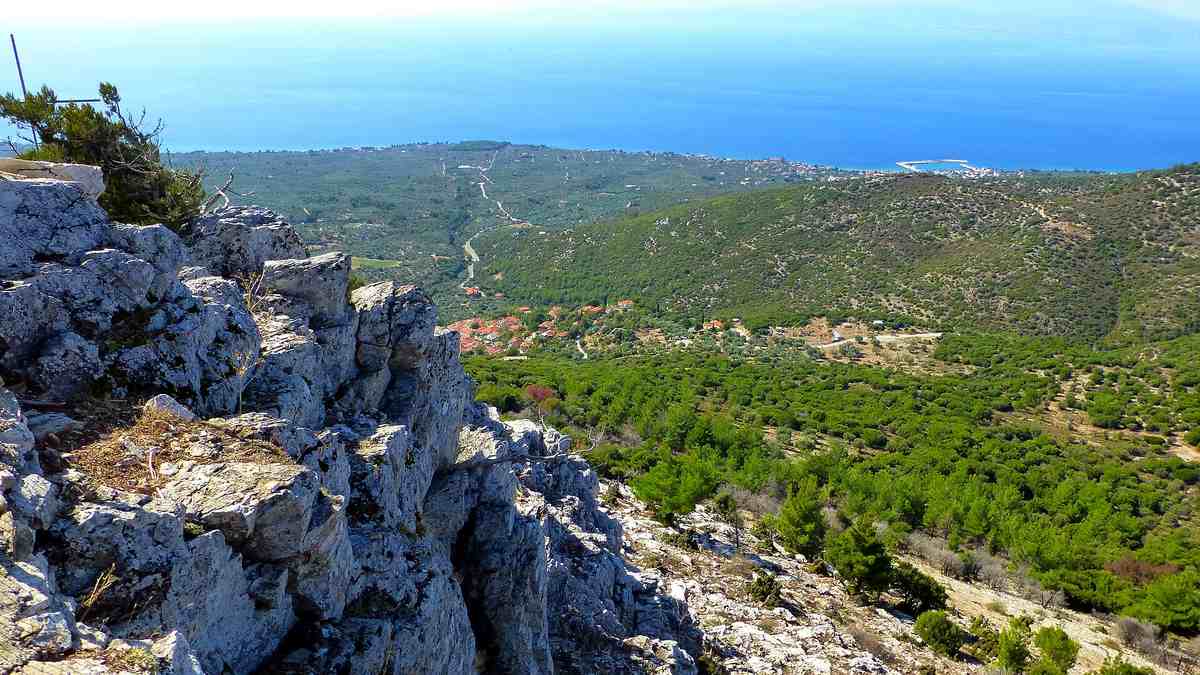
Skala Kallirachi is a harbour and traditional fishing village on the west coast of Thassos, 21 kilometres from the island capital of Limenas. Roughly 600 residents live here, most of them tied to the sea rather than to the tourist trade. Fishing boats, small craft and sailboats fill a large sheltered harbour equipped with water and electricity. Grocery stores, a bakery, a butcher and several tavernas line the shore, serving the working village rather than the crowds. The settlement looks straight out across the water toward mainland Greece, with a remarkable view that reaches Kavala and the mountains of Mount Athos on a clear day. Genuine harbour life, honest fresh fish and open sunsets give this village a character that many busier resorts have lost.
Skala Kallirachi rewards travellers who want a real place rather than a packaged one. The village sits below its parent settlement of Kallirachi on the hillside, so the name marks the shore quarter that grew up around the boats. Sections below cover where the village lies and how to reach it, the fishing harbour and its anchorage, how fishermen’s huts became permanent homes, the small beach and seafront promenade, daily village life and its fresh-fish tavernas, the wide west-coast views and sunsets, and where the village fits on a wider island trip. Each part links to neighbouring villages, food and lodging on the island. Planning stays simple with the range of Thassos tours that take in the quiet west coast.
Where is Skala Kallirachi and how do you reach it?
Skala Kallirachi lies on the west coast of Thassos, 21 kilometres south-west of the capital Limenas, reached by the coastal ring road that circles the island and passes through neighbouring Skala Marion and the larger town of Limenaria.
Skala Kallirachi occupies a low stretch of the western shore, where the coast road meets the sea below the hillside village of Kallirachi. The harbour marks the centre of the settlement, with houses spread along the water and up the slope behind. West-facing ground gives the village its long afternoon light and its open outlook across the strait. Fields, olive groves and pine slopes rise inland toward the mountainous spine of the island. Distance from the capital keeps the pace slow and the streets uncrowded. Fishermen, farmers and a handful of visitors share the same quiet waterfront. This mix of shore, harbour and hillside sets the shape of the whole village.
Drivers reach Skala Kallirachi on the ring road that circles Thassos, a route of about 21 kilometres from Limenas in the north-east. The western leg of the road runs close to the coast, dipping into each shore village in turn. Car hire in the capital or at the ferry ports gives the easiest way to arrive, since the village sees only a light bus service. Ferries from Kavala and Keramoti on the mainland land at the island ports, and the coast road links them to the west. A relaxed half-hour drive covers the run from Limenas. This simple approach keeps the village within easy reach yet clear of the busiest resorts.
Neighbouring villages string along the same western coast within a short drive. Skala Marion lies just to the north, another shore settlement built around a fishing harbour below its inland parent village. Limenaria, the second town of the island, sits a little further south with more shops, services and beaches. The ring road threads them together, so a day on the west coast can take in several harbours at an unhurried pace. Small coves and beaches break the coastline between the villages. Each settlement keeps its own character along the shared shore. This chain of west-coast villages makes Skala Kallirachi a natural stop rather than an isolated one.
The name itself explains the layout of the place. “Kallirachi” is the older village set back on the hillside, while “Skala” means the landing or shore quarter that grew up by the water below. Many Thassos villages follow this pattern, with an inland settlement and a matching harbour on the coast. Residents once lived up the slope for safety and farmed the terraces around it. The shore quarter began as a practical base for the boats and slowly gained homes of its own. A short road links the upper village to its harbour. This twin arrangement of hill village and shore settlement runs through the history of the whole coast.
What makes the fishing harbour and anchorage the heart of the village?
The harbour holds the working fishing fleet at the centre of village life, offering a large sheltered anchorage for fishing boats, smaller craft and sailboats, fitted with water and electricity on the quay for the crews who depend on it.
The harbour forms the true centre of Skala Kallirachi, the point around which the whole village turns. Fishing boats moor along the quay, their hulls painted in the bright colours of the Greek fleet. A large sheltered basin gives room for the working boats, for smaller craft and for visiting sailboats alike. Water and electricity connections on the quay serve the crews and any yachts that put in. Nets, crates and coils of rope lie stacked along the waterfront through the working day. Gulls follow each boat back to its berth. This constant coming and going of vessels gives the harbour a rhythm that the seasons barely change.
Morning at the harbour belongs to the fishermen and their catch. Boats return from the night’s work, and crews unload crates of fish onto the quay in the early light. Local buyers, taverna owners and villagers gather to see what the sea has given. The freshest fish moves straight from the deck to the kitchens along the shore. Ice, scales and the smell of salt fill the air by the water. Older men mend nets in the shade while the boats rest at their moorings. This daily landing of fish links the harbour directly to the tables of the village, with almost nothing in between.
Shelter is the reason a harbour grew on this exact stretch of coast. The basin and its breakwaters guard the boats from the west wind and the open swell of the Aegean. Deep, calm water inside the moles lets crews work in safety through most of the year. Yachts cruising the northern Aegean value the same protection and stop overnight on their passage. The quayside services of water and power make a practical halt for passing sailors. Local knowledge of the weather guides every departure and return. This natural and man-made shelter turned a simple beach into a dependable working port.
Life on the quay carries on regardless of the tourist calendar. Fishing sets the pace here, so the harbour stays busy in spring and autumn as much as in high summer. Crews service their engines, paint their hulls and repair their gear along the waterfront. Visiting sailors trade news with the resident fishermen over a coffee by the boats. Children fish with hand lines from the edge of the quay in the evening. The working port never becomes a mere backdrop for photographs. This year-round activity keeps the harbour genuine, a place of labour first and of leisure only second.
How did fishermen’s huts grow into the permanent village?
Fishermen first built simple huts on the beach to shelter their boats and gear, and over time those huts grew larger and became permanent homes, so the shore settlement of Skala Kallirachi took shape below the older inland village.
Fishermen from the hillside village of Kallirachi started the shore settlement with the plainest of buildings. They raised simple huts on the beach to protect their boats and store their nets and gear between trips. Daily work at sea made a base by the water far more practical than the climb to the upper village. The huts stood close to the moorings, within a few steps of the boats. Each family kept its own patch of shore for its craft. Timber, stone and reed made the first rough shelters. This modest beginning, driven by the needs of the fishing life, planted the seed of the village that stands on the shore today.
The huts grew steadily as the fishermen spent more of their time by the sea. Small stores for gear gained a room to rest in, then a hearth, then a full set of walls and a roof. Families began to stay overnight, then through the season, and at last all year round. What had served as a working store slowly turned into a proper home. Stone replaced reed, and single huts became houses with yards and gardens. Neighbours built alongside neighbours until a street formed along the shore. This gradual change from shelter to dwelling built the permanent fabric of Skala Kallirachi.
The finished village kept the clear stamp of its origins in the fishing life. Houses cluster around the harbour rather than a central square, facing the boats they were built to serve. Narrow lanes run down to the water at the points where the old huts once stood. Yards hold nets, floats and upturned dinghies beside the everyday clutter of a home. The plan of the village follows the working needs of the sea, not the tidy grid of a planned town. Generations of the same families still live where their forebears landed fish. This unbroken link to the founding trade shapes the look and feel of every street.
Both halves of the settlement still stand and still matter to the community. Kallirachi keeps its place on the hillside above, with its church, its older houses and its farmland on the terraces. The shore quarter of Skala holds the harbour, the tavernas and most of the daily bustle. A short road runs between the two, and families keep ties in both. The upper village offers cooler air and long views inland, while the shore offers the sea and the boats. Feast days and church services still draw the community up the hill. This living pair of hill and shore preserves the full story of how the village grew.
What can you find at the small beach and seafront promenade?
The seafront offers a small beach beside the harbour and a promenade along the water, lined with grocery stores, a bakery, a butcher and tavernas, so daily needs and a quiet swim sit within a few steps of each other.
The seafront gathers the daily life of the village along one easy stretch of shore. A promenade runs beside the water, linking the harbour to the houses and shops that face the sea. Tables from the tavernas spill onto the paving, shaded by tamarisk trees and awnings. Grocery stores, a bakery and a butcher supply the villagers and the few visitors who stay. A slow stroll along the front takes in the boats, the shops and the open view across the strait. Benches and low walls give places to sit and watch the harbour. This compact waterfront puts every practical need and every simple pleasure within a short walk.
A small beach lies beside the harbour, modest in size but genuine in feel. Calm, shallow water suits an easy swim close to the boats and the village houses. Shingle and coarse sand make up the shore, backed by a few trees for shade. Swimmers share the water with the light traffic of the fishing craft coming and going. The beach serves the residents first, so it stays quiet even at the height of summer. A taverna or two sit close enough for a meal after a swim. This unassuming beach fits the village exactly, a place to cool off rather than a resort strand.
Shops along the front cover the everyday needs of a self-sufficient village. The bakery turns out bread and simple pastries through the morning, and the scent carries along the shore. A butcher and meat shop supplies the tavernas and the households alike. Grocery stores stock the staples that keep the village fed without a trip to town. Fresh fish comes straight from the harbour rather than from any shop counter. Opening hours follow the slow local rhythm rather than the demands of mass tourism. This working core of small businesses lets the village live on its own terms all year round.
The promenade truly comes alive in the cool of the evening. Families walk the front after the heat of the day, greeting neighbours along the way. Fishermen sit outside the tavernas over an ouzo once their boats are secure. The sinking sun throws its light straight down the water and along the paving. Children play near the harbour while their parents linger over a meal. Cats weave between the chairs in hope of a scrap of fish. This gentle evening ritual, shared by residents and visitors, shows the seafront at its most welcoming and its most genuine.
What is village life like, and where do you eat fresh fish?
Village life follows the fishing calendar rather than the tourist season, and several tavernas along the harbour serve fish landed the same morning, giving Skala Kallirachi a reputation for some of the most honest fresh seafood on the island.
Village life in Skala Kallirachi keeps the steady pace of a working community. Fishing sets the daily rhythm, so mornings begin early at the harbour and quieten through the heat of the afternoon. Residents know one another, and the shops and tavernas double as places to meet and talk. Tourism plays only a supporting role, since most families live from the sea whatever the season brings. Church feasts, name days and the fishing calendar mark the turning year more than any tourist timetable. Elderly villagers gather on the front in the cool of the evening. This unforced daily life gives visitors a window onto a genuine Thassos village.
Fresh fish stands at the centre of the local table and the local pride. Tavernas along the harbour cook whatever the boats have landed that same morning, so the menu changes with the catch. Grilled fish, small fried fish and seafood pasta appear beside simple Greek salads and island vegetables. Prices stay fair because the fish travels only a few metres from deck to kitchen. Owners often know exactly which boat brought in the day’s catch. The cooking keeps things plain, letting the freshness speak for itself. This direct line from the sea to the plate makes eating here a real highlight of the west coast.
The tavernas themselves match the honest character of the village. Tables stand on the promenade or under the trees at the water’s edge, close to the moored boats. Family kitchens run most of them, with recipes handed down and little fuss on the plate. Meals stretch out in the Greek way, with no rush to clear the table. The same faces return night after night, locals and repeat visitors together. A carafe of local wine or a glass of ouzo rounds off the meal. This relaxed, family-run style suits a village that cooks first for itself and only then for its guests.
Local eating reaches well beyond the fish on the grill. Island olive oil, mountain honey and garden vegetables fill out the tavernas’ tables through the season. A wider guide to Thassos food sets out the specialities travellers meet across the island, from the famous olives to the walnut sweets. Bread comes fresh from the village bakery, and cheese and meat from the local shops. Seasonal dishes follow whatever the land and sea provide at the time. Simple ingredients, well handled, define the cooking here. This grounding in local produce, crowned by the daily catch, gives the village its strong reputation for food.
Why are the west-coast views and sunsets so remarkable here?
West-coast Skala Kallirachi looks straight across the strait toward mainland Greece, so on a clear day the view reaches the port of Kavala and the mountains of Mount Athos, while every evening the sun sets over the open Aegean.
West-coast position gives Skala Kallirachi an outlook few island villages can match. Houses and tavernas face directly out across the water toward the mainland of northern Greece. The strait between the island and the coast opens the whole western horizon to view. Boats crossing to and from the mainland ports pass within sight of the harbour. Light off the water changes through the day, from the sharp clarity of morning to the gold of evening. Open sea and distant hills fill every glance from the front. This full western exposure lies at the root of the village’s fame for scenery.
Clear days pull the distant mainland into sharp focus across the strait. The port city of Kavala shows on the coast opposite, its buildings visible against the shoreline. Behind and beyond rise the mountains of Mount Athos, the holy peninsula known in Greek as Agios Oros. The great pyramid of the Holy Mountain stands out on the far horizon when the air is clean. Fishing boats and ferries cross the water between village and mainland. Morning and late afternoon bring the crispest views over the sea. This sweep from a working harbour to a sacred mountain gives the outlook a rare depth and meaning.
Sunset is the daily highlight that draws people to the shore. The sun drops straight into the sea beyond the mainland hills, since nothing blocks the western horizon. Its light spreads across the strait and turns the water to copper and rose. Villagers and visitors gather on the promenade and the harbour wall to watch. Tavernas fill their seafront tables as the colours build over the water. The fishing boats sit black against the glowing sea. This nightly display, free and reliable through the warm months, ranks among the finest reasons to base a stay here.
The heights behind the coast add another layer to the scenery. Mountain villages such as Maries sit inland above the western shore, reached by roads that climb from the coast into the pines. From higher ground the whole strait and the mainland beyond spread out in a single view. Springs, streams and forest cloak the slopes above the harbour. A short drive uphill trades the sea view for a green valley and cooler air. The contrast between shore and mountain lies within a few kilometres. This pairing of harbour outlook and inland height makes the west coast rich in scenery from every angle.
Who suits Skala Kallirachi and where does it fit on a Thassos trip?
Skala Kallirachi suits travellers seeking a quiet, authentic base over a busy resort, offering genuine village life, fresh fish and sunsets, and it works best as a peaceful anchor combined with the beaches, towns and mountain villages nearby.
Skala Kallirachi rewards the kind of traveller who values character over convenience. Visitors who want harbour life, honest food and quiet evenings will feel at home along its shore. Families, couples and older travellers all suit its gentle, unhurried pace. Those set on nightlife, big hotels or a lively beach scene should look to the larger resorts instead. The village asks its guests to slow down and share the rhythm of a working place. A hire car makes the base far more useful for exploring the coast. This clear appeal to seekers of the genuine defines exactly who the village is for.
A stay here works best when paired with the wider attractions of the west coast. The larger town of Limenaria lies close by with its beaches, shops and services for busier days. Skala Marion, just to the north, offers another harbour and more coves to explore. Mountain villages inland give cool retreats and green walks away from the shore. Days can mix a morning swim, an afternoon drive and an evening of fresh fish by the harbour. Boat trips and island tours reach the village along the coast road. This central place among varied neighbours lets the village serve as a calm anchor for a fuller trip.
Choosing where to base a Thassos holiday shapes the whole experience. Skala Kallirachi offers peace, authenticity and low prices, but fewer rooms and services than the resorts. Our guide to where to stay in Thassos compares the villages and towns around the island for every kind of traveller. Rooms and small studios here suit those content with the simple pleasures of the sea. Larger centres like Limenaria and the capital hold more hotels and amenities. Weighing quiet against convenience is the key choice for any visitor. This honest trade-off helps travellers decide whether the village fits the trip they have in mind.
The village earns its place on a Thassos trip as a taste of the real island. A meal of fresh fish by the harbour at sunset stays in the memory long after busier days fade. The working port, the twin hill-and-shore village and the mainland view together tell the story of west-coast life. Even travellers based elsewhere find the drive out worth the effort for an evening. Guided island tours can weave the village into a wider loop of the coast. Slow, genuine and firmly tied to the sea, the place rewards an open mind. This authentic corner completes any full picture of Thassos beyond the beaches.
Frequently Asked Questions
Where is Skala Kallirachi on Thassos?
Skala Kallirachi lies on the west coast of Thassos, about 21 kilometres from the island capital of Limenas. The village is the shore quarter of the older hillside settlement of Kallirachi, built around a fishing harbour that faces the mainland across the strait. The coastal ring road links it to Skala Marion to the north and Limenaria to the south.
Is Skala Kallirachi a touristy village?
Skala Kallirachi is one of the least touristy villages on Thassos. Fishing, not tourism, remains the main livelihood, so most residents work at sea whatever the season. The harbour keeps a genuine working character, and the tavernas cook for locals as much as for visitors. Travellers who want an authentic, quiet base rather than a busy resort suit it best.
What is there to do in Skala Kallirachi?
Skala Kallirachi offers a working fishing harbour to watch, a small beach for a quiet swim and a seafront promenade lined with tavernas. Fresh fish landed the same morning is the main draw, along with remarkable sunsets over the mainland. The village also makes a calm base for exploring the beaches, towns and mountain villages of the west coast.
Can you see the mainland from Skala Kallirachi?
Skala Kallirachi looks straight across the strait toward mainland Greece from its west-coast position. On a clear day the view reaches the port city of Kavala and the mountains of Mount Athos, known in Greek as Agios Oros. The open western horizon also makes the village one of the best spots on Thassos to watch the sunset over the sea.
How do you get to Skala Kallirachi?
Drivers reach Skala Kallirachi on the coastal ring road that circles Thassos, about a half-hour drive of 21 kilometres from Limenas. Ferries from Kavala and Keramoti on the mainland land at the island ports, and the road links them to the west coast. A hire car is the easiest way to arrive, as the village sees only a light bus service.
Why is Skala Kallirachi known for fresh fish?
Skala Kallirachi is a working fishing village, so its tavernas cook fish landed at the harbour the same morning. The catch travels only a few metres from the boats to the kitchens along the shore, which keeps it exceptionally fresh and fairly priced. Grilled and fried fish, simply prepared, make eating by the harbour a highlight of the west coast.