

If you’ve ever dreamed of jumping from one whitewashed village to another, watching the sun set over a different bay every night, Greek island hopping is exactly what you’re looking for. Plan the whole trip with Greece Tours.
We’ve spent summers zig‑zagging across the Aegean and Ionian Seas, sleeping on ferries, missing ferries (it happens), and slowly figuring out which Greek island hopping routes actually work in real life, not just on a pretty Instagram map.
In this guide, we’ll walk you step by step through how to island hop in Greece: when to go, how many days you really need, how ferries work, the best islands for island hopping depending on your style, sample itineraries from Athens, Santorini, and Mykonos, plus budget tips, packing advice, and the mistakes we still see first‑timers make every summer.
Let’s plan your perfect Greek island hopping trip, without wasting days in ports or blowing your budget on the wrong ferries.
Read more in My Greece Tours.
Key Takeaways
- Plan Greek island hopping for at least 7–10 days, limiting yourself to one island group and 2–4 islands so you’re not always in transit.
- Travel in June or September for the best balance of weather, prices, and ferry schedules, and avoid overly tight connections that don’t allow for weather delays.
- Base your Greek island hopping route on your travel style, choosing Cyclades for classic white villages, Ionians for lush road trips, Dodecanese for history, or Saronic Gulf for quick trips from Athens.
- Prioritize conventional ferries and short hops to keep Greek island hopping tours and DIY trips affordable, and book high‑season ferries and rooms well in advance.
- Pack light, use local buses and occasional car or scooter rentals, and avoid trying to see too many islands, which is the most common mistake first‑timers make when figuring out how to island hop in Greece.
Why Island Hopping In Greece Is Special (And How Many Days You Really Need)
Greek island hopping isn’t just about ticking islands off a list. It’s the feeling of waking up in Paros, having lunch in Naxos, and watching the sunset in Santorini, all in the same week. Each island has its own rhythm, food, and even slightly different dialect. That’s what makes island hopping Greece so addictive.
How Long Do You Need For Greek Island Hopping?
Before we talk routes and ferries, we need to be honest about time. Most people try to see far too much.
- Absolute minimum: 3 days (really only enough for 2 islands very close together)
- Good first trip: 7–10 days
- Ideal if you love slow travel: 2 weeks or more
As a rule of thumb for a classic Greece island hop:
- 3–5 days → 1–2 islands
- 7–10 days → 2–4 islands
- 14+ days → 4–6 islands (max) in the same region
More than that, and you’ll spend your holiday on ferry decks instead of beaches.
Fast-Paced Trips: 3–5 Days
A short Greek island hopping trip works best if:
- You start in Athens, Santorini, or Mykonos (major ferry hubs)
- You stick to nearby islands with direct Greek islands ferry connections
Examples:
- Athens → Aegina & Agistri (super easy, quick ferries)
- Santorini → Ios & Naxos
- Mykonos → Tinos or Paros
We treat these quick trips as “samplers”: you get a taste of the island hopping experience without trying to do everything.
Classic Vacations: 7–10 Days
This is the sweet spot for most travelers planning Greek island hopping tours or DIY trips.
In 7–10 days, we usually suggest:
- 3 islands if you like to relax
- 4 islands if you don’t mind early ferries and moving more often
A typical 10‑day Cyclades island hopping route might be:
- Athens → Paros (3 nights)
- Paros → Naxos (3 nights)
- Naxos → Santorini (3–4 nights)
You get beaches, food, nightlife, and dramatic views without burnout.
Slow Travel: 2+ Weeks And Beyond
If you have 2–3 weeks, you can:
- Dive deeper into one island group (Cyclades, Ionian, or Dodecanese)
- Mix famous stops (Santorini, Mykonos, Corfu) with quiet islands like Amorgos, Koufonisia, or Nisyros
- Spend whole days with no plan beyond choosing your next taverna
For these longer Greek island hopping trips, the risk isn’t too little time, it’s over‑planning. Leave room for last‑minute changes, especially when the weather or a village festival tempts you to stay longer.
Best Time To Go Island Hopping In Greece
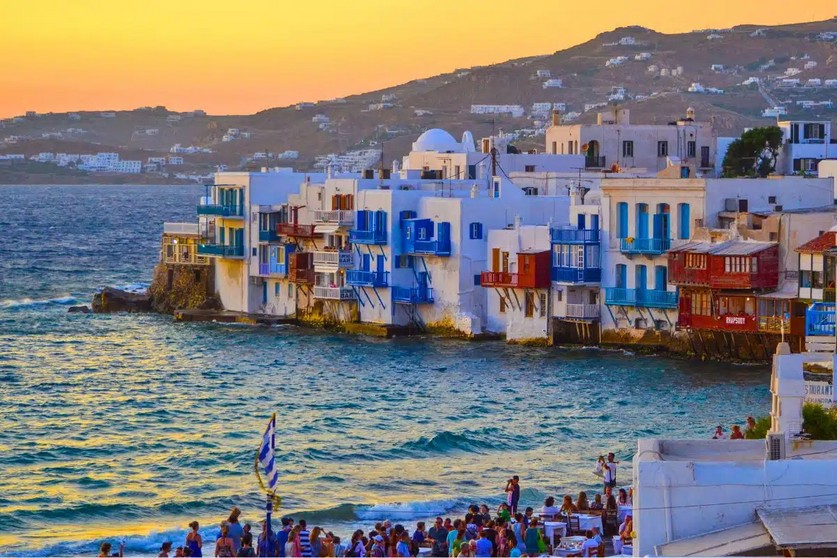
Timing your trip right can make the difference between packed ferries and peaceful coves.
Weather, Crowds, And Prices By Season
April–early May (shoulder, early spring)
- Weather: Mild, can be windy and still cool for swimming
- Pros: Quiet, cheaper rooms, authentic local feel
- Cons: Some beach bars and tour services still closed: ferry schedule lighter
Mid‑May–June (ideal shoulder)
- Weather: Warm, sunny, swimmable seas
- Pros: Excellent balance of price, atmosphere, and ferry options
- Cons: Popular islands start to feel busier in June
July–August (peak season)
- Weather: Hot, very sunny, Meltemi winds in Cyclades (can affect ferries)
- Pros: Lively nightlife, all services running, lots of Greek island hopping tours
- Cons: Highest prices, busier ferries and beaches, need to book well in advance
September–early October (our favorite)
- Weather: Still warm, sea at its best temperature
- Pros: Fewer crowds, softer light, better deals on accommodation
- Cons: Some routes start reducing frequency by late September
Late October–March (off‑season)
- Weather: Unpredictable, often cool or rainy
- Pros: Very low prices, ultra‑local atmosphere
- Cons: Many island hopping Greece itineraries are impossible, limited ferries, beach clubs closed
Best Time To Go Island Hopping In Greece
If you’re asking, “What’s the single best month for Greek island hopping?” our honest answer is June or September.
- Plenty of ferry connections
- Good Greek island hopping ferry schedule coverage
- Warm water and long days
- Lower prices than July–August
If you absolutely must travel in July–August, plan earlier, book ferries and rooms in advance, and avoid the most famous islands on weekends.
When Ferries Run (And When They Don’t)
Greek island hopping ferries run all year on some main routes, but the full network really operates May–October. In winter, you’ll find:
- Fewer departures
- More cancellations in rough weather
- Hardly any convenient island‑to‑island connections
If your whole goal is island hopping Greece, keep your trip between May and early October for simplicity and sanity.
How To Island Hop In Greece: Ferries, Flights, And Tours
When people ask us how to island hop in Greece, our answer starts with one word: ferries.
Greek Island Ferries: What First-Timers Need To Know
There are two main types of ferries for Greek island hopping:
- Conventional (large, slower) – Cheaper, more stable in windy weather, big outdoor decks. Great for budget trips.
- High‑speed (catamarans, smaller) – Much faster, more expensive, fewer outdoor areas.
For most routes:
- Short hops (under 2 hours) are often on smaller ferries or high‑speeds
- Longer routes (4–8 hours) use larger ships with cabins, restaurants, and lounges
Our tips:
- Arrive at the port at least 45–60 minutes before departure in high season
- Keep printed or digital tickets handy: staff will scan or check them at boarding
- Don’t stress if you can’t see your gate, ask the nearest kiosk or café. Locals know.
Buying Ferry Tickets And Reading The Schedule
For the Greek island hopping ferry schedule, we usually:
- Start with route planners like Ferryhopper, Viva, or Direct Ferries (for planning, not always for buying)
- Cross‑check with specific ferry company sites once we choose a departure
You’ll see fields like:
- Piraeus → Paros
- Departure time, duration
- Type: HIGHSPEED, BLUE STAR, etc.
General rules:
- For popular Cyclades island hopping routes (Athens–Paros–Naxos–Santorini), you can book a few weeks in advance in shoulder season
- In July–August, especially for fast boats, book as early as you can
Greek Island Hopping By Flight
Flights aren’t ideal for classic island hopping Greece itineraries, but they’re useful for:
- Starting or ending your trip in a far‑flung island (e.g., Rhodes, Kos, Corfu, Mykonos, Santorini)
- Saving a full travel day on long routes
Best use case: Fly Athens → distant island, then ferry between nearby islands, then fly back to Athens from another island.
When To Join An Organized Greek Island Hopping Tour
DIY is great, but sometimes organized Greek island hopping tours make sense, especially if:
- You’re very short on time and don’t want to worry about ferry tickets
- You prefer a guide handling logistics
- You’re traveling with older parents or young kids
You’ll find:
- Day tours (e.g., boat trip from Milos to Kleftiko, from Paros to Antiparos, from Rhodes to Symi)
- Multi‑day Greek island hopping trips run by tour operators (Athens–Mykonos–Santorini is the classic)
We like mixing both: use ferries for main moves, and local boat tours to explore tiny, hard‑to‑reach bays, caves, and neighboring islets.
Choosing Your Greek Island Hopping Route
Now to the fun part: deciding where to go.
Main Greek Island Groups Explained
For island hopping Greece, it helps to think in clusters:
- Cyclades: Santorini, Mykonos, Paros, Naxos, Ios, Milos, Syros, Tinos, Amorgos, etc. Classic white villages, dry landscapes, strong winds in summer. Easiest for first‑time Greek island hopping from Athens.
- Ionian Islands: Corfu, Lefkada, Kefalonia, Zakynthos, Ithaca, Paxos. Lush, green, turquoise waters, more Italian vibe. Great for Ionian islands island hopping with short hops, though ferry network is more limited than the Cyclades.
- Dodecanese: Rhodes, Kos, Symi, Patmos, Nisyros, Kalymnos, Karpathos. Closer to Turkey, rich medieval and Byzantine history, beautiful harbors. Perfect for a Dodecanese island hopping itinerary if you like culture + beaches.
- Saronic Gulf: Aegina, Agistri, Hydra, Poros. Best islands near Athens to hop for quick trips.
How To Choose The Best Islands For Your Trip Style
Ask yourself:
- Want postcard views, nightlife, easy ferries? → Cyclades (Paros, Naxos, Santorini, Mykonos)
- Prefer green landscapes and road trips? → Ionian islands island hopping (Corfu, Lefkada, Kefalonia)
- Love history, monasteries, castles? → Dodecanese (Rhodes, Patmos, Symi)
- Only have 3–4 days from Athens? → Saronic Gulf (Aegina, Hydra, Poros)
Then decide your rhythm:
- Party & buzz: Mykonos, Ios, parts of Paros
- Family / couple chill: Naxos, Paros, Milos, Skopelos
- Quiet islands for island hopping Greece: Amorgos, Folegandros, Koufonisia, Anafi, Nisyros, Paxos
Easiest Island Hopping Routes For First-Timers
Some routes just work better, reliable ferries, short hops, good Greek islands ferry connections:
- Athens (Piraeus) → Paros → Naxos → Santorini
- Athens → Syros → Tinos → Mykonos
- Athens → Aegina → Agistri → Poros (Saronic, very easy)
Stick to one island group on your first Greek island hopping trip. Jumping from Cyclades to Ionian in a week usually wastes time.
Quiet Islands And Off-The-Beaten-Path Options
If you’ve already seen Santorini Mykonos island hopping highlights or you just hate crowds, look at:
- From Naxos: Koufonisia, Donousa, Schinoussa
- From Rhodes or Kos: Symi, Nisyros, Tilos
- From Paros: Antiparos
Build them into your route as 2–3 night stops between bigger islands. You’ll often remember these quiet islands long after the famous ones.
Sample Greek Island Hopping Itineraries From Athens And Santorini
Use these as templates, then tweak based on your flights and interests.
Greek Island Hopping From Athens: Short, Easy Routes
If you’re flying into Athens and don’t want to spend half a day on ferries, focus on:
- Saronic Gulf for very short trips
- Central Cyclades for classic itineraries
3–5 Day Island Hopping Itinerary From Athens
Option 1: Saronic Sampler (super easy)
- Day 1: Athens → Aegina (1–1.5 hours). Explore Aegina Town, try pistachios, sunset at Perdika.
- Day 2: Boat to Agistri for beaches and pine forests, stay overnight.
- Day 3: Morning swim, ferry back to Athens.
You can add a fourth day for Hydra or Poros if schedules fit.
Option 2: Quick Cyclades (a bit more travel)
- Day 1: Athens (Piraeus) → Syros. Explore Ermoupoli, neoclassical architecture.
- Day 2: Ferry to Tinos (or Paros). Beach, villages, local food.
- Day 3–4: Ferry to Mykonos or back to Athens.
This is one of the easiest island hopping routes Greece offers to beginners.
7–10 Day Cyclades Island Hopping Itinerary
This is our most requested Greece island hop guide style route, balancing famous and relaxed islands.
Day 1–3: Paros
- Ferry Athens → Paros (3–4 hours)
- Stay in Naoussa or Parikia
- Explore beaches (Kolymbithres, Golden Beach), day trip to Antiparos
Day 4–6: Naxos
- Short ferry Paros → Naxos (about 1 hour)
- Mix of beaches (Agios Prokopios, Plaka) and mountain villages (Halki, Apiranthos)
Day 7–10: Santorini
- Ferry Naxos → Santorini (2 hours approx.)
- Stay in Fira or Oia if you want the famous caldera views, or in Perissa/Kamari for a quieter, cheaper beach base
- Sunset, wineries, boat trip to the caldera
You can reverse this for Greek island hopping from Santorini: start with Santorini → Naxos → Paros → Athens.
Greek Island Hopping From Santorini Or Mykonos
If you’re flying directly into Santorini or Mykonos, use them as your hub.
From Santorini:
- Easy hops to Ios, Naxos, Paros, Anafi, Milos (seasonal)
- Great for a 7–10 day loop: Santorini → Ios → Naxos → Paros → back to Athens or Santorini
From Mykonos:
- Links to Tinos, Syros, Paros, Naxos, Ikaria
- Classic Santorini Mykonos island hopping combo via Paros or Naxos as a mid‑stop (to break up the trip and save money)
Longer Island Hopping Trips: Mixing Two Island Groups
If you have 2+ weeks, you can sometimes mix island groups, but do it smart.
Examples that work:
- Cyclades + Saronic: Athens → Paros → Naxos → Santorini → flight back to Athens → Aegina → Hydra → Athens
- Dodecanese + Cyclades (with flights): Athens → Santorini → Naxos → ferry to Athens → flight to Rhodes → Symi → Rhodes → flight back
We don’t usually recommend combining Ionian + Cyclades in one short trip. You’ll lose a full day on buses and ferries between Athens and the west coast.
Budget Tips For Greek Island Hopping
Greek island hopping can be surprisingly affordable if you play it right, especially if you avoid high‑season weekends on the most famous islands.
Typical Costs And Daily Budget For Island Hopping Greece
Approximate per person, per day (excluding flights), in euros:
- Budget: €60–€90
- Hostel / simple room: €25–€50
- Food (gyros, bakeries, simple tavernas): €20–€30
- Ferries & buses: €10–€20 on average
- Mid‑range: €90–€160
- Comfortable hotel or apartment: €60–€110 (shared double)
- Meals in tavernas, some drinks: €30–€40
- High‑end: €200+ on islands like Santorini, Mykonos in summer
How To Save On Ferries, Food, And Accommodation
Ferries
- Choose slower ferries instead of high‑speeds when time allows
- Plan routes with shorter hops, it’s cheaper to do Paros → Naxos → Santorini than Athens → Santorini direct on a high‑speed
- Travel on weekdays when possible: popular Friday–Sunday departures can sell out and be pricier
Food
- Eat main meals in non‑seafront tavernas one or two streets back
- Look for small ouzeries and mezedopolia where locals eat
- Grab bakery breakfasts and picnic lunches
Accommodation
- Book early for July–August, but for June/September you can often find deals 2–3 months out
- Consider staying just outside the most famous villages (e.g., outside Oia, just outside Mykonos Town)
- On some islands, staying near but not on the beach drops prices significantly
Greek Island Hopping On A Tight Budget
If you’re really watching every euro:
- Focus on less famous islands (Naxos, Paros, Tinos, Syros, Ikaria, Andros, Lefkada)
- Travel in May, June, or September instead of peak season
- Limit long ferry journeys and choose one compact island group
You’ll still get perfect beaches and sunsets, just with more money left for your next trip.
Practical Planning: Tickets, Schedules, And Accommodation
This is the unglamorous part of Greek island hopping, but it’s what keeps your trip smooth.
When And Where To Book Accommodation
Our rough rule:
- July–August: book hotels 2–4 months in advance for popular islands (Santorini, Mykonos, Paros, Naxos)
- June & September: 1–2 months in advance works for most places
- May & October: you can often book 1–2 weeks before, except for Easter or major holidays
Aim to lock in your ferry schedule first, then book rooms to match.
Understanding Greek Island Ferry Ports And Connections
Some islands have more than one port (e.g., Athens area: Piraeus, Rafina, Lavrio). Check:
- Which port your ferry leaves from
- How long it takes to reach it from the airport or city
Also, not every island connects to every other. For example:
- Paros ↔ Naxos ↔ Santorini have strong connections
- Ionian islands have patchier connections, often via the mainland
Use major hubs like Paros, Naxos, Syros, Rhodes, Kos, Corfu as your anchors.
Using Online Tools To Plan Routes And Check Schedules
For planning Greek island hopping ferry schedules, we usually:
- Sketch a simple route on paper (e.g., Athens → Paros → Naxos → Santorini)
- Use Ferryhopper, Openseas.gr, Direct Ferries, or local ferry websites to check real‑world connections and times
- Adjust the order of islands if a connection doesn’t exist on the day we need
Once you commit, buy your ferry tickets for Greek island hopping at least a few days ahead in season, and keep both digital and printed copies if possible.
Greek Island Hopping Packing List And On-The-Ground Tips
Let’s keep this practical and light. You don’t want to drag a giant suitcase up the steps of a Cycladic village.
Essential Greek Island Hopping Packing List
- Small or medium suitcase / backpack (we avoid huge hard cases)
- Daypack for ferries and day trips
- 3–5 light t‑shirts/tops
- 2–3 pairs of shorts / light trousers
- 1–2 swimwear
- Light sweater or jacket (evenings on ferries can be windy)
- Comfortable walking shoes / sandals with grip (cobbled streets, boat decks)
- Hat, sunglasses, reef‑safe sunscreen
- Small first aid kit (plasters, painkillers, motion sickness tablets)
What To Wear On Ferries And Around The Islands
On ferries we usually wear:
- Comfortable clothes, layers for air‑conditioning
- Closed shoes or secure sandals (decks can be slippery)
Around the islands:
- Swimwear + cover‑up for beaches and beach bars
- Light clothes in the day: something a little nicer for evenings out
Documents, Money, And Tech To Bring
- Passport / ID and printed copies of key reservations
- Debit/credit cards + some cash (smaller islands may have fewer ATMs)
- Phone with offline maps downloaded
- Portable power bank (essential on long travel days)
On-The-Ground Tips: Getting Around, Eating, And Staying Safe
- Use local buses where possible: they’re cheap and often well‑timed with ferries
- For more remote beaches, consider renting a car, ATV, or scooter, but always check insurance and drive carefully
- Eat where menus aren’t only in English and where you see locals
- For safety: Greek islands are generally very safe, but use normal sense with belongings on crowded ferries and beaches
These small details add up to a smoother Greek island hopping experience.
Common Island Hopping Mistakes To Avoid
We’ve made most of these ourselves at some point. You don’t have to.
Over-Ambitious Routes And Too Many Islands
Trying to visit 5–7 islands in 10 days is one of the biggest Greek island hopping mistakes.
Every time you move islands, you lose at least half a day to packing, checking out, ferry, and checking in. Keep your route focused and give yourself full days to actually enjoy each place.
Underestimating Ferry Logistics And Weather
- The Meltemi wind in the Cyclades can disrupt or cancel high‑speed ferries, especially July–August
- Leaving only 30 minutes between flight arrival and ferry departure is risky
Always:
- Plan at least one night in Athens before an early ferry or early flight home
- Avoid building your entire route on tight, same‑day connections
Accommodation, Ticketing, And Timing Mistakes
- Booking non‑refundable rooms before confirming ferry times
- Arriving at the wrong port (Piraeus vs Rafina vs Lavrio)
- Turning up at the port 10 minutes before departure in high season
Give yourself buffer time. Greece moves at its own pace, and island hopping is much more enjoyable when you do too.
Conclusion
Greek island hopping isn’t complicated once you know the basic rules: pick one island group, keep your route simple, allow enough days per island, and respect the ferry schedule.
If you build your trip around a realistic number of islands, travel in the right season for your style, and mix famous spots with a quieter island or two, you’ll understand why so many of us keep coming back to hop our way around Greece every summer.
Use this guide as your starting point, then tailor your own island hopping Greece itinerary. Choose your route, check your ferries, book your stays, and save space in your plans for the best Greek tradition of all: changing your mind when you fall in love with an island and decide to stay one more day.
Where do you stay on each island during Greek island hopping?
For Greek island hopping, stay in the main town, the chora, for tavernas and evening life. Stay in an inland village for quiet and local routine. Stay by the beach for rest days. A route can mix all three.
Chora is the Greek name for the main town of an island. The evening volta, a slow walk through the main lanes, fills it after sunset. On Amorgos, Folegandros and Ios, the chora stands on a hill inland from the port.
Inland villages give a slower pace. Lefkes, a hill village in the centre of Paros, is a quiet place to stay in Paros. A Byzantine stone path leads from Lefkes down to Prodromos.
Family-run guesthouses, called domatia, are the traditional island lodging. Hosts share tips on tavernas, beaches and bus times. Beachfront stays suit rest days but sit far from the evening life of the chora.
Which local boats reach the smallest Greek islands?
Small local ferries and caiques serve the islands with few big-ferry calls. A small ferry links Naxos with Iraklia, Schinoussa, Koufonisia, Donousa and Amorgos. Caiques and beach boats run short hops to beaches and islets.
The Small Cyclades lie between Naxos and Amorgos. A small local ferry serves them, carrying residents, supplies and visitors. The crossing turns rough when the wind rises.
Caiques are traditional wooden boats. Day cruises by caique from Naxos reach Rina Cave on Iraklia and the beaches of Koufonisia. On Mykonos, beach boats from Platis Gialos and Ornos run to the south-coast beaches.
Local boats run fewer times a day than the big Greek ferries. A Greek island hopping route through the small islands needs a spare day for bad weather.
How do Greek holidays affect island hopping?
Greek holidays fill ferries and rooms. Orthodox Easter and 15 August, the Dormition of the Virgin Mary, bring the biggest rush of the year. Greek island hopping around these dates needs ferry tickets and rooms booked well ahead.
On 15 August, pilgrims crowd Tinos for the feast at the church of Our Lady of Tinos, the Panagia Evangelistria. Some pilgrims climb from the port to the church on their knees. Villages across the islands hold panigyria, all-night feasts with music, dancing and food.
Orthodox Easter follows the Julian calendar, so its date differs from Western Easter in most years. Midnight services, candlelit processions and fireworks mark Holy Saturday. Greek Easter traditions differ from island to island.
Churches and monasteries on every island expect modest dress. Shoulders and knees stay covered inside. Some monasteries lend wraps at the door.
Frequently Asked Questions About Greek Island Hopping
How many days do I need for Greek island hopping?
For a meaningful Greek island hopping trip, aim for at least 7–10 days, which comfortably covers 2–4 islands. With 3–5 days, stick to 1–2 nearby islands. If you love slow travel, 2 weeks or more lets you explore 4–6 islands in one region without rushing.
When is the best time to go Greek island hopping?
The best months for Greek island hopping are June and September. You’ll get warm weather, swimmable seas, plenty of ferry connections, and lower prices than July–August. May and early October are good shoulder options, while winter has limited ferries and many services closed.
How do ferries work for Greek island hopping itineraries?
Greek island hopping relies mostly on ferries: larger conventional ferries are cheaper and steadier, while high‑speed catamarans are faster but cost more. Use planners like Ferryhopper or Openseas to check routes, then confirm on ferry company sites. In high season, arrive 45–60 minutes early and book popular routes in advance.
Is Greek island hopping suitable for families with kids?
Yes, Greek island hopping can be very family‑friendly if you keep routes short and simple. Choose islands with good beaches and easy transport, like Naxos, Paros, or Aegina. Avoid packing too many islands into a short trip, and favor slower, larger ferries, which feel more stable and spacious for kids.
Do I need to rent a car on each island when island hopping Greece?
You don’t always need a car for Greek island hopping. Many popular islands have reliable buses linking ports, towns, and main beaches. Renting a car, ATV, or scooter is useful for remote beaches or villages, but check insurance, road conditions, and parking before deciding—especially in high season.