
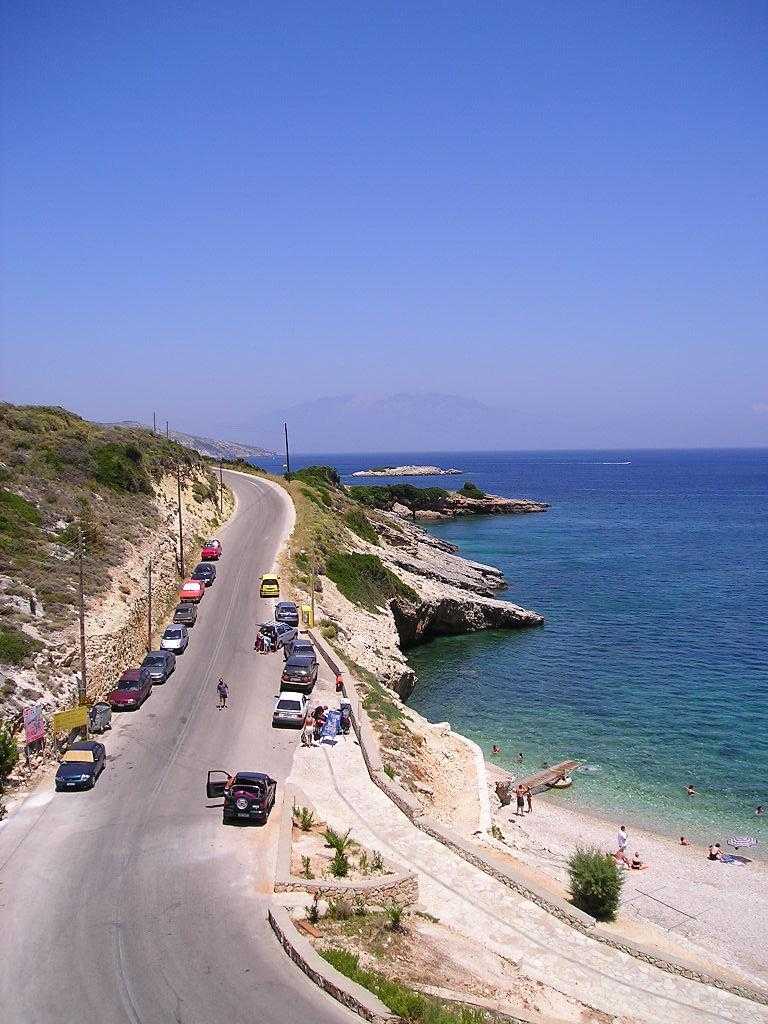
Renting a car is the best way to explore this beautiful Ionian island. Zakynthos has its finest sights scattered across the hills and coasts, and these spots are hard to reach by bus. Hire cars, jeeps, quad bikes, scooters and motorbikes are widely available at the airport, in the capital and in the main resorts. A car gives you the freedom to reach the shipwreck viewpoint, the mountain villages of the northwest, the Vasilikos beaches and the southern capes at your own pace. Plan every step of your trip with My Greece Tours.
The island is fairly small, so drives are short. The roads into the hills are narrow, steep and winding, and care is needed. Drivers need a valid licence and are usually asked to be over a certain age. Public buses link the capital with the main resorts but run less often to remote spots. Taxis and organised tours fill the gaps. The sections below cover everything you need to know. Renting a car opens up the whole island beyond the beaches. Read more in our Zakynthos travel guide.
Why Is Renting a Car the Best Way to Explore Zakynthos?
Renting a car is the best way to explore Zakynthos because the finest sights are scattered across the hills and coasts and are hard to reach by bus. A car gives the freedom to travel at your own pace.
The freedom to explore Zakynthos at your own pace is what makes renting a car so worthwhile. The island may be fairly small, meaning drives are short, yet the rewards are immense. Travellers can head straight to the shipwreck viewpoint in the morning, then spend the afternoon among the mountain villages of the northwest. There is no need to wait for buses or rely on timetables that run less often to remote spots. A hire car puts every cape, cove and hamlet within easy reach. Families particularly appreciate the flexibility of stopping wherever they like, for a quick swim, a photograph, or a long lunch at a roadside taverna.
The whole island opens up beyond the resorts, revealing the rugged interior and hidden corners that package-holiday visitors simply never see.
A car lets you reach places that public transport simply cannot reach. The Vasilikos beaches lie on a peninsula where bus services are infrequent, and the southern capes around Keri village are even harder to access without your own wheels. By driving yourself, you can set off early to beat the crowds and stay late to watch the sunset. The roads that lead to these beautiful stretches of coast pass through olive groves and pine forests, turning each drive into part of the adventure. Drivers carrying beach gear, towels, picnics and children find that a car boot is invaluable. The comfort of air conditioning on hot summer days should not be underestimated either.
Every journey becomes effortless and enjoyable with the right vehicle at your disposal.
Zakynthos measures only about forty kilometres from north to south, so no drive on the island lasts long. A hire car lets a family see the shipwreck viewpoint, the Blue Caves and a mountain village in one day. Buses skip most of the west coast, where the finest views and quietest coves sit well off the main routes. Drivers can chase the sunset at Keri lighthouse, then eat dinner back on the east coast the same evening. The freedom to change plans with the weather is worth a great deal on a summer trip. Beach gear, a cool box and tired children all fit easily into a car boot for the day.
Roadside tavernas and hidden viewpoints reward those who leave the resort strip behind and simply drive.
There are no toll roads on Zakynthos, so a day of driving costs little beyond fuel and parking. Road signs appear in both Greek and English, which helps first-time visitors follow the main routes. An economy car handles the island well and sips less fuel on the climbs into the hills. Distances between the big sights stay short, so a single tank often covers several days of touring. Guests can pause at a village bakery, a honey stall or a viewpoint whenever the mood takes them. Public buses cannot match this freedom, since they run set routes on a fixed timetable.
For most visitors the modest daily cost of a car buys the fullest possible view of the island. A quick price check across a couple of firms often saves money over a week.
Where Can You Hire a Vehicle on Zakynthos?
Hire cars, jeeps, quad bikes, scooters and motorbikes are widely available at the airport, in the capital and in the main resorts. Visitors will find rental desks and offices offering vehicles of every type across the island.
Arriving at Zakynthos airport puts travellers within steps of rental desks. Most major rental companies operate here, alongside local firms offering competitive daily rates. Booking in advance online is strongly recommended during the peak summer season, ensuring the vehicle of your choice is ready and waiting on arrival. The capital, Zakynthos Town, has an equally good selection of rental offices lining the busy harbour front. Picking up a car in town particularly suits travellers arriving by ferry from the mainland. The main holiday resorts, including Laganas, Tsilivi and Argassi, all have rental outlets within easy walking distance of hotels and self-catering apartments. This means visitors can collect a vehicle without straying far from their accommodation.
Hotel delivery is offered by local companies, usually at no extra charge.
Quad bikes and scooters are popular alternatives to cars, especially among younger visitors keen to feel the warm sea breeze on coastal roads. Jeeps are another favourite choice for tackling the rougher tracks that lead to Navagio Beach and the wilder corners of the island. Motorbikes offer a thrilling way to navigate the winding hill roads. Each vehicle type comes with its own insurance considerations, so reading the rental terms carefully before signing is absolutely essential. Helmets are compulsory for two-wheel riders, and protective gear is always provided by reputable rental firms. Travellers should inspect their vehicle thoroughly for existing damage, photographing any scratches and dents before driving away.
Taking these simple precautions avoids disputes at the end of the hire period and ensures a smooth, stress-free holiday experience.
Rental firms cluster at the airport, in the capital and across the main resorts of Laganas, Tsilivi and Argassi. Booking online before arrival is wise in July and August, when demand strips the counters of spare cars. Local companies often deliver a car to a hotel or the ferry port at no extra charge. Ferry arrivals from Kyllini find plenty of desks along the harbour front in the capital. Comparing a couple of firms on price and cover usually turns up a fair daily rate. Reading online reviews helps steer guests toward firms with clear terms and well-kept vehicles. A short walk from most resort hotels leads to at least one rental outlet.
Many firms list their fleet and daily rates online, so a booking takes only a few minutes.
Renters need a full driving licence, a passport and a credit card for the deposit at pickup. Most firms set the minimum age between twenty-one and twenty-three and cap it around seventy. Drivers under twenty-five often pay a young-driver surcharge on top of the daily rate. A licence from outside the European Union should be paired with an international driving permit. The card deposit is held against damage and released once the car returns in good order. Photographing the car from every side before driving off records any marks already there. Keeping these documents together makes the pickup quick and avoids a hold-up at the desk.
A clear photo of the fuel gauge and mileage at pickup rounds off a careful record.
What Are the Roads Like on the Island?
The island is fairly small, so drives are short. The roads into the hills are narrow, steep and winding, and care is needed. The coastal roads are generally better surfaced and wider, allowing easier progress between resorts.
Driving in the northwest of the island requires particular attention from visitors. The roads here cling to dramatic cliffsides and wind through tiny mountain hamlets like Volimes, where the tarmac often gives way to gravel and loose dirt. Sheep and goats wander freely across the lanes, adding an element of unpredictability to every journey. Signposting can be inconsistent, so downloading offline maps on your phone before heading out is wise. Locals drive confidently and at speed on these familiar roads, so pulling over to let faster vehicles pass is both courteous and safe.
First-time visitors should avoid driving these mountain routes after dark, when the lack of street lighting makes the sharp bends and steep drops genuinely hazardous. Taking it slowly and staying alert turns these challenging roads into an unforgettable scenic experience.
The main coastal road that rings the island offers a far more relaxed driving experience. Connecting the bustling resorts with the quieter stretches of coast, this route is well maintained and clearly signposted. Petrol stations are found in and around the main towns, though they become noticeably scarcer in the mountainous interior. Filling the tank before a long drive into remote areas is a sensible precaution. Speed limits are posted in kilometres per hour and are enforced by occasional police checkpoints. Parking in resort towns can be tight during the high season, so arriving early at popular destinations helps secure a spot. Blue zones indicate paid parking, while white zones are free of charge.
Following these local conventions keeps driving straightforward and penalty-free throughout your stay.
Zakynthos has few traffic lights and light road markings, so drivers rely on care and common sense. Local drivers know the roads well and move at a brisk pace on the familiar bends. Pulling aside to let a faster car pass is both polite and safer on the narrow lanes. Goats and sheep sometimes stray onto the mountain roads, so a steady speed pays off. Offline maps loaded before a trip help where signposting thins out in the interior. The east-coast roads stay wide and smooth, while the western tracks grow rough and steep. Matching your speed to the road, rather than the map estimate, keeps every drive relaxed.
Slowing right down through the villages leaves room for children, cats and parked vans.
Petrol stations gather around the main towns and grow scarce in the mountainous interior. Many close on Sundays and keep shorter hours, so filling up before a long drive is wise. Blue-zone kerbs mark paid parking in the resorts, while white zones are free of charge. Spaces fill fast at popular beaches, so an early start secures a spot near the sand. Speed limits are posted in kilometres per hour and checked by the occasional police patrol. A small cash reserve covers parking, fuel and a village taverna where cards are not taken. These simple habits keep a self-drive trip smooth and free of fines.
Carrying a spare bottle of water and a phone charger makes any longer drive easier.
What Do You Need to Drive on Zakynthos?
Drivers need a valid licence and are usually asked to be over a certain age. An international driving permit may be required depending on the country that issued your licence, so checking this requirement in advance is always advisable.
Carrying your driving licence at all times is a strict legal requirement on Greek roads. The minimum age for hiring a car on Zakynthos typically ranges from twenty-one to twenty-three, depending on the rental company’s individual policy. Drivers under twenty-five often face an additional young-driver surcharge, added to the standard daily rate. An international driving permit is necessary for licences issued outside the European Union, and presenting both documents together at the rental desk is mandatory. Driving on the right-hand side of the road follows Greek law, and headlights must be switched on during daylight hours on all rural roads. Wearing a seatbelt is compulsory for every passenger, front and rear.
Children under ten are not permitted to sit in the front passenger seat under any circumstances.
Insurance is a critical part of any car rental agreement on Zakynthos. Basic third-party cover is included as standard, yet fully comprehensive insurance gives far greater peace of mind on narrow, winding roads. Checking exactly what the policy covers before signing the rental agreement prevents unwelcome surprises later. Excess waiver options reduce the deductible amount in the event of damage, and these are worth considering given the rough surfaces on rural tracks. Fuel policies vary between companies, with most operating a full-to-full arrangement. Returning the car with less fuel than agreed incurs hefty refuelling charges, so filling up near the drop-off point saves money.
Keeping the rental agreement and emergency contact number in the car ensures help is always at hand should a breakdown occur during your trip.
Greek law puts traffic on the right, and seatbelts are compulsory for every passenger. Headlights should stay on along rural roads, even during the bright daylight hours. Children under ten may not ride in the front passenger seat under any circumstances. Using a hand-held phone at the wheel is banned and carries an on-the-spot fine. The drink-drive limit is low, so a designated driver is the safe choice on a night out. A reflective jacket and a warning triangle should sit in the car for a breakdown. Following these basic rules keeps a hire-car holiday legal and calm from start to finish. A short read of the local rules before setting off saves confusion at a junction.
Keeping to the posted limits also protects the deposit from any fine passed on by the firm.
Insurance sits at the heart of every rental agreement on the island. Basic third-party cover comes as standard, while a fuller policy adds real peace of mind. An excess-waiver option lowers the amount a driver pays if the car is scratched or dented. Rough rural tracks make tyres and underbody the most common points of minor damage. Most firms run a full-to-full fuel policy, so the car returns with a brimmed tank. Returning it short of fuel triggers a steep refuelling charge at the desk. Keeping the agreement and the emergency number in the glovebox means help is always close. Noting the drop-off time and place avoids a late-return charge at the end of the hire.
A quick call to the firm settles any question about cover before a longer mountain trip.
How Else Can You Get Around Without a Car?
Public buses link the capital with the main resorts but run less often to remote spots. Taxis and organised tours fill the gaps, offering reliable alternatives for reaching destinations that the regular bus network does not serve.
The public bus network on Zakynthos connects the capital with popular resort towns along the eastern and southern coasts. Buses depart from a central terminus and run at regular intervals throughout the day during the summer season. Fares are inexpensive and tickets can be purchased directly from the driver on boarding. The frequency drops significantly in the evening and during the winter months, making late-night returns from resort restaurants difficult without pre-booked transport. For journeys to the island’s more remote attractions, such as the mountain villages and hidden coves along the western coast, the bus network offers no service at all.
Travellers relying solely on public transport will miss out on the very sights that make Zakynthos such a memorable and rewarding island to explore.
Taxis are readily available at ranks in the capital, at the airport and outside larger hotels. They operate on fixed tariffs for popular routes, though agreeing the fare before starting the journey avoids misunderstandings. Taxis are practical for single trips, yet costs mount quickly for a full day of sightseeing. Organised coach and boat tours provide another popular alternative, picking up visitors directly from their hotels and transporting them to headline attractions like Zakynthos beaches and the famous shipwreck. These tours follow set itineraries and offer little flexibility, yet they are stress-free and include the services of a knowledgeable guide.
Travellers on a tight budget or those preferring not to drive find these tours a convenient compromise between independence and total reliance on public transport options.
The KTEL bus network links the capital with the eastern and southern resorts at a low fare. Tickets are bought from the driver, and buses leave from the central terminus through the day. Services thin out in the evening and shrink further outside the summer season. Late returns from a resort restaurant are hard without a taxi or a pre-booked ride. The western villages and hidden coves sit beyond the reach of any scheduled bus. Guests without a car see the resorts well but miss the wilder half of the island. For a car-free trip, pairing buses with the odd taxi covers the main sights.
A printed or saved timetable helps, since the posted times can change through the season.
Scooters and quad bikes suit confident riders who want to slip through tight lanes and park with ease. A helmet is compulsory, and reputable firms hand one over with every two-wheeler. These smaller vehicles reach some beach tracks that a car struggles to manage. Organised coach and boat tours offer a hands-off way to see the headline sights. They collect guests from the hotel and follow a set route to the shipwreck and the caves. A guide adds background, though the fixed timetable leaves little room to linger. Choosing between these options comes down to how much freedom a visitor wants each day. Riders should still check the two-wheeler over for damage exactly as they would a car.
Comparing the cost of several taxis against a day tour often makes the choice clear.
Frequently Asked Questions
Is It Worth Hiring a Car on Zakynthos?
Hiring a car on Zakynthos is absolutely worth it for anyone wanting to see beyond the immediate resort area. The island’s finest attractions, from the dramatic cliffs of the western coast to the serene Vasilikos beaches and the southern capes, are spread far and wide. Public buses link the capital with the main resorts, yet they run far less often to the remote spots where the most spectacular scenery awaits. A hire car gives the complete freedom to set your own schedule, linger at viewpoints and discover tucked-away tavernas that no tour bus visits. The island is fairly small, meaning journeys between destinations are short and manageable.
The cost of a few days’ car hire compares favourably with the cumulative price of taxis and tours. This makes it an economical choice for couples, families and groups of friends exploring together. Renting a car truly opens up the whole island beyond the beaches.
Can You Reach the Shipwreck Viewpoint by Car?
Yes, the famous shipwreck viewpoint is easily reached by car and this is undoubtedly the best way to get there. The viewpoint sits high on the cliffs above Navagio Beach, offering the iconic panoramic view that appears on postcards and travel guides worldwide. Driving to the viewpoint takes you through the mountainous northwest of the island, passing through traditional stone villages along the way. The final approach involves a short walk from the small car park to the clifftop viewing platform. Organised tour coaches also visit the viewpoint, yet they operate on rigid schedules with limited time at the site.
Arriving by car means you can visit early in the morning or late in the afternoon to avoid the peak crowds that gather around midday. The drive itself showcases the rugged beauty of the island’s interior, with sweeping views across the Ionian Sea unfolding at every bend in the winding road.
Are the Mountain Roads on Zakynthos Dangerous?
The mountain roads on Zakynthos are not inherently dangerous, yet they do require careful driving and full concentration. These roads are narrow, steep and winding, particularly in the northwest where the terrain is at its most dramatic. Drivers accustomed to wide, straight roads may find the tight bends and sheer drops unnerving at first. Reducing speed on the approach to corners and using the horn to warn oncoming traffic is standard practice on Greek mountain roads. Locals know these routes intimately and tend to drive quickly, so pulling into a passing place to let them through is the safest approach.
Avoiding these roads after dark is strongly advised, as street lighting is virtually non-existent and the drop-offs become invisible. A confident driver with a valid licence and a sensibly sized vehicle will have no difficulty navigating these spectacular routes in daylight. The sweeping scenery more than justifies the extra caution required.
What documents do you need to rent a car on Zakynthos?
Renters need a full valid driving licence, a passport or identity card, and a credit card in the main driver name for the deposit. Drivers holding a licence from outside the European Union should also carry an international driving permit alongside the original licence. Most firms set the minimum hire age between twenty-one and twenty-three, with an upper limit around seventy, and drivers under twenty-five often pay a young-driver surcharge. The credit card holds a deposit against damage, which the firm releases once the car returns in good order. Reading the rental terms before signing shows exactly what the insurance covers and how the fuel policy works.
Photographing the car from every angle at pickup records any existing marks and prevents a dispute at drop-off. Bringing all these documents together keeps the handover quick and lets the holiday start without a wait at the desk. A quick note of the pickup and drop-off times rounds off a smooth, well-organised hire.
Is it easy to drive on the Zakynthos mountain roads?
The mountain roads of the northwest are narrow, steep and often edged with loose gravel, so they demand care from any driver. Signposting thins out among the hilltop villages, which makes an offline map on the phone a useful backup. Goats and sheep sometimes wander across the lanes, and local drivers know the bends well and travel at a brisk pace. Pulling over to let a faster car pass is both courteous and safer on these tight roads. First-time visitors should avoid the mountain routes after dark, when the lack of street lighting hides the sharp turns and steep drops.
Filling the tank before setting off matters, since petrol stations grow scarce away from the main towns and many close on Sundays. Driving slowly and staying alert turns these challenging roads into one of the finest scenic drives on the island, with sweeping views over the sea at every rise.