
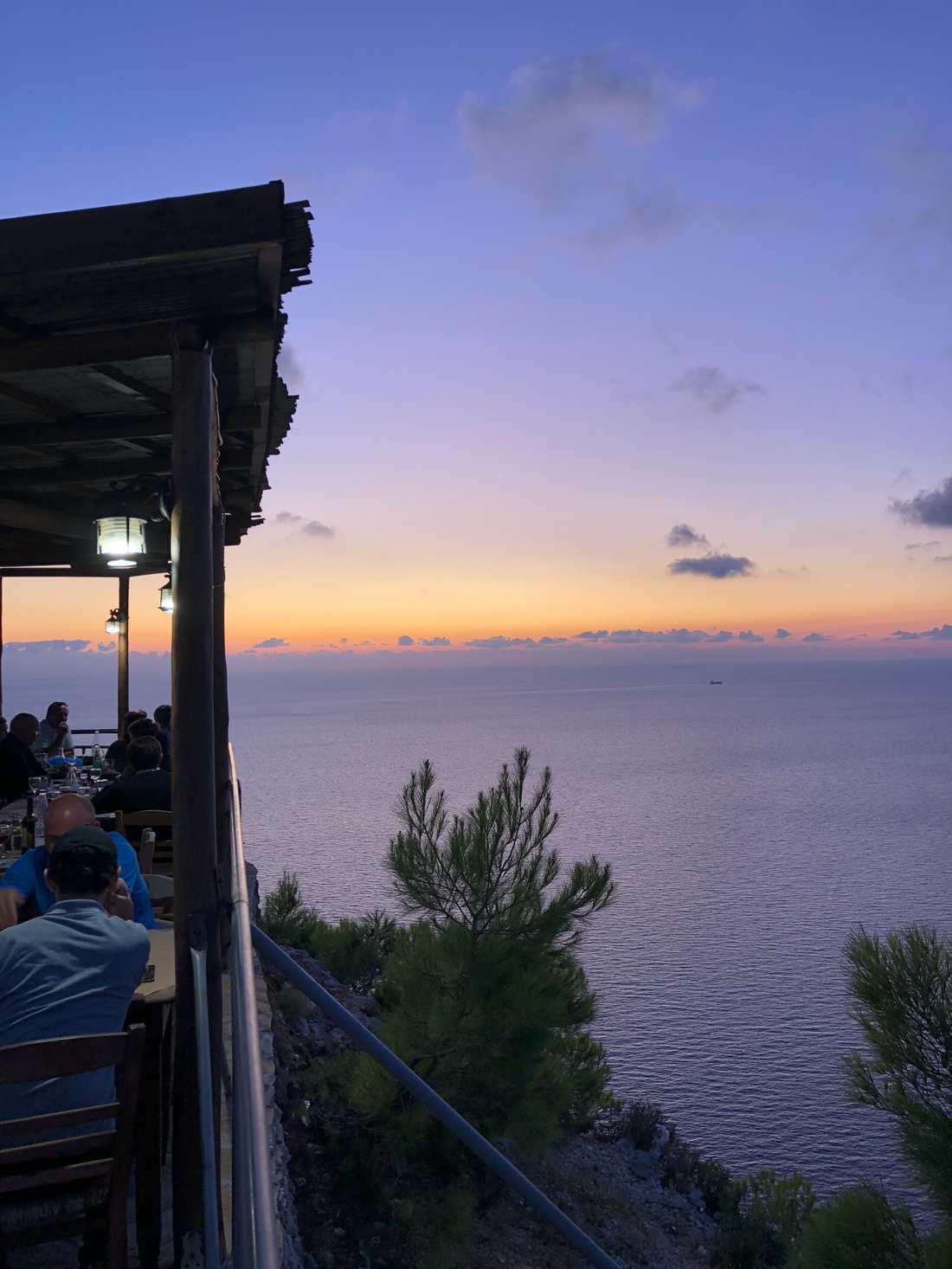
Kampi sits on the west coast of the Ionian island of Zakynthos, where sheer cliffs plunge into the open sea near the villages of Maries and Anafonitria. A huge concrete cross crowns the cliff edge, honouring islanders lost in wartime and at sea, and marking one of the finest sunset spots on the island. Ancient tombs carved into the rock date from the Mycenaean age and later Greek periods, revealing centuries of settlement. Cliff-edge tavernas serve food and drink with sweeping sea views, especially popular as the sun sinks into the water. Rolling vineyards and grazing land surround the area. Plan your visit with My Greece Tours.
Travellers seeking dramatic cliffs, deep history and the classic Zakynthos sunset will find Kampi unforgettable. The cross monument, the ancient rock tombs, and the cliff-edge tavernas each tell a piece of the island’s story. The sections below cover everything from Mycenaean burial sites to the best tavernas for golden-hour dining. Rolling vineyards and grazing land frame the approach, adding rural charm to the wild coastline. For broader planning, consult our Zakynthos travel guide and discover what else this Ionian island offers beyond its famous shores.
What makes Kampi one of the finest Zakynthos sunset viewpoints?
Kampi offers one of the finest sunset viewpoints on Zakynthos thanks to its clifftop position above the open Ionian Sea. Tavernas perched on the edge serve food and drink as the sun sinks into the water.
The clifftop position of Kampi gives visitors an uninterrupted view westward across the open Ionian Sea, and the sheer drop below the concrete cross creates a dramatic foreground for photographs. Visitors driving from the island’s more famous eastern resorts will notice the landscape change from busy strips to quiet rural roads lined with vineyards and grazing land. The tavernas clustered at the cliff edge fill quickly in the hour before sunset, so arriving early is a wise choice. Travellers combining Kampi with other western landmarks like Navagio Beach should plan their route carefully to reach the cross monument by late afternoon.
The golden light hitting the concrete cross against the deep blue water creates one of the most memorable images on the entire island, drawing photographers and romantics alike.
The sunsets at Kampi draw comparisons with the finest viewpoints across the Mediterranean, yet the experience feels distinctly Greek. The rural road leading to the cliff passes through working vineyards and grazing pastures, reminding visitors that this western coast remains agricultural at heart. Diners at the cliff-edge tavernas often order local wine and freshly grilled meat while watching the sky turn brilliant orange over the open Ionian Sea. Those exploring Zakynthos beaches along the western shore can easily add Kampi to their itinerary, since the drive from nearby coves takes only a short time. The combination of good food, sweeping sea views, and the cross monument silhouetted against the fading light makes an evening at Kampi genuinely unforgettable.
Every traveller who makes the journey leaves with a lasting memory.
The cliffs of Kampi drop straight to the Ionian from a height of around three hundred metres. The western aspect places the setting sun directly over the open sea for the watching crowd. Nothing blocks the horizon, so the sun sinks unbroken into the water each clear evening. The gulf below carries the name of the seals that once bred in its marine caves. Warm colour floods the sky and the sea in the final hour before dusk. Visitors gather on the cliff edge and along the taverna terraces to watch the light fade. The great height lifts the view above the coastline and out toward the empty western sea.
The scale of the drop and the clear horizon give Kampi its reputation as the finest sunset spot on the island.
Where is Kampi located on the west coast of Zakynthos?
Kampi sits on the west coast of the Ionian island of Zakynthos, above sheer cliffs that drop to the open sea near the villages of Maries and Anafonitria. Rolling vineyards and grazing land surround the area.
Kampi occupies a clifftop stretch on the western coast of Zakynthos, positioned above sheer cliffs that drop directly into the open Ionian Sea. The nearest villages are Maries and Anafonitria, both of which sit inland among olive groves, vineyards, and quiet country lanes. The road to Kampi winds gently through rolling rural landscape, past grazing land and working farms, giving no hint of the dramatic cliff edge that awaits just ahead. Visitors coming from the nearby Anafonitria monastery can reach the cross monument in a matter of minutes by car along a quiet, well-marked route.
The contrast between the peaceful agricultural interior and the wild coastline makes the approach to Kampi feel like a journey between two different worlds on this compact Ionian island.
The western coast of Zakynthos differs sharply from the busier eastern and southern shores visited by package tourists. Instead of sandy strips backed by hotels, the west presents towering limestone cliffs, hidden coves, and tiny mountain villages where life moves at a wonderfully slow pace. Kampi captures this western character perfectly, combining agricultural tranquility with sudden, breathtaking sea views that stop visitors in their tracks. Drivers navigating the winding coastal roads should take care, especially in the late afternoon when tour buses and rental scooters share the narrow lanes heading toward the sunset viewpoint.
The reward at the end of the road is a clifftop platform where the cross stands against the open sky and the Ionian Sea stretches endlessly to the horizon. This is the Zakynthos that exists beyond the familiar postcards.
Kampi sits in the hills of the northwest above the western coast of the island. A winding road climbs from the lower villages through olive groves and rough pasture. Sharp bends mark the final approach, so a careful pace suits the mountain drive. The village looks out over the bay of Schiza and the open Ionian beyond. The remote setting keeps the hamlet small and quiet away from the coastal resorts. A short walk from the parking area leads to the cliff edge and the cross above it. The route rewards drivers with wide views across the interior of the island on the way up.
The height and the western exposure make the village a natural balcony over the sea and the distant horizon.
What is the story behind the concrete cross monument?
A huge concrete cross stands on the cliff edge at Kampi, raised as a monument to islanders lost in wartime and at sea. It marks the spot where visitors gather to watch the sun set.
The huge concrete cross at Kampi was raised as a memorial to islanders lost in wartime and at sea, two forces that have shaped Zakynthos deeply over the centuries. Standing at the very edge of the cliff, the monument commands a view of the open Ionian Sea that stretches toward the horizon without interruption. Local families come here to pay respects, and visitors pause beneath the cross to reflect on the lives commemorated by this stark structure. The cross also serves a practical purpose for travellers. It marks the precise spot where the sunset view is finest, making it a natural gathering point in the hour before dusk.
The simplicity of the design gives the monument a quiet dignity that suits the wild surroundings perfectly.
Photographers naturally gravitate toward the cross at Kampi for its visual power against the ever-changing sky. The monument’s pale concrete glows warm gold in the last minutes before the sun disappears below the water. Its silhouette becomes razor-sharp against the vivid orange and deep purple tones that follow. The cliff edge drops away sheer on three sides, creating a powerful sense of suspension between solid land and open sea that heightens the emotional weight of the memorial. Tavernas sit just behind the cross, allowing diners to watch the light shift over the monument while enjoying a leisurely meal or a glass of local wine.
Few monuments on the Ionian islands combine remembrance, natural beauty, and communal gathering so effectively in one unforgettable location.
A tall concrete cross stands on the mountain of Schiza above the traditional village of Kampi. The monument honours the lives lost during the Greek civil war and the years of the Second World War. The cross rises on the high ground where the view stretches far across the sea. Its pale form catches the last light of the setting sun above the cliffs. The memorial gives the site a sombre meaning beneath its natural beauty. Visitors climb the short path to stand beside the cross and take in the outlook. The monument has become a landmark that marks the highest point of the village skyline.
The cross ties the peaceful cliff-top view to a harder chapter in the history of the island and the wider nation.
How old are the ancient rock tombs at Kampi?
Ancient tombs cut into the rock near Kampi date from the Mycenaean age and later Greek periods. These carved burial chambers hint at long settlement on this western coast and reveal the area’s deep historical significance.
The tombs cut into the rock near Kampi date from the Mycenaean age and later Greek periods. They rank among the oldest evidence of human settlement in the western part of Zakynthos. Archaeologists have identified these carved chambers as burial sites, hewn directly from the limestone that forms the clifftop plateau. The presence of tombs from successive ages suggests that people lived and farmed here continuously over the centuries. They were drawn by the fertile land and the defensive advantage of the high cliff edge. Walking among these ancient cuts in the rock, visitors can see the tool marks and the careful shaping of each chamber entrance.
The tombs add a profound layer of historical depth to Kampi that transforms a simple sunset stop into something far more compelling.
Visitors often miss the tombs entirely, since they lie away from the main sunset viewpoint and lack any signage or formal paths. This quiet neglect gives the site an untouched quality that contrasts sharply with the better-known landmarks on the island. Travellers interested in ancient history should ask at the local tavernas for directions to the nearest visible chambers, where the rectangular cuts in the limestone rock face are clearly visible. The Mycenaean origins connect Kampi to a wider network of Bronze Age settlements across the Ionian Sea, linking this clifftop to a civilization that profoundly shaped the eastern Mediterranean.
Standing beside tombs that have survived millennia of wind and weather, visitors gain a truly humbling perspective on the human impulse to mark this dramatic headland with permanent monuments.
Ancient rock-cut tombs sit near the cliffs of Kampi and reach back into the distant past of the island. The graves were carved directly into the soft stone of the headland by early inhabitants. Their presence shows that people valued this high, sea-facing ground long before the modern village grew. The tombs lie close to the paths that visitors follow toward the cliff edge and the cross. Weathering has smoothed the cut stone over the long centuries of exposure. The site links the sweeping view to the deep human history of the western coast. Careful walkers can spot the hollows in the rock as they cross the headland.
The tombs add a layer of ancient meaning to a place already known for its light and its height above the sea.
Which tavernas serve food and drink on the cliff edge at Kampi?
Tavernas perched directly on the cliff edge at Kampi serve food and drink with sweeping sea views. Diners especially love these spots as the sun sinks into the Ionian water, pairing local cuisine with golden-hour drama.
Cliff-edge tavernas at Kampi serve traditional Greek food and local wine with sweeping views of the Ionian Sea. Their open-air terraces fill quickly as the afternoon light softens. Menus typically feature grilled meats, fresh salads, locally produced cheese, and homemade bread, all served at a relaxed pace that encourages guests to linger over the view. The tavernas sit directly behind the concrete cross, meaning every table enjoys an unobstructed sightline to the horizon where the sun descends. Reservations are not always necessary, but arriving at least one hour before sunset guarantees a better table, particularly during the peak summer months.
Travellers who have spent the day swimming at Porto Limnionas often drive up to Kampi for an evening meal with this unforgettable backdrop.
The experience of dining at Kampi ranks among the very finest on the entire island for travellers who genuinely value atmosphere as much as the food itself. Cliff-edge tables, a pale cross silhouetted against the fading sky, and the open Ionian Sea below create a setting no eastern resort restaurant can possibly match. Visitors planning a full day on the western coast might book one of the popular Zakynthos boat tours in the morning to see the Blue Caves from the water. They can then drive inland through the vineyards to reach Kampi for a leisurely dinner.
This route captures the full range of western Zakynthos in a single rewarding day, from sea-level caves and hidden coves to dramatic clifftop views and traditional Greek taverna cooking.
Three tavernas line the cliff edge at Kampi and share the same wide view over the sea. Taverna Panorama, Taverna Cross, and Taverna Michalis each face the open horizon from their terraces. Diners take tables at the rail to watch the sun drop while they eat and drink. The kitchens serve grilled meats, salads, and familiar Greek dishes to the evening crowd. The setting rather than the menu draws visitors to these particular terraces. An arrival a couple of hours before sunset secures a seat at the edge. The tables fill fast on clear summer evenings when the light promises a strong display.
A meal at one of the three tavernas pairs simple island food with the finest sunset view on the western coast.
Frequently Asked Questions
When is the best time of year to visit Kampi for the sunset?
The ideal months to visit Kampi stretch from late spring through early autumn, when the weather stays warm and the tavernas operate at full capacity. May and June offer comfortable temperatures, clear skies, and fewer crowds at the cliff edge, making the sunset experience feel more intimate and peaceful. July and August bring the hottest weather and the largest crowds. Arriving at least one hour before sunset becomes essential to secure a good table or a prime spot near the concrete cross. September combines warm sea breezes with quieter roads, and the vineyards around Kampi take on golden autumn tones that enhance the rural approach.
October can still deliver warm afternoons, though the tavernas may reduce their hours as the tourist season winds down. Travellers should check opening times in advance during the quieter months. Rain is rare from May through September, ensuring clear sunset views on most evenings throughout the peak season.
How do you reach Kampi from Zakynthos Town?
Kampi lies on the western side of Zakynthos, roughly forty minutes by car from Zakynthos Town. The most direct route follows the main road north through the island’s interior, passing through the villages of Gaitani and Sarakinado before reaching the mountainous western region. Drivers then continue toward Anafonitria and follow the signs to Kampi, navigating narrow rural roads that wind through vineyards and olive groves. A rental car offers the greatest flexibility, allowing travellers to stop at viewpoints along the way and to time their arrival for the sunset. Scooters are another popular option, though the winding roads and occasional tour-bus traffic require confident handling.
Taxis can make the journey but need to be arranged for the return trip, since no taxis wait at the clifftop after dark. Public buses do not serve Kampi directly. The drive itself forms part of the experience, as the landscape shifts from urban coastline to rolling farmland and finally to the dramatic cliff edge above the Ionian Sea.
Is Kampi suitable for families with children?
Kampi welcomes families, and children typically respond with excitement to the dramatic clifftop setting and the huge concrete cross standing against the sky. Parents should keep young children close at the cliff edge, since the drop to the Ionian Sea is sheer and unfenced in places beyond the immediate monument area. The tavernas offer a relaxed atmosphere where families can eat together while watching the sunset, and the menus usually include simple grilled options that appeal to younger palates. The drive to Kampi passes through rolling vineyards and grazing land, which gives children a sense of the rural character of western Zakynthos.
Families combining Kampi with other island attractions should plan the visit for late afternoon, allowing time for a meal at the tavernas before the sun goes down. The open space near the cross gives children room to move safely, provided adults supervise them closely near the unfenced sections of the cliff edge.
What is the Seal Gulf below the Kampi cliffs?
The Seal Gulf is the bay that opens directly below the cliffs of Kampi on the western coast of Zakynthos. The name comes from the Mediterranean monk seals that once used the marine caves along the shoreline as breeding shelters. From the cliff edge, visitors look down onto the deep blue water of the gulf and out toward the open Ionian Sea. The great height of the headland, around three hundred metres above the water, gives a sweeping view across the whole bay. The clear horizon and the western exposure make this the setting for the famous Kampi sunset.
Boats sometimes cross the gulf during the day, and the marine caves along the coast add to the wild character of the shore. The gulf sits far from the resorts, so the water and the cliffs stay quiet and undeveloped. The combination of the height, the caves, and the open sea gives the Seal Gulf its dramatic place beneath the cliffs of Kampi.