
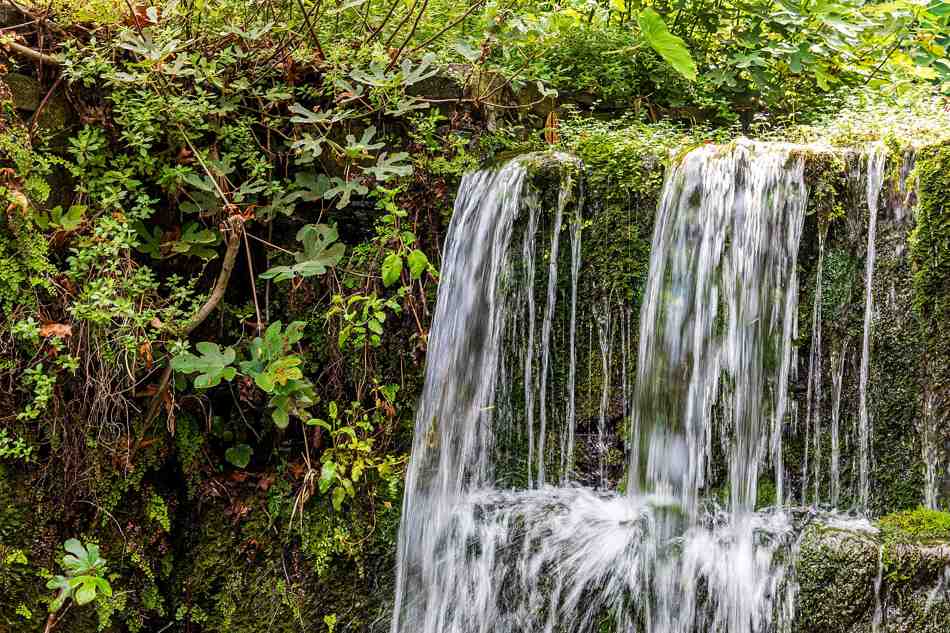
Argyroupoli rises in the green hills of Rethymno province, a village built directly over the ruins of ancient Lappa where cold spring water gushes year-round from mossy rock faces. Huge plane trees shade the lower quarter, where channels and small waterfalls feed pools beside traditional tavernas serving fresh trout and local dishes. Roman tombs carved into cliffs, Byzantine mosaics and fragments of ancient streets lie scattered around stone houses and Venetian doorways. The upper village commands wide views toward the coast, offering a cool retreat from the summer heat of the shore. Explore this layered landscape of water, history and mountain air with My Greece Tours.
Argyroupoli combines natural beauty with deep historical roots, standing where Lappa once flourished under Roman and Byzantine rule. The springs create a microclimate of shade and moisture, rare in the dry Cretan summer, while ruins testify to centuries of settlement. Stone architecture and carved doorways recall Venetian influence, and a chapel marks a Roman cemetery. The village remains quiet compared to coastal resorts, preserving a slower rhythm. The sections below cover the springs and waterfalls, the ancient city of Lappa, dining by the water, village architecture and planning your visit. For broader island context, see our Crete travel guide.
What makes the springs of Argyroupoli in Crete so distinctive?
Cold water flows constantly from rock faces in the lower village, creating channels, small waterfalls and pools shaded by enormous plane trees. Tavernas line the springs, offering dining beside the running water in a cool, green setting.
The springs emerge from multiple points in the rock, forming a network of channels that cascade over moss-covered stones and feed shallow pools. Plane trees with trunks several meters in diameter create dense canopy shade, lowering temperatures even in midsummer. The sound of flowing water fills the lower quarter, where wooden bridges cross streams and stone paths follow the watercourses. Tavernas have built terraces directly over the springs, so diners sit with their feet almost in the water. The constant flow sustains lush vegetation uncommon in the Cretan landscape, including ferns, ivy and flowering plants that thrive in the moist air.
This combination of water, shade and greenery makes Argyroupoli a natural refuge from the heat and one of the things to do in Crete for visitors seeking cooler inland environments.
The springs have supplied water for millennia, sustaining ancient Lappa and every settlement since. Local tavernas use the cold water to raise trout in stone tanks, serving the fish grilled or fried alongside traditional meze. The water temperature remains constant throughout the year, emerging from underground sources at around fifteen degrees Celsius. Visitors walk along the channels, crossing small bridges and pausing at viewpoints where waterfalls tumble into pools. The springs attract birdlife and butterflies, adding movement and color to the shaded environment. Photographers find the interplay of light filtering through leaves, water flowing over stone and the deep green of moss particularly compelling.
The site remains accessible and uncommercial, with simple paths and benches allowing quiet appreciation of the natural setting.
What remains of ancient Lappa at Argyroupoli in Crete?
Roman and Byzantine ruins scatter through the village, including rock-cut tombs in cliff faces, mosaic fragments, sections of ancient street paving and a chapel built over a Roman cemetery. These remains testify to Lappa’s importance through classical and early Christian periods.
Lappa flourished as a significant city from Hellenistic times through the Roman and Byzantine eras, controlling territory in the Rethymno hills and maintaining connections to the coast. Rock-cut tombs with carved facades appear in cliffs near the village, their chambers still visible though emptied long ago. Mosaic floors with geometric patterns lie exposed in open areas, fragments of larger buildings whose walls have vanished. A section of ancient street paving survives, its stones worn smooth by centuries of foot traffic. The chapel of the Five Virgins stands directly over a Roman cemetery, incorporating ancient materials and marking continuity of sacred use.
Inscriptions and architectural fragments appear in village walls, reused by later builders who quarried the ancient city for ready-cut stone.
Lappa sided with Rome during the conquest of Crete and received favored status, growing prosperous through trade and agriculture. The city minted its own coins and built public buildings, temples and an aqueduct system that tapped the springs. Byzantine occupation continued the settlement, adding Christian basilicas whose foundations occasionally emerge during construction work. The village name Argyroupoli, meaning silver city, may reference ancient wealth or later Venetian coinage. Visitors walking through Rethymno province encounter this layered history repeatedly, but Argyroupoli preserves an unusually dense concentration of visible remains integrated into the living village. Archaeologists continue to identify structures, though systematic excavation remains limited and most ruins lie unprotected among houses and fields.
Where should visitors eat in Argyroupoli?
Tavernas cluster around the springs in the lower village, offering tables beside flowing water under plane trees. Menus feature fresh trout raised in spring-fed tanks, alongside lamb, dakos, local cheeses and seasonal vegetables prepared in traditional Cretan style.
The tavernas at Argyroupoli capitalize on their unique setting, placing dining terraces directly over channels and pools where water flows constantly. Fresh trout appears on every menu, grilled whole with lemon and olive oil or fried and served with garlic sauce. The fish come from stone tanks fed by spring water, visible to diners who can watch them swimming before ordering. Beyond trout, tavernas serve the full range of Cretan food: slow-cooked lamb or goat, stuffed vine leaves, wild greens dressed with oil and lemon, thick yogurt with honey, and dakos topped with tomato and mizithra cheese. The cool environment allows comfortable outdoor dining even at midday in summer, when coastal tavernas become uncomfortably hot.
Proprietors maintain a relaxed pace, expecting diners to linger over multiple courses and conversation. The sound of water, shade from the plane trees and absence of traffic create a peaceful atmosphere distinct from busier tourist restaurants. Prices remain reasonable compared to coastal resorts, reflecting the village’s primarily local clientele. Visitors often combine a meal with a walk along the spring channels and exploration of nearby ruins. The tavernas stay open year-round, serving locals in winter when tourist numbers drop. Reservations are rarely necessary except on summer weekends when Greek families drive up from the coast. The combination of setting, fresh ingredients and traditional preparation makes dining at the springs a highlight of visiting the village.
What characterizes the architecture of upper Argyroupoli?
Stone houses with carved Venetian doorways line narrow streets in the upper village, where wide views extend toward the coast. Traditional construction uses local stone, wooden balconies and tile roofs, preserving the character of a mountain settlement from earlier centuries.
The upper village climbs the hillside above the springs, its houses built from the same golden limestone that outcrops throughout the area. Venetian influence appears in ornate doorway surrounds carved with family crests, dates and decorative motifs, marking the homes of prosperous families during the period of Venetian rule. Narrow lanes wind between buildings, occasionally opening onto small squares with kafeneions where older residents gather. Wooden balconies project from upper floors, their railings often painted in traditional blue or green. Tile roofs replace the flat terraces common in lowland Crete, adapted to higher rainfall in the hills.
The village has avoided modern concrete construction in its core, maintaining architectural coherence that makes it one of the hidden gems in Crete for those interested in traditional settlement patterns.
Views from the upper village extend north across olive groves and lower hills toward the Cretan Sea, visible as a blue line on clear days. The elevation provides cooling breezes and slightly lower temperatures than the coast, contributing to the village’s appeal as a summer retreat. Stone fountains fed by the springs appear at intervals, their basins carved from single blocks and their spouts shaped as animal heads. Churches dot the village, their bell towers marking the skyline and their interiors preserving icons and frescoes from Byzantine and post-Byzantine periods. Restoration work proceeds slowly, with individual owners repairing houses using traditional materials and techniques.
The village remains inhabited year-round, its population a mix of longtime residents and newcomers attracted by the setting and slower pace.
How should travelers plan a visit to Argyroupoli?
Argyroupoli lies twenty-five kilometers southwest of Rethymno town, reachable by car in thirty minutes via paved roads. Allocate two to three hours to walk the springs, see ruins, eat at a taverna and explore the upper village at a relaxed pace.
The village sits inland from the coastal highway, accessed by a well-maintained road that climbs through olive groves and passes smaller settlements. Public buses run from Rethymno several times daily, though a car provides flexibility to combine Argyroupoli with nearby attractions like Lake Kournas or the Kourtaliotiko Gorge. Parking is available at the lower village near the springs and in the upper village near the main square. The site requires modest walking on uneven stone paths and steps, manageable for most fitness levels but challenging for those with mobility limitations. Comfortable walking shoes are essential, and the paths can be slippery near the water.
The best time to visit Crete for Argyroupoli is spring or autumn, when temperatures are mild and the vegetation is lushest, though the springs provide cooling even in summer.
Visitors typically arrive late morning, walk the spring area, have lunch at a taverna, then explore the upper village and ruins in the afternoon. The village lacks hotels, functioning as a day-trip destination rather than an overnight stop. Bring a light jacket even in summer, as the shade and water create noticeably cooler microclimates. Photography is unrestricted, and the combination of water, greenery and stone provides compelling subjects throughout the day. The village sees modest tourist numbers compared to major archaeological sites, maintaining a quiet atmosphere. Combining Argyroupoli with Rethymno town makes an efficient day, allowing morning exploration of the old town and afternoon retreat to the cool springs.
Local guides can point out specific ruins and explain the history of Lappa, though the site is equally rewarding for independent exploration.
Frequently Asked Questions
Is Argyroupoli suitable for families with children?
Argyroupoli works well for families, offering natural features that engage children without requiring extensive walking or specialized knowledge. Kids enjoy watching the springs, crossing the small bridges over channels, and spotting fish in the clear pools. The tavernas welcome families and serve simple grilled dishes alongside traditional fare. The water is shallow in most accessible areas, though parents should supervise young children near the channels and pools. The ruins scattered through the village provide tangible history that older children can explore, and the carved tombs in cliff faces often capture their imagination. The village lacks playgrounds or organized activities, but the natural environment and freedom to roam along the spring paths offer unstructured play.
The cool shade makes midday visits comfortable when beaches become too hot. The drive from coastal resorts takes under an hour from most Rethymno area accommodations, making Argyroupoli an easy half-day excursion that breaks up beach time with a different landscape and pace.
Can visitors swim in the springs at Argyroupoli?
Swimming is not the primary activity at Argyroupoli, as the springs form shallow channels and small pools rather than deep swimming holes. The water is very cold year-round, emerging from underground at around fifteen degrees Celsius, which most people find too chilly for extended immersion. Visitors do wade in the shallow areas, cool their feet in the pools, and occasionally splash in the larger basins, particularly children who are less sensitive to the temperature. The tavernas and local authorities discourage swimming in areas near dining terraces or where water flows into fish-raising tanks.
The site functions more as a scenic and historical destination than a swimming spot, with the water appreciated for its visual and cooling presence rather than as a place to bathe. Those seeking swimming should head to the coast or to Lake Kournas, which lies a short drive away and offers warmer, deeper water suitable for swimming. The springs are best enjoyed by walking alongside them, listening to their sound, and dining in their cooling presence.
What other sites combine well with Argyroupoli in a day trip?
Argyroupoli pairs naturally with Rethymno town, twenty-five kilometers to the northeast, allowing morning exploration of the Venetian harbor, fortress and old town followed by an afternoon at the springs. Lake Kournas lies fifteen kilometers northwest, offering swimming in Crete’s only natural freshwater lake surrounded by hills. The Kourtaliotiko Gorge cuts through the landscape to the south, with a scenic drive, a monastery perched on the cliffs, and walking trails for those with time and energy. The beach at Episkopi stretches along the coast north of Argyroupoli, providing a contrast to the mountain village with sand, shallow water and tavernas. Combining these sites creates a varied day that samples coast, mountains, history and nature within a compact area.
Visitors based in Rethymno or nearby resorts can easily reach all these destinations by car, with driving times under thirty minutes between points. The combination works particularly well in summer when the cool springs offer midday relief before returning to the beach in late afternoon.