
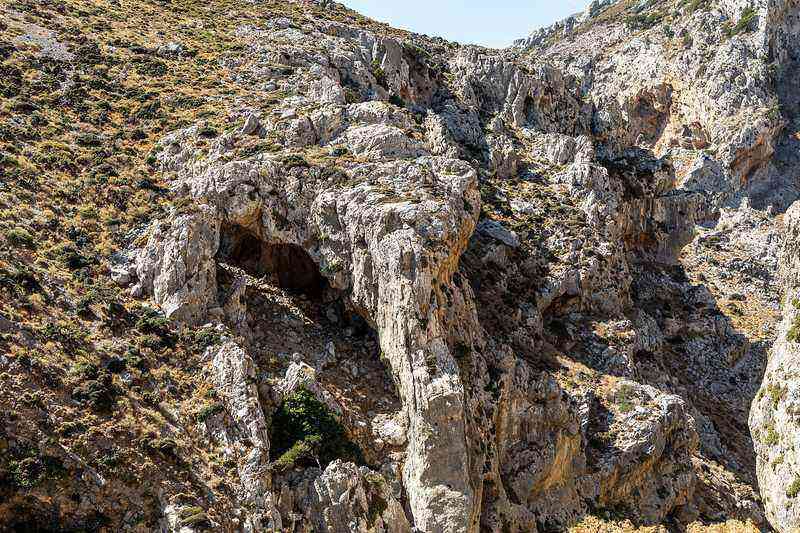
Kourtaliotiko Gorge slices through the limestone mountains of southern Crete, carving a dramatic passage between the Rethymno highlands and the Libyan Sea. Sheer cliffs rise hundreds of metres on either side of the narrow road that threads this ravine, while the Megalopotamos river rushes far below. Griffon vultures circle overhead, nesting on the towering rock faces. A stepped path descends to the chapel of Agios Nikolaos and a series of waterfalls that tumble into crystal pools. The gorge takes its name from the distinctive clattering echo the wind creates as it funnels through the rocks. Discover this natural wonder with My Greece Tours.
The gorge connects the mountain villages of the interior with the palm-fringed river mouth at Preveli beach, making it a natural corridor between two distinct landscapes. Visitors often combine a drive through the ravine with a swim at Preveli or a stop in traditional villages along the route. The sections below cover the geology, wildlife, access routes, and practical tips for experiencing this spectacular canyon. For broader context on the island’s attractions, consult our Crete travel guide to plan your southern Crete itinerary.
What makes Kourtaliotiko Gorge a unique landscape in Crete?
The gorge showcases vertical limestone cliffs carved over millennia by the Megalopotamos river. Sheer walls tower beside the winding road, creating a narrow corridor where wind produces distinctive clattering sounds through the rock formations, giving the canyon its name.
The Kourtaliotiko Gorge represents one of the most dramatic geological features in the Rethymno region, where the Megalopotamos river has cut a deep channel through the limestone plateau over countless centuries. The road that winds through the ravine clings to the cliff face, offering drivers and passengers breathtaking views of the vertical rock walls that rise on both sides. The narrowness of the passage amplifies the sound of wind rushing through gaps and fissures in the stone, creating the characteristic clattering or rattling noise that locals have long associated with this place. This acoustic phenomenon gave the gorge its name and adds an auditory dimension to the visual spectacle.
The river far below continues its erosive work, fed by mountain springs and winter rains that swell its flow and nourish the vegetation clinging to the canyon floor.
Griffon vultures and other raptors have made the inaccessible cliff ledges their nesting sites, and visitors who pause along the roadside often spot these magnificent birds soaring on thermal currents above the gorge. The combination of towering geology, rushing water, and abundant birdlife makes this canyon a highlight among things to do in Crete for nature enthusiasts. The gorge also serves as a natural gateway between the elevated interior and the coastal zone, channeling both the river and the road down toward the Libyan Sea. Vegetation changes noticeably as the elevation drops, with hardy shrubs and wildflowers giving way to lusher growth near the waterfalls and pools at the bottom.
The entire ravine functions as a living laboratory of erosion, ecology, and the interplay between rock and water.
How do you access the waterfalls and Agios Nikolaos chapel?
A stepped path descends from a parking area along the main road down to the chapel of Agios Nikolaos and the waterfalls below. The trail involves steep sections and uneven stone steps, requiring sturdy footwear and reasonable fitness for the descent and return climb.
The trailhead to the waterfalls is marked by a small parking area on the roadside partway through the gorge, where a sign indicates the path to Agios Nikolaos. The descent begins with a series of stone steps that zigzag down the cliff face, offering increasingly dramatic views of the canyon walls and the ribbon of water below. The path can be slippery, especially after rain or near the spray zone of the falls, so proper hiking shoes with good grip are essential. The little whitewashed chapel of Agios Nikolaos sits on a ledge partway down, a traditional place of worship that has served travelers and locals for generations.
Beyond the chapel, the trail continues to the riverbed, where a chain of waterfalls cascades over rock shelves into clear, cold pools.
The round trip takes roughly forty-five minutes to an hour, depending on how long you linger at the falls and whether you venture into the pools for a quick dip. The water remains refreshingly cool even in summer, fed by mountain springs and shaded by the high canyon walls. Visitors should carry water, wear sun protection for the exposed sections of the descent, and take care on the return climb, which can be strenuous in the midday heat. The experience of standing at the base of the falls, surrounded by vertical cliffs and the sound of rushing water, ranks among the most memorable moments of Rethymno exploration.
The chapel itself is often open, and its simple interior provides a cool respite and a glimpse into local religious tradition.
What wildlife inhabits the cliffs of Kourtaliotiko Gorge in Crete?
Griffon vultures nest on the inaccessible ledges of the gorge walls, and other raptors including kestrels and buzzards hunt along the canyon. The cliffs provide ideal nesting habitat, safe from ground predators and offering thermal updrafts for soaring flight.
The griffon vulture population in Kourtaliotiko Gorge forms part of a broader conservation success story across Crete, where these large scavengers have rebounded thanks to protection measures and the availability of suitable nesting sites. The sheer limestone cliffs offer ledges and crevices that are virtually unreachable by terrestrial predators, creating safe havens for nesting pairs. Vultures can often be seen circling high above the gorge, their broad wings spread wide as they ride the rising columns of warm air. Their presence indicates a healthy ecosystem, as these birds require large foraging ranges and access to carrion from pastoral activities in the surrounding countryside.
Observers with binoculars can sometimes spot the birds perched on cliff ledges or soaring in groups, their distinctive silhouettes unmistakable against the blue sky.
Smaller raptors also thrive in this environment, taking advantage of the abundant prey base of rodents, lizards, and insects that inhabit the gorge slopes and riverbanks. Kestrels hover in place, scanning the ground for movement, while buzzards patrol the canyon rim. The diversity of bird species makes the gorge a rewarding destination for birdwatchers and adds another dimension to the experience of driving or hiking through the ravine. The combination of dramatic scenery and wildlife viewing opportunities places Kourtaliotiko among the hidden gems in Crete that reward those who venture beyond the most famous archaeological sites.
The gorge ecosystem also supports a variety of plant life adapted to the rocky, sun-baked slopes, including aromatic herbs and resilient shrubs that provide food and cover for smaller animals.
How does the gorge connect to Preveli beach?
The Megalopotamos river flows through Kourtaliotiko Gorge and continues down to the sea at Preveli, where it forms a palm-lined estuary. The same road that traverses the gorge descends to the coast, making the two destinations a natural pairing for day trips.
The river that carved Kourtaliotiko Gorge does not end at the canyon’s southern mouth but continues its journey through a gentler landscape of olive groves and scattered settlements before reaching the Libyan Sea. At Preveli, the Megalopotamos spreads into a shallow delta fringed by the famous Cretan date palms, creating a lush oasis where fresh water meets salt. This dramatic transition from the stark, towering cliffs of the gorge to the tropical-looking riverbanks at the coast happens over a distance of just a handful of kilometers, showcasing the compressed ecological diversity of southern Crete. The road that threads the gorge continues downhill, winding through the final slopes before reaching the parking area above the beach.
Visitors can complete the journey in one continuous drive, experiencing the full gradient from mountain to sea.
Most travelers combine a stop in the gorge with a visit to Preveli beach, either descending the steps to the waterfalls first and then continuing to the coast, or reversing the order depending on the time of day and heat. The beach itself requires a descent down a long stairway from the clifftop parking area, and the reward is a swim in the river mouth or the sea, surrounded by palms and dramatic coastal cliffs. The combination of canyon and coast in a single excursion offers a comprehensive snapshot of the landscape variety that defines this part of Crete.
The route also passes near traditional villages where tavernas serve local specialties, allowing for a meal break between the two main attractions.
What practical tips help visitors enjoy the gorge safely?
Drive slowly through the narrow sections, watching for oncoming traffic and stopping only in designated pull-offs. Bring water, sun protection, and sturdy shoes if descending to the waterfalls. Visit early morning or late afternoon to avoid midday heat and crowds at the trailhead.
The road through Kourtaliotiko Gorge is paved and generally well-maintained, but it narrows considerably in places where the cliffs press close on both sides. Drivers should proceed with caution, especially around blind curves where oncoming vehicles may appear suddenly. Designated viewpoints and small parking areas allow safe stops for photographs and to admire the scenery without blocking traffic. The descent to the waterfalls requires preparation: carry at least one liter of water per person, wear closed-toe shoes with good traction, and apply sunscreen before starting down. The trail offers little shade, and the return climb can be taxing in the heat of midday.
Visiting in the early morning or late afternoon not only avoids the strongest sun but also increases the chances of spotting wildlife and enjoying the gorge in relative solitude.
The gorge lies roughly thirty kilometers south of the town of Spili, a convenient base for exploring the region with its famous lion-head fountains and traditional architecture. The drive from Rethymno takes about forty-five minutes, while visitors coming from Chania or Heraklion should allow additional travel time. Combining the gorge with other attractions in the area, such as Preveli beach or mountain villages, makes for a full day of exploration and ranks high on any list of hiking in Crete and natural sightseeing. Mobile phone coverage can be patchy in the depths of the canyon, so inform someone of your plans if hiking alone.
The waterfalls flow year-round but are most impressive in spring and early summer when mountain snowmelt and rainfall keep the river at its fullest.
Frequently Asked Questions
Can you swim in the pools at Kourtaliotiko Gorge?
The pools at the base of the waterfalls are accessible and swimmable, though the water remains cold throughout the year due to its mountain spring origins. The pools are shallow to moderate in depth, with rocky bottoms and clear water that invites a refreshing dip after the descent. Swimmers should exercise caution on the slippery rocks around the water’s edge and be aware that currents can be stronger during periods of high flow. The pools are not supervised, so visitors swim at their own risk and should assess conditions before entering.
The setting is idyllic, surrounded by ferns and dripping cliffs, and the experience of bathing in this natural environment is a highlight for those who make the trek down. The water temperature rarely rises above fifteen degrees Celsius, so most people opt for a quick plunge rather than an extended swim. Bring a towel and a change of clothes if you plan to get wet, and be prepared for the climb back up the trail while damp.
Is Kourtaliotiko Gorge suitable for families with children?
Driving through the gorge is suitable for all ages and offers spectacular scenery from the comfort of a vehicle, with designated pull-offs for safe stops and photo opportunities. The descent to the waterfalls and Agios Nikolaos chapel is more challenging and depends on the age and fitness of the children involved. The trail includes steep, uneven steps and sections that can be slippery, so younger children may need assistance and close supervision. Families with older children who are comfortable on mountain trails will find the hike rewarding, but those with toddlers or very young kids might prefer to admire the gorge from the roadside viewpoints instead.
The round trip to the falls takes at least forty-five minutes, and the return climb can be tiring for small legs. Carrying sufficient water, snacks, and sun protection is essential, and parents should be prepared to carry tired children on the way back up. The chapel and waterfalls themselves are fascinating for curious minds, offering opportunities to learn about geology, hydrology, and local traditions in a memorable outdoor setting.
What is the best time of year to visit Kourtaliotiko Gorge?
Spring, from late March through May, offers the most dramatic waterfalls as mountain snowmelt and seasonal rains keep the Megalopotamos river flowing strongly. Wildflowers bloom on the canyon slopes, and temperatures are comfortable for hiking without the intense heat of summer. Early summer, in June, also provides good conditions before the peak tourist season and the driest months. Autumn, particularly September and October, brings cooler weather and fewer crowds, though water flow in the falls may be reduced after the dry summer. Winter visits are possible and offer solitude, but rain can make the trail to the waterfalls slippery and potentially hazardous, and some days may be too cold for swimming in the pools.
Midsummer, in July and August, sees the most visitors and the hottest temperatures, which can make the descent to the waterfalls uncomfortable during midday hours. Early morning or late afternoon visits in summer mitigate the heat and provide better light for photography. The gorge is accessible year-round, but spring remains the optimal season for experiencing the full spectacle of water, greenery, and wildlife in this dramatic Cretan canyon.