
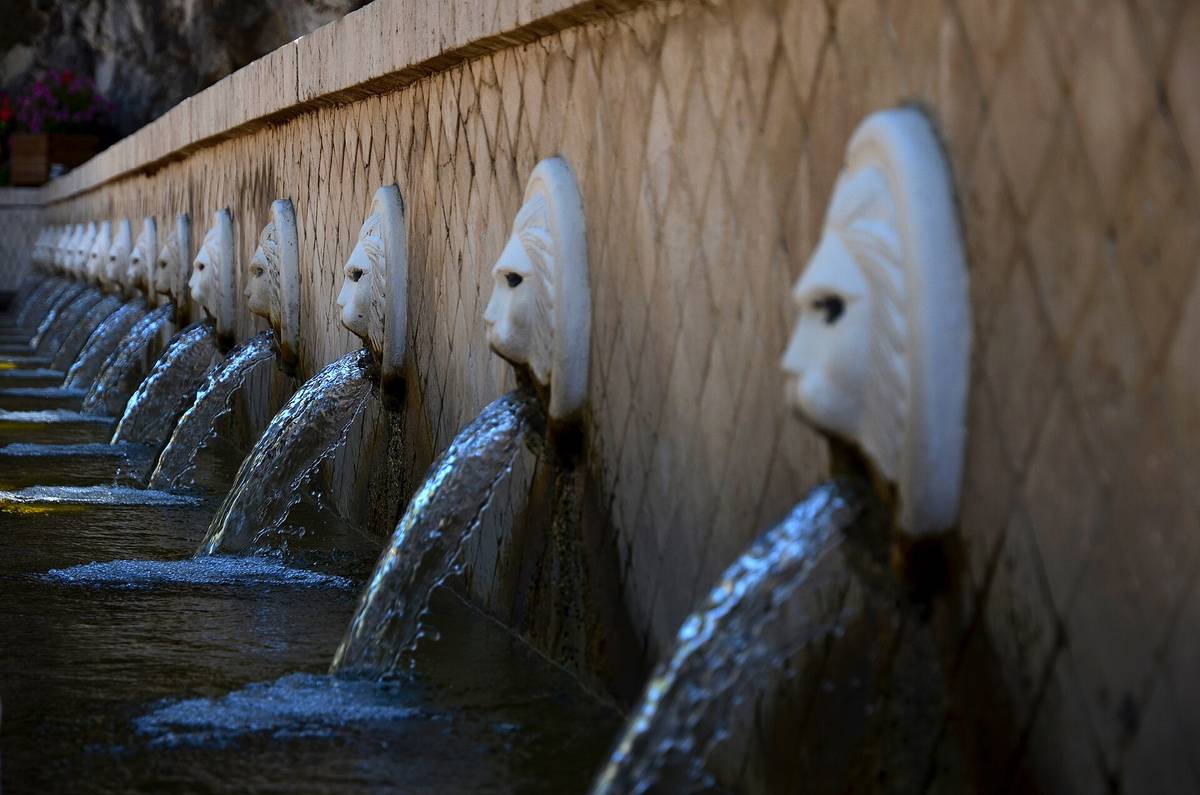
Spili sits high in the mountains of central Crete, a green oasis of plane trees, spring water and whitewashed charm on the road south from Rethymno toward the coast. The village is famous for its Venetian fountain, where nineteen carved lion heads spout cold mountain water into a long stone trough beneath the shade of the village square. Cobbled lanes wind past flower-draped houses and traditional tavernas, offering a cool retreat from the coastal heat and a glimpse of unhurried mountain life. Explore this peaceful corner of the island with My Greece Tours.
Spili makes an ideal stopping point between the north coast and the beaches of Plakias or Agia Galini, or a quiet base for exploring the Kourtaliotiko gorge and the surrounding hills. The village retains its authentic character, with local cafés, small shops and a rhythm shaped by the seasons rather than tourism. The sections below cover the history of the fountain, what to see in the village, nearby natural attractions, dining options and practical tips for your visit. For broader island context, consult our Crete travel guide.
What is the history behind Spili’s famous Venetian fountain in Crete?
The fountain was built during Venetian rule, channeling spring water through carved lion heads into a public trough. It served the village for centuries as a vital water source and social gathering point beneath the plane trees.
The long stone fountain that defines Spili today was constructed during the Venetian occupation of Crete, when engineers harnessed the abundant mountain springs to supply villages across the island. Nineteen lion heads, carved from local stone, line the fountain wall and spout cold water year-round into a communal basin. The design reflects both practical necessity and civic pride, transforming a utilitarian water source into a monumental feature of the village square. Plane trees planted alongside the fountain provide deep shade, turning the space into a natural gathering place where villagers have met, filled jugs and watered animals for generations. The fountain remains in daily use, a living piece of infrastructure that connects present-day Spili to its Venetian past.
Restoration work over the centuries has preserved the fountain’s function and form, though the exact date of its original construction remains unclear. The lion motif, a symbol of Venetian authority, appears on fountains throughout Crete and the former Venetian territories of the Mediterranean. Spili’s version stands out for its length and the number of spouts, making it one of the most photographed fountains on the island. Visitors often stop to fill bottles with the cold spring water, which flows continuously from the mountain aquifer above the village. The fountain anchors the village identity and serves as a reminder of the engineering skill that shaped mountain settlements across Rethymno province during centuries of foreign rule.
What are the main attractions and things to see in Spili village?
Beyond the fountain, Spili offers cobbled lanes, traditional houses with flower-filled balconies, small churches and quiet squares. The village itself is the attraction, inviting slow exploration on foot through its shaded streets and local tavernas.
The village spreads across a hillside, its narrow lanes paved with stone and shaded by overhanging vines and plane trees. Traditional Cretan houses, whitewashed and trimmed in blue or green, line the streets, their balconies hung with geraniums and bougainvillea. Small churches dot the village, their bells marking the hours and feast days. The central square, dominated by the fountain, hosts a handful of cafés where locals gather for coffee and conversation. Walking the lanes reveals glimpses of daily life: women tending gardens, men playing backgammon, cats dozing in doorways. The pace is unhurried, the atmosphere authentic, with tourism a supplement rather than the foundation of the local economy.
Spili lacks major museums or archaeological sites, but its appeal lies in the integrity of its village fabric and the quality of light filtering through the trees. The surrounding landscape, visible from upper streets, rolls away in folds of olive groves and cypress-studded hills. The village serves as a gateway to the Kourtaliotiko gorge and the south coast, making it a logical base for exploring the natural and cultural things to do in Crete beyond the beach resorts. Photographers prize the interplay of water, stone and greenery, especially in the soft light of early morning or late afternoon when the fountain square comes alive with local activity.
What natural attractions and outdoor activities are near Spili in Crete?
Spili sits close to the Kourtaliotiko gorge, a dramatic canyon with waterfalls and hiking trails. The south-coast beaches at Plakias and Agia Galini lie within easy reach, offering swimming and coastal walks in contrast to the mountain scenery.
The Kourtaliotiko gorge cuts through the mountains just east of Spili, its steep limestone walls rising above a seasonal river that flows toward Preveli beach. The gorge road winds through the canyon, offering dramatic views and access to short hiking trails that follow the streambed. Waterfalls appear after winter rains, and the sound of rushing water echoes off the rock faces. Birdwatchers scan the cliffs for raptors, while botanists explore the endemic plants clinging to the gorge walls. The drive through the canyon is an attraction in itself, with hairpin turns and viewpoints that frame the landscape. The Kourtaliotiko Gorge provides a natural complement to the cultivated charm of Spili, showcasing the wild beauty of the Cretan interior.
South of the village, the road descends to the Libyan Sea and the coastal settlements of Plakias and Agia Galini. Plakias offers a long pebble beach, waterfront tavernas and access to quieter coves along the coast. Agia Galini, a former fishing village, sits at the mouth of a valley with a small harbor and a crescent of sand. Both towns provide swimming, snorkeling and boat trips, making them popular day-trip destinations from Spili. The contrast between the cool mountain air of the village and the heat of the coast adds variety to a stay in the region.
Hikers can explore the network of old footpaths connecting villages and monasteries across the hills, part of the hidden gems in Crete that reward those who venture inland.
Where can you eat traditional Cretan food in Spili?
Spili’s tavernas serve home-style Cretan dishes using local ingredients: lamb, goat, wild greens, cheese and olive oil. The village square and side streets host family-run establishments where menus change with the seasons and the pace is relaxed.
The tavernas around the fountain square and along the main street offer straightforward Cretan cooking, with menus built around what the season and the local farms provide. Lamb slow-cooked with herbs, goat stew, dakos topped with tomato and mizithra cheese, and plates of horta gathered from the hillsides appear alongside grilled meats and fresh salads. Bread comes from village ovens, olive oil from nearby groves, and wine from barrels rather than bottles. The cooking is honest and unfussy, reflecting the mountain tradition of making the most of available ingredients. Portions are generous, prices modest, and the atmosphere informal. Dining here feels like eating in a neighbor’s kitchen rather than a tourist restaurant.
The village’s elevation and access to mountain springs give it an advantage in producing fresh greens and raising livestock, and the tavernas make the most of this. Cheese pies, stuffed vegetables, bean soups and roasted potatoes flavored with local herbs fill the tables. Dessert might be yogurt with honey, or a slice of kalitsounia, sweet cheese pastries dusted with cinnamon. The pace of service matches the village rhythm, with meals unfolding over an hour or more as diners linger in the shade. Eating in Spili offers a taste of authentic Cretan food without the polish or prices of coastal resorts, making it a highlight for those interested in regional culinary traditions.
What practical tips should visitors know when planning a visit to Spili?
Spili has limited accommodation, mostly small guesthouses and rooms. The village is best reached by car, as bus service is infrequent. Spring and autumn offer the best weather, with cooler temperatures and green landscapes ideal for exploring the mountains.
Accommodation in Spili consists of family-run guesthouses, traditional stone houses converted into rentals, and a handful of small hotels. Advance booking is advisable during peak season, though the village never feels crowded. The rooms are simple and clean, often with balconies overlooking the village or the surrounding hills. Staying overnight allows you to experience the village after day-trippers depart, when the fountain square becomes a local gathering place and the evening light softens the stone facades. The village has a small supermarket, a bakery, a pharmacy and a post office, covering basic needs. For broader choices in dining and shopping, Rethymno lies an hour north by car.
Deciding where to stay in Crete depends on your priorities, but Spili rewards those seeking quiet and authenticity over beach access and nightlife.
The village sits on the main road connecting Rethymno to the south coast, making it accessible by car or motorbike. Public buses run between Rethymno and Agia Galini, stopping in Spili, but the schedule is limited and not convenient for flexible exploration. Renting a vehicle gives you the freedom to visit the gorge, the coast and the surrounding villages at your own pace. Parking in Spili is straightforward, with spaces near the fountain square and along the main street. The best seasons to visit are spring, when wildflowers bloom and the gorge waterfalls flow, and autumn, when the heat subsides and the grape harvest begins.
Summer brings warmth but also crowds of day-trippers, while winter can be cool and wet, though the village retains its charm year-round. East along the mountain road, the cherry village of Gerakari spreads across the flank of Mount Kedros.
Frequently Asked Questions
How long should I spend in Spili?
Most visitors stop in Spili for an hour or two on the way between Rethymno and the south coast, pausing to see the fountain, have a coffee and walk the main street. This gives you a taste of the village but not much more. Staying overnight or basing yourself here for two or three days allows you to experience the quieter rhythms of mountain life, explore the surrounding gorges and villages, and enjoy meals at a relaxed pace. The village itself can be seen in an afternoon, but using it as a base for day trips to the coast, the Kourtaliotiko gorge and the inland monasteries makes practical sense.
The cool mountain air and the absence of tourist crowds provide a welcome contrast to the beach resorts, and the central location makes it easy to reach both coasts and the interior highlands within an hour’s drive.
Is Spili suitable for families with children?
Spili works well for families looking for a quiet, safe environment away from the bustle of the coast. The village is small and walkable, with little traffic in the center and the fountain providing a focal point that children find engaging. The cold spring water, the shaded square and the chance to see traditional village life offer educational value alongside relaxation. The surrounding area provides outdoor activities like short hikes in the gorge, visits to nearby beaches and exploration of mountain trails. Tavernas welcome families and serve simple, familiar dishes that appeal to younger palates. The pace is slow, the atmosphere friendly, and the setting green and cool even in summer.
Accommodation options include family rooms and self-catering houses, giving you flexibility in managing meals and routines. Spili lacks organized children’s activities or playgrounds, so it suits families comfortable with unstructured time and natural surroundings rather than those seeking resorts with kids’ clubs.
Can I drink the water from the Spili fountain?
The water flowing from the lion heads in Spili’s fountain comes directly from mountain springs and is cold, clear and safe to drink. Locals fill bottles and jugs from the fountain daily, and visitors are welcome to do the same. The water is untreated but naturally filtered through limestone rock, giving it a clean taste and a reputation for purity. Bringing a reusable bottle to fill at the fountain is a practical and environmentally friendly choice, saving you the cost and waste of buying bottled water. The fountain operates year-round, with the flow remaining constant even in the driest months thanks to the reliable aquifer feeding it.
Drinking from the fountain connects you to a tradition that stretches back centuries, when villagers depended entirely on this source for their daily needs. The experience of cupping your hands under a lion’s mouth and tasting the cold mountain water is one of the simple pleasures that define a visit to Spili.