
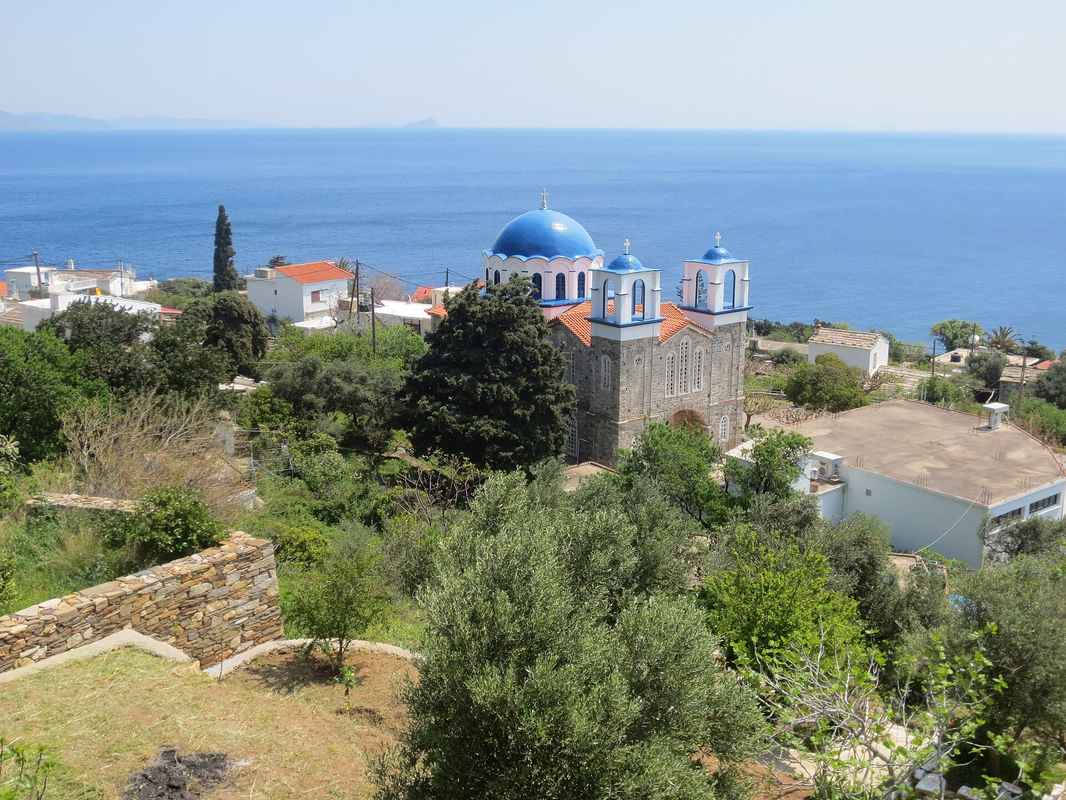
Xylosyrtis sits on the green south coast of Ikaria, a short distance southwest of the capital Agios Kirykos. The village rests on well-watered slopes that fall toward the Aegean, wrapped in springs, terraced gardens, orchards and vineyards. Water runs freely through this stretch of coast, and the mild, sheltered setting long earned it a name as a restful, healthy place. Stone houses cluster above a pebbly shore that reaches quiet coves. Tavernas serve the day’s catch beside garden produce grown just uphill. The pace stays slow and the character stays authentic, far from resort crowds. Plan a calm south-coast escape here with My Greece Tours.
This guide sets Xylosyrtis in the wider picture of the island, from its watered slopes to its shore. Read it alongside our Ikaria travel guide to see how the village fits the south coast route near the capital. The sections below cover what and where Xylosyrtis is, its green and spring-fed setting, the pebbly shore and coves, the daily rhythm of village life, and how to reach it and combine a visit with the surrounding coast. Each section answers one clear question first, then adds practical detail. The aim is a grounded, useful picture of a village that rewards a slow, unhurried visit.
What and where is Xylosyrtis in Ikaria?
Xylosyrtis is a small coastal village on the south side of Ikaria, set a short distance southwest of Agios Kirykos, the island capital. It occupies green slopes that descend toward the Aegean along the sheltered south coast.
Xylosyrtis belongs to the southeastern part of Ikaria, the long, narrow island in the north Aegean. The village sits southwest of Agios Kirykos, close enough to reach the port and administrative centre without a long drive. Houses stand on slopes above the sea rather than on a flat plain, so the settlement reads as a series of terraces climbing away from the water. The road that traces the south coast links the village to Agios Kirykos and to smaller settlements strung along the shore. That position gives the village both a working link to the capital and the quiet of a place set apart from the busier northern side of the island.
The setting shapes the whole feel of Xylosyrtis. Slopes hold gardens and orchards; the sea sits below at the foot of the terraces. Ikaria itself runs from a rugged, wind-exposed north to a milder, greener south, and this village belongs firmly to the gentler side. Springs and running water mark the ground, and the coastline breaks into pebbly stretches and small coves. Anyone weighing up things to do in Ikaria can read Xylosyrtis as a base for slow coastal walks, garden-to-table meals and quiet swims, rather than a spot built around organised attractions or crowds.
Why is the setting around Xylosyrtis so green and well-watered?
Springs and abundant running water feed the slopes around Xylosyrtis, sustaining terraced gardens, orchards and vineyards. The mild, sheltered south-coast position keeps the ground green and long gave this coast a reputation as a healthy, restful place.
Water defines Xylosyrtis. Springs rise on the hillside and streams thread down toward the shore, so the terraces stay green through the dry Aegean summer. That water supports gardens, fruit trees and vines planted on stepped ground held by dry-stone walls. The result is a patchwork of cultivation that softens the slope and shades the paths between houses. This green, spring-fed character set the village apart on an island where much of the terrain runs rocky and bare. The steady water and sheltered aspect earned the south coast a long-standing name as a place good for rest and recovery, a reputation tied to its gentle climate and its clean, running springs.
The healthy setting extends along the coast to the thermal ground nearby. The Therma springs lie on the same south shore, and the wider area is known for the Ikaria hot springs that draw visitors seeking mineral, warm-water bathing. Xylosyrtis pairs that thermal reputation with its own everyday abundance of fresh water and produce. Gardens yield vegetables, orchards give fruit, and vines add wine to the local table. The combination of springs, cultivation and a mild aspect gives the village a self-sufficient, grounded feel. That fertile base is a large part of why the place reads as restful rather than remote, and why it has kept its farming and garden traditions alive.
What is the coast and pebbly shore like at Xylosyrtis?
The Xylosyrtis coast is a pebbly shore that breaks into small coves at the foot of green slopes. Clear water, a quiet setting and easy access from the village make it a calm place to swim away from crowds.
The shore below Xylosyrtis is made of pebbles rather than wide sand, in keeping with much of the Ikarian coastline. Slopes covered in gardens run down to the water, and the shore folds into small coves sheltered by rock. The water tends to be clear and the setting quiet, so swimming here feels unhurried and private. This is a shore for slow mornings and long afternoons, not for organised beach facilities. People who reach the water find a natural, low-key spot framed by greenery, with the village terraces rising just behind. The pebbly ground keeps the sea clean and the coves calm on sheltered days.
The coast at Xylosyrtis fits a wider south-coast pattern of pebbly beaches and hidden inlets. Nearby stretches offer similar coves, and the thermal shore near Therma sits along the same run of coastline. Walking the shore or the coast road reveals a series of quiet swimming spots rather than a single busy beach. This makes the village a good base for anyone exploring the south side of Ikaria at a gentle pace. A visit rewards patience: the best coves are small and unmarked, reached on foot from the village or by short drives along the coast. The reward is clean water, shade from the green slopes, and the near-total absence of crowds.
What is village life and character like in Xylosyrtis?
Xylosyrtis keeps a quiet, authentic character built on stone houses, tavernas and gardens. Daily life runs at a slow pace tied to the land and sea, with local produce, running springs and an easy, unhurried village rhythm.
Stone houses set the tone in Xylosyrtis. They cluster on the terraces above the sea, linked by narrow lanes and shaded by trees and vines. Tavernas serve simple, local food, often garden produce grown just uphill and fish from the shore below. The pace of life stays slow, shaped by farming, fishing and the steady presence of running water. This is a lived-in village rather than a tourist showpiece, so the character feels genuine and rooted. Residents keep gardens, tend orchards and gather at the taverna, and visitors slot into that rhythm rather than changing it. The overall mood is calm, welcoming and grounded in the everyday work of the land.
The village belongs to the relaxed culture of Ikaria as a whole. Ikaria is known across Greece for long life and an easygoing approach to time, and Xylosyrtis reflects that in its unhurried days and its focus on food, family and rest. Anyone planning stays on the island can weigh Xylosyrtis against the options set out in our guide to where to stay in Ikaria, choosing between the quiet south coast and busier centres elsewhere. Staying here means trading nightlife and big facilities for gardens, springs, coves and honest local cooking. The trade suits travellers who value calm, authenticity and a real sense of place over resort convenience and crowds.
How do you visit Xylosyrtis and combine it with Ikaria’s south coast?
Reach Xylosyrtis by road along the south coast from Agios Kirykos, a short drive southwest of the capital. Combine a visit with the port town, the Therma thermal springs and the quiet coves strung along the same shore.
Access to Xylosyrtis runs through Agios Kirykos, the island capital and main southern port. The village lies a short drive southwest along the south-coast road, so a car or taxi makes the trip straightforward. Ferries and flights bring travellers to the island first, and the capital serves as the natural gateway to this stretch of coast. From the port it is easy to fold Xylosyrtis into a wider loop of the south side, taking in the town’s waterfront, its services and the nearby thermal ground. The road hugs the coast, offering sea views and glimpses of the green, terraced slopes that mark the villages along the way.
A visit works best combined with the surroundings. Base yourself near the capital or in the village, then explore the Therma thermal springs, the coves along the shore, and the everyday life of Agios Kirykos. The south coast rewards slow travel: short drives link swimming spots, tavernas and spring-fed villages. Pair Xylosyrtis with a soak in the region’s warm mineral waters and a meal of garden produce for a full sense of the south side. Anyone building an itinerary can lean on the wider things to do in Ikaria to balance quiet coastal days here with the island’s mountain villages, festivals and northern beaches.
Frequently Asked Questions
What is Xylosyrtis like as a place to visit?
Xylosyrtis is a small, green village on the south coast of Ikaria, set on well-watered slopes above the Aegean. Springs feed terraced gardens, orchards and vineyards, so the surroundings stay lush through the dry season. The village keeps stone houses, narrow lanes and tavernas that serve local produce and fish. The pace is slow and the character authentic, tied to farming, fishing and running water. This is not a resort but a lived-in settlement with a calm, restful mood. The sheltered, mild setting long gave the coast a name as a healthy place. A pebbly shore and small coves sit below the village for quiet swimming.
Xylosyrtis suits travellers who want gardens, springs, honest cooking and a real sense of place rather than nightlife or large facilities. It rewards a slow, unhurried visit and pairs naturally with the wider south coast near the capital, Agios Kirykos.
Is there a beach at Xylosyrtis?
Xylosyrtis has a pebbly shore rather than a wide sandy beach, in keeping with much of the Ikarian coast. Green, terraced slopes run down to the water, and the shore folds into small coves sheltered by rock. The water is usually clear and the setting quiet, so swimming feels private and unhurried. Do not expect organised beach facilities or crowds; this is a natural, low-key spot framed by greenery, with the village terraces rising just behind. The pebbly ground helps keep the sea clean and the coves calm on sheltered days. The coast here fits a wider south-coast pattern of pebbly beaches and hidden inlets, and the thermal shore near Therma lies along the same run of coastline.
Reaching the best coves takes a little patience, on foot from the village or by short drives along the coast road, but the reward is calm, clean water in a green, unspoilt setting.
How do you get to Xylosyrtis in Ikaria?
Reach Xylosyrtis by road along the south coast from Agios Kirykos, the island capital and main southern port. The village lies a short drive southwest of the capital, so a car or taxi makes the trip simple. Travellers first arrive on Ikaria by ferry or by air, and Agios Kirykos serves as the natural gateway to this stretch of coast. From the port, the coastal road runs southwest toward the village, hugging the shore and passing green, terraced slopes along the way. The route offers sea views and links a series of quiet villages and swimming spots.
Once at Xylosyrtis, it is easy to combine a visit with the port town, the Therma thermal springs nearby, and the coves along the same shore. Slow travel works best here, using short drives to connect tavernas, springs and swimming spots across the south side of the island at an easy pace.