
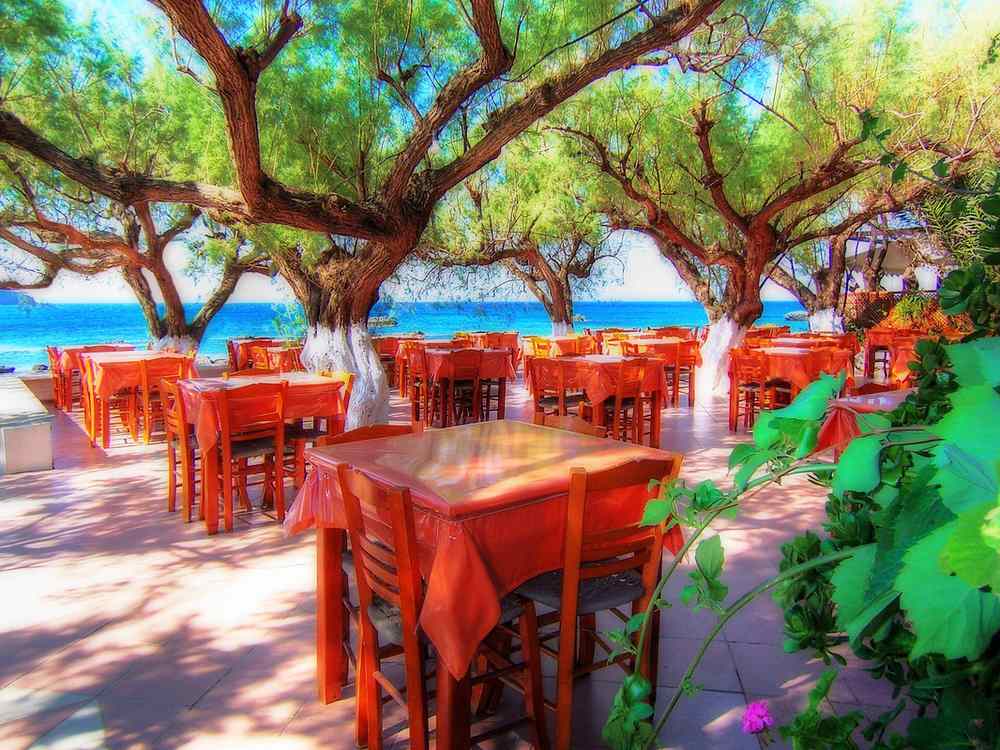
Azalas beach rewards travellers who want the east coast of Naxos at its quietest. This small sand-and-pebble bay sits just north of the harbour of Moutsouna, tucked below tamarisk trees and terraced gardens that meet the shoreline. The water runs calm and clear, sheltered from the strong meltemi wind that batters the west-coast beaches. A single seasonal taverna anchors the cove and draws diners for honest local food. The setting stays low-key and rural, far from the crowds of Agios Prokopios or Plaka. Reaching it means a short drive down the old emery-mining coast. Plan the whole east-coast run and its tavernas with My Greece Tours.
Azalas belongs to a string of hidden coves that define the wild eastern edge of the island, and our Naxos travel guide maps the route inland through the mountain villages. This corner of Naxos moves at a slower rhythm, shaped by fishing, farming and the old emery trade rather than mass tourism. The sections below cover what Azalas actually is, the character of its beach and water, the taverna and its garden setting, the drive down from Moutsouna, and the kind of traveller the bay suits best.
What is Azalas beach on Naxos?
Azalas is a small, quiet bay on the east coast of Naxos just north of Moutsouna, a mix of coarse sand and pebbles backed by tamarisk trees, gardens and a single seasonal taverna.
Azalas, also written Azala, occupies a sheltered pocket of the rugged eastern shoreline, well away from the busy west-coast resorts. The bay reads as a working rural cove rather than an organised beach: no sunbed rows stretch across it, no bars line a promenade, and the shore keeps the feel of a private garden opening onto the sea. Tamarisk trees and cultivated plots run right down toward the water, giving natural shade and a green frame that most Cycladic beaches lack. This eastern flank of the island escaped heavy development because the old emery trade, not tourism, built the local economy.
Travellers researching the wider coastline through the beaches of Naxos quickly notice how different Azalas feels from the long golden sweeps facing Paros.
The name attaches to both the cove and the taverna that sits above it, so directions locally point to one and mean the other. Azalas anchors the northern end of the short coastal strip that begins at Moutsouna, the small port that once shipped emery ore. The scale stays modest: the usable shore measures a matter of tens of metres, framed by low rock and greenery at each end. That intimacy is the appeal. Travellers arrive expecting an off-the-beaten-track stop and find exactly that, a bay where the loudest sound is the sea and the taverna kitchen.
The absence of infrastructure keeps numbers low and preserves the unhurried mood that defines the whole eastern coast of the island.
What are the beach and the water like at Azalas?
The shore mixes coarse sand and pebbles, sloping gently into calm, clear water. East-coast shelter keeps the sea flat when the meltemi churns the west, and tamarisk trees supply natural shade.
The beach surface blends soft sand near the taverna with pebbly patches toward the edges, so water shoes earn their place in a day bag. The seabed shelves gradually and stays clean, producing the transparent turquoise shallows that make the east coast a snorkelling draw. Shelter is the headline feature. This flank of Naxos faces away from the prevailing north wind, so the water often lies mirror-flat on afternoons that leave Plaka and Psili Ammos beach whipped into whitecaps. That calm makes Azalas a reliable swimming choice on blustery days and a gentle spot for families with small children.
The tamarisks lining the back of the cove cast real shade, a rare comfort on an island where umbrellas usually do all the work.
Facilities stay minimal by design. The taverna provides a cluster of loungers and umbrellas for its guests, and beyond that the beach is unorganised, so a mat, hat and refillable water bottle matter. Bring cash, since card coverage on this stretch is thin and irregular. The clarity of the water rewards a mask and fins: rocky flanks at either end of the bay shelter small fish and keep the shallows lively. Morning light hits the cove first, given the eastern aspect, which makes early swims especially fine before the taverna fills for lunch. The overall picture is a natural, unmanicured bay where the sea does the entertaining.
Compared with the vast organised sands of the southwest, Azalas trades amenities for quiet, shade and dependable calm.
What is the Azalas taverna and its setting like?
Azalas taverna is a family-run seasonal kitchen set in a garden above the bay, known for fresh local dishes, home-grown produce and a shaded, laid-back terrace overlooking the sea.
The taverna is the beating heart of the cove and the reason travellers detour this far north of the port. It occupies a garden terrace shaded by tamarisks and vines, with tables looking straight out over the water. The kitchen builds its reputation on genuine local cooking: garden vegetables, island cheese, fresh fish landed nearby and slow-cooked meat dishes tied to the farming traditions of the eastern hills. Produce grown on the surrounding plots turns up on the plate, so the menu shifts with the season rather than staying fixed. The mood is unhurried and family-run, the sort of place where lunch stretches into a long afternoon and nobody rushes the bill.
Diners often pair a swim with a meal, treating the whole stop as the day rather than a quick break.
The garden setting ties the taverna to the wider agricultural character of the eastern slopes, the same terraced land that climbs toward the mountain village of Apeiranthos. That marble-built village supplies much of the regional produce and marks the natural inland pairing for an Azalas lunch. The taverna operates seasonally, broadly from late spring through early autumn, and hours can flex with the weather and the day’s catch, so a phone check before a long drive is wise. Booking helps on peak summer weekends, when word-of-mouth fills the limited tables.
The combination of shade, sea view and honest food explains why a remote bay with almost no infrastructure still draws a loyal following year after year across the island’s slower east.
How do you get to Azalas beach near Moutsouna?
Reach Azalas by car from Naxos Town via Halki and Apeiranthos, then descend to Moutsouna and follow the coast road a short distance north to the signed bay and taverna.
The drive is half the experience. From Naxos Town the route climbs east through the Tragea valley and the mountain villages, passing Halki and the marble streets of Apeiranthos before dropping in switchbacks toward the sea. That descent to Moutsouna traces the old emery route and offers wide views over the coastline the whole way down. Azalas lies a short distance north of the port along a coastal road; a small sign marks the turn to the bay and taverna. A car or scooter is effectively essential, as public buses reach Apeiranthos and Moutsouna but not this pocket of shore. The final approach is narrow but manageable, and parking near the taverna is informal and free.
The corridor also opens the story of the Naxos emery mines, whose old aerial cableway once carried ore down these slopes to be loaded at Moutsouna. Rusting pylons still trace the hillside above the road, a reminder of the industry that shaped this coast. Travellers often combine the beach with a mountain-village morning and an emery-history stop, making a full day of the eastern loop. The road continues past Azalas toward other remote coves for those who want to push further off-grid. Set out with a full tank, since fuel stations cluster around Naxos Town rather than out here.
The whole circuit, mountains to sea, ranks among the most rewarding self-drive routes on the island for its scenery and quiet.
Who is Azalas beach best suited to?
Azalas suits travellers seeking a quiet, off-the-beaten-track bay with calm water, natural shade and a good taverna, rather than sunbed-lined resorts, organised watersports or lively beach-bar scenes.
The bay speaks to a particular kind of visitor: the one who values a slow lunch and a shaded swim over a packed beach with a soundtrack. Couples, families with young children and food-minded travellers get the most from it, drawn by the calm water, the garden taverna and the sense of arriving somewhere genuinely local. The wind-sheltered aspect makes it a smart fallback on days when the meltemi rules out the exposed western sands. Anyone wanting a wider Cycladic beach with full amenities is better served elsewhere, such as the pine-backed sweep of Panormos beach in the southeast.
Azalas is a destination for the journey and the atmosphere, not for facilities, so travellers should arrive self-sufficient and unhurried, ready to let the pace of the eastern coast set the day.
Pair the visit with the emery-mining coast and a mountain village to build a rounded day out of a single remote bay. Bring cash, sun protection, water and a snorkel, and treat lunch at the taverna as the centrepiece rather than an afterthought. Time the drive so the descent to Moutsouna lands mid-morning, leaving room for a swim before the terrace fills. Those who love the quiet corners of the Cyclades, where farming and fishing still outweigh tourism, will remember Azalas long after the busier beaches blur together. It rewards curiosity and a willingness to drive, and it delivers a version of Naxos that the coastal resorts never show.
Plan your visit and tours through our Naxos travel guide.
Frequently Asked Questions
Is Azalas beach organised with sunbeds and facilities?
Azalas is largely an unorganised bay, and that is central to its appeal. The single seasonal taverna above the cove sets out a modest cluster of loungers and umbrellas for its guests, but the beach carries no promenade, no beach bars and no watersports operators. Travellers should treat it as a natural shore and pack accordingly: a mat, a hat, plenty of water and reef-friendly footwear for the pebbly patches. Tamarisk trees along the back of the beach provide genuine shade, a real advantage over the umbrella-dependent western sands. Card payment on this stretch is thin and unreliable, so carry cash for the taverna and any extras.
The lack of infrastructure is deliberate and protected by the remote location north of Moutsouna. Visitors who arrive self-sufficient find a peaceful, uncrowded bay; those expecting resort-style amenities will be happier at the larger organised beaches near Naxos Town.
When is the best time to visit Azalas and its taverna?
The bay works best from late spring through early autumn, broadly May to October, when the sea is warm enough for comfortable swimming and the taverna keeps its seasonal doors open. Mornings suit Azalas especially well because the eastern aspect catches the first light and the water lies calm before the day heats up. That early window also delivers the quietest swim ahead of the lunch crowd. The taverna’s hours flex with the weather and the day’s catch, so a phone call before a long mountain drive saves a wasted trip. Peak summer weekends fill the limited tables through word of mouth, making a booking sensible.
The wind-sheltered position gives Azalas a further edge: on blustery meltemi days that close the western beaches, this east-coast cove often stays swimmable. Shoulder-season visits in June or September reward travellers with warm water, open kitchens and even fewer people than the July and August peak.
Can you combine Azalas with other places on the east coast of Naxos?
Azalas pairs naturally with a full eastern-loop day, and most travellers treat it that way rather than as a standalone stop. The drive from Naxos Town climbs through the Tragea valley and the mountain villages of Halki and Apeiranthos, the latter a marble-built settlement with folklore and archaeological museums worth an hour. From there the road descends the old emery route to Moutsouna, the small former ore-shipping port just south of Azalas. The rusting cableway pylons above the road tell the story of the emery-mining industry that shaped this coast and make a compelling history stop. A typical day links a mountain-village morning, an emery-history look, a swim at Azalas and a long lunch at its garden taverna.
The coast road continues north past Azalas toward other remote coves for travellers chasing solitude. This combination of mountains, mining heritage and quiet bays ranks among the most rewarding self-drive circuits on the whole island.