
Naxos and Folegandros sit in the same Cyclades, yet they deliver two different Greek island holidays. Naxos is the large green giant of the group, built for long sandy beaches, mountain villages, ancient marble and easy ferry logistics. Folegandros is small, wild and dramatic, crowned by a clifftop Chora that ranks among the loveliest in Greece. This honest comparison weighs beaches, access, scenery, atmosphere and the type of traveller each island rewards. The goal is a clear, fair verdict rather than a winner declared in advance. Read on to match the right island to your trip, and plan the details with My Greece Tours.
Naxos suits families, longer stays and travellers who want variety on one island, and our Naxos travel guide maps its beaches, villages and marble monuments in depth. Folegandros suits couples and quiet-seekers who prize scenery and calm over choice and nightlife. The sections below cover the core difference between the two islands, their beaches and access, scenery and Chora, vibe and best-fit traveller, and how to combine both into one balanced Cyclades itinerary without wasting ferry days.
What is the core difference between Naxos and Folegandros?
Naxos is a large, green, self-contained island with long beaches, mountain villages and ancient sites. Folegandros is small, arid and dramatic, defined by a spectacular clifftop Chora and a quiet, romantic pace.
Naxos measures 428 square kilometres, the largest island in the Cyclades, and packs beaches, farmland, marble quarries and a 999-metre peak into one landmass. The scale supports a full week without repetition. You can swim on a different beach each morning, drive up to a mountain village for lunch, and tour a Kouros statue or the Portara marble gate before dinner. The variety is the point. Our Naxos travel guide treats the island as a base for several sub-trips rather than a single postcard. Roads are wide, the bus network reaches the main resorts, and rental cars open the interior.
Naxos rewards travellers who want depth, movement and the freedom to change plans on a whim across one large, fertile island.
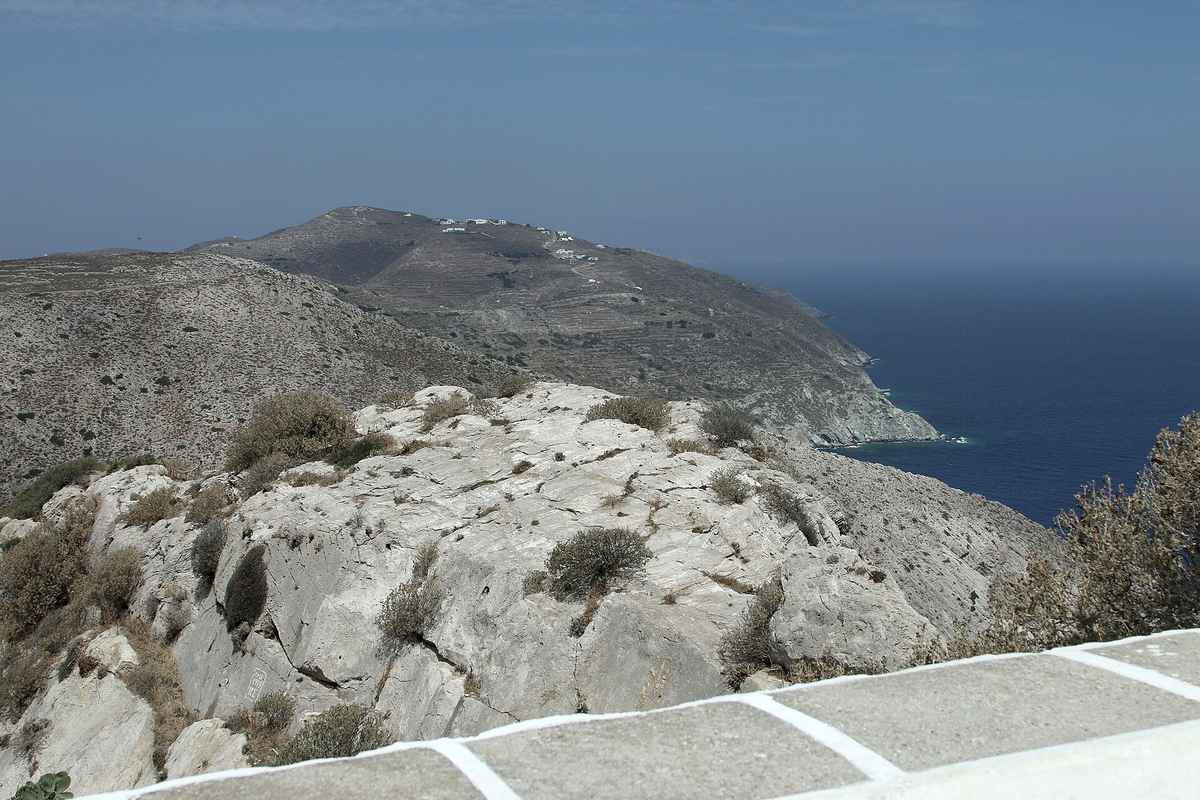
Folegandros measures 32 square kilometres and holds three settlements: the port of Karavostasi, the clifftop Chora, and Ano Meria. The island is dry, rocky and sparsely built, and that austerity is its signature. Life concentrates in the Chora, which perches on a cliff edge above the sea with a drop of roughly 200 metres. Everything runs at a slower tempo. There are no ancient marble monuments and no long coastal highway. Instead the island trades on atmosphere, silence and a coastline reached on foot or by boat. Folegandros rewards travellers who want to unplug rather than tick sights off a list. Where Naxos offers abundance and logistics, Folegandros offers focus and drama.
The core choice is variety versus intensity, and neither answer is wrong.
How do the beaches and access compare on each island?
Naxos has long, sandy, road-accessible beaches ideal for families. Folegandros has quiet pebble and rocky coves, most reached by boat or a walk, which keeps them calm but less convenient for young children.
Naxos owns one of the finest beach strips in the Cyclades. Agios Prokopios, Agia Anna and Plaka run in an almost continuous ribbon of pale sand south of Naxos Town, backed by shallow, gently shelving water. Cars, buses and tavernas sit steps from the sand, so families with strollers and coolers reach the water with zero effort. Our guide to the beaches of Naxos maps the sheltered south coast against the windward bays that draw kitesurfers. Mikri Vigla splits the two, with a calm family side and a wind-blown surf side on the same headland. The sheer length of Naxian sand means space even in August.
Access, shade and facilities make Naxos the stronger island for a straightforward, low-friction beach holiday with children.
Folegandros keeps its swimming spots wild and hard-won. Katergo, the island’s showpiece, is a strip of grey pebbles reached by boat from Karavostasi or a stony 25-minute walk over the headland. Agali is the main organised beach, sandy-ish and served by tavernas, and it acts as a hub for boat taxis to Agios Nikolaos and Livadaki. The coves reward the effort with clear, calm water and few crowds, yet the pebbles, the walks and the boat transfers suit adults more than toddlers. There is no long sandy promenade equivalent to the Naxos south coast. The trade is convenience for seclusion.
Folegandros beaches feel like small discoveries rather than resorts, which is exactly why quiet-seekers choose the island over busier, easier neighbours. Combine them via the Naxos to Folegandros ferry.
Which island has better scenery and a more striking Chora?
Both are beautiful in different registers. Naxos offers green valleys, marble monuments and stone villages. Folegandros delivers one of the most dramatic clifftop Choras in the Cyclades, a compact masterpiece of setting.
Naxos scenery is layered and varied. The Portara, a giant marble doorway from an unfinished temple of Apollo, frames the sunset on an islet beside Naxos Town. Inland, terraced valleys stay green well into summer thanks to springs and farmland. Stone villages such as Halki, Apeiranthos and Filoti climb the slopes of Mount Zas, each with Venetian towers and marble fountains. Our tour of the villages of Naxos threads these mountain settlements into a single day of driving. The scale gives Naxos range: coast, farmland, peak and monument in one island. The beauty is spread out and earned by exploring, rather than concentrated in a single viewpoint.
Naxos scenery rewards the curious traveller who moves inland instead of staying on the sand.
Folegandros concentrates its beauty into one unforgettable image. The Chora sits on a sheer cliff, its whitewashed lanes and squares strung along the very edge of a 200-metre drop to the Aegean. Bougainvillea spills over medieval Kastro walls, and the pedestrian squares link under plane trees with no traffic to break the calm. Above the town, a switchback path climbs to the church of Panagia, which crowns the ridge and delivers a sunset panorama over the whole island. The setting does the work that Naxos spreads across many sites. First-time visitors often rate the Folegandros Chora among the finest in Greece, rivalling far larger names. The scenery is compact, vertical and cinematic.
Where Naxos impresses by breadth, Folegandros overwhelms with one perfect, precipitous view.
What is the vibe of each island and who does each one suit?
Naxos feels lively, practical and family-friendly, with resorts, tavernas and things to do. Folegandros feels calm, romantic and low-key, built for couples, walkers and travellers who want quiet over busy nightlife.
Naxos carries an easy, all-rounder energy. Naxos Town blends a working port with a Venetian old town, waterfront bars and a broad choice of restaurants that stay open late without turning into a party strip. Families, groups and solo travellers all find their level. The island balances comfort against authenticity, since farming and cheese-making remain real industries rather than tourist theatre. Travellers weighing bigger names often read our Naxos vs Santorini comparison to gauge the difference in crowds and cost. Naxos delivers plenty to do across a week, yet never feels frantic.
The vibe suits people who want a real Greek island with services, variety and enough life in the evenings, without the price tag or the crush of the marquee destinations nearby.
Folegandros runs on a hushed, romantic frequency. Evenings unfold slowly in the three linked squares of the Chora, where diners linger over dinner and the only soundtrack is conversation and cicadas. There are a handful of bars and no clubs, so the night stays gentle. Couples on honeymoons, walkers chasing coastal trails, and travellers escaping the crowds form the core of its visitors. The island suits people who measure a holiday by how deeply they can slow down. Those still choosing between quieter Cyclades often compare our Naxos vs Sifnos notes for a similar calm-versus-variety trade. Folegandros is not the island for teenagers craving action or families needing constant options.
It is the island for two people, a view and time.
Can you combine Naxos and Folegandros in one trip?
Yes. Naxos and Folegandros connect by ferry, so a split week works well. Base longer on Naxos for variety, then finish with a few slow days on Folegandros for scenery and calm.
Naxos and Folegandros sit on the same western Cyclades ferry axis, which makes pairing them practical. Direct sailings run in the summer season, with crossings taking roughly one to two hours depending on the vessel and route. A balanced plan gives Naxos four to five nights for beaches, villages and marble sites, then Folegandros two to three nights to decompress. Naxos as the first base makes sense because its airport and frequent ferries simplify arrival. Travellers combining Naxos with a party island instead often study our Naxos vs Ios guide before locking the order. Sequencing matters: end on the quieter island so the trip winds down rather than ramps up.
Check current timetables early, since shoulder-season frequency drops and a missed connection can cost a full day.
Naxos Town deserves at least an afternoon before you move on, since its Kastro, waterfront and the Portara reward a proper wander, and our Naxos Town guide covers the essentials. Pack for both registers: beach gear and a car mindset for Naxos, sturdy shoes and a slower clock for Folegandros walks. Booking Folegandros accommodation early is wise, because the small island has limited rooms and the best Chora views sell out fast in peak weeks. The two islands complement rather than repeat each other, so neither day feels redundant. One delivers range and logistics, the other delivers atmosphere and rest, and together they read like a complete Cyclades story.
Plan your visit and tours through our Naxos travel guide.
Frequently Asked Questions
Is Naxos or Folegandros better for a first trip to the Cyclades?
Naxos is the safer first-trip choice for most travellers. The island combines long sandy beaches, a lively main town, mountain villages and ancient marble sites, so a single base covers many styles of holiday. Ferry links and a small airport make arrival simple, and the wide range of hotels and tavernas suits families, couples and solo visitors alike. Folegandros is a rewarding first island only for travellers who already know they want calm, scenery and romance over variety and nightlife. The small island offers fewer beaches, limited transport and a slower pace that some first-timers find too quiet.
A confident answer depends on the traveller: pick Naxos for a broad, flexible introduction to the Cyclades, and choose Folegandros for a focused, atmospheric escape. Many visitors solve the question by combining both, opening on Naxos for range and closing on Folegandros for rest.
How many days do you need on Naxos and on Folegandros?
Naxos justifies four to seven days because the island spreads its attractions across a large area. Two days cover Naxos Town and the nearest south-coast beaches. A third and fourth day open the mountain villages, Mount Zas and the marble Kouros statues inland. A full week lets you slow down and add the windward bays and quieter northern coast. Folegandros works well in two to four days. One day explores the clifftop Chora and its sunset church walk, a second reaches the beaches by boat or trail, and a third allows a hike to Ano Meria or a repeat swim at a favourite cove.
Stretching Folegandros past four days suits only true slow-travellers who want nothing on the schedule. For a combined trip, a rough split of five nights on Naxos and three on Folegandros balances variety against calm without rushing either island or wasting ferry days.
Which island is more affordable, Naxos or Folegandros?
Naxos is generally the more affordable of the two, mainly because its size creates competition and choice. The island offers a wide spread of accommodation, from budget rooms to comfortable hotels, plus supermarkets, bakeries and tavernas that price for locals as well as visitors. Larger ferry volume and an airport also keep travel options flexible and often cheaper. Folegandros runs pricier per night in relative terms because room supply is small and demand for the famous Chora views is high in peak weeks. Fewer beds and a short season push rates up, and dining choices, while excellent, are limited enough to reduce price competition.
Neither island reaches the cost level of the marquee destinations, so both remain sensible value within the Cyclades. Booking Folegandros early is the key move for controlling cost, since the best-value rooms disappear first and last-minute prices on such a small island climb sharply during the summer high season.