
Naxos and Mykonos sit side by side in the central Cyclades, yet they offer travellers two very different holidays. Naxos is the largest Cycladic island, greener and more authentic, known for long sandy beaches, mountain villages, farming traditions and gentle prices. Mykonos is smaller, drier and world-famous for glamour, cosmopolitan crowds, designer boutiques and legendary nightlife. Choosing between them depends on whether you want quiet authenticity and value or high-energy style and status. Both islands reward first-time and returning visitors, and both connect easily to Athens and to each other by ferry. The clearest way to compare them fairly is to weigh each island’s strengths side by side, and you can plan the whole trip with My Greece Tours.
This comparison stays fair to both islands and helps you match each one to your travel style and budget. For deeper local detail on the greener option, read our Naxos travel guide. The sections below cover the core difference between the two islands, which one has better beaches, which offers stronger nightlife and towns, which suits families and tighter budgets better, and whether you should simply combine Naxos and Mykonos on a single Cyclades trip.
Naxos vs Mykonos: what’s the difference?
Naxos is a large, green, affordable island built on farming, mountain villages and long natural beaches, while Mykonos is a small, glamorous, expensive island built on cosmopolitan nightlife, beach clubs and designer style. The two suit opposite travel moods.
Naxos is the biggest island in the Cyclades, and much of that land is fertile. Its central mountains rise to roughly a thousand metres, feeding valleys planted with olives, citrus, potatoes and vines, so the interior stays green when other islands turn brown. Traditional villages such as Halki, Filoti and Apeiranthos keep old crafts, kitron liqueur and marble-carving alive. Prices for food, rooms and car hire sit noticeably below the Cycladic average. Naxos rewards travellers who want space, nature, authentic tavernas and a slower rhythm, and it works equally well for beach days, hiking and cultural sightseeing across a single relaxed week without ever feeling overrun or overpriced.
Mykonos is far smaller and grows little; its identity is style rather than agriculture. The island turned a barren landscape into a global brand of luxury, and it draws celebrities, cruise passengers and party crowds every high season. Whitewashed Mykonos Town, the windmills and Little Venice photograph beautifully, but hotels, restaurants and beach clubs charge premium prices to match the reputation. Mykonos rewards travellers chasing energy, fashion, cocktails and social scenes over quiet authenticity. Understanding this core contrast makes every other comparison clearer, and the difference shows most vividly at the water’s edge, where the two islands treat their beaches in completely opposite ways.
Which has better beaches?
Naxos wins on natural sandy beaches, offering long, wide, uncrowded shores with shallow water, while Mykonos wins on organised party beaches with sunbeds, music and clubs. The better choice depends on whether you want calm space or a lively scene.
Naxos owns one of the finest continuous coastlines in Greece, a golden ribbon running south from Naxos Town. Agios Prokopios, Agios Georgios, Agia Anna and the vast Plaka beach share soft pale sand, clear shallow water and plenty of room even in August. Further south, Mikri Vigla draws windsurfers and kitesurfers, while remote Alyko hides cedar dunes and quiet coves. The beaches of Naxos stay largely natural, with tavernas and a few sunbed rows rather than wall-to-wall clubs. Families appreciate the gentle entry and calm bays. Swimmers, walkers and photographers find space to spread out, and reaching each beach by local bus stays simple and cheap throughout the season.
Mykonos treats beaches as venues rather than scenery. Paradise and Super Paradise are famous worldwide for daytime parties, DJs, cocktails and packed sunbeds that cost far more than a Naxos umbrella. Psarou attracts yachts and celebrity spotting, while Elia and Kalafatis add watersports and calmer stretches for those who want a break from the music. The sand is pretty, but the beaches are smaller and busier, and the best spots fill quickly in peak weeks. Mykonos beaches deliver atmosphere, service and social buzz; Naxos beaches deliver space, nature and value. That same split between spectacle and calm carries straight into how the two islands handle their nightlife and their main towns.
Which has better nightlife and towns?
Mykonos has the stronger nightlife, with world-famous clubs, bars and beach parties, plus one of the most photogenic towns in Greece. Naxos offers a calmer, family-friendly Chora with tavernas, wine bars and a relaxed evening pace instead of clubbing.
Mykonos Town, known as Chora, is a maze of whitewashed lanes, boutique windows, cocktail bars and famous windmills above Little Venice, where waves lap the foundations of seafront houses. After dark the island earns its reputation: clubs pull international DJs, and bars stay busy until sunrise. The scene is glamorous, expensive and unapologetically loud, aimed at travellers who treat nightlife as the main event. Cruise arrivals and day trippers swell the crowds, so the narrow streets can feel packed at midday and again late into the night. For sheer energy, fashion and celebrity atmosphere, Mykonos remains the benchmark island in the entire Aegean, and people travel from around the world specifically for it.
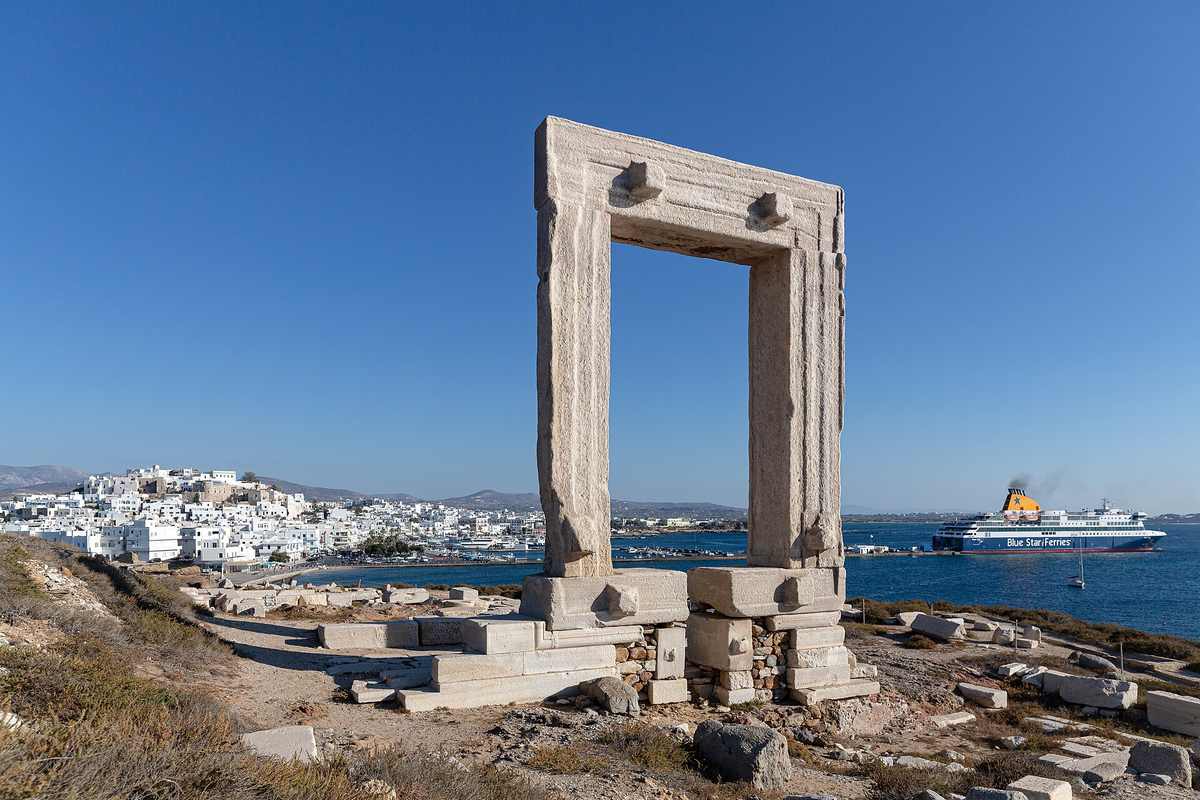
Naxos keeps a gentler tone. Naxos Town centres on the marble Portara gateway, a Venetian castle and a working harbour lined with tavernas, ouzo bars and family-run shops. Evenings mean long dinners, sunset drinks by the Portara and a handful of relaxed music bars rather than mega-clubs. Families, couples and older travellers feel comfortable strolling late without the intensity of a party resort. The town stays lived-in and local, not staged for tourism alone. This difference in pace mirrors a wider gap between the two islands, because the atmosphere that suits Mykonos party-goers is rarely the one that suits families watching their holiday budget.
Which is better for families and budget?
Naxos is clearly better for families and budgets, with cheaper rooms, calm shallow beaches, space to roam and authentic tavernas. Mykonos is far more expensive and adult-oriented, built around nightlife, luxury dining and premium beach clubs rather than young children.
Naxos suits families and value-seekers on almost every measure. Accommodation, tavernas, car hire and beach sunbeds all cost less than on Mykonos, often by a wide margin, so a week stretches further. The long shallow beaches near Naxos Town let small children paddle safely, and the flat coastal strip makes buggies and short walks easy. Beyond the sand, families can explore the Portara, mountain villages, pottery workshops and farm visits, giving parents affordable variety on rainy or windy days. Local buses connect the main resorts cheaply, reducing the need for taxis. Naxos delivers a genuine Greek island holiday where the daily budget stays predictable and the pace stays relaxed for every age group.
Mykonos leans strongly towards adults with money to spend. Room rates in high season rank among the highest in Greece, restaurant bills climb fast, and a day on a signature beach club can cost more than a night’s hotel elsewhere. Nightlife, fashion and social scenes define the island, so young families often feel out of step and stretched financially. Couples, groups of friends and luxury travellers get the most from what Mykonos offers. The contrast is stark: Naxos protects your wallet while Mykonos tests it. Since the two islands answer such different needs, many travellers stop choosing between them and instead ask whether they can experience both on one trip.
Should you combine Naxos and Mykonos?
Yes, combining Naxos and Mykonos works beautifully, because the two islands sit close together and connect by frequent ferries. Pairing them gives you Naxos for authentic beaches and value plus Mykonos for glamour and nightlife on a single Cyclades holiday.
Naxos and Mykonos are natural partners because they are neighbours in the central Cyclades, and fast ferries link them in well under an hour in high season. That short hop lets you build a trip that balances both moods rather than settling for one. A common plan gives Naxos the larger share, using its beaches, villages and lower prices as the relaxed base, then adds two or three nights on Mykonos for the town, sunsets and nightlife. The reverse order works too if you prefer to end quietly. Both islands also connect to Paros and Santorini, so a wider island-hopping route slots them in easily alongside other Cyclades favourites without long or awkward crossings.
Practical planning makes the pairing smooth: book ferries early for peak dates, travel light between islands, and check schedules, which you can review in our guide on how to get to Naxos. Choose Naxos as your main base if beaches, family comfort and value matter most, and treat Mykonos as the glamorous highlight rather than the whole holiday. Combining them removes the pressure of a single choice and shows you two contrasting faces of the same island group in one journey. Plan your visit and tours through our Naxos travel guide.
Frequently Asked Questions
Is Naxos or Mykonos cheaper?
Naxos is significantly cheaper than Mykonos across almost every part of a holiday. Accommodation on Naxos, from family studios to comfortable hotels, costs a fraction of Mykonos high-season rates, where rooms rank among the most expensive in Greece. Everyday spending follows the same pattern: tavernas, car hire, sunbeds and drinks all cost less on Naxos, while Mykonos charges premium prices for restaurants, beach clubs and bars to match its luxury reputation. A single day at a famous Mykonos beach club can exceed a whole day’s budget on Naxos. Because Naxos grows much of its own food and relies less on imports and status, value runs through the island naturally.
Travellers watching their budget, or wanting a longer stay for the same money, consistently get far more from Naxos, while Mykonos rewards those happy to pay for glamour and social scenes.
Which island is better for first-time visitors to the Cyclades?
Both islands suit first-time visitors, but the better choice depends on what you want from your first Cyclades trip. Choose Naxos for a well-rounded introduction to authentic Greek island life: outstanding sandy beaches, mountain villages, historic sites, good food and gentle prices, all on one large island that rarely feels overwhelming. It offers variety and space without demanding a big budget, which makes it forgiving for a first visit. Choose Mykonos for a first taste of the glamorous, cosmopolitan side of Greece, with its iconic whitewashed town, famous sunsets and legendary nightlife, provided you are ready for crowds and high prices.
Many first-timers get the best of both by combining the two, since they sit close together by ferry. Using Naxos as a relaxed base and adding a couple of nights on Mykonos delivers contrast, comfort and highlights in a single trip.
How do you travel between Naxos and Mykonos?
You travel between Naxos and Mykonos by ferry, and the route is short, frequent and easy in the main season. Both islands are central hubs in the Cyclades ferry network, so several daily connections link them, with fast catamarans and high-speed boats crossing in well under an hour and conventional ferries taking a little longer at lower fares. No flight is needed, and no long detour through Athens is required. Book tickets in advance for peak-season dates, because popular sailings sell out and vehicle space is limited. Foot passengers usually find the process simple: arrive at the port, board, and enjoy the sea views.
The same network connects both islands onward to Paros, Santorini and Athens, making a multi-island route straightforward. This close, reliable link is exactly why combining Naxos and Mykonos on one holiday is so popular and practical.