
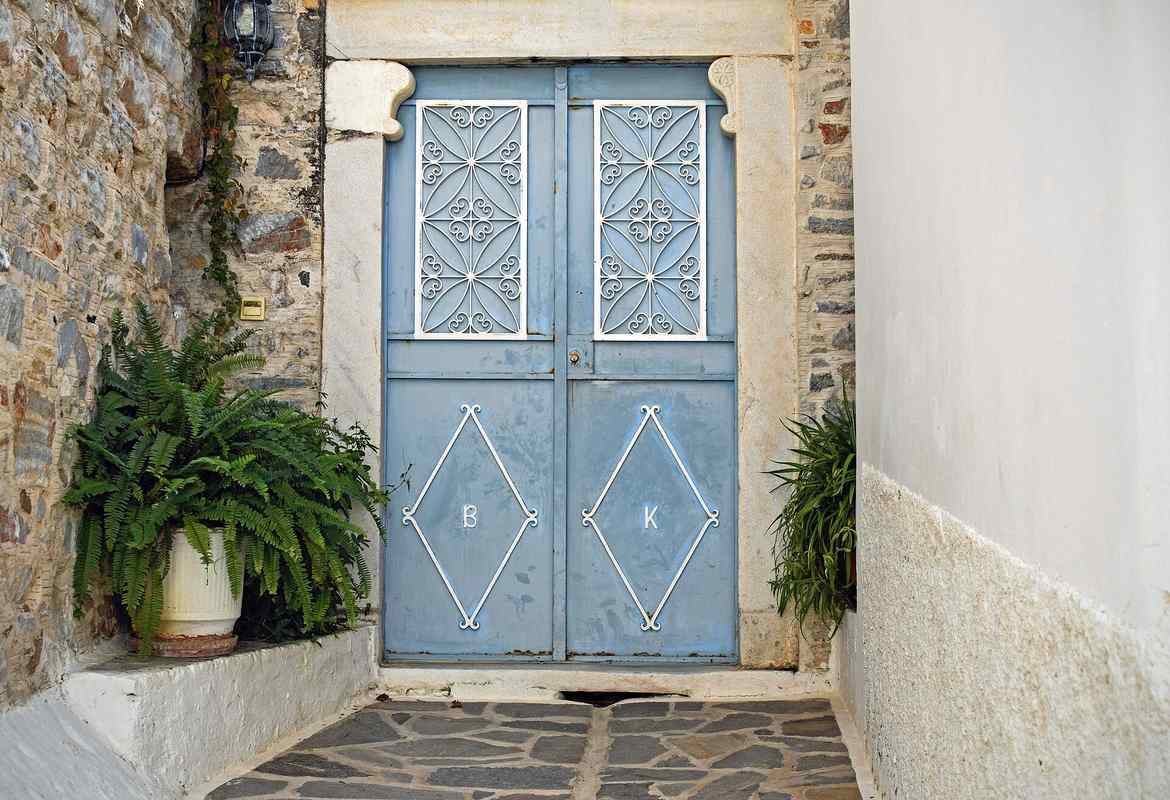
Filoti is the largest village in the mountainous heart of Naxos, spread across the western slopes of Mount Zas above the green Tragaea valley. Terraced fields, olive groves, and old stone houses climb the hillside, while a broad plane-shaded square anchors daily life below the domed church of Panagia Filotitissa. Travellers reach Filoti to slow down, taste mountain cooking, and use the village as a gateway to the island’s highest peak. The clear air, long views over the valley, and unhurried pace make it a favourite stop on any inland route. You can explore the village and the wider valley with My Greece Tours on a guided day out.
This page sits within our wider Naxos travel guide and focuses on everything that makes Filoti worth a detour into the highlands. The sections below cover what Filoti is and where it sits in the Tragaea, what the village square and its church are like, why the village serves as the base for climbing Mount Zas, the food and traditions that define local life, and how to plan a practical visit by car or bus.
What is Filoti on Naxos?
Filoti is the largest inland village on Naxos, built on the western slopes of Mount Zas above the Tragaea valley. Around a thousand residents live among terraced fields, olive groves, and stone houses, making it the natural capital of the island’s mountainous interior.
Filoti spreads across a natural amphitheatre of hillside about sixteen kilometres from Naxos Town, at an altitude of roughly four hundred metres. The village looks out over the Tragaea, a wide upland basin planted with olive trees, citrus, and vines that stays green long after the coast has turned dry and golden. Houses of pale stone and whitewash stack up the slope in tight lanes, linked by stepped alleys and small courtyards. Filoti has long acted as a market and meeting point for the surrounding hamlets. It keeps a steady, lived-in rhythm rather than a purely seasonal one because it is the biggest settlement between the port and the eastern coast.
The village belongs to a cluster of highland settlements that give the interior its character. It is often the first stop for visitors exploring the villages of Naxos beyond the beaches. Its position on the flank of the island’s tallest mountain shapes everything here, from the cool evening air to the spring water that feeds the fields and orchards below. Filoti wears its size lightly: it feels like a working community first and a destination second, where shops and services help the whole upland district. Farming, herding, and small crafts still underpin daily life.
That balance is clearest in the heart of the village, where the main square and its landmark church draw both residents and travellers throughout the day.
What is the village square and church like?
Filoti’s main square is a broad, plane-shaded plateia lined with cafes and tavernas, set just below the church of Panagia Filotitissa. Old plane trees give deep shade, and the square works as the village’s living room from morning coffee to late evening.
The plateia is the obvious centre of Filoti life. Huge plane trees, part of fed by a spring, spread a canopy over stone paving where locals gather to talk, read the paper, and watch the street. Cafes and kafeneia ring the space, their tables spilling into the shade, and in the cooler hours the square fills with families and passing walkers. From here the ground rises gently toward the church, so most visits naturally begin with a coffee under the branches before a wander uphill. The atmosphere is relaxed and social rather than touristic, and the square rarely feels crowded even when the tavernas are busy.
Above the square stands Panagia Filotitissa, a handsome domed church with a tall marble bell tower that is visible from across the valley. Built and enriched over generations, it holds carved marble screens and an ornate interior that reflect the wealth the Tragaea once drew from farming and marble. The church is the focus of the village’s biggest religious celebration, and its forecourt offers wide views over the terraced slopes. Together the plane trees, the cafes, and the bell tower form the postcard image of Filoti. Once you have taken in the square, the mountain rising behind the village explains why so dozens of walkers pass through.
Why is Filoti the base for Mount Zas?
Filoti is the standard base for climbing Mount Zas because the most popular trailhead lies just above the village near the chapel of Agia Marina.
The classic ascent of Mount Zas begins a short distance above Filoti, where a side road climbs to the little chapel of Agia Marina and a small parking area. From there a stone-marked footpath winds up through rock and low scrub to the summit at just over a thousand metres, the tallest point in the Cyclades. Most walkers use Filoti to stock up on water and snacks, leave their car near the chapel, and set out early before the midday heat. The round trip takes a handful of hours at a steady pace, and the reward is a sweeping panorama over the Aegean and the neighbouring islands.
An alternative route passes the Cave of Zas, a large cavern linked in myth to the childhood of the god Zeus, adding a cultural stop to the climb for those with more time. Either way, the village is where the walk is organised: it is the last place for supplies, the meeting point for guided groups. The spot where hikers return for a long lunch afterwards. Filoti fills with walkers in the cooler months of spring and autumn as well as summer, when the exposed slopes are more comfortable because the trailhead sits so close. That steady flow of visitors keeps the tavernas busy through most of the year.
The mountain appetite it creates leads straight to the food and traditions that define the village.
What food and traditions define Filoti?
Filoti is known for hearty mountain cooking built on local produce: goat and pork dishes, wild greens, cheeses, and the island’s citrus and potatoes. Village festivals, especially the summer panigyri around the church, keep old customs and music alive.
Eating in Filoti means highland food rather than seafood. Tavernas around the square serve slow-cooked goat and pork, homemade sausages, baked oven dishes. Wild greens gathered from the surrounding slopes, alongside Naxian cheeses such as the firm graviera and the soft, tangy xinomizithra. The Tragaea’s orchards and gardens supply lemons, oranges. The famous Naxos potatoes, while local kitron liqueur, distilled from citron leaves in nearby Halki, often ends a meal on a fragrant note. Portions are generous and prices fair, reflecting a place that feeds working farmers and shepherds as considerable as visitors.
A wealth of tables carry only a handful of dishes, cooked fresh that day from whatever the season offers, which is a large part of the appeal.
Tradition runs strong through the calendar. The biggest event is the summer panigyri tied to the church of Panagia Filotitissa, when the square fills for a night of food, wine. Naxian music that continues into the early hours. Smaller feast days, harvest customs, and family celebrations mark the rest of the year, and the village keeps its dialect, recipes, and songs with obvious pride. Sharing a festival table here is one of the warmest ways to meet the community. With the flavours and festivities in mind, the last thing to plan is simply how to reach Filoti and fit it into a wider tour of the interior.
How do you visit Filoti?
You reach Filoti by car or public bus from Naxos Town in about thirty minutes, following the main cross-island road. Most travellers combine it with a loop of nearby mountain villages, arriving mid-morning for the square and staying for lunch.
The easiest way to visit is to drive the main road that crosses the island from Naxos Town toward Apeiranthos and the east coast; Filoti sits directly on this route, roughly sixteen kilometres and half an hour inland. The road is paved and scenic but winding, so allow extra time and drive with care on the bends. Public buses run a series of times a day between the port and the mountain villages, stopping in Filoti, which makes a car-free day trip perfectly possible. Parking is easiest on the edge of the village, from where the square is a short walk downhill. Aim to arrive before midday to enjoy the shade before the lunch rush.
Filoti works best as part of a villages loop rather than a single stop. From here it is a short drive to Halki, the old commercial heart of the Tragaea with its distillery and Byzantine churches, and onward to hilltop Apeiranthos with its marble lanes. Pair the drive with the walk up Mount Zas, a taverna lunch, and a stroll among the plane trees, and you have a full, rewarding day in the highlands. Bring sturdy shoes, sun protection, and cash for the smaller tavernas. Plan your visit and tours through our Naxos travel guide.
Frequently Asked Questions
How far is Filoti from Naxos Town and how long does the drive take?
Filoti lies about sixteen kilometres inland from Naxos Town, and the drive usually takes around thirty minutes along the main cross-island road toward Apeiranthos and the eastern coast. The route is fully paved and very scenic, climbing gradually into the Tragaea valley with wide views over olive groves and terraced fields. It is also winding in places, so it is wise to allow a little extra time and drive carefully on the bends. Public buses connect Naxos Town with the mountain villages a cluster of times a day and stop in Filoti, making a car-free visit straightforward if you prefer not to drive.
A host of travellers combine the trip with other inland villages such as Halki and Apeiranthos, turning a simple drive into a relaxed half-day or full-day loop through the interior. Arriving mid-morning gives you time to enjoy the shaded square before lunch and to wander the lanes while the light is soft.
Is Filoti a good base for climbing Mount Zas?
Yes, Filoti is the usual base for climbing Mount Zas, the highest summit in the Cyclades at just over a thousand metres. The most popular trailhead sits a short distance above the village, where a side road leads to the chapel of Agia Marina and a small parking area. From there a marked stone path climbs to the peak, and the round trip takes a handful of hours at a steady pace. Filoti is the practical starting point because it is the last place to buy water and supplies, the natural meeting spot for guided hiking groups. A welcome place to return for a long lunch afterwards.
An alternative route passes the mythical Cave of Zas, adding a cultural highlight to the walk. Set out early in the cooler part of the day, wear sturdy shoes, carry no shortage of water. Bring sun protection, since most of the path is open and exposed to the sun.
What should I eat and see in Filoti?
Start with a coffee under the huge plane trees in the main square, then walk up to the church of Panagia Filotitissa to admire its marble bell tower and the views over the Tragaea valley. For food, Filoti is all about hearty mountain cooking rather than seafood: look for slow-cooked goat and pork, sausages, oven dishes. Wild greens, served alongside Naxian cheeses such as graviera and xinomizithra. The valley’s orchards supply lemons, oranges, and the celebrated Naxos potatoes, and a wealth of meals finish with a glass of local kitron liqueur made from citron.
Ask about the village panigyri, the church festival with music, wine, and dancing that fills the square late into the night if your visit falls in summer. Beyond the village itself, use Filoti as a springboard to the Mount Zas trail and to neighbouring highland villages, combining a walk, a taverna lunch. A slow wander through the quiet stone lanes.