
Halki sits at the heart of Naxos in the fertile Tragaea valley, a broad basin of olive groves, cypress and stone terraces framed by the island’s highest mountains. Once the capital of Naxos, the village keeps an unhurried, dignified air, with neoclassical mansions, Byzantine churches and a graceful main street lined with shops and cafes. Visitors come for the famous kitron liqueur, the quiet lanes and the sense of stepping into an older, agricultural Naxos far from the beaches. Its central location makes it a natural base for exploring the mountain interior. The easiest way to weave Halki into a wider island itinerary is with My Greece Tours.
This guide explains what makes Halki special and how to fit it into your trip, and it pairs well with our wider Naxos travel guide for planning the rest of the island. The sections below cover what Halki is and its role as former capital, why it is famous for kitron and the Vallindras distillery, the churches and mansions you can see, what there is to do and eat along the main street, and how to reach the village and combine it with a wider tour.
What is Halki on Naxos?
Halki is a historic inland village in the Tragaea valley of central Naxos and the former capital of the island. Set among olive groves and Byzantine churches, it is known for elegant mansions, a walkable main street and a calm, traditional atmosphere.
Halki lies in the middle of Naxos, roughly sixteen kilometres inland from the port town of Chora, in the heart of the Tragaea, a fertile upland plain shaded by olive trees, plane trees and cypress. The name Tragaea covers a cluster of villages, but Halki has long been the most important of them. For centuries it served as the administrative and commercial capital of Naxos, a role reflected in its grand houses and the wealth of churches scattered through the surrounding countryside. The valley’s springs and deep soil made it one of the richest farming districts in the Cyclades, producing olive oil, citrus and wine that supported prosperous local families.
To understand Halki fully, it helps to see it as the leading member among the villages of Naxos.
Wandering into Halki today, you sense that older importance immediately. The streets are paved and shaded, the buildings taller and more ornate than in a typical Cycladic hamlet, and the pace deliberately slow. There are limited cars in the centre, so the village rewards those who arrive on foot and simply stroll. Small squares open unexpectedly around a church or a fountain, and the smell of jasmine and citrus drifts over garden walls. It has kept an authentic working character, with tavernas serving farmers as well as travellers because Halki grew as a centre of trade and administration rather than tourism.
That same heritage explains its most celebrated product, the citron spirit that has carried the village’s name well beyond the island, which the next section explores through the Vallindras distillery.
Why is Halki famous for kitron?
Halki is famous for kitron, a fragrant liqueur distilled from citron-tree leaves. The historic Vallindras distillery in the main square has produced it for generations and offers free tastings.
Kitron is a Naxian speciality found almost nowhere else, a clear or lightly coloured liqueur made not from the fruit of the citron but chiefly from its aromatic leaves. The citron, a knobbly ancestor of the lemon, has grown in the Tragaea for centuries, and local families learned to distil its perfume into a smooth, sweet spirit. The drink comes in three grades distinguished by strength and colour, from a mild green through yellow to a stronger clear version, each with its own balance of sweetness and citrus intensity. Kitron became a signature Naxian product precisely because the valley around Halki offered the ideal growing conditions.
It remains one of the most authentic edible souvenirs you can carry home from the island.
The best place to meet kitron is the Vallindras distillery, set in a handsome building on Halki’s main square. The family has been distilling here for generations using old copper stills and traditional methods. A short walk through the premises shows the vintage equipment, aromatic ledgers and storerooms still in use. Tastings are usually offered free of charge, letting you compare the three grades before choosing a bottle, and the staff explain the process with genuine pride. Buying a bottle here supports a living craft rather than a mass-produced import.
Sampling kitron naturally leads to the buildings around the square, for the distillery sits among the churches and mansions that give Halki its distinctive architectural character, the focus of the next section.
What churches and mansions can you see?
Halki and the Tragaea are rich in Byzantine churches and old family mansions. The most important is Panagia Protothroni on the main square, one of the oldest churches on Naxos, while fortified towers and neoclassical houses reveal the village’s aristocratic past.
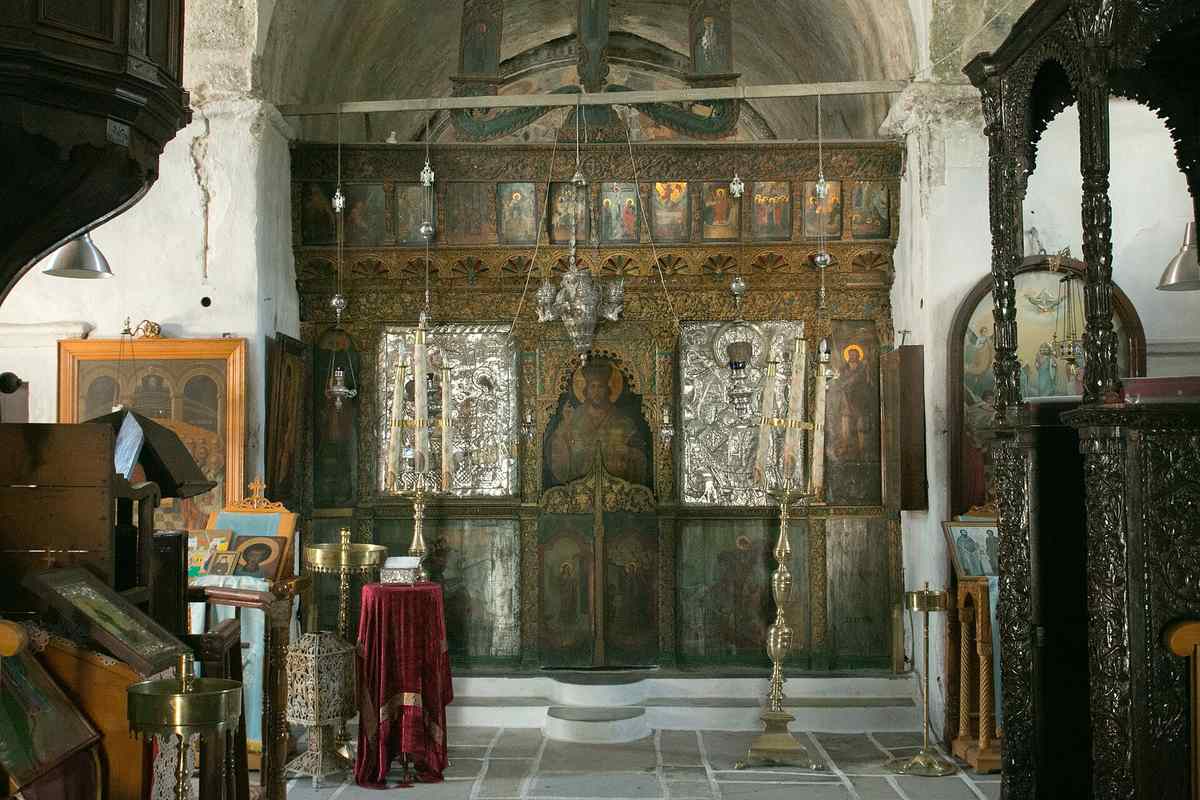
The centrepiece is Panagia Protothroni, a Byzantine church facing Halki’s central square whose foundations reach back well over a thousand years. Layers of frescoes from different periods survive inside, and its dignified stone bell tower is one of the village’s landmarks. The wider Tragaea is sometimes called a little Byzantium for the sheer number of old churches hidden among its olive groves, a host of with wall paintings of real artistic value. Close to Halki stands the Frankish-era Gratsia tower, a square fortified house that recalls the centuries when Venetian and other Western lords ruled Naxos from strongholds like this.
These monuments together tell the story of a village that was powerful enough to attract both the Orthodox Church and foreign nobility.
Alongside the churches, Halki’s streets are lined with neoclassical and older mansions built by the merchant and landowning families who prospered from the valley’s produce. Tall facades, carved doorways, iron balconies and shaded courtyards give the centre an elegance unusual for a mountain village, and a cluster of houses have been carefully restored. Walking slowly is the best way to appreciate the detail, from marble lintels to faded painted shutters. The same architectural richness continues in nearby mountain villages such as Apeiranthos, making Halki a fine first stop on a wider heritage route.
Having admired the buildings, most visitors are ready to slow down further and enjoy the village’s shops, cafes and local food, which the following section describes.
What is there to do and eat in Halki?
In Halki you can stroll the shaded main street, browse craft and food shops, taste kitron and local sweets, and linger in cafes and tavernas serving Naxian produce such as cheese, olive oil, honey and citrus dishes in a relaxed village setting.
The pleasures of Halki are gentle ones. The main street is a short, elegant parade of shops set in old buildings. You can find woven textiles, ceramics, herbs, olive oil, thyme honey and, of course, bottles of kitron. A well-known weaving workshop keeps traditional loom skills alive, and small delicatessens sell the graviera and other cheeses for which Naxos is famous across Greece. Browsing feels leisurely rather than rushed, and shopkeepers are happy to explain their products because everything is close together and largely free of traffic. Buying directly from these makers is one of the most rewarding ways to experience the village.
It puts local food and craft at the centre of any visit rather than as an afterthought.
Halki’s cafes and tavernas cluster around the square and along the main lane, dozens of with tables under trees or vine-shaded terraces when it is time to sit down. Dishes lean on the valley’s own produce: fresh cheeses, slow-cooked meats, garden vegetables, local wine and citrus-scented desserts, often finished with a complimentary glass of kitron. A cafe stop here is as a great deal of about the setting as the food, watching village life pass at its own pace. Halki also makes an ideal pause on a day of exploring the interior. Pairs well with the wider range of things to do in Naxos, from beaches to mountain hikes.
Read on for how to reach the village itself.
How do you visit Halki?
Halki is easiest reached by car or organised tour from Naxos Chora, about a twenty-minute drive inland. It sits on the main cross-island road and fits a mountain-villages loop through the Tragaea.
Halki lies on the central road that crosses Naxos from Chora towards the mountain villages, so it is simple to reach and hard to miss. Driving from the port town takes around twenty to thirty minutes through olive groves and gentle bends. There is parking on the edge of the village since the centre is best explored on foot. Public buses also serve the Tragaea route, though a car or guided tour gives more freedom to stop at churches and viewpoints along the way.
A wealth of travellers combine Halki with higher villages such as Apeiranthos and Filoti on a single scenic loop, turning a short visit into a full and memorable day among the finest inland scenery on the island.
A couple of simple tips make the trip smoother. Wear comfortable shoes for the paved lanes, allow at least an hour or two so you are not rushed, and try to include a distillery tasting and a coffee stop rather than only passing through. Mornings and late afternoons are cooler and quieter, and the light on the stone and greenery is especially lovely then. Combining Halki with one or two neighbouring villages, a taverna lunch and a Byzantine church or two makes an ideal inland day away from the coast. Plan your visit and tours through our Naxos travel guide.
Frequently Asked Questions
Where is Halki located on Naxos?
Halki is an inland village in the centre of Naxos, roughly sixteen kilometres from the port and main town of Chora. It sits in the Tragaea valley, a fertile upland plain of olive groves and small villages ringed by the island’s highest mountains. Halki is easy to reach and serves as a natural gateway to the interior because it lies on the central road that crosses Naxos towards the mountain settlements. The drive from Chora takes only twenty to thirty minutes through green countryside, so a wide range of visitors treat the village as their first stop when heading inland.
Its central position, historic importance and cluster of churches and mansions make it one of the essential places to see on any trip that goes beyond the beaches. It combines readily with nearby villages for a full day of exploring the heart of the island away from the busy coast.
What is kitron and where can I taste it in Halki?
Kitron is a traditional Naxian liqueur distilled mainly from the fragrant leaves of the citron tree, a citrus relative that has grown in the Tragaea valley for centuries. It is sweet, aromatic and comes in three grades that differ in strength and colour, from a mild green to a stronger clear version. Kitron is closely tied to Halki because the surrounding valley provided ideal conditions for cultivating citron, and the drink became a signature product of the area. The best place to taste it is the historic Vallindras distillery on the village’s main square, where the same family has distilled kitron for generations using old copper stills.
A visit lets you walk through the atmospheric premises, see the traditional equipment and sample the different grades, usually free of charge, before choosing a bottle to take home. Buying directly from the distillery supports a genuine local craft and makes for one of the most authentic souvenirs of Naxos.
How much time should I spend in Halki?
Most visitors find that one to two hours is enough to enjoy the essence of Halki, though it is easy to linger longer. In that time you can stroll the shaded main street, browse the craft and food shops, step inside the Byzantine church of Panagia Protothroni, tour the Vallindras distillery for a kitron tasting and pause at a cafe or taverna for a coffee or lunch. It is best explored slowly and on foot rather than rushed because the village is compact and largely free of traffic.
A host of travellers build Halki into a wider day in the mountain interior, combining it with nearby villages such as Apeiranthos and Filoti, a Byzantine church or two and a leisurely taverna meal. Approached this way, Halki becomes the calm, cultured centrepiece of a full inland day rather than a quick stop, offering a rewarding contrast to the beaches and busier coastal resorts of Naxos.