
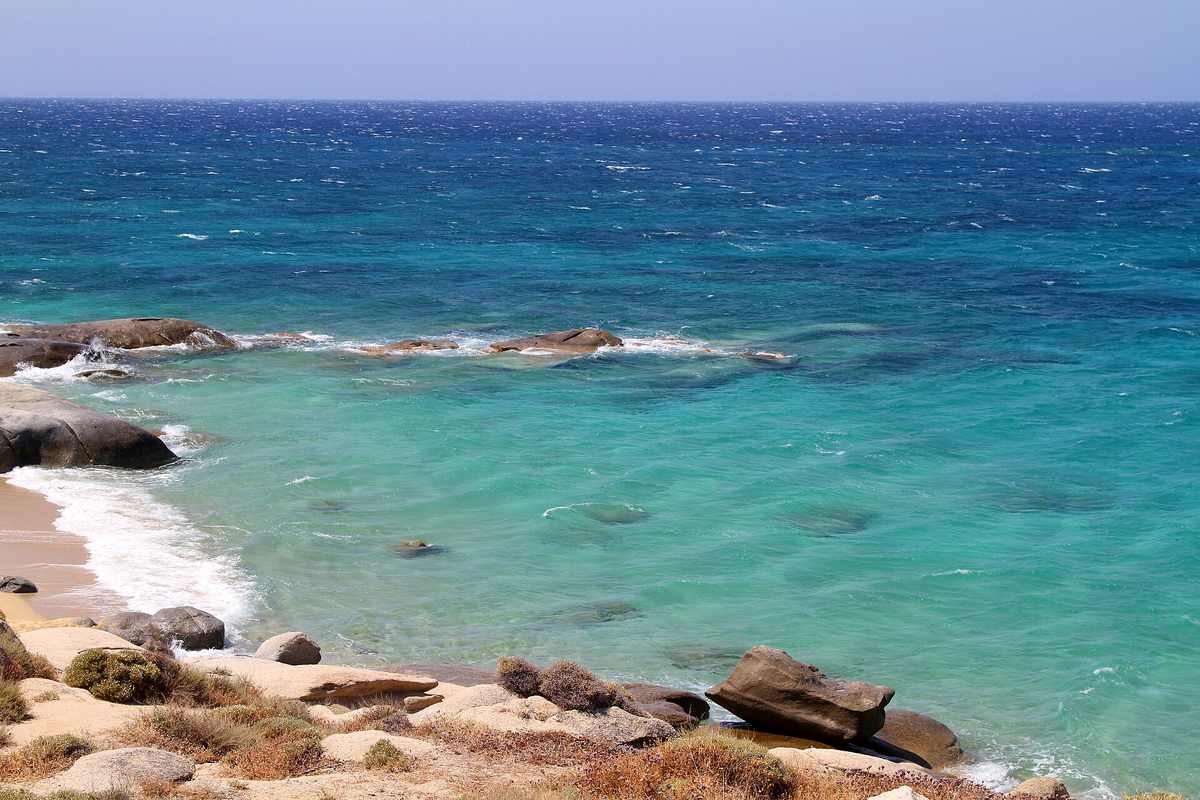
Naxos holds the longest, softest stretches of sand in the Cyclades, and its beaches are the main reason so a wealth of travellers return year after year. The whole south-west coast is one gentle ribbon of pale sand and clear, shallow water, sheltered enough for families yet open enough for windsurfers chasing the meltemi. From the lively town beach of Agios Georgios to the wild dunes of Alyko, there is a shore here for every mood, and the water stays warm and inviting through the long Aegean summer. You can explore the island’s coast on a relaxed guided tour with My Greece Tours if you would rather have every detail handled.
This page pulls together the finest sandy bays on the island so you can plan your days with confidence, and it works alongside our wider Naxos travel guide for everything beyond the shoreline. The sections below cover why Naxos beaches are so special, the beaches closest to Naxos Town, the long southern beaches, where to do watersports, and the practical details of getting there and staying comfortable.
Why are the beaches of Naxos so special?
Naxos beaches stand out for their sheer length of fine pale sand, shallow turquoise water and a west-facing coast sheltered from the roughest seas.
The magic of the Naxian coast comes down to geography. The island’s south-west shore faces away from the open Aegean swell, so the sea arrives calm and glassy across a wide, gently shelving seabed. That shallow gradient is why the water glows in bands of pale turquoise and stays warm and safe for children well out from the shore. The sand itself is unusually soft and fine, formed into broad flat expanses and, further south, into rolling dunes. Its beaches simply have room to breathe, spreading over kilometres rather than squeezing into small rocky coves the way dozens of island shores do because Naxos is the largest of the Cyclades.
There is also a feeling of unhurried space here that has been lost on the more famous islands. Where Mykonos packs sunbeds fin to fin and Santorini offers dark volcanic strips backed by cliffs, Naxos gives you long open horizons, tamarisk shade and ample undeveloped sand for anyone who wants to walk away from the crowd. Prices are gentler and the pace is slower, which is a large part of the island’s charm. That same generous coast begins right on the doorstep of the main town, so the first beaches worth knowing are the ones closest to Naxos Town.
For the water itself, add a session of snorkelling in Naxos over the rocky reefs at the ends of these bays.
Which beaches are closest to Naxos Town?
The nearest is Agios Georgios, the town beach within walking distance of the harbour and old quarter. Just south lie the celebrated Agios Prokopios and neighbouring Agia Anna, both reachable in minutes by the frequent local bus, taxi, car or scooter.
Agios Georgios is the beach you can reach on foot straight from the centre of Naxos Town, curving south from the harbour in a broad shallow arc. Its calm, waist-deep water makes it a favourite with families, while the promenade behind it is lined with cafes, tavernas and small hotels. You are never far from a cold drink or a shaded lunch. Agios Georgios is ideal for a first afternoon on the island, letting you swim, stroll and watch the ferries come and go without ever needing transport because it sits right beside the port and the maze of the old town.
A couple of minutes south, the coast opens into its most famous stretch. Agios Prokopios beach is regularly ranked among the finest in Greece, a long band of white sand meeting water so clear it looks almost tropical, backed by a small resort of rooms and beach bars. Immediately beyond it, Agia Anna continues the same golden sweep in a slightly quieter, more village-like setting with fishing boats and family tavernas. Both are served by the frequent local bus, making them effortless day trips. Keep heading south from Agia Anna and the coast unrolls into the long, wilder beaches that a wealth of visitors consider the real prize.
Divers go deeper with diving in Naxos at the wall and cave sites off the same coast.
What are the best long southern beaches?
South of Agia Anna the coast becomes a vast open expanse. Plaka is the star, a long sweep of sand and dunes, followed by Mikri Vigla, Kastraki, the cedar-forested Alyko and finally Pyrgaki. Each grows wilder, emptier and more beautiful as you drive south.
Plaka is where Naxos shows its true scale, an almost endless line of soft sand and low dunes stretching for kilometres beneath waving tamarisk and clumps of sea lily. Parts of it are organised with sunbeds and easygoing beach bars, but you only have to walk a short way to find a stretch of sand entirely your own. One quieter section has long been a favourite with naturists. The shallow, translucent water is the same dreamy turquoise you find further north, only with far fewer people around. For dozens of returning visitors Plaka is simply the best all-round beach on the island, roomy enough that it never feels busy even at the height of summer.
Continue south and the landscape turns steadily wilder. Mikri Vigla splits around a rocky headland into two bays, and just beyond it Kastraki offers a long ribbon of pale sand where development thins to almost nothing. Then comes Alyko, the most distinctive of all, its dunes cradling a rare grove of ancient cedar trees whose roots pin the sand in place and cast dappled shade over hidden pockets of beach. Furthest down the coast, Pyrgaki closes the run with calm, shallow water and a genuine end-of-the-road quiet. These wind-brushed southern shores are exactly where the island’s watersports scene comes alive. Paddlers reach the quieter coves by sea kayaking in Naxos along this shore.
Where can you do watersports on Naxos?
Mikri Vigla and the wider south-west coast are among the top windsurfing and kitesurfing spots in Greece, driven by the reliable meltemi wind. Well-run schools and rental centres here cater to beginners and experts alike, with equipment, lessons and safe launch spots.
The summer meltemi that funnels through the Cyclades turns the south-west of Naxos into a genuine watersports haven. Mikri Vigla is the beating heart of it: the rocky headland neatly divides the bay so that one side offers steady flat-water conditions perfect for learning. The other picks up stronger gusts and waves for advanced riders. Long-established windsurfing and kitesurfing schools cluster here, offering board and kite rental, structured courses and instructors who read the daily wind and steer you to the right side of the point. Even complete beginners can book a taster session and be gliding across the shallows within a day or two.
Beyond Mikri Vigla, the same dependable breeze lifts Plaka and the beaches south of it into fine conditions for freeride sailing and downwinders. The calmer bays near town suit paddleboarding, kayaking and gentle snorkelling over seagrass meadows. Rentals and lessons are easy to arrange right on the sand, and a wide range of centres also organise coastal excursions for those who want to combine sport with sightseeing. Watersports are only one slice of the island’s appeal, of course. It is worth planning how you will reach these beaches and fit them around everything else there is to do. Hire your own hull through boat rental in Naxos to reach the sands that no road serves.
How do you get to the beaches and what should you know?
Frequent local buses link Naxos Town to Agios Prokopios, Agia Anna, Plaka and beyond, while a hire car or scooter unlocks the wilder southern bays. Organised beaches offer sunbeds and tavernas; the remote ones need water, shade and sun sense.
Getting to the sand is refreshingly simple. From the central bus station in Naxos Town, regular services run down the west coast to Agios Prokopios, Agia Anna and Plaka throughout the day in season. You can reach the headline beaches with no car at all. To explore the quieter southern shores like Kastraki, Alyko and Pyrgaki, a hired car or scooter gives you the freedom to hop between bays and chase the calmest water. Rental offices cluster around the port and town. Since there are no shortage of things to do in Naxos beyond the coast, from mountain villages to ancient temples while you are organising transport it is well worth browsing the island’s other highlights.
Once you arrive, know the difference between the organised and the wild beaches. Agios Georgios, Agios Prokopios, Agia Anna and stretches of Plaka come with sunbeds, umbrellas, showers and tavernas within easy reach, so you can turn up empty-handed. The southern bays and the hidden pockets around Alyko have little or no infrastructure, so carry water, snacks, shade and everything you need for the day. The afternoon meltemi can whip up sand and stronger currents on exposed shores, and the Aegean sun is fierce, so pack high-factor sunscreen, a hat and a windbreak, and time your swim for the calmer mornings. Plan your visit and tours through our Naxos travel guide.
Frequently Asked Questions
Which is the best beach in Naxos?
There is no single answer, because the best beach depends on what you want from your day. Agios Prokopios and Plaka are the two names that come up most often. Agios Prokopios pairs postcard-perfect white sand and glassy shallow water with an easy strip of beach bars and rooms. It is regularly listed among the finest beaches in the whole of Greece, which makes it ideal if you like a little life and convenience around you. Plaka, just to the south, wins the hearts of travellers who prefer space, dunes and a slower rhythm, since it runs for kilometres and lets you find a quiet patch of sand even in peak season.
Families with small children often favour Agios Georgios in town for its shallow, sheltered water and walking-distance cafes. For raw natural beauty a wealth of single out Alyko, where a grove of cedar trees rises straight from the dunes. Try to sample two or three and let your own taste decide.
Are the beaches of Naxos suitable for children?
Naxos is one of the most family-friendly islands in the Cyclades, largely thanks to the nature of its west-coast beaches. The sea here shelves very gradually across soft, clean sand. The water stays shallow and warm a long way out, giving small children a wealth of safe space to paddle and play without sudden drop-offs. Agios Georgios, right beside the town, is a classic family choice because it is calm, sheltered and lined with cafes. Parents are never far from shade, snacks or a changing spot. Agios Prokopios and Agia Anna are also excellent, offering the same gentle water together with sunbeds, umbrellas and tavernas within a couple of steps of the sand.
On the more exposed southern beaches the afternoon meltemi wind can pick up and stir the sea. With younger children it is wise to swim in the calmer mornings and choose the more sheltered organised bays. Bring no shortage of water, high-factor sunscreen and a sunshade, since the Aegean sun is strong throughout the season.
When is the best time to visit the beaches of Naxos?
The beach season on Naxos runs from late spring through to early autumn, and each part of it has its own character. Late spring and early summer bring warm, settled days, sea temperatures that are climbing pleasantly and beaches that are still delightfully uncrowded. This makes it a notable window for a relaxed coastal holiday. High summer is the hottest and busiest stretch, with the sea at its warmest and every beach bar in full swing. It is also when the meltemi wind blows most reliably, so the exposed western shores can get gusty in the afternoons even as they draw windsurfers and kitesurfers from across Europe.
Early autumn is a favourite of a wealth of regulars: the crowds thin out, the sea is at its warmest after a long summer of heating. Prices ease while the days stay gloriously sunny. Whenever you come, aim to swim in the calmer mornings on the wind-exposed southern beaches, and keep the sheltered bays near town in reserve for breezier days.