
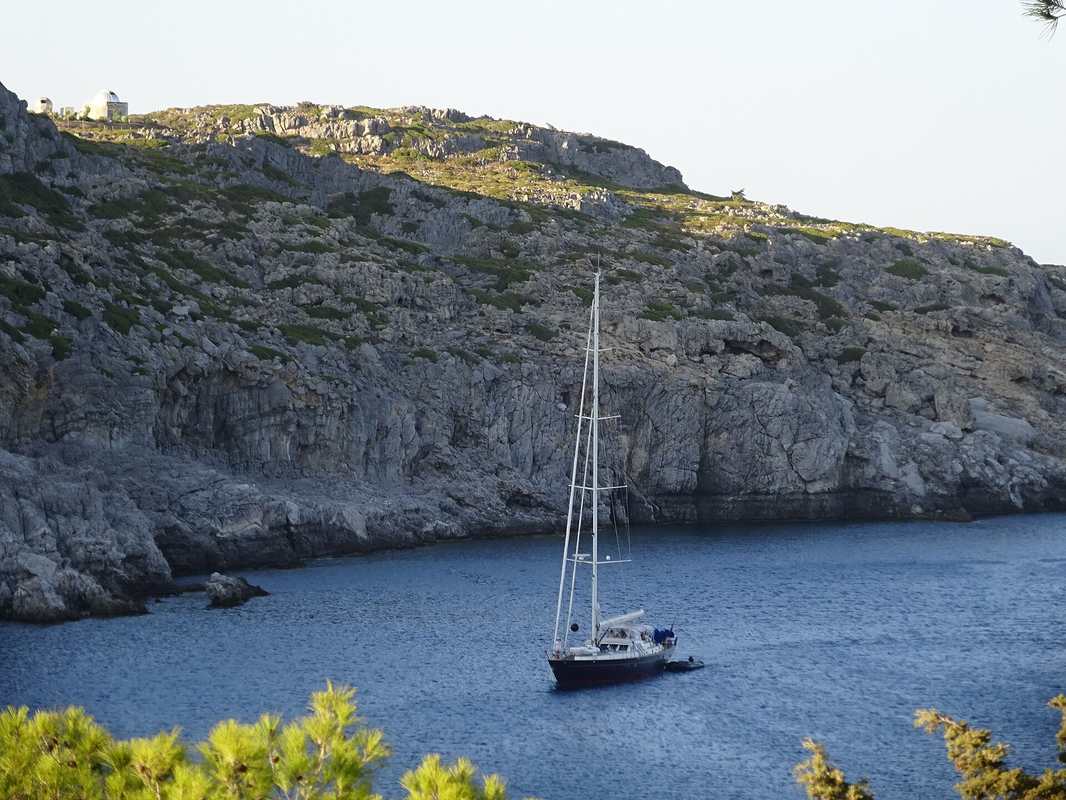
Anthony Quinn Bay is a small, scenic rocky cove on the east coast of Rhodes, set just beside Ladiko beach near the resort of Faliraki, and prized for its strikingly clear turquoise water, rocky outcrops and pine-fringed slopes. It is a pebble-and-rock cove rather than a long sandy beach, which keeps the water exceptionally clean and makes it one of the most photographed swimming spots on the island. The sheltered, transparent shallows draw snorkellers, swimmers and photographers throughout the warm months, while the surrounding hills give the bay a wild, cinematic feel. Plan tickets and tours through My Greece Tours.
For wider island context, see our Rhodes travel guide. The sections below cover what Anthony Quinn Bay is, why it carries that name, where it sits and how to reach it, what you can do there, and the practical tips that make a visit smoother.
What is Anthony Quinn Bay?
Anthony Quinn Bay is a small, sheltered rocky cove on the east coast of Rhodes, beside Ladiko beach near Faliraki. It is known for clear turquoise water, rugged outcrops and pine-clad slopes, forming a pebble-and-rock swimming spot rather than a broad sandy beach.
The bay sits within a horseshoe of low cliffs and pine-covered hillside, and the combination of rock, depth and shelter keeps the water unusually transparent. Instead of sand, the shoreline is made of pebbles and flat rock platforms that step down into the sea, so the cove reads more like a natural swimming pool than a conventional resort beach. This setting is exactly what gives Anthony Quinn Bay its reputation: calm, glassy shallows that shade quickly into deep blue, framed by greenery and stone. It is compact, which is part of its charm and also the reason it fills up fast in high summer.
Visitors come mainly to swim, snorkel and take in the scenery rather than to spread out on towels along a wide strand. Because the bay is small and the rock gives way to deeper water close to shore, it rewards confident swimmers and anyone who enjoys looking down through clear water at fish and submerged rock. The atmosphere is relaxed and scenic rather than developed, with only limited facilities. Our guide to Rhodes beaches covers how this cove compares with the island’s sandier shores, and the next section covers why it is called Anthony Quinn Bay.
Why is it called Anthony Quinn Bay?
The cove is named after the actor Anthony Quinn, who came to this part of Rhodes while filming the war epic The Guns of Navarone nearby. He grew attached to the bay, and a well-known but legally contested story claims he acquired land here, cementing the name in local memory.
The connection dates to the filming of The Guns of Navarone in the area, when Quinn spent time around this stretch of coast and reportedly fell for the dramatic, rocky scenery. Over the years the bay became informally linked with his name, and that name stuck so firmly that today most maps, signs and visitors use it rather than any older local label. The association adds a layer of cinematic romance to a spot that already looks like a film set, which is part of why it remains such a popular stop on the east coast.
Alongside the affection, there is a long-running and legally contested story that the actor acquired land around the bay, a claim that has been the subject of dispute over the decades. Rather than treat that as settled fact, it is best understood as part of the bay’s lore: a memorable tale that travellers hear and retell. What matters for a visit is that the name reflects a genuine personal attachment to the place. Our guide to nearby Faliraki covers the resort that most visitors base themselves in, and the next section covers where the bay is and how to get there.
Where is Anthony Quinn Bay and how do you get there?
Anthony Quinn Bay lies on the east coast of Rhodes, immediately beside Ladiko beach and just a short distance from the resort of Faliraki. Most visitors reach it by car, taxi or bus from Faliraki or Rhodes town, following signs down to the cove from the coastal road.
From Faliraki the bay is only a few minutes away, which makes it an easy half-day trip for anyone staying in or near the resort. The most flexible option is to drive, as you can arrive early, leave when the crowds build and combine the cove with Ladiko beach next door. A taxi works well if you prefer not to drive the narrow access lane, and local buses running along the east-coast route put you within reach of the turn-off, from where a short walk or transfer completes the journey down to the water.
The final approach descends from the main road toward the shore, so allow a little time for the last stretch and for finding somewhere to leave the car. Because everything is close together, many people pair Anthony Quinn Bay with other sights along this coast in a single outing rather than treating it as a standalone destination. Our guide to things to do in Rhodes covers how the bay fits into a wider east-coast itinerary, and the next section covers what you can do once you arrive.
What can you do at Anthony Quinn Bay?
At Anthony Quinn Bay you can swim in calm clear water, snorkel around the rocky outcrops, and relax on the pebble-and-rock shore. The transparent shallows and submerged rock make it one of the best snorkelling spots on Rhodes, while the scenic setting is ideal for photography and quiet sunbathing.
Snorkelling is the headline activity here. The clarity of the water, the underwater rock formations and the resident fish make even a short swim with a mask rewarding, and the sheltered cove keeps conditions calm on most days. Swimmers who enjoy deeper water will appreciate how quickly the bay drops away from the rocks, while those who prefer to stay shallow can paddle in the protected edges. Bringing your own snorkel gear is wise, since facilities are limited and the appeal of the bay is very much about getting into the water.
Above the waterline, the bay is a fine place to sunbathe on the rocks or claim one of the limited sunbeds, photograph the turquoise water against the pines, and simply take in a setting that feels far wilder than the nearby resort. It is a place for slow, scenic enjoyment rather than busy beach activities, and pairing it with neighbouring Ladiko beach gives you a sandier option close by. Our guide to where to stay in Rhodes covers the best bases for reaching the cove easily, and the next section covers the tips that help you visit.
What tips help you visit Anthony Quinn Bay?
Arrive early to beat the crowds and secure parking, wear water shoes because entry is over rocks rather than sand, and bring your own snorkel gear, water and shade. The cove is small and very busy in summer, with limited parking and only some sunbeds, so planning ahead makes a real difference.
Timing is the single most useful tip. Anthony Quinn Bay is compact and extremely popular, so it fills quickly on summer mornings and the limited parking disappears fast. Coming early, or later in the afternoon, gives you a calmer experience and a better chance of a spot near the water. Footwear matters too: because you enter the sea over rocks rather than sand, water shoes protect your feet and make getting in and out far more comfortable, especially when the rocks are slippery.
Pack as though facilities will be minimal, since they are. Carry your own water, sun protection and snorkel gear, and consider some shade, as natural cover is limited and demand for sunbeds is high. Keep your visit relaxed by combining the cove with neighbouring Ladiko beach so you have a sandy alternative if the bay is crowded. Treat the rocky shore with care, watch your footing, and respect the small, fragile setting. Plan your visit and tours through our Rhodes travel guide.
Frequently Asked Questions
Is Anthony Quinn Bay good for snorkelling?
Yes, Anthony Quinn Bay is widely regarded as one of the best snorkelling spots on Rhodes. The water is strikingly clear and the bay is sheltered, so conditions stay calm on most days, and the rocky outcrops both above and below the surface create habitat for fish and interesting underwater scenery. Because the shoreline is made of pebbles and rock rather than sand, very little sediment is stirred up, which keeps visibility excellent. The cove also drops away to deeper water quite close to shore, giving snorkellers plenty to explore without swimming far. To make the most of it, bring your own mask, snorkel and fins, as facilities are limited, and wear water shoes for the rocky entry. Early morning, when the water is calmest and the cove is least crowded, tends to offer the clearest views and the most relaxed experience for swimming and snorkelling alike.
Does Anthony Quinn Bay have sand or sunbeds?
Anthony Quinn Bay is a pebble-and-rock cove rather than a sandy beach, so you should not expect a soft, wide strand. The shoreline is made up of pebbles and flat rock platforms that step down into the sea, which is exactly what keeps the water so clear, but it also means the entry into the water is over rocks. For this reason water shoes are strongly recommended for comfort and grip. There are some sunbeds available, but they are limited in number and in high demand during the busy summer months, so they can be claimed early in the day. Many visitors simply lay a towel on the rock platforms instead. Because the cove is small with only basic facilities, it is wise to bring your own water, shade and snorkel gear. If you want sand close by, the neighbouring Ladiko beach offers a sandier alternative just a short distance away.
How do you get to Anthony Quinn Bay from Faliraki?
Anthony Quinn Bay sits just a short distance from the resort of Faliraki on the east coast of Rhodes, beside Ladiko beach, so it is one of the easiest excursions for anyone staying in the area. The most flexible way to reach it is by car, which lets you arrive early, beat the crowds and combine the cove with Ladiko next door, though the access lane is narrow and parking is limited. A taxi is a convenient alternative if you would rather not drive the final approach, dropping you close to the shore. Local buses running along the east-coast route also pass within reach of the turn-off, from where a short walk or transfer takes you down to the water. Whichever option you choose, allow a little extra time for the descent to the cove and for finding somewhere to leave the car, especially during the busy midday hours when the bay is at its fullest.