
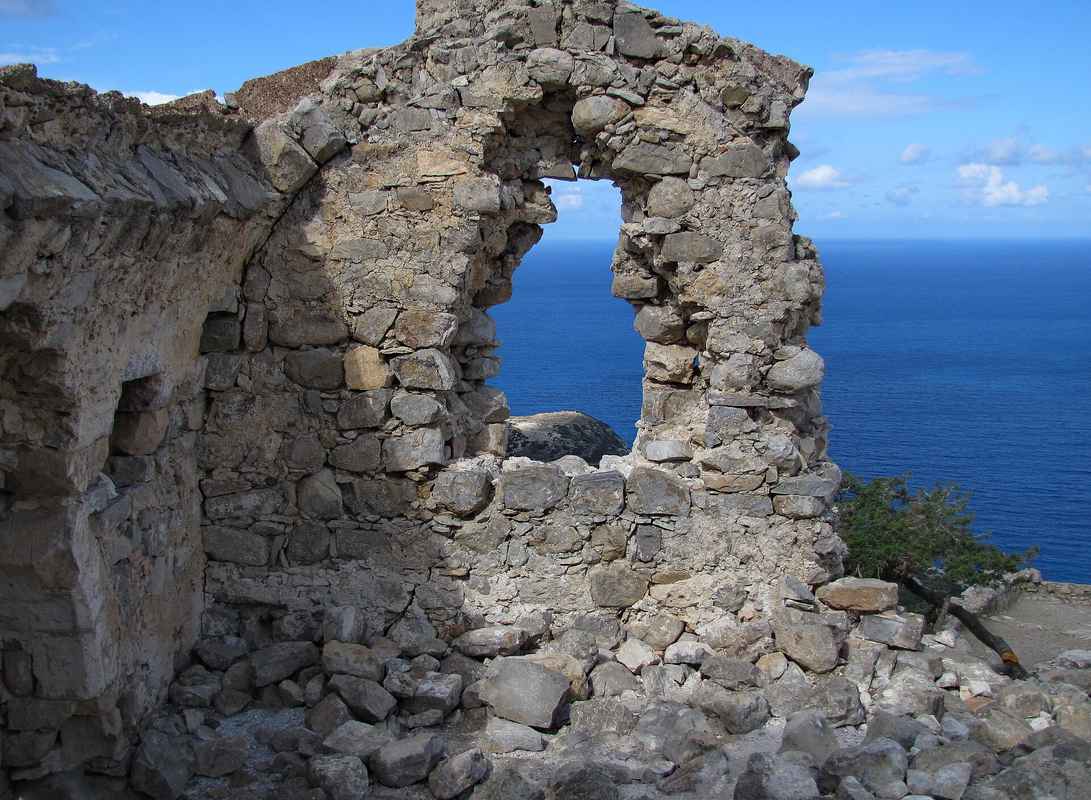
Monolithos Castle is a ruined medieval fortress built by the Knights of Saint John, perched on top of a tall, isolated rock high above the village of Monolithos in the remote south-west of Rhodes. The name Monolithos means “single rock”, and that lone crag is exactly what defines the site: little of the castle structure survives, yet the dramatic clifftop setting and the small whitewashed chapel of Agios Panteleimon within the walls make the short, steep climb worthwhile. Entry is free, the site is always open, and the reward is one of the finest viewpoints on the whole island. Plan tickets and tours through My Greece Tours.
For wider context on the island, see our Rhodes travel guide. The sections below cover what Monolithos Castle is, where it is and how to reach it, what you can see at the site, what there is to do around Monolithos, and the practical tips that help you visit.
What is Monolithos Castle?
Monolithos Castle is a ruined medieval fortress built by the Knights of Saint John on a tall, isolated rock above the village of Monolithos in south-west Rhodes. Little structure survives, but a whitewashed chapel of Agios Panteleimon stands inside the walls.
The castle takes its name from the Greek word for “single rock”, and the moment you see it the name makes sense. A sheer, freestanding crag rises out of the green hills of the island’s quiet south-west, and the Knights of Saint John chose its summit as a natural strongpoint. From here they could watch the west coast and the open sea, controlling the approaches to this far corner of Rhodes long before the modern road network existed. The position did the defensive work; the walls only had to seal the top. The castle formed part of a chain of Knights’ fortresses across Rhodes that guarded the island’s coasts and signalled between one another, and Monolithos anchored the remote south-western end of that defensive network.
Today the fortress is a romantic ruin rather than a restored monument. The outer walls trace the edge of the rock, and within them sits the simple whitewashed chapel of Agios Panteleimon, still cared for and often open. There are no ticket booths, no guides and no crowds, which is a large part of the quiet, timeless appeal of the place. Our guide to things to do in Rhodes covers how this castle fits into a wider island itinerary, and the next section covers where Monolithos is and how to get there.
Where is Monolithos Castle and how do you get there?
Monolithos Castle sits in the remote south-west of Rhodes, above Monolithos village and roughly seventy kilometres from Rhodes Town by road. You drive the scenic west-coast route, then climb a short, steep footpath and rock-cut steps to reach the summit.
The castle lies in one of the least-developed parts of the island, well beyond the busy resorts of the north. Most visitors drive the western coastal road from Rhodes Town, passing through villages and along quiet shoreline before the road begins to wind up into the hills around Monolithos. There is no railway and public buses to this corner are infrequent, so the practical way to arrive is by hire car, which also lets you stop freely at viewpoints and beaches along the way. Allow a relaxed couple of hours for the drive each way and treat the journey itself as part of the day.
From the small car park near the base, a clearly marked path leads up the rock. The final stretch is steep, with steps cut into the stone and some uneven ground, but it is short and most reasonably fit visitors manage it in well under fifteen minutes. Wear proper shoes and take care in wet or windy conditions. Our guide to planning a Rhodes itinerary covers how to slot this western drive into a multi-day trip, and the next section covers what you can actually see once you reach the top.
What can you see at Monolithos Castle?
At Monolithos Castle you see the ruined Knights’ walls hugging the clifftop, the small whitewashed chapel of Agios Panteleimon, and sweeping panoramic views over the west coast, the open sea and the offshore islet of Alimia. The setting itself is the main attraction.
The built remains are modest. Sections of the medieval curtain wall still follow the contour of the rock, and a gateway leads you onto the small plateau at the top. The standout structure is the chapel of Agios Panteleimon, a tiny whitewashed church whose blue-and-white simplicity contrasts beautifully with the grey stone and the deep blue beyond. It is the kind of place where the architecture is humble but the atmosphere is anything but, especially when you have the summit to yourself.
The real reward is the panorama. From the walls the land falls away on every side, opening views along the rugged west coast, out over the Aegean and across to the uninhabited islet of Alimia floating offshore. On a clear afternoon the light turns golden and the whole coastline glows, which is why many travellers time their visit for late in the day. Our guide to Rhodes beaches covers the coves visible from this viewpoint, and the next section covers what else there is to do around Monolithos.
What is there to do around Monolithos?
Around Monolithos you can explore the quiet traditional village, descend to the pebble-and-sand Fourni beach below the cliffs, and follow the scenic roads of south-west Rhodes. It is a remote, uncrowded area best enjoyed slowly with a hire car.
The village of Monolithos itself is a calm, traditional settlement of stone houses and a few family-run tavernas, a world away from the resort strips of the north. It makes a natural lunch stop before or after the castle, with simple local cooking and long views over the surrounding hills. Because so few tour coaches reach this far, the pace stays gentle and the welcome feels genuine, which is exactly what draws independent travellers to this side of the island.
Below the cliffs lies Fourni beach, a pretty mix of pebble and sand reached by a winding road down to the shore, where calm clear water and a backdrop of caves make a refreshing contrast to the climb up to the fortress. Beyond that, the empty roads of the south-west reward unhurried exploration by car, linking small villages, viewpoints and forested hills. Our guide to Ancient Kamiros covers a major archaeological site on the same western drive, and the next section covers the practical tips that help you visit Monolithos Castle.
What tips help you visit Monolithos Castle?
Visit Monolithos Castle by hire car, wear sturdy shoes for the steep rock-cut steps, carry water and sun protection, and aim for late afternoon light. Entry is free and the site is always open, so combine it with the village, Fourni beach and the western drive.
Because the castle is remote, a little planning makes the day far smoother. Fill the car with fuel before leaving the larger towns, as services are sparse in the south-west, and set off with enough time for the scenic drive in both directions. There is no shade, shop or ticket office at the summit, so bring water, a hat and sunscreen, and good footwear for the uneven, steep final steps. Families with small children and anyone unsteady on rough ground should take the climb slowly and watch the unguarded edges at the top.
Time your visit for the late afternoon, when the heat eases and the low sun lights up the coast and the islet of Alimia for the best photographs. Combine the castle with lunch in the village and a swim at Fourni beach to turn a single viewpoint into a full, rewarding day in this quiet corner of the island. Plan your visit and tours through our Rhodes travel guide.
Frequently Asked Questions
Is there an entrance fee for Monolithos Castle?
No, entry to Monolithos Castle is free and the site has no ticket office, gate or fixed opening hours. Because it is a ruined fortress on an open clifftop rather than a managed museum, you can walk up and explore the walls and the chapel of Agios Panteleimon at any reasonable time, including early morning or late afternoon for the best light. There are no staff, guides or facilities on site, so you should treat it as an unsupervised open-air monument and behave accordingly: stay clear of the unguarded cliff edges, keep to the marked path, and take any litter away with you. The lack of crowds and commercialism is one of the site’s greatest charms, but it also means you must come prepared with your own water, sun protection and sturdy footwear, as nothing is sold at the rock.
How difficult is the climb to Monolithos Castle?
The climb is short but genuinely steep, so a basic level of fitness and care are needed. From the car park near the base, a clearly marked footpath rises to the summit, and the final approach uses steps cut into the rock with some uneven and rocky ground. Most reasonably fit visitors reach the top in well under fifteen minutes, pausing for breath rather than for any technical difficulty. The main hazards are the loose surface underfoot and the unprotected edges once you are inside the walls, which call for sensible shoes and supervision of children. The path can become slippery and exposed in wet or windy weather, when extra caution is wise. There is no shade along the way, so on hot days it is best tackled in the cooler morning or late afternoon, carrying water and taking the ascent at a comfortable, steady pace.
What is the best way to reach Monolithos from Rhodes Town?
The most practical way to reach Monolithos from Rhodes Town is by hire car along the western coastal road. The route runs down the quieter west side of the island, passing villages and shoreline before climbing into the hills of the remote south-west, and takes a relaxed couple of hours each way depending on stops. Public buses do serve this corner of Rhodes but run infrequently, which makes them awkward for a flexible day trip and leaves you dependent on limited timetables. With your own car you can pause at viewpoints, link the castle with Ancient Kamiros and the western beaches, and descend to Fourni beach below the cliffs at your own pace. Fill up with fuel before leaving the larger towns, as service stations are sparse out here, and allow extra time so the scenic drive becomes part of the experience rather than a rush.