
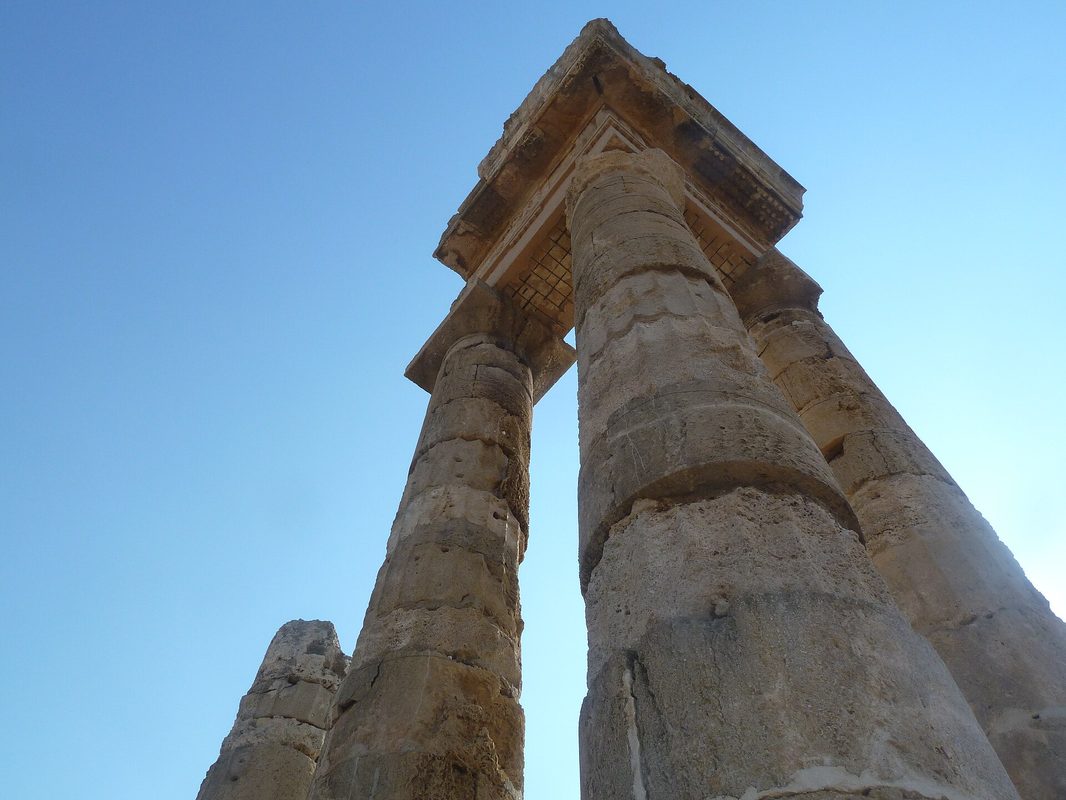
The Acropolis of Rhodes is the Hellenistic sanctuary on the Monte Smith hill at the western edge of Rhodes town, where the re-erected columns of the Temple of Apollo Pythios, a restored stadium and a small marble odeon stand in an open archaeological park. Unlike a defensive citadel, it served as the civic and religious heart of the ancient city. Plan tickets and tours through My Greece Tours.
For wider context on the island, the broader Rhodes travel guide sets this site within everything the island offers. The sections below cover what the Acropolis of Rhodes is, where it sits on Monte Smith, what you can see there, how it differs from the Acropolis of Lindos, and how to plan your visit.
What is the Acropolis of Rhodes?
The Acropolis of Rhodes is the Hellenistic religious and civic sanctuary of the ancient city, built on the Monte Smith hill. Rather than a fortified stronghold, it was an open complex of temples, a stadium and a theatre that crowned the western heights above the planned grid of Rhodes town.
Founded after the unification of the island’s three old cities in the late fifth century BC, Rhodes grew into one of the great maritime powers of the Hellenistic world, and its acropolis reflected that wealth and confidence. The hill was laid out as a sacred and cultural quarter rather than a refuge, with sanctuaries dedicated to Apollo, Athena and Zeus arranged across broad terraces. Public buildings for sport and performance sat alongside the temples, so the site combined worship, athletics and learning in one elevated precinct overlooking the sea. This blend reflected the confidence of a city that excelled in trade, art and scholarship, and the hill was designed to be admired from the harbour and the planned streets below as much as used by those who climbed it.
Much of what survives today is the result of careful excavation and partial restoration carried out over the last century, which re-erected several columns and rebuilt the stadium to its original lines. The remains are spread across a low, green hill rather than concentrated behind walls, which is why the place reads more as a landscaped park than a ruined fortress. Our guide to Rhodes Old Town covers the medieval city below the hill, and the next section covers exactly where the acropolis sits on Monte Smith.
Where is the Acropolis of Rhodes (Monte Smith)?
The Acropolis of Rhodes occupies Monte Smith, a low hill also known as Agios Stefanos, on the western edge of Rhodes town. It lies a short distance inland from the seafront, roughly two kilometres from the medieval old town, and rises gently to give wide views over the modern city and the surrounding sea.
The hill takes its modern name from a British admiral who used the heights as a lookout during the Napoleonic era, while its Greek name, Agios Stefanos, comes from a chapel on the slope. Because it stands on the western side of the peninsula, the summit faces the open Aegean, which is why it has become one of the most popular spots on the island to watch the sun set. The position was deliberate in antiquity too, giving the sanctuary prominence above the harbour-facing grid of the ancient city.
Reaching Monte Smith is straightforward: it is a walkable distance from the centre, an easy taxi ride, or a stop on local bus routes that climb the western suburbs. The roads up the hill are lined with residential streets and pine, so the approach feels relaxed rather than touristy. Our guide to things to do in Rhodes covers how to fit the hill into a wider day, and the next section covers what you can actually see once you reach the top.
What can you see at the Acropolis of Rhodes?
At the Acropolis of Rhodes you can see the Temple of Apollo Pythios with its re-erected columns on a terrace, a restored ancient stadium, a small marble odeon used for music and rhetoric, the foundations of the temples of Athena Polias and Zeus Polieus, and a nymphaeum of rock-cut grottoes.
The Temple of Apollo is the most photographed feature, where a row of slender columns and part of the entablature have been raised again on the upper terrace, framed against the sky and the sea below. Just downhill, the long, narrow stadium has been restored close to its ancient form, complete with the curved end and starting line where runners once competed in the city’s games. Beside it stands the compact odeon, a small marble theatre whose tiered seating once hosted musical contests and lessons in rhetoric.
Lower on the hill lie the more fragmentary remains: the broad foundations of the temples of Athena Polias and Zeus Polieus, which once dominated the highest ground, and the nymphaeum, a set of artificial grottoes cut into the rock and linked by underground passages that supplied and stored water. Together they show how athletics, performance and worship shared the same precinct. Our guide to the Colossus of Rhodes covers the island’s most famous monument, and the next section covers how this hilltop sanctuary differs from the acropolis at Lindos.
How does it differ from the Acropolis of Lindos?
The Acropolis of Rhodes is a spread-out civic and religious sanctuary on a low, open hill, whereas the Acropolis of Lindos is a fortified clifftop citadel crowned by a medieval castle and the Temple of Athena Lindia. One emphasises open public space, the other dramatic defence and elevation.
At Lindos the ancient sanctuary sits atop a sheer rock high above a bay, and successive rulers, including the Knights of Saint John, wrapped it in heavy fortifications, so today you climb through medieval walls to reach the classical temple at the summit. The setting is steep, compact and defensive, and the approach itself is part of the experience as the path winds up from the white village below. The acropolis of Rhodes, by contrast, never carried such walls and was never reshaped into a castle.
The Rhodes hill instead spreads its temples, stadium and odeon across gentle terraces that you wander freely, with no single fortified summit to climb. Where Lindos rewards visitors with vertiginous sea views from behind battlements, Monte Smith offers a calmer, parkland feel and sweeping sunsets over the town. Choosing between them is less either-or than complementary, since the two sites show different faces of ancient Rhodian life. Our guide to Lindos in Rhodes covers the clifftop citadel in detail, and the next section covers how to plan a visit to Monte Smith.
How do you visit the Acropolis of Rhodes?
You visit the Acropolis of Rhodes by heading to Monte Smith on the western edge of town, on foot, by taxi or by local bus. The site is largely an open, unfenced archaeological park with free entry, so you can wander the terraces at your own pace, with late afternoon especially popular for the sunset.
Because most of the hill is open ground rather than a ticketed enclosure, there are no queues or set opening rituals for the main terraces, and you simply walk among the monuments. Comfortable shoes help on the uneven paths and grass, and shade is limited, so a hat and water are sensible in the warmer months. Many visitors time their arrival for the last hours of daylight, when the columns of the Temple of Apollo glow and the western horizon turns gold over the sea, making it one of the finest free viewpoints on the island.
A relaxed visit pairs naturally with the old town and the seafront, since the hill is close enough to combine into a single afternoon and evening. Guided walking tours and small-group excursions often include Monte Smith alongside the medieval city, which adds historical context to the bare stones. Plan your visit and tours through our Rhodes travel guide.
Frequently Asked Questions
Is the Acropolis of Rhodes free to visit?
Yes. The Acropolis of Rhodes on Monte Smith is largely an open, unfenced archaeological park rather than a gated, ticketed monument, so the main terraces with the Temple of Apollo, the stadium and the odeon can be reached and enjoyed without an entrance charge. This is one of the things that makes it such a rewarding stop, because you can wander the site freely and linger as long as you like, particularly for the sunset views that draw crowds in the late afternoon. As arrangements at archaeological sites can change over time, it is always worth confirming the current situation locally before you set out, especially if you hope to enter any specific enclosed or restored structure. For the most reliable, up-to-date planning advice, check our wider Rhodes travel guide, which keeps practical details for the island’s sites in one place.
How long do you need at the Acropolis of Rhodes?
Most visitors find that an hour to ninety minutes is enough to take in the main monuments at a comfortable pace, walking from the Temple of Apollo down to the restored stadium and the small marble odeon, then exploring the temple foundations and the nymphaeum. If you simply want the headline views and a few photographs, a shorter visit of around half an hour is perfectly possible. Those who enjoy ancient history, or who arrive specifically for the sunset, often stay considerably longer, settling near the columns of the Temple of Apollo to watch the light fade over the sea. Because the site is open and unhurried, you can tailor the length of your visit to your own interests rather than to fixed opening slots. Combining the hill with the medieval old town below makes for a satisfying half-day that balances classical and medieval Rhodes.
Can you visit both the Acropolis of Rhodes and Lindos in one day?
Yes, many visitors combine the two in a single day, although they are quite different experiences in separate parts of the island. The Acropolis of Rhodes on Monte Smith sits on the western edge of Rhodes town, so it pairs easily with the medieval old town and can be seen in a morning or late afternoon. The Acropolis of Lindos, by contrast, is a fortified clifftop citadel some distance down the eastern coast, reached by road or organised excursion, and it involves a steeper climb through the village and medieval walls to the Temple of Athena Lindia. A common plan is to visit the Monte Smith site early or at sunset and devote the main part of the day to Lindos. Guided tours and small-group excursions frequently link the two, and our Rhodes travel guide can help you sequence them sensibly within your trip.