
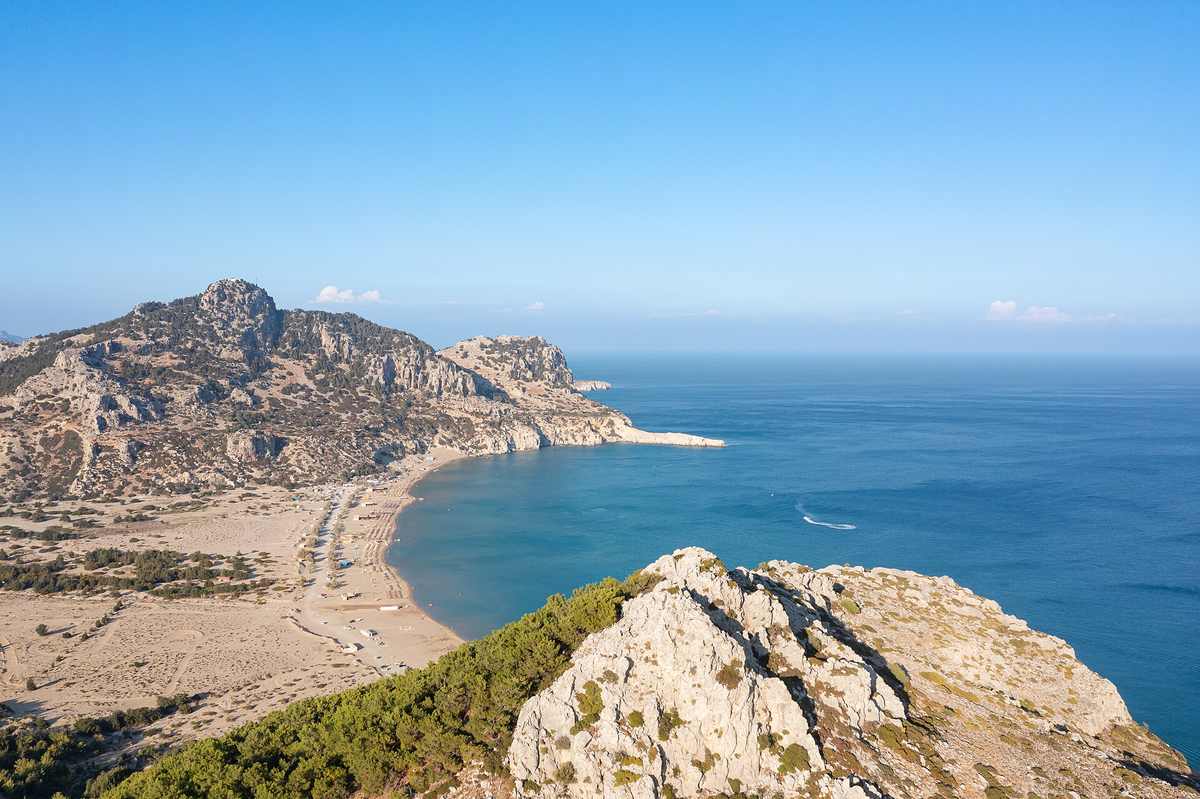
Rhodes beaches are the stretches of sand, pebble and rocky cove along the long, varied coastline of Rhodes, the largest island of the Dodecanese, where a sheltered east coast and an exposed, breezy west coast offer very different swimming and watersports conditions. Plan tickets and tours through My Greece Tours.
For the wider island picture, see our Rhodes travel guide. The sections below cover the best beaches overall, the east coast favourites, the west coast and Prasonisi, family versus watersports beaches, and practical tips for enjoying the coast.
What are the best beaches in Rhodes?
The best beaches in Rhodes line the calmer east coast: golden Tsambika beneath its clifftop monastery, the clear cove of Anthony Quinn Bay, lively Faliraki, the art-deco coves of Kallithea Springs, Agathi, Lindos Beach and St Paul’s Bay, plus windswept Prasonisi in the far south.
Rhodes rewards anyone willing to explore its full coastline, because the island packs a remarkable range of beaches into a single destination. On the east side you find broad bands of golden and fine sand backed by tavernas and sunbeds, while smaller rocky coves hide between headlands for swimmers who prefer clear, deep water. The contrast is part of the appeal: a family can spend the morning on a shallow sandy stretch and the afternoon snorkelling over rocks a short drive away. Because the famous names cluster within easy reach of Rhodes Town and Lindos, you can sample several in a single day without long, tiring transfers across the island.
Choosing between them comes down to the kind of day you want. Tsambika and Faliraki suit sun-and-sand crowds with full facilities, Anthony Quinn Bay rewards snorkellers, Kallithea Springs blends swimming with a restored spa setting, and Prasonisi belongs to the wind chasers. Distances are manageable, so it pays to match the beach to the weather and to your group rather than simply heading for the nearest sand. Our guide to things to do in Rhodes covers the wider mix of sights and activities, and the next section covers the east coast beaches in detail.
What are the best beaches on the east coast?
The east coast holds most of the island’s famous sandy beaches because it faces away from the prevailing wind. Tsambika, Faliraki, Kallithea Springs, Agathi, Lindos Beach and St Paul’s Bay sit along this sheltered shore, offering golden sand, clear shallow water and the calmest conditions for relaxed family swimming.
Tsambika is the showpiece of the east coast, a long sweep of golden sand sitting directly beneath the clifftop Tsambika Monastery, whose viewpoint looks straight down over the bay. A short distance away, Anthony Quinn Bay is a small rocky cove named after the actor, prized for crystal-clear water and excellent snorkelling rather than for sand. Faliraki anchors the resort end of the coast with a broad, busy beach and the widest choice of facilities, while Kallithea Springs pairs swimming in sheltered coves with a beautifully restored art-deco spa complex that is a sight in its own right. Each sits within an easy drive of the next.
Further south the coast leads towards Lindos, where Lindos Beach curves below the acropolis-crowned headland and the near-enclosed St Paul’s Bay forms one of the most photographed swimming spots on the island. Agathi, or Golden Beach, offers another stretch of soft sand in a gentler, less developed setting. Together these beaches make the east coast the natural base for most beach holidays on Rhodes, combining calm water with monuments and villages a few minutes inland. Our guide to Lindos in Rhodes covers the village and its acropolis above the bay, and the next section covers the west coast and Prasonisi.
What are the west coast beaches and Prasonisi like?
The west coast around Ialysos and Ixia is more exposed and windier, with pebblier shores that draw windsurfers rather than sunbathers. At the southern tip, Prasonisi is a sandbar joining a small islet where the Aegean and Mediterranean meet, ranking among Greece’s top windsurfing and kitesurfing spots.
Where the east coast shelters bathers, the west coast catches the prevailing wind head-on, and that single fact shapes everything about it. The beaches near Ialysos and Ixia tend towards pebble rather than soft sand, the sea is livelier, and the steady breeze that frustrates sunbathers is exactly what board riders want. As a result this side of the island has grown into a hub for windsurfing schools and equipment hire, with a more active, sporty atmosphere than the resort sands further east. Swimmers can still enjoy it on calmer days, but the west coast rewards those who come for the wind rather than for stillness.
Prasonisi, at the very southern tip of Rhodes, is the island’s most dramatic stretch of coast. A low sandbar links the main island to a small islet, and on either side of that bar the Aegean Sea meets the Mediterranean, often with noticeably different conditions on each shore. The combination of shallow flat water on one side and choppier waves on the other makes it one of the finest windsurfing and kitesurfing locations in Greece, busy with riders through the breezy months. Our guide to Rhodes Old Town covers the medieval city back near the harbour, and the next section covers which beaches suit families and which suit watersports.
Which Rhodes beaches suit families and which suit watersports?
Families do best on the sandy, shallow east-coast beaches with facilities, such as Tsambika, Faliraki and the Kallithea Springs area, where calm water makes paddling safe. Watersports enthusiasts head for the wind-exposed shores at Prasonisi, Ialysos and Ixia, the island’s main windsurfing and kitesurfing bases.
For families, the deciding factors are sand underfoot, water that stays shallow well offshore, and amenities close at hand. Tsambika delivers all three, with its long golden beach shelving gently into calm sea, while Faliraki adds the broadest range of sunbeds, tavernas and organised facilities for a full, comfortable day out. The coves around Kallithea Springs suit families who want sheltered swimming combined with somewhere interesting to wander between dips. Because these beaches lie on the protected east coast, the water is usually settled, which makes a real difference when small children are paddling near the shore.
Watersports gravitate to the opposite conditions. Prasonisi is the headline destination, where reliable wind and the meeting of two seas create ideal flat-water and wave settings for windsurfing and kitesurfing alike, and the west coast beaches near Ialysos and Ixia provide a second cluster of schools and rental outfits closer to Rhodes Town. The same breeze that makes these spots thrilling for board riders is why families generally avoid them for swimming, so the choice is usually clear cut. Our guide to where to stay in Rhodes covers basing yourself near the right stretch of coast, and the next section covers practical tips for enjoying the beaches.
What tips help you enjoy the beaches of Rhodes?
Match the beach to the wind: choose the sheltered east coast on breezy days and save the west coast for watersports. Arrive early at famous beaches like Tsambika and Anthony Quinn Bay for parking and space, bring water shoes for rocky coves, and carry sun protection.
A little planning makes a large difference on Rhodes, because conditions vary so much from one coast to the other on the same day. When the wind picks up, head for the east-coast beaches around Tsambika, Faliraki and Kallithea, which stay calm and swimmable; when you want action on the water, the breeze that ruins a lazy afternoon on the west coast becomes the whole point at Prasonisi or Ialysos. Checking the forecast the night before lets you pick the right side of the island and avoid driving to an exposed, choppy beach in search of stillness that simply will not be there.
Practical details round out the day. Popular beaches such as Tsambika and the small cove at Anthony Quinn Bay fill quickly and have limited parking, so an early start secures both a space and a patch of sand. Pack water shoes for the rockier coves, take ample sun protection and water since shade can be scarce, and keep some change for sunbeds and refreshments where facilities exist. A car gives you the freedom to chase the calmest coast, which is the single best way to enjoy the island’s variety. Plan your visit and tours through our Rhodes travel guide.
Frequently Asked Questions
Which is the best sandy beach in Rhodes?
Tsambika is widely regarded as the best sandy beach on Rhodes. It is a long, broad sweep of fine golden sand on the sheltered east coast, sitting directly beneath the dramatic clifftop Tsambika Monastery, whose viewpoint looks straight down over the whole bay. The sand is soft underfoot and the sea shelves gently, staying shallow a good way out, which makes the beach genuinely family-friendly as well as scenic. Because it faces away from the prevailing wind, the water is usually calm and clear, ideal for relaxed swimming. Faliraki offers a comparable expanse of sand with even more facilities and a livelier resort atmosphere, while Agathi, or Golden Beach, provides a quieter alternative in a less developed setting. The trade-off at Tsambika is popularity: it draws crowds and parking is limited, so arriving early in the day is the surest way to secure both a space and an unhurried patch of sand.
Is Prasonisi worth visiting in Rhodes?
Prasonisi is well worth the trip to the southern tip of Rhodes, especially for anyone interested in watersports or unusual coastal scenery. It is a narrow sandbar that links the main island to a small islet, and on either side of that bar two seas meet: the Aegean on one shore and the Mediterranean on the other, frequently with noticeably different conditions just metres apart. That meeting creates flat shallow water on one side and choppier waves on the other, which is exactly why Prasonisi ranks among the top windsurfing and kitesurfing spots in Greece, busy with riders through the breezier months. Even non-surfers find the geography striking and enjoy walking out along the sandbar. Bear in mind that it lies a fair distance from Rhodes Town and the main resorts, so it is best visited with a car, and the same wind that thrills board riders can make ordinary swimming there less relaxing than on the calm east coast.
Where are the best beaches for snorkelling in Rhodes?
For snorkelling, the rocky coves of the east coast beat the long sandy resort beaches, because clear, deeper water over rock and stone supports far more marine life than open sand. Anthony Quinn Bay is the standout: a small, sheltered rocky cove named after the actor, prized for its crystal-clear water and the underwater rock formations that make it one of the best snorkelling spots on the island. The cove is compact and can get busy, so an early arrival helps with both parking and space in the water. The sheltered coves around Kallithea Springs are another rewarding option, combining calm, transparent water with the restored art-deco spa setting nearby. As a general rule on Rhodes, seek out the smaller rocky bays of the protected east coast rather than the broad sandy stretches when you want to see fish and underwater scenery, and pack water shoes to cross the rocks comfortably and protect your feet.