
Minoan burial customs were the funerary practices of Bronze Age Crete, defined by communal tombs that families reused across generations and by burials in painted clay coffins called larnakes. These customs reveal how the Minoans honoured the dead and imagined the afterlife. Plan tickets and tours through My Greece Tours.
The same culture that built the great Palace of Knossos developed distinctive ways of treating its dead. The sections below cover how the Minoans buried their dead, the types of tombs they used, what larnakes were and how they worked, the grave goods placed with the dead, the great cemeteries where these customs survive, and what the burials tell us about Minoan beliefs.
How did the Minoans bury their dead?
The Minoans buried their dead communally, placing bodies inside shared tombs that families reused over generations. Corpses were laid in a contracted position, and older bones were pushed aside in secondary burial to make room for new interments rather than being discarded.
Minoan burial was rarely a private, single-occupant affair. A tomb functioned as a long-lived house for the dead, holding the remains of dozens of people deposited over decades or centuries. At each new death the community opened the tomb, laid the body inside, and pushed earlier bones and offerings to the sides or into adjoining chambers. This practice of secondary burial kept the tomb in continuous use and expressed a strong sense of ancestral continuity, binding the living to the dead through one reopened resting place rather than scattered individual plots.
Practices were not uniform across Crete, and they shifted between the earlier and later Bronze Age. Early bodies were arranged in a contracted, knees-drawn-up position; later customs favoured individual containers such as coffins and jars set within the larger communal space. The act of returning repeatedly to the same tomb mattered throughout. Our guide to Minoan tholos tombs covers the round communal structures of the Messara plain, and the next section covers the full range of tomb types the Minoans built.
What types of tombs did the Minoans use?
The Minoans used four main tomb types: circular stone tholos tombs on the Messara plain, rectangular built house tombs and ossuaries, rock-cut chamber tombs reached by a passage, and burials placed inside large storage jars called pithoi. Each form served communal, repeated use.
The most distinctive early form was the circular stone tholos tomb, built above ground with thick walls and concentrated on the fertile Messara plain in southern Crete. These round structures were genuinely communal, accumulating burials and offerings over generations. Alongside them stood rectangular built tombs, often called house tombs because their multi-room plan resembled domestic architecture, together with built ossuaries where collected bones were stored. These above-ground forms show a culture that invested heavy labour in permanent, reusable monuments for its dead rather than disposable single graves.
Other forms were cut into the landscape or used everyday containers. Rock-cut chamber tombs were excavated into hillsides, providing an enclosed space reached by an entrance passage known as a dromos. Bodies were also placed directly inside pithoi, the same large jars used to store grain, oil and wine. These solutions reflect regional traditions across the island. Our guide to the Knossos temple tomb covers a notable built funerary structure near the palace, and the next section covers larnakes, the painted clay coffins central to later Minoan burial.
What were larnakes and how were they used?
Larnakes were clay coffins, either rectangular chests with lids or deeper bathtub-shaped tubs, used to hold a body within a tomb. Painted with figural and floral scenes, they became a common Minoan burial container in later periods, set inside chamber and communal tombs.
A larnax, plural larnakes, was a coffin of fired clay produced in two shapes: a rectangular chest with a lid, and a deeper, bathtub-like tub. The body, drawn up into a contracted position to fit, was placed inside, and the larnax was then set within a tomb rather than buried alone in open ground. The earliest larnakes appear late in the Early Minoan period and lack legs or paint. Later examples gave each individual a distinct container while keeping them inside the shared communal space, marking a shift toward personal provision within the older collective tradition.
The decoration is what makes larnakes so valuable. Painted examples carry scenes in the same tradition as Minoan frescoes and pottery, showing double axes, sacred horns of consecration, marine motifs, and occasional human figures and ritual activity. These images are among the rare surviving glimpses of how the Minoans pictured death and what they believed surrounded it. Our guide to the Minoan larnax covers their shapes and painted imagery in detail, and the next section covers the grave goods deposited alongside the dead.
What grave goods accompanied the dead?
Minoan dead were accompanied by grave goods: pottery vessels, jewellery, carved seal-stones, bronze weapons and personal ornaments. These offerings were placed within the tomb beside the body, and reused tombs accumulated large assemblages over generations of communal burial.
The objects buried with the dead span everyday and prestige goods alike. Pottery is the most abundant find, ranging from plain cups to finely decorated vessels that once held offerings of food or drink. Personal ornaments such as beads and pendants were placed with the body, and carved seals, small engraved stones used to mark ownership or identity, appear often. Bronze weapons accompany certain burials, a sign that rank, role and social standing were expressed in death as firmly as in life within Minoan communities.
The grave goods were largely worn and used items from daily life, and that detail is telling. Everyday possessions placed beside the dead point to a belief in continuing life beyond the grave, where familiar objects would still serve their owner. The funeral itself appears to have included the giving of gifts to the dead and a shared communal meal at the tomb. Because tombs were reopened repeatedly, these offerings built up into rich, layered assemblages rather than belonging to a single occupant, and the mingled deposits testify to long-term use of every grave.
Where are the great Minoan burial sites on Crete?
The great Minoan burial sites include the Messara tholos cemeteries at Apesokari and Koumasa, the necropolis at Armeni near Rethymno, the Chrysolakkos complex at Malia, and the tombs of Mochlos. Together they preserve the full range of Minoan funerary architecture.
The Messara plain in southern Crete holds the densest concentration of early tholos tombs. Round stone chambers at Apesokari, Koumasa and Platanos served whole communities for generations, and their contents fill many museum cases today. Near Rethymno, the necropolis at Armeni preserves more than two hundred rock-cut chamber tombs from the later Bronze Age, each reached by a stepped dromos and many still holding their painted larnakes in place. These cemeteries let visitors read the Minoan treatment of death directly in the landscape.
Two coastal sites round out the picture. At Malia the Chrysolakkos complex, whose name means the pit of gold, was a large rectangular funerary building that yielded the celebrated gold bee pendant now in Heraklion. On the islet of Mochlos, off the north coast, house tombs held burials rich in gold jewellery and stone vases. Our guide to the Heraklion Archaeological Museum covers where the finds from these cemeteries are displayed, and the next section covers what the burials reveal about belief.
What do Minoan burials tell us about their beliefs?
Minoan burials point to belief in continued existence after death, expressed through grave goods, repeated communal use of tombs, and painted funerary scenes on larnakes and the Agia Triada sarcophagus. These objects preserve rare evidence of Minoan ritual and ideas about the afterlife.
The care taken over Minoan burial points to firm convictions about what death involved. Equipping the dead with pottery, ornaments and seals implies that the deceased were thought to need or value such things beyond the grave, and the persistent reuse of tombs over generations expresses a powerful bond with ancestors. The communal, repeatedly reopened tomb was not merely practical. It served as a focus of memory and continuity, suggesting the dead remained part of the community’s ongoing life rather than being severed from it.
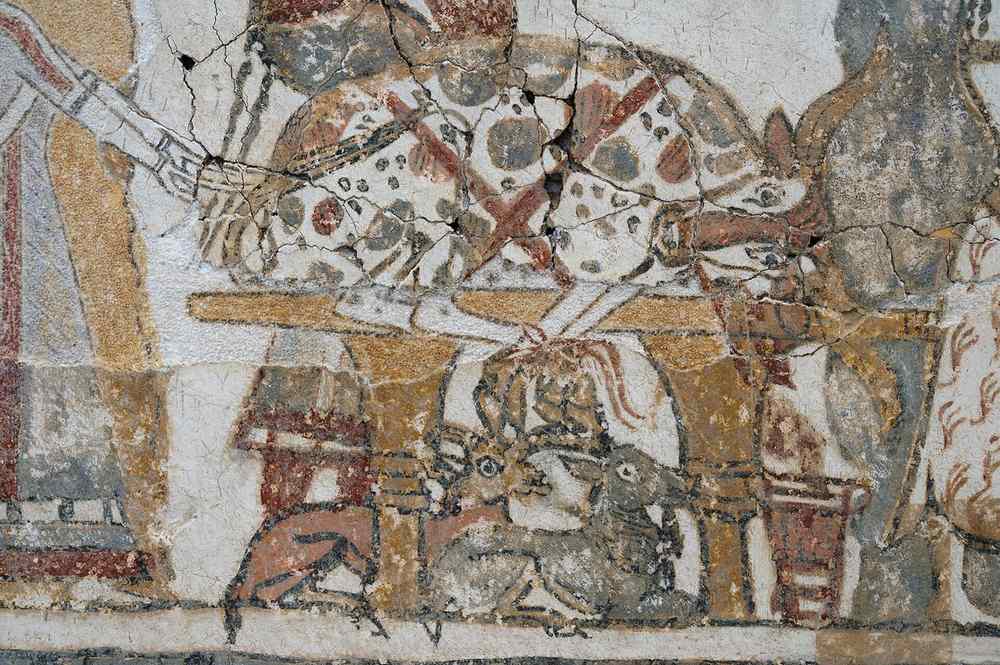
The clearest evidence comes from painted imagery. Some larnakes, and above all the famous Agia Triada sarcophagus, carry scenes that show funerary ritual, processions and offerings, giving an extraordinary window onto Minoan beliefs about death that texts cannot provide. The Agia Triada scenes depict libations poured to the dead, animals led to sacrifice, and figures bringing offerings toward a shrine. Read with proper caution, these images reveal a culture that surrounded death with ceremony and meaning. Plan your visit through our Palace of Knossos guide.
What is a larnax burial and how was it prepared?
A larnax burial placed the contracted body inside a painted clay coffin, which was then set within a chamber tomb rather than lowered into open ground. Vessels, ornaments and offerings were arranged around the coffin before the tomb was closed until the next interment.
Preparing a larnax burial followed a clear sequence. The clay chest or tub was first placed on the tomb floor, sometimes raised on stones. The body was folded into a contracted, knees-to-chest position so it fitted the compact container, a posture the Minoans used across their tomb types. Personal ornaments stayed on or beside the corpse, and cups and jars holding food or drink offerings were set around the larnax. A lid, where the chest form was used, sealed the coffin before the chamber itself was closed.
The painted decoration on many larnakes turned the coffin into a statement of belief. Double axes, horns of consecration, spirals, marine creatures and processions of figures cover the sides of the finest examples, echoing the imagery of Minoan frescoes and pottery. Because organic offerings rarely survive, the clay larnax and its durable painted surface often preserve the clearest record of an individual Minoan burial that reaches the excavator.
How did status shape a Minoan burial?
Status shaped Minoan burial through the richness of grave goods rather than through separate cemeteries. Elite dead received gold jewellery, imported stone vases and fine seals, while ordinary burials held plain pottery and simple ornaments within the same communal graves.
The Minoans did not wall their leaders off in a distinct necropolis. Rank showed instead in what accompanied the body. The gold bee pendant and other treasures from the Chrysolakkos building at Malia, and the gold ornaments and imported obsidian and stone vessels from the Mochlos house tombs, mark burials of clear wealth and standing. These prestige goods reached Crete through the same trade networks that supplied the palaces, so a rich grave signalled a family’s place within the wider Minoan economy as much as personal power.
Ordinary burials tell the quieter half of the story. Plain drinking cups, cooking vessels, spindle whorls and simple beads make up the bulk of the finds from most communal tombs, showing that the same funerary rite reached across the social scale. The contrast between the gold-laden coastal tombs and the modest Messara deposits gives archaeologists a rare measure of Minoan social difference, read directly from the objects families chose to leave with their dead.
How did Minoan burial differ from Mycenaean burial?
Minoan burial favoured communal, reused tombs and painted clay larnakes, while the Mycenaeans who later controlled Crete built monumental tholos and shaft graves for individual elites with weapons and gold masks. Their takeover at Knossos brought warrior burials to the island.
The two cultures treated death from different starting points. Minoan tombs gathered whole communities across generations, with grave goods drawn largely from daily life and an emphasis on continuity with the ancestors. Mycenaean elite burial, by contrast, centred on the individual warrior and dynast, expressed through richly furnished shaft graves and grand beehive tholos tombs whose finds include weapons, armour and gold death masks. Where the Minoan tomb spoke of shared belonging, the Mycenaean tomb projected personal rank and martial prestige.
The two traditions met on Crete itself once the Mycenaeans gained control of Knossos in the fourteenth century before the common era. So-called warrior graves appear near the palace, holding swords, spearheads and boar’s-tusk helmets alongside older Minoan forms. Reading the two customs side by side lets archaeologists trace the shift from Minoan to Mycenaean authority on the island through the changing treatment of the dead.
Frequently Asked Questions
How did Minoan burial customs change over time?
Minoan burial customs evolved across the Bronze Age while keeping their communal core. In the Early Minoan period the dominant forms were the circular tholos tombs of the Messara and rectangular house tombs, into which generations were added with little separation between individuals. As the palatial period advanced, rock-cut chamber tombs spread and individual containers became normal, so that each body might rest in its own larnax or pithos even inside a shared grave. This shift toward personal provision did not overturn the older collective ideal; larnakes and jars were set within the same reused communal tombs, and secondary burial continued. Minoan burial customs therefore trace a slow move from wholly mixed group deposits toward individualised burial that still honoured the ancestral tomb.
Were Minoan tombs used for one person or many?
Minoan tombs were overwhelmingly communal rather than individual. A single tomb typically held the remains of dozens of people, deposited over decades or centuries by the same family or community. At each new burial the tomb was reopened, the body placed inside, and earlier bones and offerings moved aside in a practice known as secondary burial. This kept tombs in continuous use and gathered large numbers of skeletons and grave goods in one place.
The pattern reflects a strong sense of ancestral continuity, in which the dead were not isolated in separate plots but gathered together in a shared resting place. Even when later customs introduced individual containers such as larnakes and pithoi, these were usually set inside the same communal tombs, preserving the collective character of Minoan burial throughout the Cretan Bronze Age and across its regional variations.
What is a larnax?
A larnax is a clay coffin used in Minoan burial to hold a body within a tomb. Larnakes were made of fired clay and came in two shapes: a rectangular chest with a fitted lid, and a deeper tub resembling a bathtub. The body was placed inside, drawn up into a contracted position to fit the container, and the larnax was then set within a chamber tomb or other communal grave rather than buried alone.
Painted larnakes carry scenes in the same artistic tradition as Minoan frescoes and pottery, depicting double axes, horns of consecration, marine life and occasionally human figures and ritual activity. This decoration makes them valuable to archaeologists, because the images offer rare direct evidence of how the Minoans visualised death. Larnakes became common in the later periods of Minoan Crete and rank among the most recognisable artefacts of the culture’s funerary practices.
Where can I see Minoan burial artefacts today?
The richest collection of Minoan burial artefacts is held in the Heraklion Archaeological Museum on Crete, which displays pottery, jewellery, carved seals, bronze weapons, larnakes and other finds recovered from tombs across the island. The museum also houses the celebrated Agia Triada sarcophagus, whose painted scenes provide rare insight into Minoan funerary ritual and beliefs about the afterlife.
Seeing these objects together makes clear how carefully the Minoans equipped their dead and how their burial customs developed over time. Many visitors combine the museum with a trip to the nearby Palace of Knossos, which gives essential context for the civilisation that produced these tombs. The archaeological cemetery at Armeni near Rethymno can also be visited, letting you stand among the rock-cut chamber tombs where these customs were practised.