
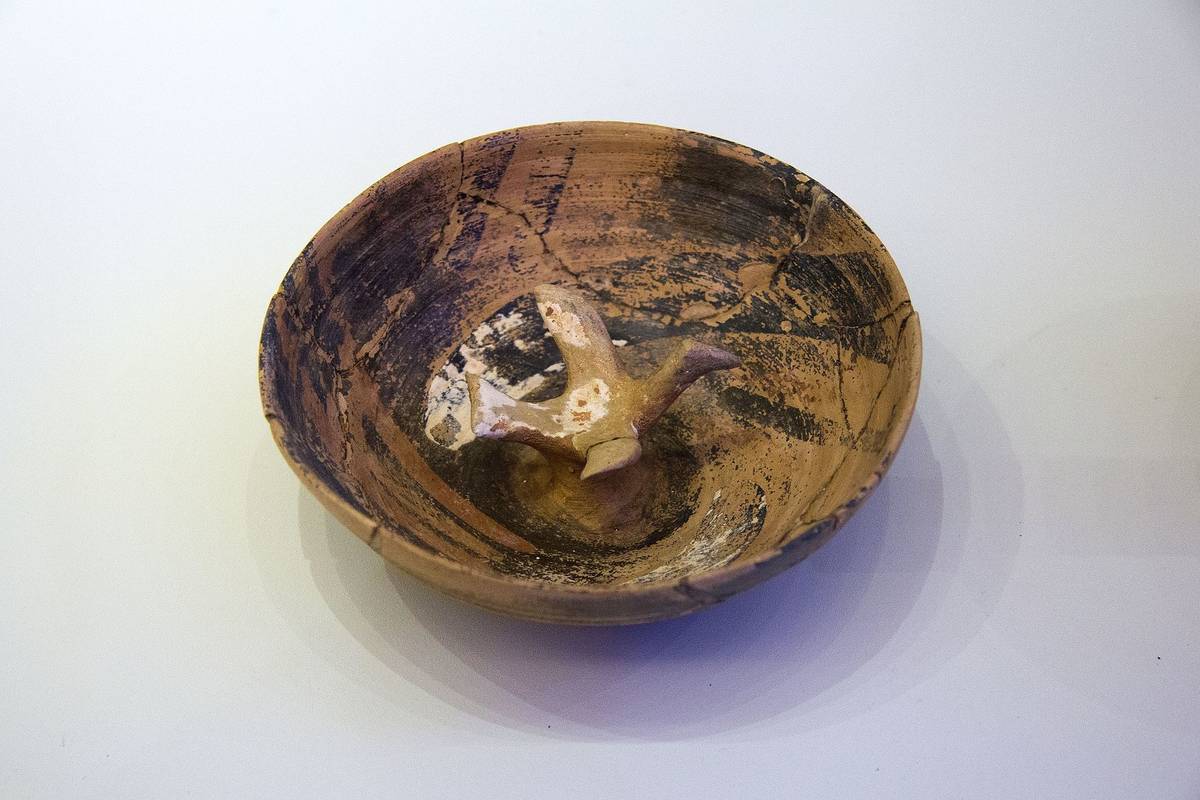
Minoan food was an early Mediterranean diet built on bread, olive oil, pulses, fruit, dairy and seafood, eaten by the Bronze Age people of Crete. This balanced, plant-led diet sustained a sophisticated palace society for centuries. Plan tickets and tours through My Greece Tours.
The same surplus that fed daily meals also stocked the storerooms of the Palace of Knossos, where food powered the entire economy. The sections below cover what the Minoans ate, the ingredients that formed their diet, how they cooked and stored food, what they drank, and what we know about Minoan feasting.
What did the Minoans eat?
The Minoans ate a balanced Mediterranean diet of bread and porridge from wheat and barley, olives and olive oil, pulses such as lentils and chickpeas, figs, grapes and other fruit, vegetables and herbs, plus dairy, fish, shellfish and meat from sheep, goats and pigs.
The everyday Minoan plate was overwhelmingly plant-based. Bread and porridge made from wheat and barley supplied the bulk of daily calories, eaten alongside pulses like lentils, beans and chickpeas that delivered cheap, storable protein. Olives and olive oil flavoured and enriched these staples, while figs, grapes and other seasonal fruit, together with vegetables and herbs, rounded out the diet. Animal foods appeared more sparingly. Sheep, goats and pigs provided meat, cheese and milk, some cattle were kept, and the surrounding Aegean delivered fish and shellfish. Wild game supplemented the table on occasion, giving the diet variety without dominating it.
This pattern reflected the landscape of Crete itself, where farmland, orchards, grazing slopes and a generous coastline sat within easy reach of every settlement. The result was a diet that modern nutritionists would recognise as remarkably healthy, low in heavy meat and rich in grain, oil, fruit and fish. Our guide to Minoan agriculture covers the farming systems behind these foods, and the next section covers the specific ingredients that formed the Minoan diet.
What ingredients formed the Minoan diet?
The core ingredients were cereals of wheat and barley, olives and olive oil, pulses such as lentils and chickpeas, figs and grapes, vegetables and herbs, dairy from sheep and goats, fish and shellfish, the meat of sheep, goats and pigs, and honey as the sweetener.
Cereals stood at the centre of the Minoan larder. Wheat and barley were ground into flour for bread and boiled into porridge, forming the dependable base of the diet. Around this base clustered the Mediterranean trio of grain, olive and vine: olives pressed for oil, and grapes grown for both fresh fruit and wine. Pulses, including lentils, beans and chickpeas, added protein and were easy to dry and keep.
Figs and other fruit, garden vegetables and gathered herbs supplied vitamins, sweetness and aroma, turning plain staples into varied meals across the seasons. Wild greens from the hillsides, nuts and aromatic herbs added further flavour and nutrition, and the same olive oil that lit lamps and dressed the body also enriched the cooking pot. Almonds, quinces and pomegranates grew on the island, and saffron gathered from crocuses gave both colour and prized flavour.
Animal produce filled out the remaining gaps. Sheep and goats yielded milk that was turned into cheese, a practical way to preserve nutrition, while their flocks, along with pigs and some cattle, supplied meat for richer occasions. Fish and shellfish from the sea were prized enough to feature in Minoan wall paintings. Honey served as the principal sweetener, and bees were valued accordingly. Our guide to Minoan trade covers how some foods and flavourings moved across the Aegean, and the next section covers how the Minoans cooked and stored their food.
How did the Minoans cook and store their food?
The Minoans cooked over open hearths in clay cooking pots, baking, boiling and grilling their food, and they stored grain, oil, wine and other staples in large clay pithoi and smaller jars kept in dedicated palace and household storerooms.
Minoan cooking relied on fire and clay. Food was prepared over open hearths, with clay cooking pots set above or beside the flames for boiling and stewing, while bread was baked and meat and fish were grilled. These methods suited a diet of grains, pulses, vegetables and oil, where slow boiling softened beans and porridge and direct heat handled meat and seafood. The cooking equipment was simple, durable and locally made, and the same basic techniques served both modest households and the kitchens that supplied the palaces with large quantities of prepared food.
Storage was the true engine of Minoan society. Enormous clay jars called pithoi, alongside smaller jars, held grain, olive oil, wine and other staples in cool, dedicated storerooms. The scale of this storage allowed surpluses to be gathered, protected and redistributed, smoothing out lean seasons and feeding workers and feasts alike. Our guide to Knossos pithoi covers these giant storage vessels in detail, and the next section covers what the Minoans drank.
What did the Minoans drink?
The Minoans drank wine made from their abundant grapes, water as the everyday staple, and possibly beer and honey-based drinks. Conical cups survive in huge numbers, suggesting that communal drinking was a regular and important part of Minoan social life.
Wine was the signature Minoan drink. The vine grew well across Crete, and grapes were pressed and fermented into wine that appeared at meals, ceremonies and gatherings. Water remained the everyday staple for ordinary thirst, while beer and honey-based drinks were also possible additions to the Minoan cup, reflecting the same grain and honey that fed the diet. Drinking was clearly more than a private act. The archaeological record from Crete is full of vessels for pouring, mixing and serving liquids, pointing to organised hospitality rather than casual sipping. Jugs for pouring, mixing bowls and fine cups all survive in quantity, the equipment of shared drinking rather than the solitary cup.
The clearest evidence is the conical cup. These plain clay cups survive in staggering numbers at Minoan sites, often found in heaps, which strongly suggests communal drinking on a large scale. Such mass-produced cups fit a society that gathered to drink together at ceremonies and feasts, perhaps using and discarding cups in single events. Our guide to Minoan pottery covers the cups, jugs and serving wares behind these rituals, and the next section covers what we know about Minoan feasting.
What do we know about Minoan feasting?
Minoan feasting was central to palace society, where stored food was redistributed at communal events. Vast numbers of conical cups, large cooking and serving vessels, and dedicated storerooms point to organised feasts that bound the community together and displayed the power of the palaces.
Feasting sat at the heart of how Minoan society worked. The palaces gathered agricultural surplus into their storerooms and then redistributed it, and communal meals were a key occasion for that redistribution. Sharing food and drink reinforced bonds between rulers, officials, workers and worshippers, while the scale of the catering advertised the wealth and authority of the palace itself. The same storerooms full of pithoi that secured everyday supplies also provisioned these gatherings, linking the daily economy directly to public celebration and religious ritual on Crete.
The physical evidence for feasting is striking. Heaps of conical cups, large cooking pots and serving vessels, and the remains of substantial meals all point to events feeding many people at once. These finds turn the Minoan diet from a private matter into a social and political institution, where eating and drinking together expressed identity, hierarchy and belief. You can see the cups, pithoi and other finds for yourself in Crete’s great collection, the Heraklion Archaeological Museum. Plan your visit and tours through our Palace of Knossos guide.
How do we know what the Minoans ate?
We know what the Minoans ate from carbonised seeds and animal bones dug from their sites, residues inside cooking pots and jars, Linear B records of grain, oil and livestock, and food scenes painted on frescoes and pottery. These sources build a detailed picture.
Archaeology supplies the hard evidence. Excavators recover charred grains of wheat and barley, pulse seeds, olive stones, fig pips and grape pips from hearths, storerooms and rubbish deposits, while animal bones show which livestock and fish reached the table. Chemical residues absorbed into the clay of pots reveal traces of oil, wine and dairy, letting scientists identify foods that left no visible remains. Together these finds move the Minoan menu from guesswork to measured record.
Written and painted sources add further detail. The Linear B tablets from Knossos, kept by the later Mycenaean administration, list grain, olive oil, figs, sheep, goats, pigs and honey among the goods the palace managed, naming the very foods archaeology recovers. Frescoes and decorated pottery show fish, marine creatures, saffron harvesting and drinking scenes, confirming which foods carried cultural weight. Read alongside the excavated remains, these records give Minoan food an unusually full documentation for the Bronze Age.
How did status affect what the Minoans ate?
Status affected Minoan food through quantity and richness rather than separate menus. Elite diners had readier access to meat, wine and imported flavourings, while ordinary people relied more on bread, pulses and vegetables. Palace feasts spread richer food more widely on special occasions.
The staples crossed the social scale. Bread, porridge, pulses, olives and seasonal fruit fed rich and poor alike, since these foods formed the base of the whole Cretan economy. The difference showed at the top of the plate. Meat, especially from cattle, was costly and appeared more often on elite tables and at organised feasts, and imported or prized flavourings such as spices and fine wine were easier for the wealthy to command.
The palaces reshaped this balance through redistribution. By gathering surplus grain, oil and livestock and then serving it at communal feasts, the palace let ordinary people share in richer food at festivals and rituals that they could not afford day to day. Eating together therefore carried social meaning, marking rank while also binding the community. The Minoan diet thus reflected both the everyday economy and the ceremonial power of the palace system.
What herbs and seasonings did the Minoans use?
The Minoans seasoned their food with a wide range of herbs and aromatics grown or gathered on Crete, including coriander, cumin, fennel, mint, sage, thyme and saffron. Olive oil carried these flavours, and honey and boiled grape juice supplied sweetness for porridge, fruit and drinks.
Cretan cooking drew on a rich herb garden. Coriander, cumin, dill, fennel, mint, marjoram, oregano, sage, rosemary and thyme all grew within reach, and many appear in Linear B records or survive as seeds at Minoan sites. These aromatics turned plain grain, pulse and vegetable dishes into varied meals, and they doubled as remedies in a world where food and medicine overlapped. Poppy, valued for its seeds, is shown in Minoan art and points to the same close attention to plants.
Saffron held a special place among the seasonings. Gathered from the stigmas of the crocus, it gave a golden colour and prized flavour, and the famous saffron-gathering frescoes from Akrotiri on Thera show its importance in the Minoan world. For sweetness the Minoans reached for honey and for boiled-down grape juice, the same natural sources that flavoured their drinks. Together these flavourings gave Minoan food a character that reached well beyond plain subsistence.
How does Minoan food relate to the modern Cretan diet?
Minoan food is the Bronze Age ancestor of the modern Cretan diet, sharing the same core of bread, olive oil, pulses, wild greens, fruit, cheese, fish and wine. The plant-led pattern praised today as the Mediterranean diet has deep roots in Minoan Crete.
The continuity is remarkable. The staples that anchored the Minoan table, olive oil, barley bread, lentils and chickpeas, figs and grapes, sheep’s and goat’s cheese, and fish from the surrounding sea, are still the foundations of traditional Cretan cooking. Wild greens gathered from the hillsides, so valued in Crete today, were part of the ancient diet as well, and honey remains the island’s classic sweetener. The same landscape shaped both cuisines, giving the modern kitchen a direct line back to the Bronze Age.
Modern research has drawn on this heritage. Nutritionists who studied the long-lived people of mid-twentieth-century Crete and helped define the Mediterranean diet were describing an eating pattern whose outline the Minoans had already established. Minoan food therefore matters beyond archaeology, standing as an early example of a way of eating that the wider world now recognises as one of the healthiest. Our guide to Minoan agriculture covers the farming that made it possible.
Frequently Asked Questions
Was the Minoan diet healthy?
The Minoan diet was a healthy early form of the Mediterranean diet that modern nutrition still admires. It rested on plant foods: bread and porridge from wheat and barley, pulses such as lentils, beans and chickpeas, olives and olive oil, figs, grapes, other fruit, vegetables and herbs. These supplied complex carbohydrates, fibre, healthy fats and a wide range of vitamins.
Animal foods played a supporting role rather than a starring one. Dairy from sheep and goats provided cheese and milk, while meat from sheep, goats and pigs appeared in smaller amounts, and fish and shellfish from the sea added lean protein. Honey served as the sweetener instead of refined sugar. The overall pattern was low in heavy meat, rich in grain, oil, fruit and seafood, and varied across the seasons, giving the Minoans a balanced and sustaining diet.
Did the Minoans eat fish and seafood?
The Minoans ate fish and shellfish drawn from the sea that surrounded Crete. Living on an island placed the Aegean within reach of every coastal settlement, and marine foods formed a genuine part of the diet alongside grain, pulses, fruit and meat. Fish and shellfish offered lean protein that complemented the heavily plant-based table, and the people of Crete clearly valued these foods. Recorded catches included tuna, red mullet, sea bream, sardines and swordfish.
Marine life appears repeatedly in Minoan art, with dolphins, fish and octopuses painted on walls and pottery, a sign of how closely the sea was woven into Minoan identity and cuisine. Shellfish were gathered along the shore, while fish were caught from the rich waters nearby. Combined with the cereals, olive oil, dairy and occasional meat that made up the rest of the diet, seafood helped give Minoan food its varied, distinctly Mediterranean character.
What sweetener did the Minoans use?
Honey was the sweetener in the Minoan diet, since refined sugar did not exist in the Bronze Age. Bees were valued for the honey they produced, and that honey sweetened foods and flavoured drinks. As a natural sweetener it enriched porridge, fruit and other dishes, and honey-based beverages were among the drinks the Minoans enjoyed alongside wine and water. Boiled-down grape juice gave a second natural sweetener for the table.
The importance of honey fits the wider pattern of the Minoan diet, which drew on the natural produce of Crete: cereals, olives, fruit, pulses, dairy and seafood, all gathered from farmland and the surrounding sea. Honey rounded out this larder by supplying sweetness without any processed ingredients. Its prominence shows how the Minoans made full use of the resources around them, turning the work of their valued bees into a lasting part of their cuisine.
Did the Minoans eat much meat?
The Minoans ate meat sparingly compared with grain, oil and pulses. Sheep and goats were the main livestock, kept largely for milk and wool, so their meat came mostly from older animals at the end of their working lives. Pigs were raised for meat more directly, and cattle, being costly to keep, appeared chiefly at feasts and elite tables. Wild game such as deer and hare supplemented the supply on occasion.
For most people, meat was an occasional food tied to festivals, sacrifices and communal feasts rather than a daily staple. This pattern kept the everyday diet plant-led while reserving richer animal food for special events, and it matches both the animal bones recovered from Minoan sites and the flocks and herds counted in the later Linear B records at Knossos.