
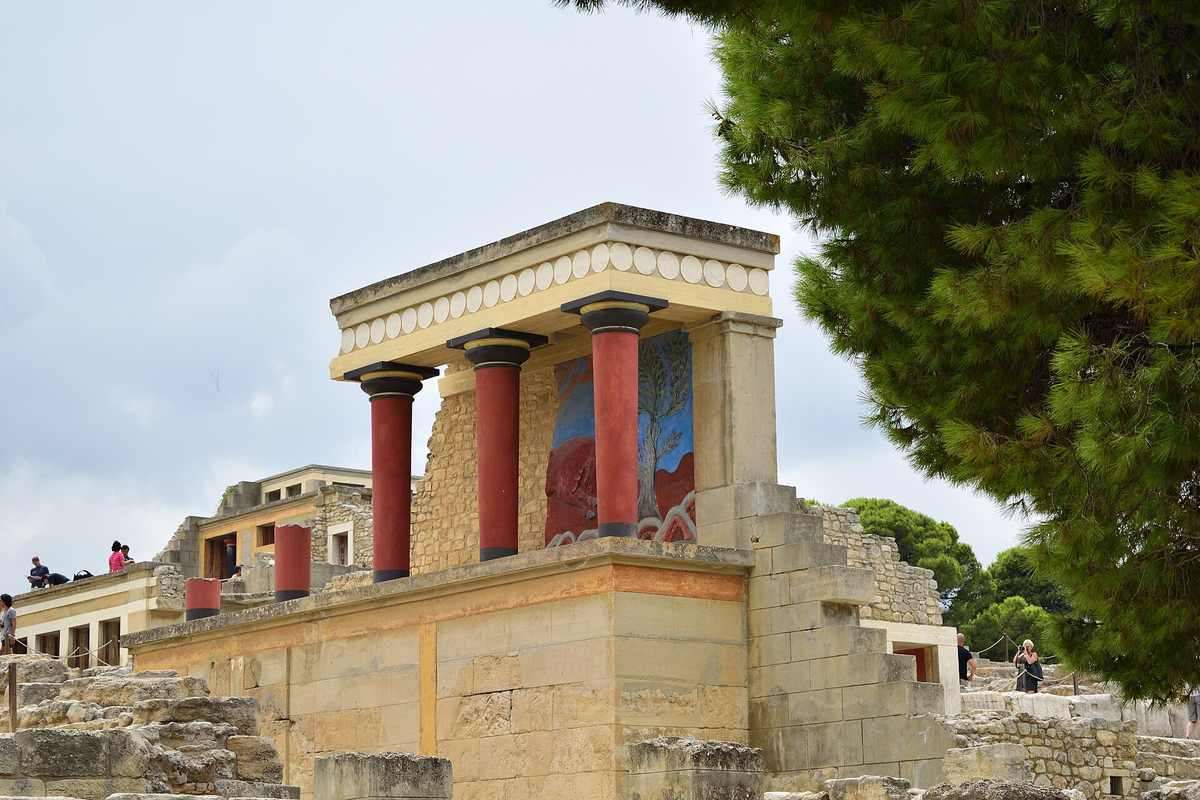
The best time to visit Knossos is spring or autumn, early in the day, when the weather is mild and the crowds and heat are lower. Plan tickets and tours through My Greece Tours.
Timing makes a real difference to a visit to the Palace of Knossos. The sections below cover the best season, the best time of day, whether summer works, avoiding the crowds and the weather through the year.
What is the best time of year to visit Knossos?
The best time of year to visit Knossos is spring or autumn, roughly the shoulder seasons either side of summer, when the weather is warm but not fierce, the crowds are thinner and the surrounding countryside is at its most pleasant.
Spring and autumn lead the year. The heat eases then. The crowds thin out. The comfort rises.
Spring greens the valley. Mild days reward walking. Wildflowers fringe the ruins. The light turns soft.
Autumn cools the summer. The warmth lingers gently. The crowds depart. The calm returns.
The shoulder seasons balance it. Weather meets quiet. Comfort meets value. The visit shines.
The best time of year to visit Knossos is in the shoulder seasons of spring and autumn, the months either side of the high summer. In spring the weather is mild and pleasant, the surrounding countryside is green and dotted with wildflowers, and the crowds are far lighter than in peak season, making for a comfortable and relaxed visit to the open, sun-exposed ruins. Autumn offers a similar balance, with summer’s warmth lingering into milder days as the crowds thin out.
These shoulder months avoid the twin drawbacks of high summer, the fierce heat on the unshaded site and the heavy crowds of tour groups and cruise excursions, while still offering warm, settled weather and longer daylight than winter. Prices on Crete are also lower outside the peak. For the best all-round experience of Knossos, spring and autumn are hard to beat. Our guide to Knossos opening hours covers the seasonal schedule, and the next section covers the best time of day.
What is the best time of day to visit Knossos?
The best time of day to visit Knossos is early in the morning, soon after opening, or later in the afternoon.
Morning is the prime slot. The gates open quiet. The air stays cool. The crowds lie ahead.
Midday overwhelms the site. The coaches converge. The groups swell. The heat peaks.
Late afternoon clears it. The groups depart. The light softens. The calm returns.
The open ruins bake. Shade is rare. The early hours help. The sun relents later.
Regardless of the season, the best time of day to visit Knossos is early in the morning, soon after the site opens, when the temperature is lower, the light is soft and beautiful for photographs, and the largest crowds have not yet arrived. The middle of the day is both the hottest and the busiest period, as tour groups and cruise excursions descend on the site under the strong sun, on ruins that offer very little shade.
A later-afternoon visit is the next best choice if a morning does not suit your plans, particularly in summer when Knossos stays open into the evening, as the tour groups thin out and the heat begins to ease. Whenever you go, carrying water, a hat and sun protection is essential on the exposed site. A well-timed visit transforms the experience from a hot, crowded scramble into a relaxed exploration. The next section covers whether summer is a good time to visit.
Is summer a good time to visit Knossos?
Summer is a workable but not ideal time to visit Knossos, as it brings the largest crowds and fierce heat on the unshaded site.
Summer tests the visitor. The heat blazes. The crowds peak. The timing matters most.
The site offers little shade. The sun beats down. The stones radiate heat. The water bottle saves you.
Crowds swell in the season. Tours and cruises arrive. The paths fill. The calm is rare.
Early or late is key. Dawn brings cool calm. Evening brings relief. Midday is best avoided.
Summer is the most popular but least comfortable time to visit Knossos. The Cretan summer is hot, and the site is largely open and unshaded, so the midday sun can be punishing among the ruins, while the peak tourist season brings the heaviest crowds, with tour groups and cruise excursions converging on the palace in the middle of the day. This combination of heat and crowds can detract from the experience if you visit at the wrong time.
That said, summer is perfectly workable with the right approach. Visiting very early in the morning, soon after opening, or in the late afternoon and evening when the site stays open later, avoids the worst of both the heat and the crowds. Buying a skip-the-line ticket in advance also helps you avoid queuing in the sun. With water, a hat and sun protection, and good timing, a summer visit can still be rewarding. Our Knossos tickets guide covers skip-the-line options, and the next section covers avoiding the crowds.
How do you avoid the crowds at Knossos?
You avoid the crowds at Knossos by visiting early in the morning or late in the afternoon, choosing the spring or autumn shoulder seasons, and buying a skip-the-line ticket in advance.
Early arrival beats the crowds. The first hour stays calm. The groups arrive later. The palace breathes.
Shoulder seasons thin the visitors. Spring and autumn quieten. The groups dwindle. The paths open.
Skip-the-line saves the queue. The ticket is prebought. The line falls away. The entry speeds.
Midday draws the masses. The coaches converge then. Avoiding it helps. The calm is found.
Avoiding the crowds at Knossos comes down to timing and a little planning. The single most effective step is to arrive early, soon after the site opens, before the organized tour groups and cruise excursions descend in the middle of the day, or to come in the late afternoon as those groups leave. The midday hours in high summer are by far the busiest, so steering clear of that window makes the biggest difference.
Choosing the season helps too: the spring and autumn shoulder months bring far thinner crowds than the summer peak, and winter quieter still. Buying a skip-the-line ticket or booking a guided tour in advance lets you bypass the ticket queue, which can be long in the sun in summer. Combining an early start, a shoulder-season visit and an advance ticket gives the calmest possible experience of the palace. The next section covers the weather through the year.
What is the weather like at Knossos through the year?
Knossos has a Mediterranean climate, with hot, dry summers, mild and changeable winters, and warm, pleasant springs and autumns.
Knossos follows the Cretan climate. Summers run hot and dry. Winters turn mild and wet. The shoulders stay warm.
Summer blazes over the ruins. The sun beats hard. The heat lingers. The shade is scarce.
Spring and autumn please. The warmth turns gentle. The rain stays rare. The comfort peaks.
Winter cools and dampens. Showers pass through. The air freshens. The crowds vanish.
Knossos enjoys the typical Mediterranean climate of Crete, with four distinct moods through the year. Summers are hot and dry, with strong sunshine and high temperatures that feel especially intense on the open, largely unshaded ruins, which is why timing and sun protection matter so much in those months. The heat is reliable and rain is rare, so the main challenge is comfort rather than weather disruption.
Spring and autumn bring warm, settled and far more comfortable conditions, ideal for exploring the site, with spring adding green countryside and wildflowers around the palace. Winter is the coolest and wettest season, with mild temperatures and occasional rain showers, though many days remain pleasant and the site is at its quietest. Understanding this seasonal pattern helps you choose both when to visit and what to bring. Plan the timing through our guide to Knossos opening hours.
Pulling it together, the ideal Knossos visit is an early start in spring or autumn. Those shoulder months give warm but comfortable weather, far thinner crowds than the summer peak and pretty green countryside around the ruins, while arriving soon after opening means you beat both the midday heat and the tour groups whatever the season. If summer is your only option, go very early or late, buy a skip-the-line ticket in advance and come prepared with water, a hat and sun protection for the open site. Time it well and Knossos rewards you with a calm, comfortable encounter with one of the most remarkable places in the ancient world.
Frequently Asked Questions
When is the best time to visit Knossos?
The best time to visit Knossos is in the spring or autumn shoulder seasons, early in the morning. These months offer warm but not fierce weather, far thinner crowds than the summer peak, and pleasant green countryside around the site, giving the best balance of comfort and calm. Whatever the season, arriving soon after the site opens avoids both the midday heat and the largest tour-group crowds, which converge in the middle of the day. If you can only visit in high summer, go very early or in the late afternoon, buy a skip-the-line ticket in advance, and bring water, a hat and sun protection for the largely unshaded ruins.
Is Knossos too crowded in summer?
Knossos can be very crowded in the middle of the day in high summer, when tour groups and cruise excursions converge on the site under the strong sun. Combined with the heat on the largely unshaded ruins, this can make a midday summer visit hot and busy. However, summer is still workable with good timing: visiting very early in the morning, soon after opening, or in the late afternoon and evening when the site stays open later, avoids the worst of both the crowds and the heat. Buying a skip-the-line ticket in advance also helps you avoid queuing in the sun.
What months are best to visit Knossos to avoid crowds?
The best months to visit Knossos to avoid crowds are in the spring and autumn shoulder seasons, either side of the high summer, when visitor numbers are much lower while the weather is still warm and pleasant. Winter is quieter still, with the ruins often nearly empty, though the hours are shorter and rain is possible. Whatever the month, arriving early in the morning, before the tour groups and cruise excursions arrive in the middle of the day, makes the biggest difference to avoiding crowds. Pairing a shoulder-season visit with an early start and an advance skip-the-line ticket gives the calmest experience of the palace.