
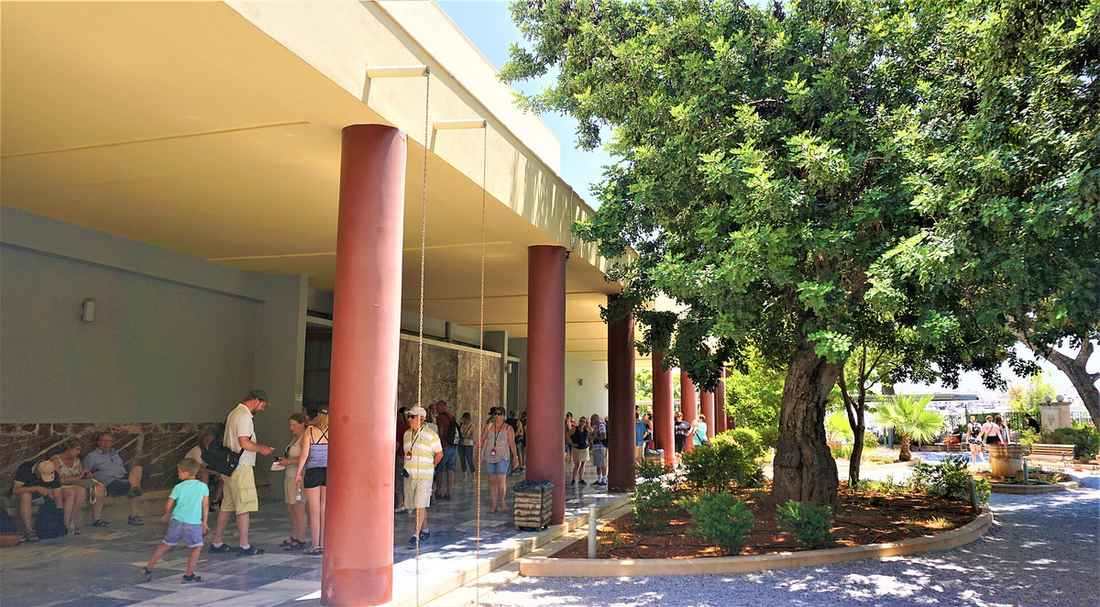
A Knossos and Heraklion tour pairs the Minoan palace with the Heraklion Archaeological Museum, where its original frescoes are kept. Plan combined tours and tickets through My Greece Tours.
Combining the two is the fullest way to experience the Palace of Knossos. The sections below cover what the tour is, why the palace and museum belong together, what it includes, how long it takes, what it costs and whether it is worth it.
What is a Knossos and Heraklion tour?
A Knossos and Heraklion tour is a combined excursion that pairs a visit to the Minoan palace of Knossos with the Heraklion Archaeological Museum in the nearby city.
A Knossos and Heraklion tour brings together the two essential sights of the Minoan world on Crete. The first is the archaeological site of Knossos, where you walk through the ruins and reconstructions of the great palace. The second is the Heraklion Archaeological Museum in the nearby city, which houses the original frescoes, pottery, jewellery and artefacts excavated from the site. Most such tours are guided, with an expert licensed guide leading you through both, so that the ruins and the finds explain each other.
The two are usually visited on the same day. A short transfer of around twenty to thirty minutes links the palace, on the city’s southern outskirts, with the museum in the centre of Heraklion. The museum sits on Xanthoudidou Street, a short walk from the Venetian harbour and the main square. Many tours use the discounted combined ticket that covers both attractions, and include transport and skip-the-line entry. The result is a complete Minoan experience that the palace alone cannot offer.
The combination is popular because it answers a common frustration. Visitors who see only the site often leave feeling that the ruins were confusing and the famous frescoes were merely copies, while visitors who see only the museum miss the scale and atmosphere of the place. The Knossos and Heraklion tour solves both at once. It is offered as a self-guided combined ticket, as a small-group guided tour, and as a private tour, and cruise lines and Crete travel agents run their own versions from across the island, so a format exists to suit almost any base and budget.
Our Knossos guided tours guide covers the palace-only options, and the next section covers why the two belong together.
Why combine Knossos with the Heraklion museum?
Combining Knossos with the Heraklion museum gives the complete picture, because the original frescoes and finds from the palace are kept in the museum, not on site.
There is a compelling reason to combine Knossos with the Heraklion Archaeological Museum. The original frescoes and the finest artefacts from the palace are not at the site itself but in the museum. At Knossos, the famous wall paintings on display are replicas, placed where the originals were found. The genuine frescoes, including the celebrated bull-leaping and procession scenes, along with the prince of the lilies and the dolphin fresco, are preserved and exhibited in the museum. Seeing only the site means missing the real masterpieces.
The two sights are perfectly complementary. The palace conveys the scale, layout and architecture of Minoan Knossos, letting you stand in the spaces where the civilisation lived. The museum reveals the artistry, craftsmanship and daily life through its collection of Minoan art and objects, from the snake goddess figurines to the Phaistos Disc. Together they turn a visit from a walk through ruins into a full understanding of a remarkable Bronze Age culture. Standing in the throne room and then seeing the objects that once furnished such rooms joins the two halves of the story.
The Heraklion Archaeological Museum is the largest museum on Crete and one of the most important in Greece. It holds artefacts spanning more than five thousand years of Cretan history, from the Neolithic period to Roman times, with the Minoan collection as its heart. Because so much of what was found at Knossos is displayed here, the museum is effectively the archive of the palace. The bull-leaping fresco, the ladies in blue, the procession fresco and the faience figurines all live in these galleries, so the museum turns the abstract ruins of Knossos into vivid, coloured, human detail.
Our guide to the Knossos frescoes covers the wall paintings, and the next section covers what the tour includes.
What does a Knossos and Heraklion tour include?
A Knossos and Heraklion tour usually includes a guided visit to the palace and the museum, the entry tickets or combined ticket, and often skip-the-line access and transfers from Heraklion or the resorts.
A typical Knossos and Heraklion tour includes a guided visit to both the archaeological site of Knossos and the Heraklion Archaeological Museum. An expert licensed guide leads both parts and explains the connection between the ruins and the finds. The entry tickets, often as the discounted combined ticket, are usually included. Skip-the-line access is included on many tours, saving time at both attractions during the busy season from May to October.
Most tours also include transport. This may be a transfer between the two sites, or full hotel pickup and drop-off from Heraklion and the main Crete resorts, which matters most on a day tour from a more distant town. Some itineraries add a little free time to explore Heraklion’s old town, with its Venetian harbour, the Koules fortress and the lively market streets. Checking exactly what is included, the guide, the tickets, the transfers and any free time, is wise when booking, since a self-guided combined ticket and a fully guided small-group tour are very different products.
Group size is worth checking too. Small-group tours cap numbers, often at around fifteen or fewer, so you stay close to the guide, while a large coach tour is cheaper but more crowded.
The itinerary itself is fairly consistent from tour to tour. At the palace, the guide leads you through the west court, the central court, the throne room with its gypsum throne, the reconstructed north entrance with the charging bull relief, and the grand staircase down into the royal apartments. At the museum, the tour focuses on the Minoan galleries on the ground floor, where the original frescoes and the great finds are grouped by period and by palace. A good guide connects the two directly, pointing out in the museum the very objects and paintings whose findspots you stood beside at Knossos. The next section covers how long the tour takes.
How long is a Knossos and Heraklion tour?
A Knossos and Heraklion tour usually takes around half a day, with roughly one and a half to two hours at the palace and another hour or two at the museum, plus transfers.
A Knossos and Heraklion tour generally takes around half a day when starting from Heraklion. Expect roughly one and a half to two hours at the palace site and another hour or two in the Heraklion Archaeological Museum, plus the short transfers between them and your accommodation. Guided combined tours often run to about four to five hours in total. This makes for a full but manageable morning or afternoon that covers both essential Minoan sights without feeling rushed.
The main variable is where you start from. Beginning in Heraklion or at its cruise port keeps the day compact. A combined tour from the more distant resorts of Chania, Rethymno or Agios Nikolaos involves a coach journey of one and a half to three hours each way, which turns the outing into a full-day excursion of up to twelve hours. Allowing for the travel time, and the summer heat at the open palace, helps you plan the rest of your day around the tour.
It helps to picture the day by starting point. From Heraklion, the palace is about twenty minutes away, so a half-day comfortably covers both sights and leaves the afternoon free. From Rethymno, roughly midway along the north coast, the drive adds around an hour each way, so an early start is sensible. From Chania in the far west, the journey is the longest, and the tour becomes a full day with limited breaks. Cruise passengers calling at Heraklion have the shortest transfers of all, since the port sits close to both the palace and the museum. Matching the tour to your base is the single biggest factor in how relaxed the day feels.
Our guide to the best time to visit Knossos covers the timing, and the next section covers the cost.
How much does a Knossos and Heraklion tour cost?
A Knossos and Heraklion tour costs more than the entry tickets alone, since it adds a guide, transport and skip-the-line access, but the combined ticket keeps the admission part good value.
The cost of a Knossos and Heraklion tour depends on what it includes and where it starts. The admission itself is modest, and the discounted combined ticket that covers both the palace and the museum costs less than buying the two entries separately. This combined ticket is typically valid for several days, so it can be used across two visits rather than in a single day. Booking online in advance secures both the ticket and, on guided products, the skip-the-line entry.
A guided combined tour adds the cost of a licensed guide, transport and organisation on top of the admission. Prices rise with distance and fall with group size, so a large coach tour from Heraklion is the cheapest guided option, a small-group tour costs more per person, and a private tour is the most expensive but the most flexible. Full-day tours from Chania or Rethymno cost more again because of the long transfers. For most visitors, the value lies in the guide and the saved queuing time rather than in the ticket price, which stays low either way.
Three broad formats cover most bookings. The self-guided combined ticket is the cheapest, giving entry to both sites with no guide, and suits confident, independent visitors who read up in advance or use an audio guide. The small-group guided tour is the middle option, adding a licensed guide, skip-the-line entry and often transport, and is the most popular choice for first-time visitors. The private tour is the top tier, giving a dedicated guide who tailors the pace and the focus to your interests, which suits families, specialists and anyone short on time. Choosing between them is really a choice about how much guidance and flexibility you want, since the sights themselves are the same.
Our Knossos guided tours guide covers the tour formats, and the next section weighs up whether the tour is worth it.
Is a Knossos and Heraklion tour worth it?
Yes, a Knossos and Heraklion tour is well worth it, as it gives the complete Minoan experience that neither the palace nor the museum offers alone.
A Knossos and Heraklion tour is genuinely worth it for anyone interested in the Minoan civilisation, because it provides the complete picture that neither sight gives alone. Seeing the palace lets you experience the scale, layout and reconstructed grandeur of Knossos in person. The Heraklion Archaeological Museum then reveals the original frescoes, the finest pottery and the everyday artefacts that bring the culture to life, the real treasures that are not kept at the site. One shows the place, the other shows its soul.
A knowledgeable guide ties the two together, explaining how the finds in the museum relate to the spaces in the palace, which deepens the understanding of both. Add the convenience of included tickets, often as the discounted combined ticket, along with transport and skip-the-line entry, and the combined tour becomes an efficient, rewarding way to experience the heart of Minoan Crete in a single visit. For a first-time visitor with limited time, it is the most complete option available.
The order of the visit can shape the experience. Seeing the palace first and the museum second is the most common arrangement, since it lets you stand in the rooms before meeting the objects that filled them. Some guides reverse this, using the museum to set the scene before the site. Either way, the pairing rewards visitors who care about context rather than photographs alone. Those with a deeper interest in the Minoans, in the myth of the labyrinth, or in the story of Sir Arthur Evans, who excavated and reconstructed Knossos, gain the most from a guided combined visit, since much of that background lives in the connection between the two places.
In the end, pairing Knossos with the Heraklion museum is the difference between seeing a place and understanding it. Joined by a knowledgeable guide and made easy by a combined ticket, transport and skip-the-line entry, the two together turn a single morning or afternoon into a journey through the heart of Bronze Age Crete. Plan your tour and tickets through our Palace of Knossos guide.
Frequently Asked Questions
Should you visit the Heraklion museum with Knossos?
Yes, visiting the Heraklion Archaeological Museum together with Knossos is highly recommended, as the two complete each other. The original frescoes and the finest artefacts from the palace are kept in the museum, not at the site, where the wall paintings on display are replicas. The palace conveys the scale, layout and architecture of Minoan Knossos, while the museum reveals the genuine art and objects, including the famous bull-leaping fresco and the snake goddess figurines. Together they give a far fuller understanding of the Minoan civilisation. A discounted combined ticket covers both, and many guided tours visit them on the same day, often with transport and skip-the-line entry included.
How long does a Knossos and Heraklion museum tour take?
A Knossos and Heraklion museum tour usually takes around half a day from Heraklion, with roughly one and a half to two hours at the palace site and another hour or two in the museum, plus short transfers. Guided combined tours often run to about four to five hours in total. This covers both essential Minoan sights at a comfortable pace. The main variable is the starting point. Beginning in Heraklion or at its cruise port keeps the day compact, while a combined tour from the more distant resorts of Chania, Rethymno or Agios Nikolaos involves long coach journeys each way and becomes a full-day excursion. Allowing for the travel time and the summer heat at the open palace helps with planning.
Is there a combined ticket for Knossos and the Heraklion museum?
Yes, there is a discounted combined ticket that covers both the Knossos archaeological site and the Heraklion Archaeological Museum, and it costs less than buying the two tickets separately. It is typically valid over several days, so you do not have to see both on the same day, though many visitors and guided tours do. The combined ticket makes good sense because the two attractions complement each other. The palace shows the architecture and scale of Minoan Knossos, while the museum houses the original frescoes and finds excavated from the site. Together they give the fullest picture of the Minoan world.
Can you do the Knossos and Heraklion tour on a cruise stop?
Yes, the Knossos and Heraklion tour works well on a cruise stop, because the Heraklion cruise port sits close to both the palace and the museum. The palace is about a twenty-minute transfer from the port, and the museum is in the city centre nearby. An organised shore excursion is the most convenient option, since it handles the transfers, includes a guide and skip-the-line entry, and is timed to return you to the ship in good time. Independent passengers can also reach both by taxi or the local bus. With one and a half to two hours at the palace and about an hour at the museum, the combined visit fits comfortably into a typical port call.