
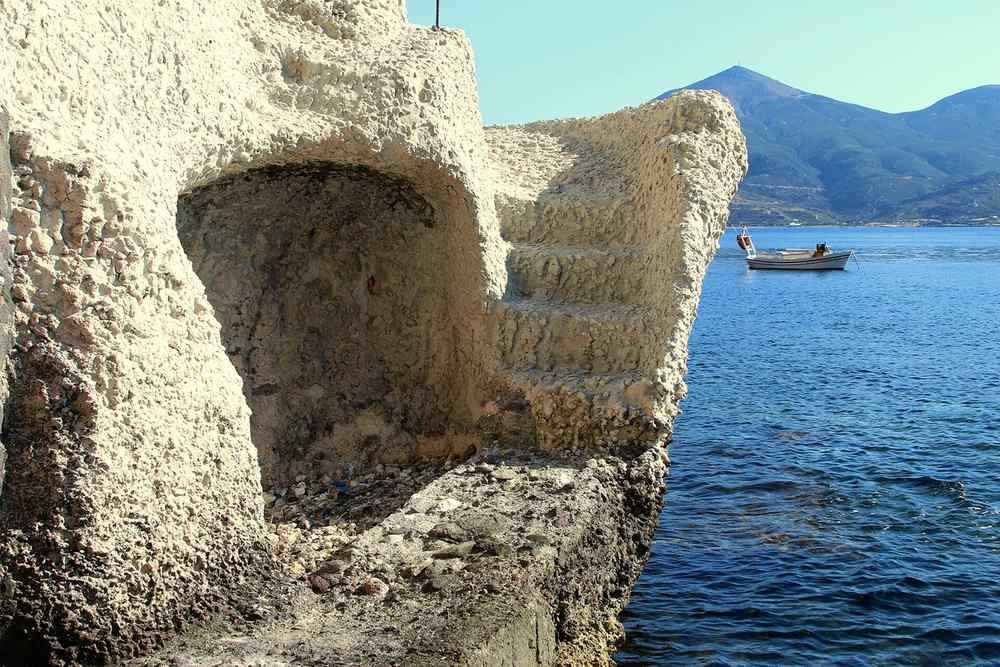
Choosing between Milos and Samos pits a small volcanic Cycladic island against a large, green and lush north Aegean one. Plan island tours and tickets through My Greece Tours.
This comparison is a common question in the Milos travel guide. The sections below compare the landscapes, the beaches, the vibe, the access and which island suits you best.
Which is better, Milos or Samos?
Milos is better for dramatic volcanic beaches and a compact Cycladic feel, while Samos is better for green forested mountains, ancient history and wine.
Each island offers a different Greece. Milos is small and volcanic. Samos is large and green. The choice turns on taste.
Pick Milos for the coast. Coloured coves and caves define it. The beaches headline the trip. The boat days dazzle.
Pick Samos for the green. Forested mountains rise high. Vineyards cloak the slopes. History fills the sites.
Both reward the curious. Milos sells volcanic drama. Samos sells lush variety. Scale and nature split them.
Milos and Samos sit at opposite ends of the Greek island spectrum. Milos, in the western Cyclades, is a small, compact volcanic island where bare hills, coloured cliffs and dozens of dramatic coves make the coast the star. It is an island for beaches, boat trips and the sculpted, otherworldly geology of the Cyclades, easily explored from a single base over a few days.
Samos, in the north Aegean close to the Turkish coast, is a large, green and mountainous island cloaked in pine forest and vineyards, famous for its sweet wine, its ancient heritage as the birthplace of Pythagoras, and the vast Heraion temple. It is lush, varied and rich in history where Milos is bare, compact and beach-led. Choose Milos for volcanic coves and an easy island trip, and Samos for forested mountains, wine, ancient sites and a larger island to roam. The next section compares the landscapes.
How do the landscapes of Milos and Samos compare?
Milos has a dry, compact volcanic landscape of coloured cliffs, white rock and bare hills, while Samos is large, green and mountainous, covered in pine forest and vineyards with high peaks and streams.
The two landscapes diverge sharply. Milos runs bare and compact. Samos runs green and tall. Nature drives the gap.
Milos owes its look to fire. Volcanic rock paints the coast. Cliffs glow red and white. Hot springs warm the shore.
Samos owes its look to forest. Pine cloaks the mountains. Vineyards stripe the hills. Streams feed the green.
The contrast shapes the trip. Milos dazzles with rock. Samos soothes with woodland. Both face clear seas.
The landscapes here could hardly differ more. Milos is shaped by its volcanic origins, with eruptions and hydrothermal activity that stained its coast in remarkable colours and carved it into white rock, coloured cliffs and sea caves. The hills are largely bare and sun-baked, the island is small enough to cross in under an hour, and the drama lies in the sculpted forms that line the coast of the western Cyclades.
Samos is one of the greenest and most mountainous islands in the Aegean. It rises to high peaks cloaked in dense pine forest, threaded with streams and waterfalls and striped with the vineyards that produce its celebrated sweet wine, all on a large island that takes real time to explore. It is lush, tall and verdant where Milos is bare, low and compact. A traveller drawn to coloured geology and a small beach island will warm to Milos, while one who loves green mountains, forest and wine country will lean toward Samos. The next section compares the beaches.
Which has better beaches, Milos or Samos?
Milos has more dramatic and varied beaches, with dozens of colourful volcanic coves and sea caves, while Samos has attractive pebble and sand beaches backed by green hills.
The beaches split by character. Milos sells colour and caves. Samos sells green-backed bays. Both run clear and blue.
Milos wins on variety. The coloured coves astonish. Sarakiniko glows white. Kleftiko hides its caves.
Samos wins on greenery. Pine frames the pebbles. Hills back the bays. The shade cools the swim.
The choice depends on taste. Milos craves the camera. Samos craves the calm. Both reward the swimmer.
On beaches, Milos offers spectacle that few islands can rival. Its volcanic coast is carved into dozens of coves of remarkable colour and form, from the white moonscape of Sarakiniko to the coloured cliffs of the south and the cave-riddled rock of Kleftiko reached by boat. For a traveller who treats beaches as the heart of a holiday and loves dramatic, photogenic swimming, the Milos coast is hard to beat.
Samos answers with attractive, green-fringed beaches spread along its long coastline. Bays such as Tsamadou, Lemonakia and Potami pair clear water with backdrops of pine and hillside, offering shaded, scenic swimming, and their larger number reflects the size of the island. They are lovely and varied but lack the colour and sheer drama of the Milos coves. Choose Milos for spectacular, varied beaches, and Samos for green-backed bays along a bigger island. The next section compares the vibe.
How do the vibe and atmosphere of Milos and Samos compare?
Milos has a compact, chic Cycladic vibe with a foodie scene and boat-trip energy, while Samos feels larger, greener and more traditional, with lively resorts, ancient sites and a working agricultural island life.
The two moods differ in scale. Milos feels compact and chic. Samos feels large and varied. Size shapes both.
Milos carries a Cycladic buzz. Whitewashed villages charm. The food scene shines. The boat trips draw a crowd.
Samos spreads its life wide. Resorts dot the coast. Vineyards work the hills. History fills the towns.
Atmosphere follows the island. Milos focuses on the sea. Samos blends beach and culture. Both stay welcoming.
In atmosphere, the islands reflect their size and character. Milos is a compact, quietly stylish Cycladic destination, with whitewashed villages like Plaka, a celebrated food scene and a relaxed crowd drawn by the beaches and boat trips. Everything is close together, and the mood is focused and scenery-led, an easy island to settle into for a beach-and-boat holiday without the noise of the party islands.
Samos is larger, greener and more varied in its rhythm, blending lively coastal resorts with a working agricultural island of vineyards and villages and a rich ancient heritage at the Heraion and Pythagoreio. It offers more to explore beyond the beach, from wine tasting to archaeology, across a bigger and more traditional island. Where Milos delivers a focused, chic beach escape, Samos delivers a broad mix of swimming, culture and green countryside. The next section helps you choose between them.
Should you choose Milos or Samos?
Choose Milos for volcanic beaches, sea caves, boat trips and a compact Cycladic escape, and Samos for green mountains, wine, ancient history and a larger, varied island to explore.
The verdict rests on what you want. Milos sells coves and boat trips. Samos sells green and culture. One island wins.
Choose Milos for the coast. Volcanic beaches headline it. Boat trips seal the deal. The food rewards the night.
Choose Samos for the green. Forested mountains define it. Wine and ruins fill the days. The island spreads wide.
They sit far apart. Milos anchors the Cyclades. Samos anchors the east Aegean. One trip rarely fits both.
The decision turns on the island you want. Choose Milos for a compact volcanic island of dozens of coloured coves, sea caves, hot springs and boat trips, paired with a relaxed, stylish scene and a strong food culture. It rewards travellers who want a focused, scenery-led beach holiday with a sense of discovery and short distances between everything.
Choose Samos for a large, green and mountainous island of pine forest, vineyards, sweet wine and ancient sites, with a varied mix of beaches, culture and countryside to explore at a slower, more spread-out pace. The two lie far apart, Milos in the western Cyclades and Samos in the east Aegean near Turkey, so they do not combine on one trip, and most travellers choose one as a focus. Plan your island route through our things to do in Milos guide once you decide.
The shape of your wider holiday can settle the choice. Milos fits a Cycladic island-hopping route, easily linked by ferry to Sifnos, Serifos, Folegandros and Santorini for a multi-island trip from Athens. Samos sits in the east Aegean and pairs naturally with the nearby Turkish coast or with a longer exploration of the larger eastern islands, suiting travellers who want depth on one big island rather than hopping between small ones. So beyond beaches and scenery, the decision reflects whether you want a compact, hop-friendly Cycladic adventure or a deeper stay on a green, varied island with culture and countryside to explore at a slower pace.
Ultimately the islands suit different travellers. Milos rewards those who want a focused, beach-led escape with short distances and a real sense of discovery, while Samos rewards those who want to settle into a large, green island and explore its wine, history and forested mountains at leisure. Weighing how much you value spectacular coves against varied countryside and culture usually points clearly to one island over the other.
How do dining and food compare on Milos and Samos?
Milos serves a compact, seafood-led island food scene of harbour tavernas and Cycladic cooking, while Samos offers a broad wine-country cuisine of grilled meats, mountain herbs and its famous sweet Muscat wine.
Milos concentrates its kitchens around Adamas and Pollonia, where tavernas grill the day’s catch and plate octopus, caper-leaf salads and Cycladic cheese pies. The volcanic soil grows capers and tomatoes that anchor the table, and dinner leans on the short distance between the boat and the plate. The food scene stays walkable and firmly tied to the sea.
Samos builds its table around the land as much as the water. The island produces the sweet Muscat wine that carries its name, poured after meze of grilled meat, honey and mountain greens gathered on the forested slopes. Wine tasting at the co-operative cellars near Vathy turns a meal into a tour of the terroir, and the size of the island spreads its tavernas across coast and hill villages alike.
The gap reflects the two landscapes. Milos rewards a traveller who wants refined island seafood within walking distance of the harbour. Samos rewards one who wants to eat and drink across a green wine island, pairing the sweet Muscat with long lunches in vine-covered villages.
Which has more to do beyond the beach, Milos or Samos?
Samos has more to do beyond the beach, with the Heraion temple, Pythagoreio, wine cellars and forest hikes, while Milos focuses on boat trips, hot springs and its ancient theatre and catacombs.
Milos keeps its activities close to the coast. The boat trip to Kleftiko headlines the itinerary, the Roman theatre and the early Christian catacombs add culture, and the site of the Venus de Milo draws visitors to Tripiti. Kayaking, snorkelling and the thermal springs fill the rest of a beach-led week.
Samos turns sightseeing into a full programme. The vast Heraion temple honoured the goddess Hera, the UNESCO-listed Eupalinian aqueduct tunnels through a mountain at Pythagoreio, and the birthplace of Pythagoras carries a deep ancient story. Hikers climb through pine forest to waterfalls and mountain villages, and the wineries add a tasting circuit that spans the island.
This difference defines the two trips. Milos delivers a focused island where the sea shapes the day and culture plays a supporting role. Samos delivers a large island where ancient sites, wine and forest walks compete with the beach for a traveller’s time.
How do access and getting around compare for Milos and Samos?
Milos is reached by ferry from Piraeus or a short flight and toured from one base, while Samos sits far across the Aegean near Turkey, reached by a long ferry or a longer flight and explored by car across a large island.
Milos sits in the western Cyclades, linked to Piraeus by ferry and to Athens by a short domestic flight into its small airport. The island stays compact, so a rental car or scooter reaches the coves within short drives, and boat trips cover the caves that roads cannot. One base serves the whole holiday.
Samos lies in the east Aegean, close to the Turkish coast and far from Piraeus, which makes the flight into its airport the practical arrival for most travellers. The ferry runs long and overnight-style from Athens. On the island, its size calls for a rental car to link Vathy, Pythagoreio and the mountain villages, and boats also cross to the Turkish port of Kusadasi.
The practical takeaway favours different planners. Milos suits a traveller who wants a quick sail or flight and a single relaxed base. Samos suits one willing to travel further east for a large green island, and it pairs naturally with a side trip to the nearby Turkish coast.
Is Milos or Samos cheaper for a holiday?
Samos is usually cheaper for the on-island spend, with lower room and dining prices on a large non-Cycladic island, while Milos carries higher Cycladic premiums in peak summer for accommodation and boat trips.
Milos prices track the wider Cyclades, where summer demand lifts the cost of rooms, ferry tickets and popular boat trips. Rates ease in spring and autumn, yet July and August place the island in the mid-to-upper tier. The ferry or flight fare adds to the on-island cost.
Samos keeps day-to-day costs lower, since a large east-Aegean island prices its hotels, tavernas and car hire below Cycladic levels. The trade-off is the longer flight or ferry to reach it, which can offset the on-island saving depending on where the trip starts. On the island, a budget stretches across a bigger area for the same nightly outlay.
The value verdict depends on the trip. Samos offers a more economical stay on a green, varied island rich in wine and history. Milos costs more for a compact volcanic coast, and the premium buys concentration and spectacle rather than distance covered.
Frequently Asked Questions
Is Milos or Samos better for beaches?
Milos is better for beach variety and drama, with dozens of colourful volcanic coves, sea caves and moonscapes, from Sarakiniko to Kleftiko reached by boat. Samos has attractive pebble and sand beaches such as Tsamadou, Lemonakia and Potami, backed by green pine hills and spread along a much larger coast, offering shaded, scenic swimming. Choose Milos for spectacular, photogenic beaches and boat trips, and Samos for green-fringed bays and the variety that comes with a bigger island.
Is Samos bigger than Milos?
Yes, Samos is much bigger than Milos. Samos is a large island of high, forested mountains, vineyards and several sizeable towns, taking real time to explore by car, while Milos is a compact island that can be crossed in well under an hour and is easily covered from a single base over a few days. The difference in size shapes the trips: Samos suits touring a varied island of beaches, wine country and ancient sites, while Milos suits a focused beach-and-boat holiday with short distances between its coves and villages.
Is Milos or Samos easier to reach from Athens?
Milos is generally easier to reach from Athens. It lies in the western Cyclades, connected by frequent ferries from Piraeus and by short domestic flights from Athens. Samos sits far across the Aegean near the Turkish coast, reached by a long overnight-style ferry from Piraeus or by a longer domestic flight. For a trip based on Athens, Milos is the more convenient choice, while Samos suits travellers willing to fly further for a large, green island, and it is also popular with visitors combining it with the nearby Turkish coast.
Is Milos or Samos better for families?
Both suit families, in different ways. Milos works for a relaxed beach base, with sheltered coves for younger children, a boat trip as the highlight and short drives that keep travel simple. Samos suits families who enjoy variety, pairing calm beaches with wine-country drives, forest waterfalls and hands-on history at the Heraion and Pythagoreio. A family after easy beach days will lean to Milos, while one that wants nature, ancient sites and a bigger island to roam will get more from Samos.
How many days do you need for Milos versus Samos?
Milos rewards four to six days, enough to reach the main coves, take a boat trip to Kleftiko and settle into the island rhythm from one base. Samos asks for more, ideally six to nine days, given its size and the distances between Vathy, Pythagoreio, the wineries and the mountain villages. A short trip fits Milos comfortably, while Samos repays a longer stay that lets you cover its beaches, ancient sites, wine country and forested peaks without rushing.