
Thiorichia beach on Milos sits beside the abandoned sulphur mines at Paliorema, where rusting industrial ruins meet ochre sand and clear water. Plan beaches and boat trips through My Greece Tours.
Thiorichia is an unusual stop in the Milos travel guide. The sections below cover where the beach is, its mining history, the snorkelling, what to bring and how to reach it.
Where is Thiorichia beach on Milos?
Thiorichia beach lies on the remote east coast of Milos, at Paliorema, beside the island’s abandoned sulphur mines. It sits in a secluded bay far from the main resorts, reached by a rough dirt track or by boat along the coast.
Thiorichia hides on the east coast. Paliorema names the bay. The mines stand above it. The setting feels remote.
The cove sits far from the towns. No resort crowds it. The track guards the way. The boat reaches the rest.
Rusty ruins frame the sand. Old machinery looms above. The industry left its mark. The scene turns surreal.
Ochre sand colours the beach. Sulphur stains the shore. Clear water laps it. The contrast astonishes.
Thiorichia, also written Theioryxeia, is one of the most unusual beaches on Milos, set in the remote bay of Paliorema on the island’s east coast. Its name means the sulphur mines, and the beach takes its character from the abandoned mining complex that rises directly behind it. Far from the main resorts and villages, it occupies a secluded, almost forgotten corner of the coast where industrial history and a wild beach meet in striking fashion.
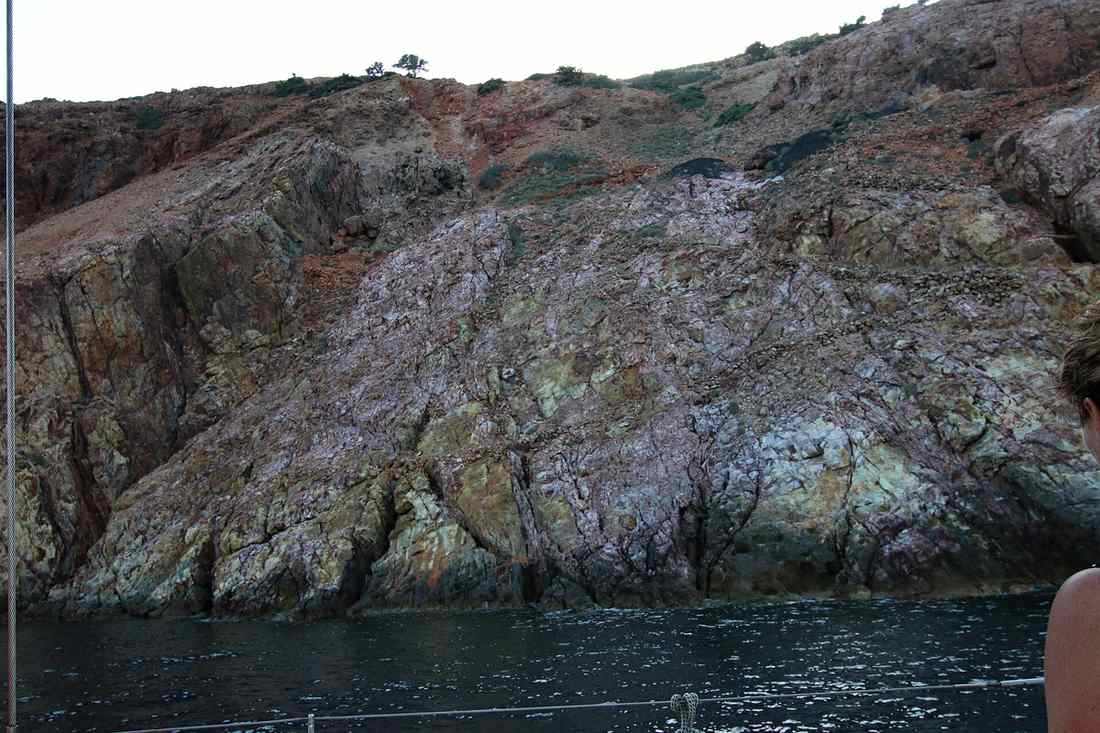
The bay is hemmed in by the ruins of the sulphur works and stained in the ochre and yellow tones of the mineral that was once dug here. The sand carries the same colours, and the clear water laps against a backdrop of rusting machinery, crumbling loading bridges and empty buildings. It is a beach for the curious as much as the swimmer, combining a quiet, scenic cove with one of the island’s most evocative industrial sites. Our guide to the Milos sulphur mines covers the history, and the next section explains it.
What is the history of the Thiorichia sulphur mines?
The Thiorichia sulphur mines at Paliorema operated until the mid-twentieth century, extracting sulphur and manganese from the volcanic ground.
Thiorichia tells a mining story. Sulphur drew the work here. The volcanic ground held it. The industry grew.
The mines ran for decades. Workers dug the mineral. Boats shipped it out. The bay buzzed with toil.
The work eventually stopped. The mines fell silent. The crews moved on. The machinery rusted.
The ruins remain today. Old carts cling to rails. Buildings crumble slowly. The past haunts the cove.
Milos has been mined since antiquity, and its volcanic geology has long made it rich in minerals, from obsidian in prehistoric times to sulphur, manganese, bentonite and perlite in the modern era. At Paliorema, the sulphur mines worked the eastern coast for decades, extracting and processing the bright yellow mineral until operations ceased around the middle of the twentieth century, when the industry on this part of the island wound down.
The closure left the remote site exactly as it stood. Today the bay is a preserved industrial relic, with rusting ore carts on their rails, a ruined loading bridge running out toward the sea, old furnaces and the shells of workers’ buildings scattered across the slope above the beach. Exploring the ruins is a fascinating, slightly eerie experience, a window into the island’s industrial past set against the bright sea. The contrast of decay and beauty is what makes Thiorichia memorable. The next section covers the snorkelling.
Is Thiorichia beach good for snorkelling?
Thiorichia is good for snorkelling, with clear, calm water and a rocky, mineral-streaked seabed that shelters marine life.
Thiorichia rewards the snorkeller. The water runs clear. The rock drops below. The fish gather there.
The remote cove stays calm. The crowds rarely arrive. The sea sits undisturbed. The clarity holds.
Mineral colours streak the depths. Volcanic rock lines the floor. The hues catch the light. The scene absorbs.
Bring your own gear. No rental waits here. A mask reveals the cove. Water shoes guard the feet.
The clear, sheltered water at Thiorichia makes it a fine spot for snorkelling. The bay’s remote position keeps it quiet and the sea calm and undisturbed, so visibility is good, and the rocky, mineral-rich seabed shelters the marine life that thrives along this volcanic coast. The same coloured rock that streaks the cliffs and stains the sand continues below the waterline, giving the underwater scene the same surreal palette as the shore.
The beach has no facilities of any kind, so snorkellers need to come fully equipped, bringing their own mask, snorkel and fins, along with water shoes for the rocky, sometimes mineral-crusted entry. Pairing a swim and a snorkel with a wander through the ruins makes for a rich half-day at this singular spot. For a wider look at the island’s underwater world, see our Milos diving and snorkelling guide. The next section covers what to bring.
What should you bring to Thiorichia beach?
Bring water, food, shade, sturdy shoes and snorkelling gear to Thiorichia, as the beach has no facilities.
Thiorichia offers no services. No taverna feeds you. No bar pours a drink. You carry it all.
Water tops the list. The sun beats hard. Shade is scarce. A parasol earns its place.
Sturdy shoes protect you. The ruins hide sharp metal. The ground turns rough. Closed shoes guard the feet.
Carry your litter out. Leave the cove pristine. Respect the old site. The next visitor benefits.
Thiorichia is a remote, unserviced beach, so preparation matters. There is no taverna, beach bar, sunbed or shop anywhere near the bay, and the nearest supplies are a long drive away, so bring ample drinking water, food or a packed lunch, and proper sun protection. A beach umbrella is worth the effort, since shade is scarce, and a hat and high-factor sunscreen guard against the strong sun reflecting off the pale, mineral-streaked ground.
The ruins add a safety dimension to the packing list. Sturdy closed shoes are sensible for exploring the old mining site, where rusting metal, broken machinery and uneven ground can be hazardous, and curious visitors should take care around the unstable structures. Water shoes help on the rocky entry to the sea. As with all the island’s wild beaches, carrying every scrap of litter back out keeps this atmospheric spot unspoilt. The next section covers how to reach Thiorichia.
How do you get to Thiorichia beach?
Thiorichia is reached by a long, rough dirt track across the east of Milos, best tackled by a quad or four-wheel-drive, or more easily by boat along the coast.
Thiorichia tests the traveller. A rough track leads in. A quad handles it best. An ordinary car struggles.
The drive crosses the east. The road turns to dirt. The surface jolts and climbs. The effort guards the cove.
A boat offers an easier way. The coast opens from the sea. Tours pass the bay. The ruins frame the approach.
The hard access keeps it calm. The crowds stay away. The quiet endures. The reward runs deep.
Reaching Thiorichia is part of its character, and not for the faint-hearted by road. The bay lies at the end of a long, rough dirt track across the remote east of the island, a bumpy and sometimes steep route best tackled with a quad bike or a four-wheel-drive rather than a standard hire car. The difficult approach is exactly what keeps the beach so secluded and the ruins so undisturbed, deterring all but the determined.
The gentler alternative is to arrive by sea. A boat trip along the east coast reaches the bay without the punishing drive and frames the rusting loading bridge and ochre cliffs beautifully from the water. A Milos boat tour or a private boat is the easiest way to combine Thiorichia with other hidden coves. However you come, the journey is part of the adventure to one of the island’s most unusual beaches. Plan the wider trip through our things to do in Milos guide.
A visit to Thiorichia works best as an unhurried half-day rather than a quick stop. The long, rough drive or the boat trip out means it pays to set aside the time to explore the ruins, swim, snorkel and take in the strange beauty of the place without rushing. Going earlier in the day avoids the strongest heat on the shadeless ground and gives the softest light for photographing the rusting machinery against the sea. Pairing the bay with other remote east-coast spots makes the effort of reaching it worthwhile, and the sense of discovery at this haunting, little-visited corner of the island is its own reward for the adventurous.
For travellers who collect the unusual, Thiorichia ranks among the most singular sights on Milos. The meeting of a quiet, clear-watered cove with the rusting bones of a lost industry gives it an atmosphere found nowhere else on the island, equal parts beach, ruin and open-air museum. It rewards curiosity and effort over comfort, and a careful, respectful visit leaves you with one of the most memorable impressions the island has to offer.
What can you see in the Thiorichia mining ruins?
The Thiorichia ruins hold rusting ore carts on their rails, a collapsed loading bridge running toward the sea, old furnaces and processing sheds, and the shells of workers’ buildings scattered up the slope, all left where the sulphur industry abandoned them.
The ruins climb the slope directly behind the beach, so a walk up from the sand traces the whole workflow of the mine. Ore carts still sit on rusted rails that once carried the yellow mineral down toward the water, and the skeletal loading bridge reaches out over the shore where boats were filled. The layout reads like a diagram of the sulphur trade frozen in place.
Old furnaces and processing structures stand among the buildings, their walls streaked in the same ochre and yellow tones that colour the cliffs and sand. The shells of the workers’ quarters and store rooms give a human scale to the site, a reminder that a small community once lived and laboured in this remote bay. Photographers find the rusted metal against the blue sea one of the most striking industrial scenes on the island.
The structures are unstable and unfenced, so the ruins reward careful, respectful exploration rather than climbing. Broken machinery, sharp rusted edges and crumbling walls make sturdy shoes and a watchful eye essential, and children need close supervision. Treated with care, the site works as an open-air museum of the island’s mining past, tied to the wider story in our guide to the Milos sulphur mines.
How does Thiorichia compare with other Milos beaches?
Thiorichia trades the polish of Milos’s famous beaches for raw industrial atmosphere. It lacks the fame of Sarakiniko or the facilities of Paleochori, yet it offers ruins, solitude and colour that no other beach on the island can match.
Sarakiniko draws crowds to its white volcanic moonscape, and Paleochori pairs coloured cliffs with tavernas and sunbeds. Thiorichia sits at the opposite end of the scale, remote and unserviced, its appeal built on the rusting sulphur works rather than easy comfort. A traveller after amenities and a classic swim heads for the busier southern beaches, while one after atmosphere and quiet chooses this eastern cove.
The colour palette links Thiorichia to the island’s volcanic character even as its mood sets it apart. The ochre sand and mineral-streaked rock echo the tones of Paleochori and Firiplaka, all products of the same hydrothermal geology, yet the industrial ruins give Thiorichia a haunting edge the others lack. The cove rewards curiosity over convenience, and its underwater colour makes the snorkelling as distinctive as the shore.
Fitting Thiorichia into a wider beach plan works best as a contrast rather than a substitute. Pairing it with a lively southern beach earlier in the trip highlights how varied the Milos coast is, from the sculpted white rock of Sarakiniko to the raw industry of Paliorema. The island rewards travellers who mix its polished icons with its wild, little-visited corners.
When is the best time to visit Thiorichia beach?
The best time to visit Thiorichia is the morning, when the light is soft for photographing the ruins and the shadeless ground stays cooler, and the late spring to early autumn season, when the sea is warm and the track is dry.
A morning arrival suits the shadeless bay best. The ground reflects the sun off its pale, mineral-crusted surface, so the earlier hours keep the heat manageable before the midday glare builds. The softer morning light also flatters the rusting machinery and ochre cliffs, giving photographers the richest colours against the sea and the clearest water for a swim.
The wider season shapes both access and comfort. Late spring through early autumn brings warm water for swimming and snorkelling and a dry track that is easier for a quad or four-wheel-drive to cross. Wetter months turn the rough route muddy and less predictable, and the exposed cove offers no shelter from wind or rain, so a settled, dry day is worth waiting for.
Timing also helps preserve the quiet that defines the place. Arriving early, before boat trips reach the coast, often means the ruins and the sand to yourself, deepening the sense of discovery at this remote spot. Planning the visit as an unhurried half-day, tied into the wider route in our things to do in Milos guide, makes the effort of reaching it worthwhile.
Frequently Asked Questions
Why is Thiorichia called the sulphur mines beach?
Thiorichia is called the sulphur mines beach because it sits at Paliorema beside the abandoned sulphur mining works that gave it its name, which means the sulphur mines in Greek. The bay was once an active site extracting sulphur and manganese from the volcanic ground, and when mining stopped around the middle of the twentieth century, the rusting machinery, loading bridge and buildings were left in place. They now stand behind the ochre-tinted beach, making it one of the most distinctive and atmospheric coves on Milos.
Can you reach Thiorichia beach by car?
Reaching Thiorichia by a standard hire car is difficult, as the bay lies at the end of a long, rough dirt track across the remote east of Milos that really calls for a quad bike or a four-wheel-drive. The bumpy, sometimes steep route deters casual visitors and is what keeps the beach so quiet. The easier option for many is to arrive by boat along the coast, on a tour or private charter, which avoids the drive entirely and offers a striking view of the ruins from the sea.
Is Thiorichia beach worth visiting on Milos?
Thiorichia is well worth visiting for travellers drawn to unusual, atmospheric places rather than only sunbeds and easy swimming. The combination of a quiet, scenic cove, clear water good for snorkelling and the haunting ruins of the abandoned sulphur mines makes it one of the most memorable and photogenic spots on Milos. It rewards the effort of the rough drive or the boat trip with a real sense of discovery. Visitors should come fully self-sufficient, wear sturdy shoes around the ruins and take care near the unstable old structures.
Is it safe to explore the Thiorichia ruins?
Exploring the Thiorichia ruins is safe with sensible care, though the site is unfenced and unmaintained, so caution is essential. The abandoned buildings, furnaces and loading bridge carry rusted metal, sharp edges, broken machinery and crumbling walls, and the ground is uneven, so sturdy closed shoes are important and climbing on the fragile structures is unwise. Children need close supervision throughout. The remoteness of the bay means help is far away, so a careful, unhurried visit is best. Treated with respect, the ruins are a fascinating window into the island’s mining past, but they reward looking and photographing over clambering.
Are there facilities at Thiorichia beach?
Thiorichia has no facilities of any kind, so visitors must come fully self-sufficient. There is no taverna, beach bar, sunbed, umbrella hire, shop or toilet anywhere near the remote bay, and the nearest supplies lie a long drive away across the island. Anyone visiting should carry ample drinking water, food, sun protection and a beach umbrella for the shadeless ground, along with snorkelling gear and water shoes for the rocky entry. Carrying every piece of litter back out keeps the atmospheric cove and its ruins unspoilt. The lack of services is part of what keeps Thiorichia so quiet and undisturbed compared with the busier southern beaches.