
This Athens 5 day itinerary covers the Acropolis and ancient sites, the great museums and neighbourhoods, two full day trips, and the Riviera coast, a complete plan for a deeper visit. Build it around skip-the-line Acropolis tickets and tours from My Greece Tours for a seamless trip.
This five-day plan draws on the wider Athens travel guide. The sections below cover whether five days is enough, then a day-by-day plan for days one to five. They also set out where to stay, how to get around, what a trip costs, when to visit and the best route order.
Is five days enough for Athens?
Five days is an ideal amount of time for Athens. It covers every major ancient site and museum without rushing, the best neighbourhoods at leisure, two full day trips out of the city, and a day on the Riviera or a Saronic island.
The compact historic core means the essential ancient monuments and the greatest museums fit comfortably into the first two days. That leaves three further days for the things that deepen a visit. You can explore the characterful neighbourhoods, linger in cafés and tavernas, and take two full-day excursions out of the city into the wider region of Greece.
Five days frees you from the checklist. It leaves time to revisit a favourite viewpoint at sunset, browse the markets, or sit and watch Athenian life unfold. It also fits a relaxed day by the sea on the Athens Riviera, or a cruise to the nearby Saronic islands. In short, five days lets you see both the city and its surroundings without exhaustion. It gives depth without rush. The itinerary opens with the Acropolis.
Set against shorter trips, the extra days change what is possible. A two-day visit covers only the Acropolis and the ancient core. A three-day visit adds the museums and one day trip. Five days is the first length that fits the full city core, the neighbourhoods and beaches, and two contrasting excursions, so it earns its place as the sweet spot for a thorough first visit to the Greek capital.
What should you do on days one and two?
Spend day one on the Acropolis, its slopes with the ancient theatres, the Acropolis Museum, and Plaka, ending with a sunset from the Areopagus. Spend day two on the Ancient Agora, Roman Agora, Temple of Olympian Zeus, Panathenaic Stadium and National Archaeological Museum.
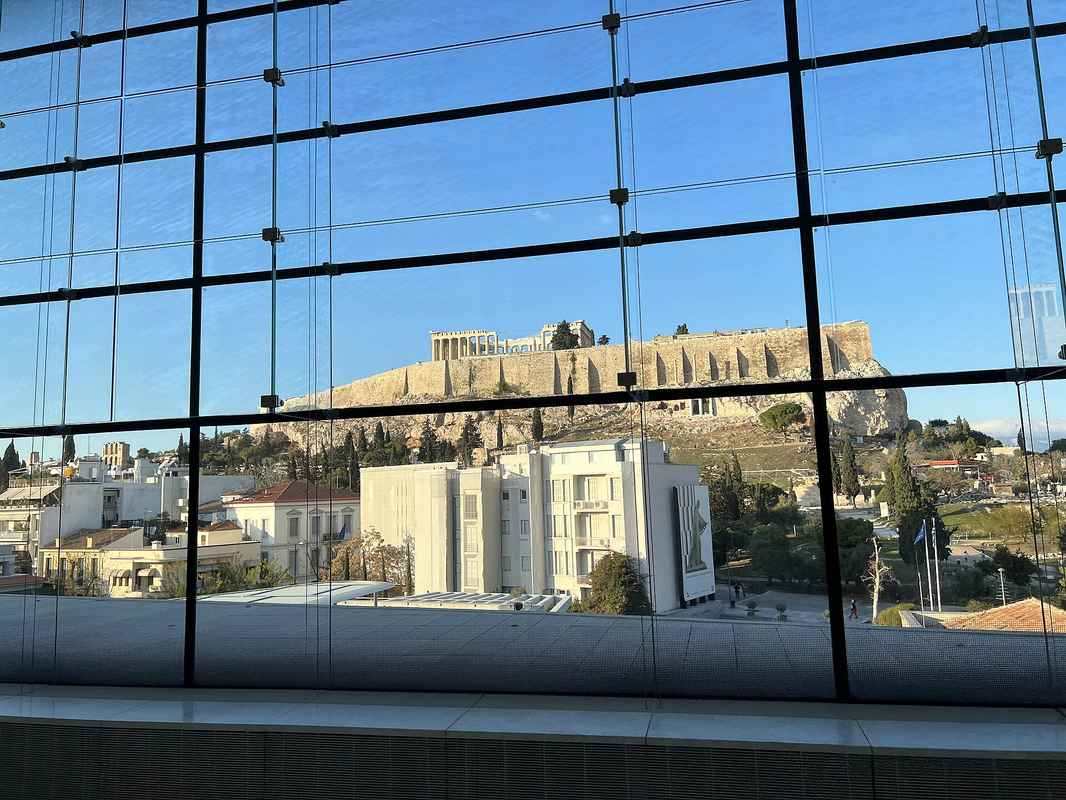
The first two days are devoted to the ancient and central heart of Athens. Day one belongs to the Acropolis. Arrive early with a pre-booked ticket to stand before the Parthenon and the other temples crowning the sacred rock. Then descend to explore the southern slope with the ancient Theatre of Dionysus and the Odeon of Herodes Atticus. Visit the luminous Acropolis Museum nearby, home to the Parthenon sculptures and finds from the sacred rock.
Spend the afternoon in the picturesque lanes of Plaka, the old quarter beneath the Acropolis. Lunch at a taverna and climb into the island-like alleys of Anafiotika. Then claim a perch on the Areopagus rock for a sunset over the citadel. Day two broadens the picture. Explore the Ancient Agora with its well-preserved Temple of Hephaestus, the adjacent Roman Agora and Tower of the Winds, the towering Temple of Olympian Zeus with Hadrian’s Arch, and the marble Panathenaic Stadium of the first modern Olympics.
In the afternoon, give time to the National Archaeological Museum on Patission Street, the richest collection of ancient Greek art anywhere. Its highlights run from the gold Mask of Agamemnon and the Mycenaean grave goods to the bronze Artemision statue and the frescoes of Akrotiri. Round off the day with dinner and drinks in the streets of Monastiraki and Psiri, where tavernas and bars fill the lanes around Hadrian’s Library. These two days deliver the essential Athens. The next days reach beyond the city.
What should you do on day three?
Use day three for a day trip to Delphi, the ancient sanctuary of Apollo and home of the famous oracle, set on Mount Parnassus about 180 km and 2.5 hours from Athens. Explore the Temple of Apollo, the theatre, the stadium and the museum.
With the city’s highlights behind you, the third day is the moment to venture out on the first of two excursions. The classic choice is Delphi, one of the great ancient sites of Greece. Delphi sits high on the slopes of Mount Parnassus about 180 km northwest of Athens, roughly two and a half hours by road. The ancient Greeks regarded it as the centre of the world. It was home to the most famous oracle of antiquity, where pilgrims came to consult the god Apollo.
Exploring the sanctuary, you climb the Sacred Way past the remains of treasuries to the Temple of Apollo. From there the path rises to the well-preserved theatre and the stadium above. The whole site commands wide views over a sea of olive groves to the Gulf of Corinth below. The archaeological museum holds the bronze Charioteer, one of the finest surviving Greek statues.
The trip pairs well with a stop in the mountain town of Arachova, known for its stone houses and weaving, or the seaside town of Galaxidi for lunch. Allow a full day: the drive alone runs about two and a half hours each way, and the site rewards two to three hours on foot across steep terraces. Delphi works as a long day trip by organised tour, which spares the mountain driving and adds a guide. It also works by rental car for independence, with the option of an overnight in Arachova for those who want more time. The fourth day returns to the city.
What should you do on day four?
Spend day four on the neighbourhoods, viewpoints and museums you have not yet seen. Climb Lycabettus Hill for the city panorama, browse Kolonaki, Koukaki or Exarcheia, and visit the Benaki or Cycladic Art museum. Then head to the Riviera for a swim.
The fourth day slows the pace and adds the layers of Athens beyond the headline ancient sites, tailored to your interests. A fine way to begin is by climbing Lycabettus Hill, the highest point in the city, on foot or by the funicular. The summit gives a 360-degree panorama over Athens to the sea. From there you might explore a neighbourhood you have not yet seen. Options include the boutiques and cafés of Kolonaki, the restaurants and bars of Koukaki and Pangrati, or the mural-covered streets of Exarcheia.
Art and culture lovers can devote the morning to another of the city’s museums. Choices include the Benaki Museum of Greek culture on Vasilissis Sofias Avenue, the Museum of Cycladic Art with its marble figurines, or the modern collection of the Goulandris Museum in Pangrati. The Byzantine and Christian Museum and the Benaki Museum of Islamic Art round out the options for a second cultural morning.
The warm afternoon is the moment to reward yourself with a trip to the Athens Riviera, the coast south of the city. The seaside tram reaches it easily. Take a swim and some sun at the beaches of Glyfada or Vouliagmeni, where the lake at Vouliagmeni offers warm mineral water year-round. Round off the day with a coastal sunset and a seaside dinner of fresh fish. The final day offers a second excursion.
What should you do on day five?
Use day five for a second day trip. Options include the clifftop Temple of Poseidon at Cape Sounion; a cruise to the Saronic islands of Hydra, Poros and Aegina; or the Argolid sites of Mycenae, Epidaurus and Nafplio. Each contrasts with the city.
The fifth day is the moment for a second excursion, chosen to complement the first. For sea and a clifftop temple, head south to Cape Sounion. The white columns of the Temple of Poseidon crown a headland high above the Aegean, about 70 km and ninety minutes away, and pair well with a Riviera beach. The site is famous for its sunset over the water.
For a taste of Greek island life, take a day cruise from Piraeus to the Saronic islands of Hydra, Poros and Aegina. Hydra has a car-free harbour and stone mansions. You can swim and explore between the ports as you sail. History enthusiasts may prefer the Argolid in the Peloponnese. This route takes in the Bronze Age citadel of Mycenae with its Lion Gate, the ancient theatre of Epidaurus known for its acoustics, and the harbour town of Nafplio.
Cape Sounion suits travellers short on time, since the round trip fits an afternoon and ends with the Poseidon temple glowing at sunset. The Saronic cruise suits those who want a relaxed day at sea with three island stops and swimming. The Argolid suits history enthusiasts willing to spend longer on the road for the deepest ancient-Greece reward. Each of these works as an organised tour or a self-drive day. Each provides a contrast to the urban days, whether through sea, islands or further antiquity. Ending your stay with such an excursion rounds out a complete five days. Knowing where to base yourself ties everything together.
Where should you stay for five days in Athens?
Stay in a central, walkable neighbourhood near the sights and a metro station, such as Plaka, Monastiraki, Koukaki, Thissio or Syntagma. One central base serves the whole itinerary, keeping the Acropolis, the historic core and metro links to Piraeus and the airport within easy reach.
The main sights cluster together, so a central base is invaluable. Plaka sits directly under the Acropolis and has the most atmosphere, though prices run higher. Monastiraki puts you at the transport hub where two metro lines meet, steps from the flea market and the tavernas of Psiri. Thissio offers a quieter, leafy setting with clear Acropolis views along the pedestrian promenade and easy access to the Ancient Agora at the far end of the walk.
Koukaki, just south of the Acropolis Museum, has become a favourite for its residential feel, bakeries and neighbourhood tavernas. Syntagma, around the central square, is the most connected of all. The metro line to the airport and the tram to the Riviera both start there. For a five-day stay, one central base near a metro station beats moving hotels. It gives swift links to the port of Piraeus for island cruises, and it keeps late-evening returns from day trips simple. The full picture is in the where to stay in Athens guide.
How do you get around Athens over five days?
Use the metro and your feet for the city, the tram for the Riviera, and ferries from Piraeus for the Saronic islands. Rent a car or take an organised tour for Delphi and the Peloponnese. The compact historic core needs little transport.
The Athens metro runs three lines and reaches the airport, Piraeus and Syntagma directly. It is clean, cheap and fast, and it links every central neighbourhood in this plan. Line 1 also passes Monastiraki and Thissio for the archaeological sites. A single ticket covers the metro, buses and the tram within the city, and a multi-day pass suits a longer stay. Buy and validate tickets before boarding.
The historic centre rewards walking. The pedestrian Grand Promenade links the Acropolis, the Ancient Agora, the Temple of Olympian Zeus and Thissio without a single road crossing. For the Riviera, the coastal tram runs from Syntagma down to Glyfada and the beaches. For the Saronic islands, fast ferries and hydrofoils leave Piraeus through the day, reachable by metro Line 1 in about twenty minutes from the centre.
Delphi and the Argolid need road transport. An organised tour handles the driving on mountain roads and long motorway stretches, and it includes a guide at the sites. A rental car gives freedom to stop at Arachova, Galaxidi or a Peloponnese village on your own schedule. Cape Sounion is reachable by KTEL coastal bus along the Riviera, by tour or by car. Match the transport to the day, and the whole five-day plan flows without wasted time.
Taxis and ride-hailing apps fill the gaps for late returns or luggage runs, and both are cheaper than in northern Europe. The metro runs from early morning until after midnight, later on weekends, which covers most dinners and evening walks. Keep a validated ticket or a contactless card ready, since inspectors do check, and validate every leg. With the metro for reach, walking for the core and the tram for the coast, a five-day visitor rarely needs a taxi except after a late Piraeus ferry.
How much does a 5 day Athens trip cost?
Costs depend on your choices, but a combined Acropolis ticket saves against single entries at each monument. Public transport is cheap on a multi-day metro pass. The main variables are accommodation, guided tours versus self-drive, and how often you eat at tavernas.
Athens is affordable compared with most European capitals, and a five-day plan gives room to balance splurges against savings. The single biggest lever is accommodation, which swings widely between a Koukaki guesthouse and a Plaka boutique hotel or a Syntagma landmark. Booking early secures both better rates and the central location that saves on transport.
For the sites, the combined ticket that bundles the Acropolis with the Ancient Agora, Roman Agora, Temple of Olympian Zeus, Hadrian’s Library and Kerameikos costs less than separate entries and stays valid across several days. The Acropolis Museum and National Archaeological Museum charge their own admissions. Day trips are the second big variable. An organised coach tour to Delphi or the Argolid carries a fixed per-person price, while a shared rental car spreads the cost across a group.
Food ranges from a two-euro souvlaki or bakery pie to a long taverna dinner with wine. Eating where Athenians eat, a little off the busiest tourist streets, gives better value and better food. This guide gives no fixed prices, since fares, tickets and menus change. Check current rates when you book, and build the combined ticket and a metro pass into your plan for the clearest savings. A useful rule of thumb is to fix the two largest costs early, the hotel and the day-trip method, then let food and small entries flex to the daily mood.
When is the best time for five days in Athens?
Spring and autumn are the finest windows for five days in Athens, with mild weather for the ancient sites and day trips. Summer is hot and busy, best for beach days. Winter is quiet and cool, with lower prices but a chance of rain.
April, May, September and October bring warm days, cool evenings and comfortable conditions for climbing the Acropolis and walking Delphi. The light is clear, the crowds are thinner than in high summer, and day trips to the Peloponnese or the islands run in pleasant temperatures. These shoulder months suit the full five-day plan best, blending sightseeing, neighbourhoods and excursions without heat fatigue.
June through August brings strong heat, so plan the Acropolis and open-air sites for early morning. The reward is long daylight, calm seas for the Saronic cruise and warm swimming at Cape Sounion and the Riviera. Carry water and sun protection, and use the midday hours for air-conditioned museums. November through March is cool and quiet, with the lowest prices and the shortest queues. Rain is possible, and some ferry and tour schedules thin out, so a winter five days leans more on the city and its museums than on beaches.
What is the ideal 5 day route to avoid backtracking?
Cluster the central sites geographically, then alternate a city day with a day trip. Do the Acropolis and Plaka together, then the Agora-to-Stadium axis, then Delphi, then neighbourhoods with the Riviera, then a final excursion. This spaces the two long drives apart.
Backtracking wastes the most time on a city break, so the route matters. Days one and two keep you inside the compact historic core, where every monument sits within walking distance along the pedestrian promenade. Grouping the Acropolis, its slopes and the Acropolis Museum on one day, then the Agora, Roman Agora, Olympian Zeus and Panathenaic Stadium on the next, means you never cross the city twice for the same cluster.
Placing Delphi on day three breaks the pattern with a long northwest drive, then day four brings you back for a relaxed mix of hilltop views, museums and the southern coast. Saving the second excursion for day five lets you pick its direction, south to Cape Sounion, out to sea for the Saronic islands, or west into the Argolid, without colliding with the Delphi route. Alternating city days and day trips also rests your legs between the long museum-and-monument walks. The result is a loop that never repeats a leg and ends on a strong note.
The order flexes to your arrival time and the weather. If you land late on the first day, swap the Acropolis to day two and use the first afternoon for Plaka and an orientation walk along the Grand Promenade. Bad weather on a planned day trip is easy to absorb, since the two excursions can trade places or shift to a museum-heavy city day. Book the Delphi and second-excursion slots for the two clearest forecast days, and keep the flexible city content for the rest. This keeps the geographic clustering intact while letting the plan bend around a delayed flight or a rainy morning.
Which two day trips suit a 5 day Athens itinerary best?
The strongest pairings combine one inland ancient site with one coastal or island escape. Delphi with Cape Sounion mixes mountain sanctuary and clifftop temple. Delphi with the Saronic islands adds sea and island life. Delphi with the Argolid runs through Mycenae, Epidaurus and Nafplio.
Two day trips give the plan its range, so pick a pair that contrasts rather than repeats. Delphi is the near-unanimous first choice, since no other site within reach matches its setting and history. The question is what to place beside it on day five. Pairing Delphi with Cape Sounion keeps both trips short and scenic. Sounion sits about 70 km south of Athens along the coast road, close enough for a half-day with a beach stop and the temple at sunset.
Pairing Delphi with the Saronic islands swaps antiquity for sea on the second day. A cruise from Piraeus links Hydra, Poros and Aegina, so you sample three islands, a car-free harbour and a swim without an overnight stay. This pairing suits travellers who want the classic ancient sanctuary and a taste of the Greek islands in the same trip. Fast ferries reach Aegina in around forty minutes for an independent visit to its Temple of Aphaia.
Pairing Delphi with the Argolid is the choice for history enthusiasts. Mycenae, about 120 km southwest in the Peloponnese, opens with the Lion Gate and the beehive tombs of the Bronze Age. Nearby Epidaurus holds the best-preserved ancient theatre in Greece, still used for summer performances. The seaside town of Nafplio, the first capital of modern Greece, makes the natural lunch and stroll stop. Together with Delphi, this run covers the widest sweep of Greek antiquity a five-day base can reach.
What should you eat over five days in Athens?
Eat souvlaki and grilled meats, mezes with ouzo or tsipouro, fresh fish on the coast, and bakery pies for breakfast. Seek out tavernas where Athenians eat, a little off the busiest tourist streets, and pair the food with local wine from the Attica hills.
Five days give room to work through the range of Athenian food, from quick street bites to long taverna dinners. Start mornings with a bakery pie, a spinach or cheese bougatsa, and a Greek coffee. For lunch, the classic is souvlaki or a gyros wrap in Monastiraki or Psiri, cheap, filling and fast between sights. Set an evening aside for a full mezedes spread, a table of small plates such as grilled octopus, fava, tzatziki and saganaki, shared over ouzo or tsipouro.
The neighbourhoods each carry their own flavour. Plaka and Monastiraki serve the tourist-facing tavernas, reliable but busy. Koukaki, Pangrati and Petralona reward a short walk with the tavernas where locals actually eat, lower prices and better cooking.
On a Riviera or Cape Sounion afternoon, order fresh fish by the kilo at a seaside fish taverna and finish with the day’s catch grilled simply. A market visit to the Varvakios central hall shows the raw ingredients behind the plates, from hanging meat to barrels of olives and cheese. Sweet stops matter too: try loukoumades, the honey-soaked dough balls dusted with cinnamon, or a scoop of thick Greek yoghurt served with walnuts and spoon fruit. Round any meal off with local wine from the Attica and Nemea vineyards, and leave one dinner for a rooftop table with an Acropolis view, the fitting close to a five-day stay.
Frequently Asked Questions
Is five days too long for Athens?
No, five days is not too long for Athens; it is an ideal length. It covers every major ancient site and museum without rushing, the best neighbourhoods at leisure, two full day trips to places like Delphi, Cape Sounion or the Saronic islands, and the Riviera beaches. That combination gives a deep, relaxed experience of the city and its surroundings.
What day trips can you do with five days in Athens?
With five days in Athens you can take two day trips. Popular choices include the oracle of Delphi on Mount Parnassus, the clifftop Temple of Poseidon at Cape Sounion, a cruise to the Saronic islands of Hydra, Poros and Aegina, and the Argolid sites of Mycenae, Epidaurus and Nafplio. Each works well as a tour or a self-drive trip.
How do you split a 5 day Athens itinerary?
A good split is two days in the city for the Acropolis, ancient sites and museums, one day trip to Delphi, one day for neighbourhoods, viewpoints and the Riviera beaches, and a final day trip to Cape Sounion, the Saronic islands or the Argolid. This balances the headline city sights with relaxed exploration and two excursions.
Can you visit the Greek islands on a 5 day Athens trip?
Yes. The Saronic islands sit close to the port of Piraeus and make an easy day trip. A cruise to Hydra, Poros and Aegina takes in three islands in a day, and fast ferries reach Aegina in around forty minutes. These near islands suit a five-day plan far better than the distant Cyclades, which need a longer stay to justify the ferry time.
Do you need a car for a five-day Athens itinerary?
No car is needed for the city itself, since the metro, tram and walking cover every central sight. A car helps only for the day trips to Delphi and the Peloponnese, and even those run as organised tours that spare the driving. If you prefer independence and plan to stop in villages like Arachova or Nafplio, a rental car for those two days is worthwhile.
Is the Acropolis combined ticket worth it for five days?
Yes, for most visitors. The combined ticket bundles the Acropolis with the Ancient Agora, Roman Agora, Temple of Olympian Zeus, Hadrian’s Library and Kerameikos, costs less than separate entries, and stays valid across several days. Since a five-day plan visits several of these sites, the combined ticket saves both money and queuing time. The two big museums charge their own admission.