
A Hosios Loukas (Osios Loukas) day trip from Athens reaches a UNESCO-listed Byzantine monastery of dazzling 11th-century golden mosaics, set in a peaceful valley of olive and almond trees near Delphi. Make it effortless with a guided tour or skip-the-line tickets from My Greece Tours, often paired with Delphi and Arachova. Plan the whole trip with Greece Tours.
This serene Byzantine treasure is a rewarding escape in the Athens travel guide. The sections below cover whether it is worth it, the monastery, the mosaics, the architecture, combining it with Delphi, how to get there and the best way to visit.
Is Hosios Loukas worth a day trip from Athens?
Yes, for lovers of Byzantine art and peaceful beauty. Hosios Loukas is a breathtaking 11th-century monastery in a tranquil valley of olive and almond trees near Distomo, one of the finest monuments of Middle Byzantine art and a UNESCO World Heritage Site. Famous for its dazzling golden mosaics and frescoes, it makes a serene, moving day trip, often combined with nearby Delphi.
For travellers drawn to the spiritual beauty and artistic splendour of Byzantium, Hosios Loukas, also spelled Osios Loukas, is one of the most rewarding excursions from the capital. This breathtaking monastery sits in a serene, picturesque valley carpeted with olive and almond trees on the slopes of Mount Helicon, near the town of Distomo, about two hours from Athens. Founded around 1011 AD, it is celebrated as one of the most important and beautiful monuments of Middle Byzantine architecture and art anywhere in the world, and it is duly inscribed on the UNESCO World Heritage list. Its great glory lies inside: the main church is adorned with shimmering golden mosaics and richly coloured frescoes of the eleventh century, masterpieces of Byzantine religious art that visitors consistently describe as awe-inspiring.
Beyond the art, the monastery’s tranquil setting, its working monastic life, and the sweeping views over the valley give it a deeply peaceful, contemplative atmosphere. Conveniently located close to the great ancient site of Delphi, it is most often and most rewardingly combined with that destination on a single day trip. For art, history and serenity, it is a hidden gem. It pairs naturally with the oracle in the Delphi day trip guide. The monastery itself is the heart of a visit.
What is the Monastery of Hosios Loukas?
The Monastery of Hosios Loukas is a still-active Greek Orthodox monastery founded around 1011 AD, dedicated to a local hermit saint, Luke of Steiris (Hosios Loukas), known for his piety and healing miracles. Comprising two linked churches and monastic buildings around a courtyard, it is one of the greatest surviving complexes of Middle Byzantine architecture, set in a beautiful, peaceful rural landscape.
The monastery takes its name and origin from a holy man, Saint Luke of Steiris, known in Greek as Hosios Loukas, a revered hermit and ascetic who lived in the area in the tenth century and became famous for his piety, prophecies and healing miracles. After his death around 953 AD, his tomb became a place of pilgrimage, and the great monastery grew up over his shrine, with the magnificent main church, the Katholikon, completed around 1011 to 1012 AD. Today Hosios Loukas remains a living, active Greek Orthodox monastery, home to a small community of monks who continue the daily round of prayer and worship that has continued here for over a thousand years.
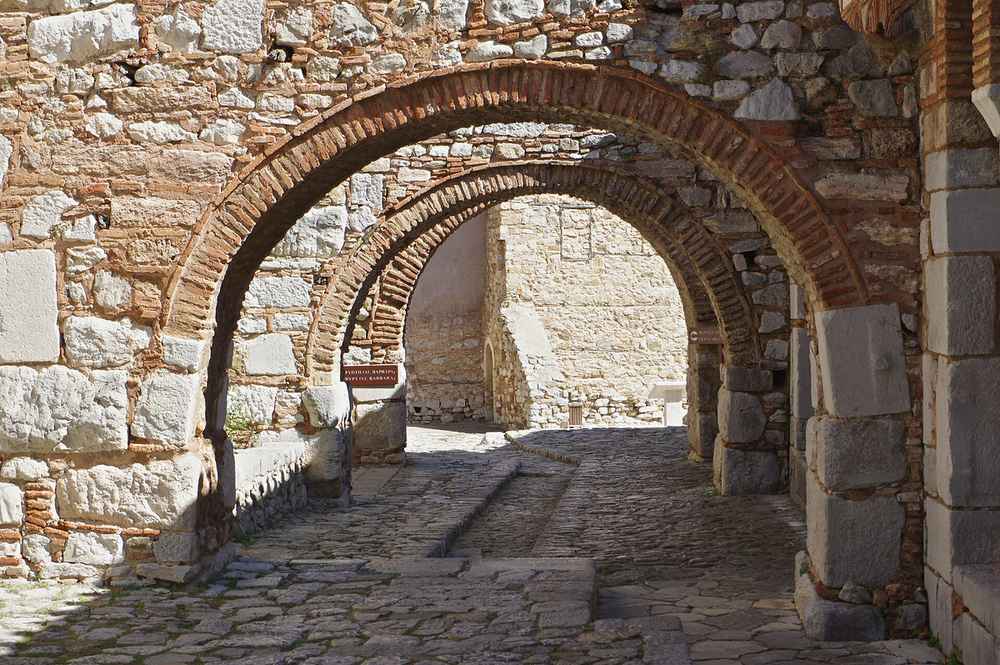
The complex is composed of two adjoining churches, the larger Katholikon dedicated to the saint and the older church of the Theotokos (the Virgin Mary), along with the monastic cells, a refectory, a bell tower and other buildings arranged around a courtyard, the whole ensemble surrounded by terraced gardens and the olive-clad valley. As one of the finest and best-preserved monastic complexes of its era, it offers a rare and complete window onto the Byzantine world. Its peaceful setting enhances every visit. The crowning glory lies in its mosaics. The golden mosaics are unforgettable.
What are the mosaics of Hosios Loukas?
The mosaics of Hosios Loukas are among the finest surviving examples of Middle Byzantine art, dating from the 11th century. Set against shimmering gold backgrounds, they cover the interior of the main Katholikon church with images of Christ, the Virgin, saints and biblical scenes. Together with the frescoes, these glowing, masterful mosaics are the monastery’s greatest treasure and the main reason to visit.
The supreme treasure of Hosios Loukas, and the reason art lovers travel from afar to see it, is its extraordinary collection of eleventh-century mosaics, which rank among the most important and beautiful surviving examples of Middle Byzantine art in the world. Lining the upper walls, vaults and domes of the great Katholikon church, these mosaics are set against backgrounds of gleaming gold tesserae that catch the light and seem to glow with an unearthly radiance, especially as the sun moves through the church. They depict the central figures and stories of the Orthodox faith with majestic solemnity: Christ and the Virgin Mary, ranks of saints, apostles and church fathers, and key scenes from the life of Christ, such as the Nativity, the Baptism, the Crucifixion and the Resurrection, rendered with the distinctive dignity, stylisation and spiritual intensity of Byzantine art at its height.
Where mosaics do not cover the surfaces, magnificent frescoes complete the decoration. Standing within the dimly lit church, surrounded by these glowing golden images gazing down from every surface, is a profoundly moving and unforgettable experience. The mosaics alone justify the journey. The architecture that frames them is equally remarkable. The buildings themselves are masterpieces.
What is the architecture of Hosios Loukas like?
Hosios Loukas is a masterpiece of Middle Byzantine architecture, centred on the early 11th-century Katholikon, a domed, cross-in-square church with elegant stonework, and the adjoining 10th-century church of the Theotokos. The buildings feature fine cloisonné masonry, marble floors and screens, a crypt with the saint’s relics, and a harmonious complex of churches, cells and courtyards set in the landscape.
Beyond its mosaics, Hosios Loukas is itself a building of the highest architectural importance, a benchmark of the Middle Byzantine style that influenced church design across the Orthodox world. The heart of the complex is the Katholikon, the main church built around 1011 to 1012, a grand example of the domed octagon plan, in which a large central dome rests on an octagonal arrangement of arches, creating a soaring, light-filled interior space; its exterior is distinguished by elegant cloisonné masonry, where dressed stones are framed by bricks in decorative patterns, a hallmark of the period. Adjoining it stands the older and simpler church of the Theotokos, dedicated to the Virgin, built in the late tenth century in the cross-in-square plan, with its own fine brickwork.
Inside, the churches are richly finished with coloured marble floors, marble revetments and carved screens, while beneath the Katholikon lies an atmospheric crypt that holds the relics of Saint Luke and further wall paintings. Around the churches are the monastic cells, refectory, bell tower and courtyards, all harmoniously composed within the terraced, olive-clad landscape. The whole ensemble is a sublime expression of Byzantine art and faith. It rewards unhurried exploration. The site combines perfectly with Delphi. Pairing it with Delphi makes the most of the day.
How do you combine Hosios Loukas with Delphi?
Hosios Loukas lies close to Delphi, about 35 to 40 minutes apart by road, so the two are naturally combined into one rich day trip from Athens. Most tours and self-drive itineraries visit the great ancient sanctuary of Delphi and its museum, then the serene Byzantine monastery of Hosios Loukas, often with the mountain town of Arachova, blending classical and Byzantine Greece in a single memorable day.
One of the best ways to experience Hosios Loukas on a day trip from Athens is to combine it with the magnificent ancient site of Delphi, as the two lie reasonably close together, around thirty-five to forty minutes apart by road, and complement each other beautifully, pairing the pagan classical world with the Christian Byzantine one. Delphi, a UNESCO World Heritage Site set dramatically on the slopes of Mount Parnassus, was home to the famous oracle of Apollo and considered by the ancient Greeks to be the very centre of the world; its ruins, including the Temple of Apollo, the theatre and the stadium, along with its superb museum, are among the most important and atmospheric in Greece.
A typical combined itinerary, followed by many organised tours and independent drivers, takes in the ancient sanctuary and museum of Delphi, the golden Byzantine mosaics of Hosios Loukas, and often a stop in the chic mountain town of Arachova for lunch or shopping. This rich pairing delivers a wonderfully varied day, spanning two great chapters of Greek civilisation, ancient and Byzantine, amid spectacular mountain scenery. Together they more than justify the journey from Athens. The mountain town is covered in the Arachova day trip guide. Reaching the monastery takes some planning.
How do you get to Hosios Loukas, and what is the best way to visit?
Hosios Loukas is about 150 kilometres north-west of Athens, a roughly 1.5 to 2 hour drive via the National Road toward Thebes, then signs to Distomo. Public transport is awkward, so driving or an organised tour is best. The monastery is open daily for a modest fee; dress modestly, covering shoulders and knees, wear comfortable shoes, and combine it with Delphi for the richest day.
Reaching Hosios Loukas is easiest by car or organised tour, as the monastery lies in a rural valley away from major public transport routes. By road it is about 150 kilometres north-west of Athens, a drive of roughly one and a half to two hours: you head out on the National Road toward Thebes (Thiva), then follow the signs toward Distomo and the monastery, with the final stretch running through scenic countryside, and parking available at the site. Public transport to this remote spot is genuinely awkward, requiring slow connections, so driving or joining a guided tour is by far the most practical option, with many Athens tours conveniently bundling Hosios Loukas with Delphi and Arachova.
The monastery is generally open to visitors daily, with hours that vary by season, and charges a modest admission fee that supports its preservation, so it is wise to check the current times before setting off. As this is an active place of worship, visitors should dress respectfully, covering shoulders and knees, and behave quietly and reverently inside the churches; comfortable shoes help on the uneven ground and steps. Allowing time to absorb the mosaics, the crypt and the peaceful setting, ideally combined with Delphi, makes for an unforgettable day. The wider routes appear in the getting around Athens guide. The questions below cover the points visitors ask most.
Frequently Asked Questions
What is Hosios Loukas famous for?
Hosios Loukas is famous as one of the finest Middle Byzantine monasteries in the world, a UNESCO World Heritage Site near Distomo. It is renowned above all for its dazzling 11th-century golden mosaics and frescoes inside the main Katholikon church, set in a peaceful valley of olive and almond trees, often visited with nearby Delphi.
How far is Hosios Loukas from Athens?
Hosios Loukas is about 150 kilometres north-west of Athens, roughly a 1.5 to 2 hour drive via the National Road toward Thebes and then Distomo. Public transport is awkward, so a car or an organised tour is best. It lies about 35 to 40 minutes from Delphi, with which it is often combined.
Can you combine Hosios Loukas with Delphi?
Yes, Hosios Loukas is commonly combined with Delphi on a day trip from Athens, as the two are only about 35 to 40 minutes apart. A typical tour visits the ancient sanctuary and museum of Delphi and the Byzantine monastery of Hosios Loukas, often with the mountain town of Arachova, blending classical and Byzantine Greece.