
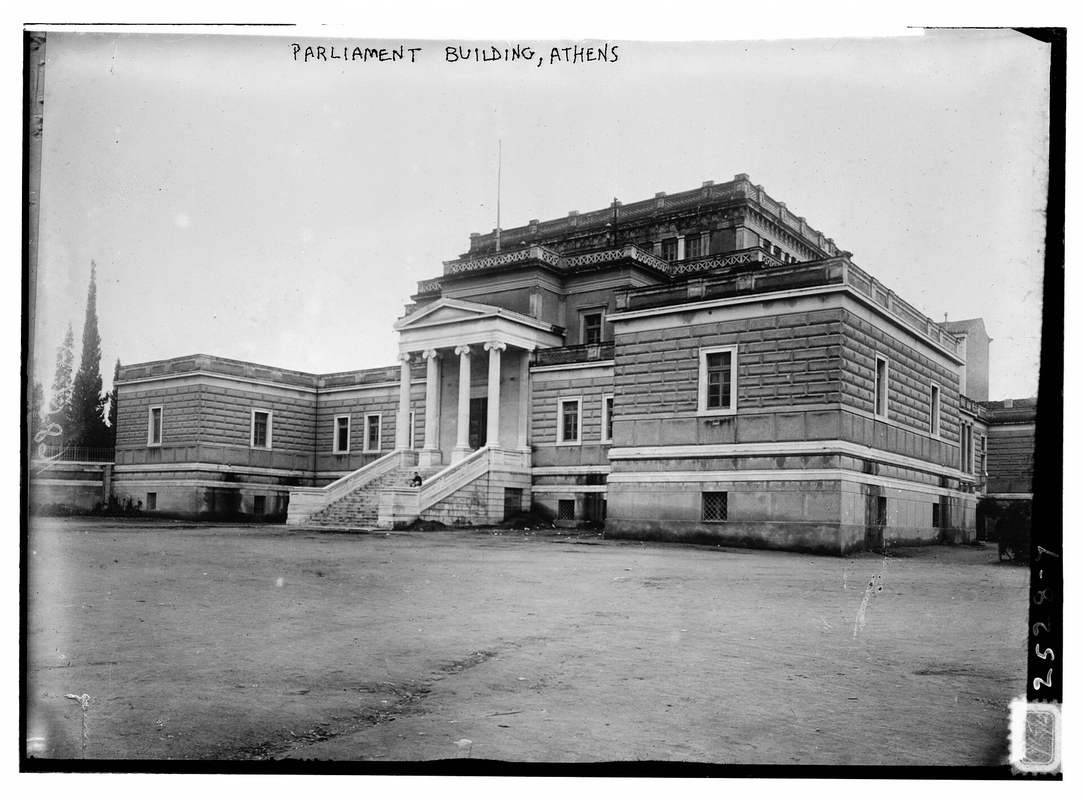
The National Historical Museum in Athens, housed in the grand Old Parliament building, tells the story of modern Greece from the fall of Constantinople through the 1821 War of Independence to the modern state. See it alongside the city’s headline sights with skip-the-line tickets and tours from My Greece Tours for a deeper understanding of Greek history.
This absorbing museum is a rewarding stop in the Athens travel guide. The sections below cover what it is, the Old Parliament building, the collections, the 1821 Revolution highlights, the parliament chamber, practical details and how to get there.
What is the National Historical Museum of Athens?
The National Historical Museum is a museum of modern Greek history in central Athens, housed in the Old Parliament building on Stadiou Street. Run by Greece’s Historical and Ethnological Society, it covers the period from the fall of Constantinople in 1453 through Ottoman rule and the 1821 War of Independence to the early 20th century, with over 11,000 historical items.
For anyone wanting to understand the dramatic story of modern Greece, the National Historical Museum offers a rich and absorbing journey through the centuries that forged the nation. Located in the heart of the city on Stadiou Street, near Syntagma Square, the museum is housed in the magnificent Old Parliament building and is run by Greece’s Historical and Ethnological Society, founded in 1882. Its collections trace a clear chronological narrative of Greek history from the fall of Constantinople to the Ottomans in 1453, through the long centuries of Ottoman rule, the glorious Greek War of Independence that began in 1821, and on into the building of the modern Greek state, reaching up to the early twentieth century and the Greek-Italian war of.
The holdings now number more than eleven thousand items, ranging from oil paintings, drawings and engravings to weapons, flags, costumes, medals, personal belongings of historical figures, rare books and photographs. Together they bring to life the struggles, heroes and identity of modern Greece in a way the ancient sites cannot. For a fuller picture of the country beyond antiquity, it is essential. It complements the cultural sweep of the Benaki Museum guide. The building itself is a historic monument.
What is the Old Parliament building?
The Old Parliament House is a grand neoclassical building on Stadiou Street, built between 1858 and 1875 to designs by François Boulanger. It served as the seat of the Greek Parliament until, when parliament moved to the Old Palace on Syntagma Square. After housing the Ministry of Justice, it became the National Historical Museum. A statue of Kolokotronis stands in front.
The home of the National Historical Museum is itself a significant monument of modern Greek history, adding greatly to the meaning of a visit. The Old Parliament House is a stately neoclassical building constructed between 1858 and 1875 to designs by the French architect François Boulanger, its handsome façade a fine example of the nineteenth-century architecture that shaped the new capital. For decades this building was the very seat of Greek democracy: the national Parliament met here, debating and shaping the young state, until, when it relocated to the newly redesigned Old Royal Palace on Syntagma Square, which remains the Greek Parliament today.
After the move, the building served for a time as the Ministry of Justice, before being fittingly turned into the National Historical Museum, preserving its dignity and historic role. Standing proudly in front of the building is the famous bronze equestrian statue of General Theodoros Kolokotronis, one of the supreme commanders of the 1821 War of Independence, a much-loved Athens landmark. To visit the museum is thus to step inside the cradle of modern Greek parliamentary life. The building enriches the experience. The era is reflected across the city’s monuments. The collections themselves are wide-ranging.
What collections does the museum hold?
The museum’s collections, displayed across 16 rooms, span from the fall of Constantinople in 1453 to the Greek-Italian war of, with over 11,000 items. They include oil paintings, watercolours, drawings, engravings, posters and folk lithographs, weapons and flags, costumes, medals and decorations, the personal belongings of historical figures, rare books, manuscripts and photographs, telling the story of modern Greece.
The richness of the National Historical Museum lies in the breadth and variety of its eclectic collections, gathered by Greece’s Historical and Ethnological Society since 1882 and displayed across sixteen rooms of the Old Parliament building. The exhibits follow a chronological narrative stretching from the fall of Constantinople in 1453, through the centuries of Ottoman rule, the great War of Independence, the reign of King Otto and the modern kingdom, up to the Greek-Italian war of. Within this sweep, visitors encounter a remarkable diversity of objects: fine oil paintings, watercolours, drawings, engravings, posters and folk lithographs depicting key events and figures; an important collection of weapons, swords and revolutionary flags; traditional costumes and uniforms; medals, decorations and awards; and, perhaps most evocatively, the personal belongings of the heroes and statesmen who shaped the nation.
Alongside these are rare books, manuscripts, maps, plans and historical photographs. With more than eleven thousand items in total, the collection offers an unusually intimate and tangible connection to the people and moments that created modern Greece. It rewards an unhurried, attentive visit. The struggle for freedom is its central theme. The 1821 Revolution is the heart of the collection.
What are the 1821 War of Independence highlights?
The museum’s greatest emphasis and finest highlights concern the 1821 Greek War of Independence. Visitors can see the actual weapons, swords, flags and uniforms of the revolutionary fighters, the personal effects of heroes such as Theodoros Kolokotronis and Lord Byron, portraits of the leaders, and relics that vividly evoke the struggle that won Greek freedom and founded the modern state.
The undisputed centrepiece of the National Historical Museum, and the reason many Greeks and visitors come, is its outstanding collection devoted to the War of Independence of 1821, the pivotal struggle that liberated Greece from Ottoman rule and gave birth to the modern nation. The museum places special emphasis on this heroic period, and its galleries are filled with deeply moving and authentic relics of the revolution. Here you can see the actual weapons, ornate swords, firearms and the colourful banners and flags carried into battle by the revolutionary fighters, alongside their distinctive costumes and uniforms. Particularly stirring are the personal belongings of the great heroes of the struggle, including items connected to the legendary general Theodoros Kolokotronis, whose statue stands outside, and relics associated with the philhellene poet Lord Byron, who died supporting the Greek cause.
Portraits of the revolutionary leaders, dramatic history paintings of key battles and sieges, and documents of the fledgling state complete this powerful display. Standing among these objects, the sacrifices and triumph of 1821 feel close and real. This collection alone justifies a visit. The same heroes rest in the First Cemetery guide. The historic chamber adds further atmosphere.
What is the old parliament chamber like?
The large, impressive central chamber where the Greek Parliament once met is preserved within the museum, allowing visitors to stand in the very room where the laws of the young Greek state were debated. With its grand semicircular form and historic atmosphere, the chamber is a highlight in itself and a tangible link to the birth of modern Greek democracy.
Beyond its rich collections, the National Historical Museum offers a rare and atmospheric experience: the chance to stand inside the actual chamber where modern Greek democracy took shape. At the heart of the Old Parliament building, the large and impressive parliamentary chamber in which the deputies of the Greek state once gathered has been carefully preserved, so that visitors can enter the very room where the nation’s laws were debated and its destiny argued over during the formative decades of the kingdom. The grand semicircular space, with its tiered seating, speaker’s rostrum and dignified neoclassical decoration, evokes the weight and drama of those parliamentary sessions, and standing within it brings the political history of modern Greece vividly to life in a way that objects alone cannot.
This preserved chamber is one of the museum’s most memorable features, linking the visitor directly to the institution that governed the young nation from this building until. Combined with the surrounding galleries of revolutionary relics and historical art, it makes the museum a deeply evocative place. For lovers of history, the chamber is a quiet thrill. The building’s role mirrors the modern Parliament on Syntagma. Planning a visit is straightforward.
How do you visit the National Historical Museum?
The National Historical Museum is at 13 Stadiou Street in central Athens, near Syntagma Square, a short walk from Syntagma and Panepistimio metro stations. It generally opens Tuesday to Sunday, around 8.30am to 2.30pm, and closes on Mondays, with modest admission. Allow around one and a half to two hours, and combine it easily with Syntagma, the Trilogy and central sights.
A visit to the National Historical Museum is easy to arrange and fits neatly into a day exploring central Athens. The museum stands at 13 Stadiou Street, in the historic heart of the city close to Syntagma Square, making it very accessible: Syntagma station, served by metro lines 2 and 3 and the airport line, and Panepistimio station on line 2 are both a short walk away, with many buses passing nearby. The museum generally opens from Tuesday to Sunday, typically from around 8.30am to 2.30pm, and is closed on Mondays, so it is wise to check the current hours and confirm before visiting, as schedules can vary.
Admission is modest, with reduced rates for students and seniors and free-entry days at certain times of year. To take in the sixteen rooms of collections, the revolutionary relics and the preserved parliament chamber at a relaxed pace, allow around one and a half to two hours, more for the deeply interested. Because of its central location on Stadiou Street, the museum combines easily with a walk to Syntagma Square, the neoclassical Athenian Trilogy nearby, and the shops of the centre. The local routes are explained in the getting around Athens guide. The questions below cover the points visitors ask most.
Frequently Asked Questions
What is the National Historical Museum of Athens known for?
The National Historical Museum is known for telling the story of modern Greece from the fall of Constantinople in 1453 through the 1821 War of Independence to the modern state, with over 11,000 items. It is famous for its revolutionary relics and for being housed in the grand Old Parliament building, with Kolokotronis’s statue outside.
Where is the National Historical Museum in Athens?
The National Historical Museum is at 13 Stadiou Street in central Athens, near Syntagma Square, in the Old Parliament building. It is a short walk from Syntagma metro station on lines 2 and 3 and Panepistimio station on line 2, with the equestrian statue of General Kolokotronis standing in front.
How long do you need at the National Historical Museum?
You need around one and a half to two hours to enjoy the National Historical Museum, taking in its 16 rooms of collections, the relics of the 1821 War of Independence and the preserved old parliament chamber. History enthusiasts may wish to spend longer exploring its more than 11,000 items.