
The Byzantine and Christian Museum in Athens holds over 30,000 icons, sculptures, textiles and manuscripts spanning the 3rd to 20th centuries, one of the world’s great collections of Byzantine art. See it with the city’s headline sights using skip-the-line tickets and tours from My Greece Tours for a richer cultural day. Plan the whole trip with Greece Tours.
This major museum is a cultural highlight of the Athens travel guide. The sections below cover what it is, its history, the collections, the icons, the permanent exhibition, practical details and how to get there.
What is the Byzantine and Christian Museum?
One of the world’s most important museums of Byzantine art, this institution stands on Vasilissis Sofias Avenue in central Athens. It holds more than 30,000 artworks dating from the 3rd to the 20th century AD, including icons, sculptures, wall paintings, textiles, manuscripts and ceramics from across the Greek and wider Byzantine world.
Dedicated to a thousand years of Christian and Byzantine civilisation, this museum is among the finest of its kind anywhere in the world. It occupies a handsome estate on Vasilissis Sofias Avenue, between Syntagma and the Kolonaki district, set around the elegant 19th-century Villa Ilissia. Its collection is vast and unrivalled in scope, numbering more than thirty thousand objects that trace the art and religious life of the Byzantine Empire and the Greek Orthodox world from the early Christian era through to modern times, spanning the third to the twentieth century AD. The holdings come not only from Greece but from across the regions where Hellenism and Orthodoxy flourished, including Asia Minor, the Balkans and beyond.
Visitors encounter radiant religious icons, carved marble sculptures, fragments of vivid wall paintings, embroidered ecclesiastical textiles, illuminated manuscripts, coins, ceramics and everyday objects, all illuminating the faith, art and society of Byzantium. Far from a narrow specialist collection, the museum tells a sweeping story of how a great Christian empire shaped Greek identity. For anyone curious about the era between classical antiquity and modern Greece, it is essential. It complements the broader sweep of the nearby Benaki Museum. Its origins reach back over a century.
What is the history of the museum?
The Byzantine and Christian Museum was founded to collect, preserve and study Byzantine and post-Byzantine antiquities. Since it has been housed in the Villa Ilissia, a neoclassical mansion built in the 1840s for the Duchess of Plaisance. The museum has since expanded with modern underground galleries to display its growing collection.
The museum’s story reflects a deliberate effort to rescue and honour Greece’s Byzantine heritage. It was established, at a time when scholars and the state were increasingly keen to collect, protect and study the Christian and Byzantine antiquities scattered across the country and the wider Orthodox world, many of them at risk amid the upheavals of the early twentieth century. the museum found its permanent home in the Villa Ilissia, a romantic neoclassical mansion built in the 1840s for the colourful French-American aristocrat Sophie de Marbois, the Duchess of Plaisance, a prominent figure in newly independent Athens. The graceful villa and its courtyards still form the heart of the museum and a beautiful setting in their own right.
As the collection grew over the decades, the museum was greatly expanded, most notably with the addition of spacious modern galleries built largely underground around the courtyard, allowing the thousands of works to be displayed in a clear, chronological and well-lit narrative without overwhelming the historic mansion. This blend of old villa and contemporary gallery gives the museum a distinctive character. Its careful curation makes the long Byzantine story accessible. The era it covers links to the Christian monuments across the city. The collections are its great treasure.
What collections does the museum hold?
The museum’s collections include around 3,000 icons, some 2,000 marble sculptures, about 1,000 textiles and vestments, wall-painting fragments, roughly 500 manuscripts and codices, early printed books, ceramics, coins and thousands of minor liturgical objects. Together they span the 3rd to the 20th century and form an unsurpassed record of Byzantine and post-Byzantine art.
The depth and variety of the holdings are what make this museum so significant, with rich collections in every medium of Byzantine art. At the heart sit the icons, around three thousand of them, ranging across the full chronological span and gathered from across Greece, Asia Minor, the Balkans and as far as Russia, forming one of the greatest icon collections in existence. The sculpture collection comprises some two thousand architectural and decorative pieces, mostly carved marble, from the early Christian period to the late eighteenth century. There are about a thousand textiles, principally ecclesiastical vestments and liturgical cloths from the fifth to the twentieth century, alongside precious fragments of wall paintings rescued from churches, dating from the fifth and sixth centuries onward.
The library and graphic collections hold roughly five hundred Byzantine and post-Byzantine manuscripts and codices from the sixth to the nineteenth century, several hundred early printed books, and hundreds of woodcuts, etchings and lithographs. Thousands of smaller objects, including coins struck by the emperors of Constantinople, clay lamps, lead seals, small flasks for holy oil and carved cross-reliquaries, complete the picture. This breadth lets the museum illuminate every aspect of Byzantine life, faith and craftsmanship. The icons, above all, draw visitors. The carved marble echoes the city’s other ancient sculpture. The icons deserve special attention.
What are the icons and highlights?
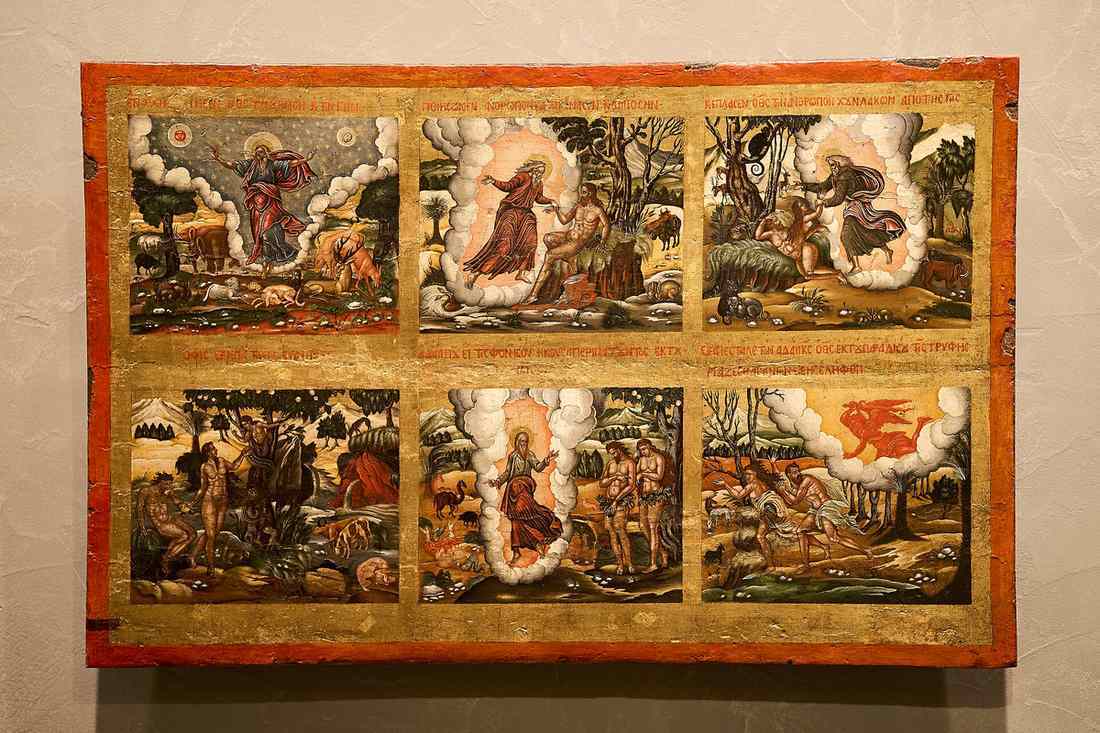
The museum’s icon collection of around 3,000 works is its greatest treasure, spanning the early Christian period to the 19th century and including masterpieces of Byzantine and Cretan painting. Other highlights include early Christian sculpture, the double-sided icons, vivid wall paintings, a reconstructed church interior, gold and silver liturgical objects and illuminated manuscripts, all displayed in the museum’s elegant underground galleries.
Among the museum’s many riches, the icons stand out as the undisputed highlight and the main reason many visitors come. Numbering around three thousand, they range from the earliest Christian images through the great age of Byzantine art to the flourishing of the Cretan school after the fall of Constantinople, and they include genuine masterpieces of religious painting, their gold grounds and solemn figures glowing in the gallery light. Particularly prized are the rare double-sided icons, painted on both faces and once carried in processions, which the museum displays so that both sides can be admired. Beyond the icons, the displays guide you through the whole arc of Byzantine art: early Christian marble sculpture and architectural fragments, fragile but vivid wall paintings lifted from churches, a partially reconstructed church interior that evokes how these works were originally seen, and dazzling liturgical objects in gold and silver, along with embroidered vestments and illuminated manuscripts.
The thoughtful chronological layout in the cool, modern underground galleries makes it easy to follow the development of style and faith across the centuries. For lovers of religious art and history, the collection is deeply rewarding. The Orthodox tradition it preserves still shapes Greece today. Planning a visit is simple.
What is the permanent exhibition like?
The permanent exhibition is arranged in two main sections. The first, devoted to Byzantium from the 4th to the 15th century, presents around 1,200 artefacts showing the transition from the ancient to the Christian world and the empire’s golden age. The second, “From Byzantium to the Modern Era”, displays about 1,500 works from the 15th to the 20th century after the fall of Constantinople.
The museum presents its vast holdings through a clear, two-part permanent exhibition that turns thousands of objects into a coherent and absorbing journey. The first section is dedicated to Byzantium itself, covering roughly the fourth to the fifteenth century, and gathers around 1,200 artefacts that trace the great transformation from the classical pagan world into the Christian Byzantine civilisation, following the empire through its early centuries, its iconoclastic struggles and its golden age of art and faith. Here you see how ancient forms were adapted to new Christian purposes, and how the distinctive Byzantine style of icons, mosaics and architecture took shape. The second section, titled “From Byzantium to the Modern Era”, picks up after the fall of Constantinople in 1453 and presents about 1,500 works from the fifteenth to the twentieth century, showing how Byzantine artistic and religious traditions survived and evolved under Ottoman rule and into the modern Greek state, including the brilliant Cretan school of icon painting.
Displayed largely in the cool, spacious underground galleries, the exhibition is logically ordered and richly informative without becoming overwhelming. Following it from start to finish gives a genuine understanding of more than 1,500 years of history. It rewards an unhurried visit of a couple of hours. The setting around the historic villa adds to the charm. The practical details are easy to manage.
How do you visit the Byzantine and Christian Museum?
The museum stands at 22 Vasilissis Sofias Avenue, a short walk from Evangelismos metro station on line 3 and from Syntagma. It is generally open daily in summer and on a reduced schedule in winter, with a modest entrance fee and reductions for students and seniors. Allow around one and a half to two hours, and combine it with nearby Kolonaki museums.
A visit to the Byzantine and Christian Museum is easy to fit into a cultured day in central Athens. The museum is located at 22 Vasilissis Sofias Avenue, on the elegant boulevard running from Syntagma toward Kolonaki, and it could hardly be more accessible: Evangelismos station on metro line 3 is only a couple of minutes’ walk away, and Syntagma, served by lines 2 and 3 and the airport line, is a short stroll further. Opening hours are generally daily in the summer season and follow a reduced schedule in winter, often with one closing day, so it is wise to check the current times before you go. Admission is modest, with the usual reduced rates for students, seniors and young visitors, and free-entry days at certain times of year.
To take in the two-part permanent exhibition and the lovely villa and courtyard at a relaxed pace, set aside around one and a half to two hours. Because the museum sits among a cluster of fine institutions, it combines beautifully with the nearby Benaki Museum, the Museum of Cycladic Art and the green slopes of Kolonaki into a single rewarding afternoon. The shaded grounds make a pleasant pause. The local routes are explained in the guide to nearby Kolonaki. The questions below cover the points visitors ask most.
Frequently Asked Questions
What is the Byzantine and Christian Museum known for?
The Byzantine and Christian Museum is known for one of the world’s greatest collections of Byzantine art, with over 30,000 works from the 3rd to 20th centuries. Its highlights are around 3,000 icons, including rare double-sided ones, plus sculpture, wall paintings, textiles and manuscripts, set around the historic Villa Ilissia in central Athens.
Where is the Byzantine and Christian Museum in Athens?
The Byzantine and Christian Museum is at 22 Vasilissis Sofias Avenue in central Athens, between Syntagma and Kolonaki. It is a couple of minutes’ walk from Evangelismos metro station on line 3 and a short stroll from Syntagma, close to the Benaki Museum and the Museum of Cycladic Art.
How long do you need at the Byzantine and Christian Museum?
You need around one and a half to two hours to enjoy the Byzantine and Christian Museum, taking in its two-part permanent exhibition of icons, sculpture, textiles and manuscripts, along with the historic Villa Ilissia and its courtyards. Allow longer if you have a deep interest in Byzantine art and history.