The open-air cinema of Chora screens films from 1 June to early October, and the church feasts of summer start with Saint Marina in mid-July and end with the Holy Cross in mid-September, so Mykonos cultural events run on two calendars at once. Outside summer, Epiphany on 6 January brings a blessing of the waters, and Clean Monday, 48 days before Orthodox Easter, brings kites and outdoor lunches.
The municipal cultural centre seats 220 people in its biggest hall, and the state antiquities service of the Cyclades opens its monuments on the heritage days. Visitors who prefer a guided day over a free one will find ready-made tours for each Greek region on the Greece Tours homepage.
Which arts festivals and exhibitions count as Mykonos cultural events?
The Mykonos Biennale is the main arts festival among Mykonos cultural events. The municipality adds exhibitions, plays, concerts and films. It stages them in a municipal cultural centre, a municipal gallery and an open-air cinema in Chora.
The Mykonos Biennale is a biennial contemporary art and cultural event held on Mykonos, with activities on nearby Delos. It runs for roughly one week in odd-numbered years. Wikipedia says editions are frequently held in late summer or early autumn. Among Mykonos cultural events, it is the one with a two-year rhythm.
A Greek artist founded it. Its organisers describe it as a symposium that joins art and philosophy with the setting of Mykonos. They say it is not a conventional large-scale biennial exhibition. The programme holds visual art exhibitions and installations, short-film screenings, video-art projections and performances.
The festival is also one of the Mykonos cultural events that move around the island. Wikipedia says editions use non-traditional or historic venues. It lists museums, mills, Cine Manto, the Archaeological Museum of Mykonos and the streets of Chora among them.
The Grypareio Cultural Center anchors the municipal side of Mykonos cultural events. It stands in Argyraena. The municipal site calls it a multi-functional building complex with sound and lighting systems. Donors gave it to the municipality for events of high cultural, educational and social content.
The halls hold speeches, lectures, seminars, conferences, concerts, theatre and dance performances and screenings. The main hall seats 220 people on the ground floor and 100 on the mezzanine. A hall upstairs seats 80. Concerts and plays among Mykonos cultural events take place in rooms like these.
The municipal Culture menu lists the Municipal Art Gallery, Cine Manto, the Municipal Library and an Intangible Cultural Heritage section. A series called Autumn Theatre in Mykonos puts a children’s show for ages 7 and over in the Grypareio. Together they make Mykonos cultural events a list that reaches past summer.
Cine Manto is the municipal open-air cinema in the Meletopoulou Municipal Garden, in the centre of Mykonos Town. The municipality set it up to give the garden a cultural use. It adds film to Mykonos cultural events from 1 June to early October. It shows premieres, award-winning films and children’s films. Greeks call such cinemas therina, which means summer cinemas.
Which heritage days open the doors of the monuments for Mykonos cultural events?
International Museum Day in late spring and the European Heritage Days in September are the two heritage dates. Museums and monuments plan programmes for both. On Mykonos, the Ephorate of Antiquities of the Cyclades looks after the antiquities behind these Mykonos cultural events.
International Museum Day falls in late spring, on or around the 18th of the month. The International Council of Museums, known as ICOM, coordinates it. The first one followed an ICOM resolution that created an annual event. Among Mykonos cultural events, it is the late-spring heritage date.
The day lets museum professionals meet the public and raises awareness of the challenges museums face. Each year has a theme that reflects a current issue for museums worldwide. Museums answer with events tied to the theme.
The Council of Europe and the European Commission run the European Heritage Days together. The official site says they are held mainly in September each year. It says the programme draws up to 20 million visitors every year.
Wikipedia says the programme opens buildings, monuments and sites to the public. Its aim is wider access to architectural and environmental heritage. It adds that the programme reaches sites that are not normally accessible to the public. For a traveller who plans around Mykonos cultural events, September is the month to check.
Greece has taken part since the mid-nineties. The national coordinator is the Directorate of Archaeological Museums, Exhibitions and Educational Programmes of the Hellenic Ministry of Culture. Greek sites in the programme host guided tours, seminars and activities inspired by the year’s theme.
The Municipality of Mykonos lists an evening of music as part of the European Heritage Days on its Culture page. That entry puts one of the Mykonos cultural events inside a Europe-wide programme. The Mykonos island guide maps Chora, Ano Mera and the beaches.
The Ephorate of Antiquities of the Cyclades is a Regional Service of the Ministry of Culture. It covers Andros, Melos, Thera, Kea-Kythnos, Mykonos, Naxos, Paros, Syros and Tenos. It manages state-owned monuments, archaeological sites, museums and collections in that area. Any of the Mykonos cultural events held at a state museum or monument sits inside that area.
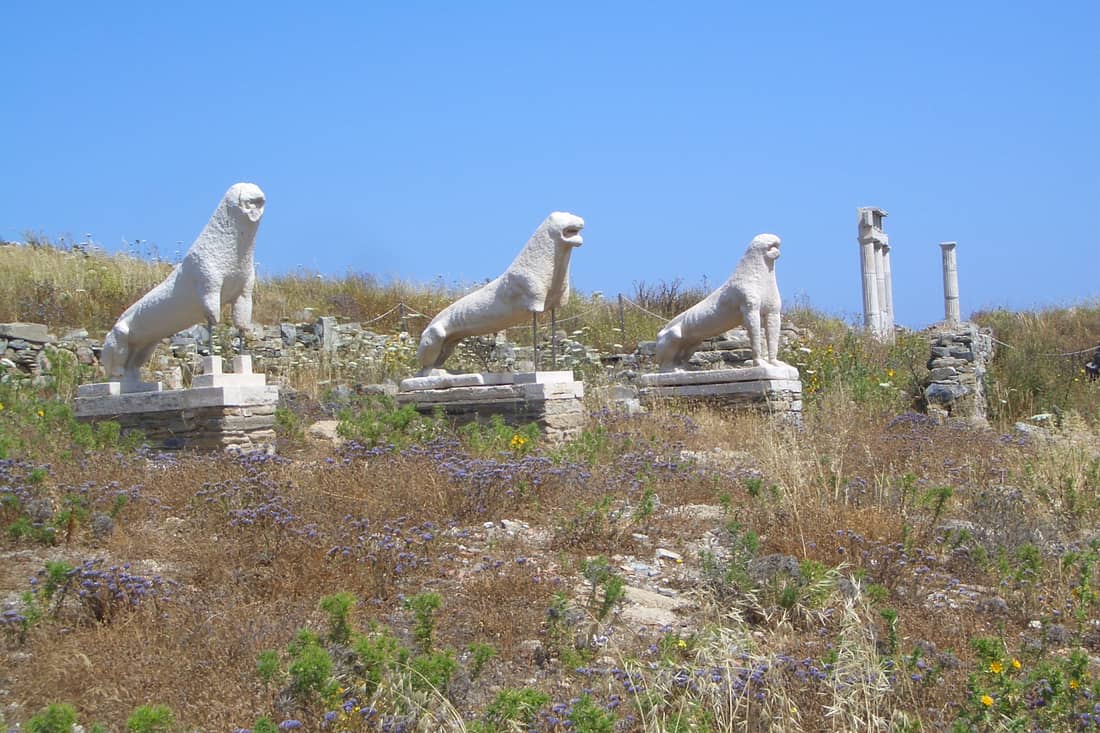
The word ephorate comes from the Greek ephoros, which means overseer. A later reform merged the regional ephorates into a single ephorate for each regional unit, covering all periods. Wikipedia says Delos is administratively part of the municipality of Mykonos. For the finds, read the museum of finds from Delos.
What is a panigiri and how does it shape Mykonos cultural events?
A panigiri is a village festival tied to a church feast. It fills the calendar of Mykonos cultural events with saints’ days. It opens with Vespers on the eve, then adds the liturgy, a shared meal, music and dance.
The word comes from the ancient Greek panegyris, which Wikipedia glosses as “gathering”. Each ancient gathering served the worship of one god. It held prayers, sacrifices and processions. A Mykonos festival guide counts more than fifty important festivals on the island. Each one belongs to the church year, so Mykonos cultural events of this kind follow the feast calendar.
Greek Wikipedia describes the modern panigiri as a festive event held mainly outside large cities, for religious or commercial reasons. It takes place in a parish on a religious feast. An icon procession and an open-air market can join it. A meal, folk songs and traditional dances go with it.
For Mykonos cultural events of this kind, the guide sets the timing. A festival takes place on the eve of the feast, in the evening. It can also take place on the day after the divine service. Days before, the churches are whitewashed and flagged, and the bronze work is polished. On the eve, every candle is lit.
Food follows the service. Bread and pastries are offered after Vespers on the eve of the saint’s feast. Later come ewe ragout, boiled meat, lard with cabbage and lemon bouillon, with plenty of wine. Tables stand in the side rooms that the chapels have.
The venue changes with the season. A winter feast uses a festival house, a long building. A built table runs down the middle, with built benches on both sides. A summer feast uses outdoor benches, sometimes covered. The guide says all visitors are invited to eat and have fun. A traveller can join Mykonos cultural events of this kind.
- Live music carries these Mykonos cultural events: the tsambouna and the toumbaki, a small drum, are the traditional instruments of the feasts.
- The tsambouna is a double-chantered bagpipe with no drone, blown by mouth into a goatskin bag.
- Musicians play in pairs, mostly on the tsambouna. The guide also names violins, lutes, santouri and accordion.
- Wikipedia lists the Syrtos and the Ballos among the folk dances of the Cyclades.
- In the Syrtos, dancers link hands in a chain or circle, and the leader breaks away to improvise steps.
- The Ballos is a couples’ dance of courtship. Its name comes from the Greek verb ballizo, “to dance, to jump”.
Mykonos cultural events cross the water too. The guide lists feasts on Delos, Rhenia and Tragonisi. On the eve of 7 July, the guards of Delos hold a service and a three-course meal for Agia Kyriaki. Friends from Mykonos join them. Nobody can stay on Delos into the evening except on one day a year.
Which saints’ days do the churches and chapels mark among Mykonos cultural events?
The summer feast list on Mykonos runs from Agia Marina on 17 July to the Holy Cross on 14 September. Saint Nicholas, patron saint of sailors, has 6 December. These fixed days form the saints’ calendar of Mykonos cultural events.
The Mykonos festival guide lists the summer feasts by day. These days give Mykonos cultural events their summer dates. For the church buildings themselves, see the guided church and village tours. This page covers the days the churches celebrate.
- 17 July: Saint Marina, at Ano Mera and in the Vorna area
- 20 July: Prophet Elias, at Skalado
- 25 July: Saint Anna, at the church on the beach of that name
- 26 July: Saint Paraskevi
- 27 July: Saint Panteleimon, at Marathi and in Vorna
- 14 September: the Exaltation of the Holy Cross, at Marathi
- October: Saints Gerasimos and Artemios, in Chora
Wikipedia gives 17 July as the Eastern Orthodox feast of Saint Marina, the Great Martyr. It gives 20 July for Prophet Elias and places chapels and monasteries of Elias on mountaintops. Greek folklore links him with the sun. Marina and Elias come first in the guide’s July run.
The feast of Saint Panteleimon falls on 27 July in the Eastern Orthodox calendar, Wikipedia says. His Greek name means “all-compassionate”. The Eastern Church counts him among the Holy Unmercenary Healers. For Mykonos cultural events on that day, the guide names Marathi and Vorna.
Saint Nicholas has his day on 6 December. Wikipedia calls him the patron saint of sailors and travelers. In its legend, he rebuked the waves until a storm on his ship subsided. Greek folklore calls him the Lord of the Sea. Locals call the Old Port chapel Agios Nikolakis, a name that reflects its small size.
A report on religious tourism says the chapels that face the water were built to protect sailors. They guarded the voyage out and back. The report ties the small churches and chapels to the yearly festivals, which it calls Paniguria. Those festivals fall on different days, so Mykonos cultural events of this kind spread across the calendar.
Wikipedia states the rule. Fixed feasts fall on the same calendar day every year, while movable feasts change each year. A saint’s day belongs to the fixed set. The feast of a parish’s patron saint counts as a Great Feast. The rule fixes the date of every one of the Mykonos cultural events in the list above.
Easter moves the other set. Pascha falls on different dates from year to year, and Pentecost comes fifty days after it. Saint George shows where the two meet. If his feast occurs before Easter, the church celebrates it on Easter Monday instead. Churches on the Julian calendar add 13 days to the modern date.
Which national holidays, parades and customs add to Mykonos cultural events through the year?
Six occasions add to Mykonos cultural events: Epiphany, Carnival, Clean Monday, Independence Day, Orthodox Easter and Ohi Day. Epiphany is 6 January, Independence Day 25 March and Ohi Day 28 October. The other three move with Easter.
Epiphany falls on 6 January, and Greeks call it Theophany or the Day of the Lights. The Orthodox Churches perform the Great Blessing of Waters that day. In the Greek practice the priest casts a cross into the water, and volunteers try to recover it. Whoever gets it first swims back and returns it to the priest.
Apokries, the Greek carnival, has three themed weeks: Prophoni, Kreatini and Tirini. Tsiknopempti, Smoky Thursday, falls 11 days before Clean Monday and brings outdoor parties of grilled meat. The Tirini week centres on cheese, eggs and dairy. The Carnival weeks shift with Easter, so this part of the Mykonos cultural events calendar has no fixed date.
Clean Monday falls 48 days before Pascha Sunday. Greece and Cyprus both count it as a public holiday. Outdoor excursions mark the day. Wikipedia calls kite flying a widespread custom that stands for trying to reach the Divine. The Greek name is Kathara Deftera, also given as Pure Monday or Green Monday.
Independence Day on 25 March marks the start of the Greek War of Independence. The uprising was planned for that date, the Orthodox feast of the Annunciation. Schools rehearse dances, songs and poems on the day before. Local schoolchildren then march in traditional costume with flags. Wikivoyage describes a school flag parade in every town and village.
Ohi Day on 28 October marks the Greek refusal of an Italian ultimatum. Its name is the Greek word for no. Schoolchildren parade in Athens and other municipalities, and public and private buildings fly the Greek flag. The main military parade takes place in Thessaloniki, with a student parade a day earlier.
Both churches set Easter on the first Sunday after the Paschal full moon. Orthodox churches count by the Julian calendar and Western churches by the Gregorian. The Eastern method repeats an uncorrected 19-year cycle. That moving date decides when Mykonos cultural events of Holy Week fall. The guide to the spring month on the island covers Easter too.
- Thursday: women dye the eggs dark red with onion skins and vinegar. The colour stands for the blood of Christ.
- Good Friday morning: the bier of the Epitaphios is decorated with spring flowers. The procession takes a long street route where it can, and otherwise circles the church three times.
- Good Friday evening: the Lamentations are sung before the Epitaphios while all hold lighted candles. People who cannot attend can watch from balconies and sidewalks.
- For Mykonos cultural events on Good Friday, a Greek news feature names the area outside the folklore museum as the place to watch the Epitaphios processions.
- Holy Saturday: the church lights go out, and worshippers wait in darkness and silence. The service starts near midnight, and people light candles from the priest’s candle.
- After midnight: the greeting Christos Anesti gets the reply Alithos Anesti, meaning Christ is risen, truly He is risen.
- Easter Sunday: red eggs are cracked together in a game called tsougrisma, and tsoureki, a braided loaf, is baked for the feast.
What else do travellers ask about Mykonos cultural events?
What does chronia polla mean at Mykonos cultural events?
Chronia polla joins the Greek words for years and much. Wiktionary glosses it as happy birthday, happy name day, happy New Year, Merry Christmas and happy Easter. For birthdays, two longer wishes ask the person to reach a hundred or a thousand.
What do Greeks call a feast or holiday at Mykonos cultural events?
The Greek word is giorti. Wiktionary lists its meanings as celebration, feast day, holy day, holiday and name day. In the plural it names the period between Christmas and Twelfth Night. The verb eortazo means to celebrate. The form eorti also means feast day.
Which name days fall on a holiday at Mykonos cultural events?
Names tied to Easter float with the date of Pascha, and Anastasios and Anastasia celebrate on Easter Sunday. People named after St. Basil celebrate on New Year’s Day. Children celebrate birthdays and name days equally festively.
Is Orthodox Easter always later than Western Easter in Mykonos cultural events?
No, not every year. The two Easters share a day about 30% of the time. The Eastern one comes a week later about 44% of the time. The Eastern Paschal full moon has 19 possible dates, from 21 March to 18 April.
Can visitors attend church services among Mykonos cultural events?
Visit Greece says visitors can attend the midnight mass on Syros, another Cyclades island. A Cyclades Easter guide calls the Epitaphios a religious observance and tells visitors to follow the route respectfully. What a first visit involves helps you plan the first day.
Why does the Epiphany blessing matter for boats in Mykonos cultural events?
Epiphany marks the end of the traditional ban on sailing. The winter seas are said to be cleansed of the kalikantzaroi, goblins that torment Christians during the festive season. Blessed water goes home, where people sprinkle it on themselves and their houses and also drink it.