
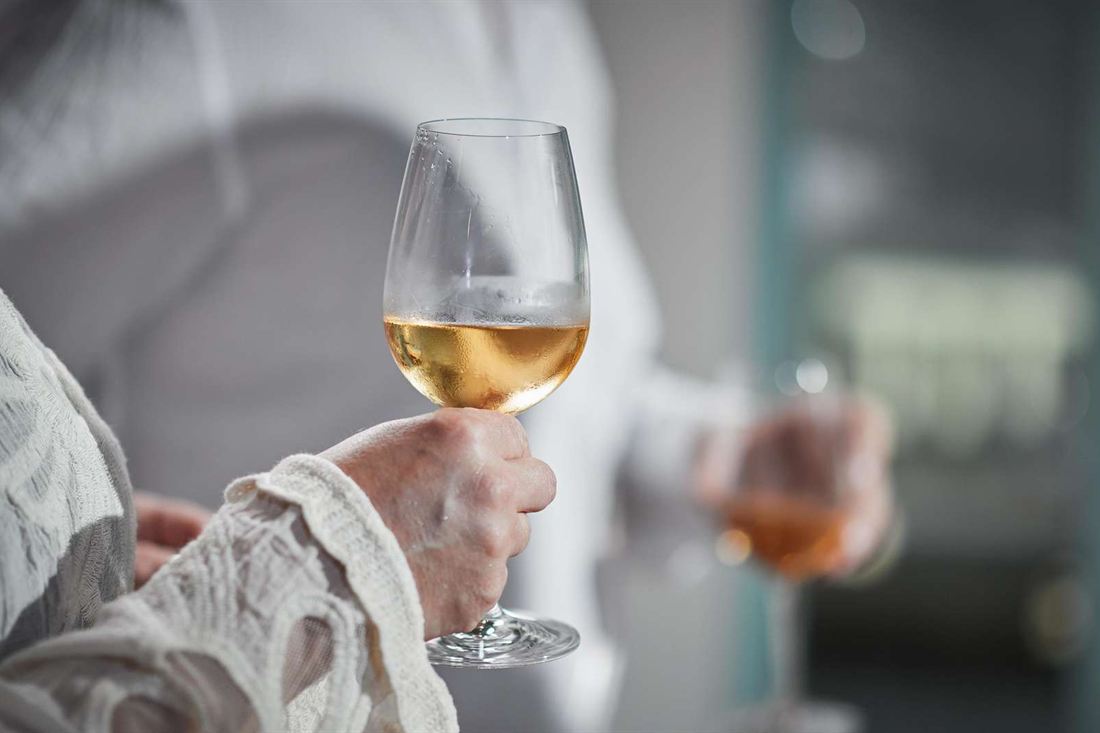
An Amorgos wine tasting sets out island and Cycladic wines with local snacks on the easternmost island of the Cyclades. Put the whole island-hopping plan together on Greece Tours.
Each section below answers one part of an Amorgos wine tasting: the booking, the winery and grapes, the vines in the wind, the glass, the harvest, the styles and the timing.
What is an Amorgos wine tasting?
It is a guided session where you taste Cycladic and other Greek wines with local food on the side. Amorgos offers it as a hosted tasting, a winery visit or a wine bar with wine by the glass.
The island of Amorgos marks the eastern edge of the Cyclades. Its tastings pour wines from the Cyclades and from other Greek regions. An Amorgos wine tasting is not one fixed event. It comes in the three forms below.
A hosted Amorgos wine tasting puts a local expert in charge of the glasses. At Aegialis Hotel and Spa above Aegiali bay, the expert explains the flavours and aromas of about six wines. The talk covers food pairing and production methods. Local delicacies and snacks come with the wines.
Cycladic Adventures runs a small-group version in Aegiali. The group is capped at 8 to 10 people, and a local sommelier leads it. The tour includes the wine tasting, traditional aperitifs, water and appetizers. This version shows the hosted form at small scale.
A winery visit adds a look at how the drinks are made. This Amorgos wine tasting starts with a tour. At the island’s distillery and winery, a guided tour of the facilities comes first. After it, you move to the tasting area and sample organic wines. The winery also sells bottles to take home.
A wine bar is the relaxed form of an Amorgos wine tasting. You order by the glass from a list of Greek wines, so one evening can cover a handful of labels. A food menu sits beside the wine list. You choose each glass yourself, so the pace is yours.
Wikipedia defines wine tasting as the sensory examination and evaluation of wine. It adds that casual tasting involves far less analysis and focuses on personal appreciation of the wine.
The hosted form is the structured one. It gives a structured introduction to Greek wine, set against ordering random bottles in tavernas. That makes it the clearest Amorgos wine tasting for a first-timer.
Which Amorgos wine tasting can you book?
You can book “Amorgos: Cycladic Wine Tasting with Local Snacks” on GetYourGuide. It is a 2-hour guided tour on Amorgos, offered in English and Greek, with free cancellation. The listing pairs the wines with local snacks.
The listing promises three things. You learn about the island’s wine heritage. You taste Cycladic wines. You enjoy local cheeses, cold cuts and traditional delicacies. Wine and food come together, as the title says: “with Local Snacks”.
In the terms of the first section, this is the hosted form: a guided tour with wine and snacks. Here are the listed facts of this Amorgos wine tasting:
- Length: 2 hours.
- Format: guided tour, listed under the Amorgos location.
- Languages: English and Greek.
- Cancellation: free cancellation.
- Booking cut-off: at least 10 hours before the start.
- Access: marked wheelchair accessible.
- Group size: the booking form takes 1 to 20 adults.
Three more Cyclades wine tours are bookable on other islands. The Naxos private wine tasting tour lasts 3 hours, visits a historic winery and pours 5 local wines. The Paros tour lasts 4 hours and visits 2 wineries. The Naxos wine and mythology sunset tour lasts 3 hours and starts in Naxos Old Town.
Each of the three differs from this Amorgos wine tasting in place and length. The Naxos private tour and the Paros tour also list pickup, while the Amorgos widget lists none. Pick the one that matches the island you sleep on.
Which wineries make the wine at an Amorgos wine tasting?
Amorgion, a winery and distillery in Katapola, makes the island’s own wine. Greeka’s list of Amorgos wineries holds that single name. Wine bars such as Magiasi in Chora pour Greek wine from small estates. The producer behind an Amorgos wine tasting therefore depends on the venue.
Anyone who builds an Amorgos wine tasting around a winery stop starts at Amorgion. Greeka says the company began with a distillery in Athens and later opened a second site in Katapola village. Visitors there watch wine being made and sample the island’s products. Greeka calls the wines made there Amorgiano wines.
Cyclades.travel describes a guided tour of the facilities. Staff explain how the liquors and wines are made, from base ingredients to ageing and blending. The tasting includes organic wines, and bottles are on sale to take home. Gastronomy Tours lists a 30-minute guided visit for up to 20 people, active from late spring to October.
Magiasi Wine Bar is a place for an Amorgos wine tasting by the glass. It fills an old mansion on the upper square of Chora, called Ano Plateaki. Botilia says the list focuses on small and boutique Greek wineries, and Cyclades.travel adds that it reaches beyond the Cyclades.
Cyclades.travel names three more places that pour wine. Moonbar Katerina in Katapola is a wine and cocktail bar that serves wine by the glass. Cycladic Adventures runs a small group tasting in Aegiali, built around Greek wines from older wineries.
Aegialis Hotel and Spa, also in Aegiali, hosts an Amorgos wine tasting led by a local expert. The expert covers the history of Greek wine and grape varieties while the labels are tasted.
Which grapes go into Cycladic wine?
Five grapes link to the Cyclades and the wider Aegean in Wikipedia’s entries: Assyrtiko, Aidani, Athiri, Mandilaria and Monemvasia. Mandilaria, a red grape, also goes by the name amorgiano, which points straight at Amorgos.
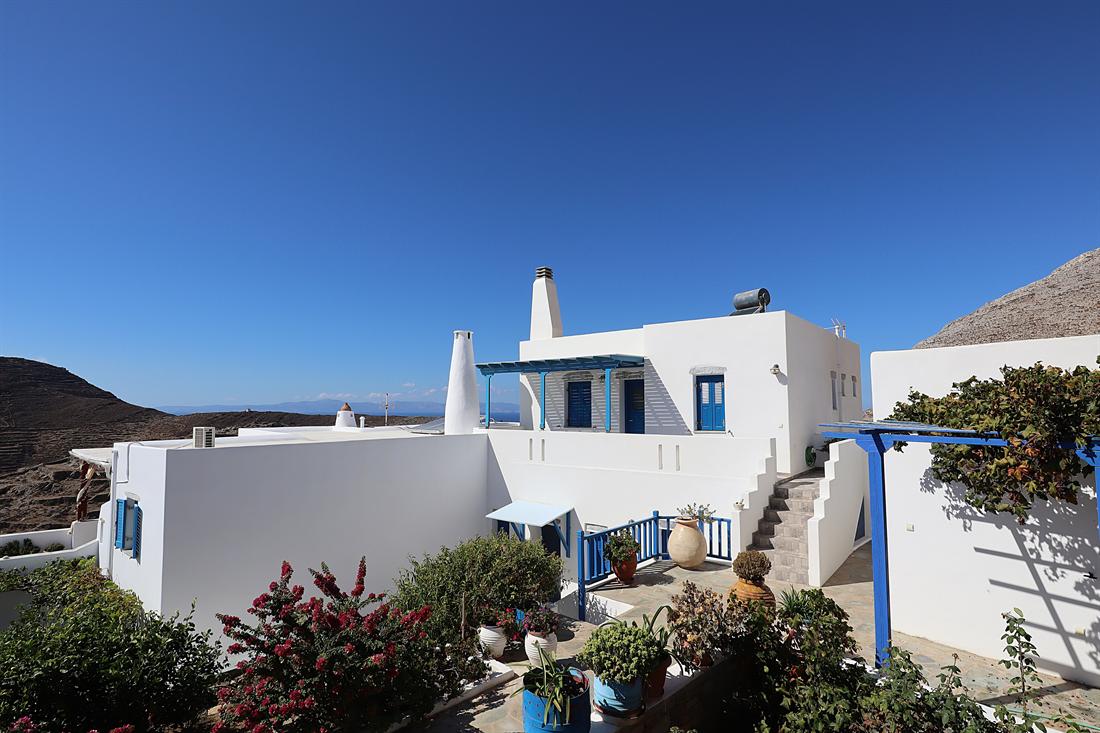
The sources for Amorgos wineries do not name the grapes in their bottles. These five describe Cycladic wine as a whole. Ask the host at an Amorgos wine tasting which grape is in each glass.
Assyrtiko is a white grape native to Santorini. Wikipedia says it is widely planted on Santorini and on other Aegean islands, such as Paros. It does not lose its acidity even when very ripe. The Greek wine entry compares its character to Riesling.
Aidani is a white grape grown primarily on Santorini and found on other Aegean isles. Wikipedia says the grape is known for its floral aroma. Winemakers use it mainly as a blending partner, with grapes such as Athiri, to make dry wines.
Athiri is a white grape noted for its lemon character. The Greek wine entry calls it a lower acid variety, among the oldest, originally from Santorini. Wikipedia also records blends of Athiri with Assyrtiko in other parts of Greece.
Mandilaria is a red grape grown throughout the Greek Isles. Wikipedia says it produces deeply colored wine. Its wine can be very tannic, and blending with other grapes makes the mouthfeel softer. The second name amorgiano gives an Amorgos wine tasting a ready question for the host.
Monemvasia is a Greek grape that is now grown primarily in the Cyclades. Wikipedia says it is evidently named after the port of Monemvasia on the Peloponnese. DNA analysis does not suggest a close relationship between it and any Malvasia grape.
How do Cycladic vines grow in the wind and drought?
On Santorini, growers train vines low in woven baskets called kouloura. The basket shields the grapes from wind and sun. The roots reach deep into the volcanic soil to find moisture through long, dry summers.
Decanter names the whipping north wind, the Meltemi, as the one thing the Cyclades share. Amorgos belongs to that island chain, so an Amorgos wine tasting pours wine from a windy region. Wikipedia adds that the Cyclades have a dry, mild climate and soil that is not very fertile outside Naxos.
Santorini winds can reach 40 km/h, Decanter reports. Over the years, the vines take on a ground-hugging, wicker basket shape to resist them. The low shape also limits wind damage during flowering and shields the grapes from sunburn.
Wikipedia describes how a kouloura grows. The vine is woven into a ring, with the grapes facing the inside. Leaves and canes then guard the fruit from harsh wind and sunlight. On a small plot, a kouloura can pass for a wild bush.
Rain is scarce. Decanter puts yearly rainfall on Santorini at just 350 mm. The porous subsoil holds humidity from the air and releases it as moisture at night, says Wikipedia. Decanter adds that Assyrtiko roots can reach 18 metres down.
Athens researchers tested the kouloura against a trellis system called VSP. They used dry-farmed Santorini plots, meaning vines grown without irrigation, and watched two growing seasons.
The kouloura vines kept a less stressed water status. In the heatwave they studied, 19% of kouloura fruit was damaged, against 32% on the trellised vines. That study is Santorini data, so ask your host at an Amorgos wine tasting how the local vines are trained.
Terraces add a second defence on slopes. VisitGreece says Santorini’s vineyards sit on terraces, and Wikipedia says terraced fields cut erosion and surface runoff. Decanter also describes terraces of carefully farmed bush vines around a monastery on Paros. An Amorgos wine tasting lets you check what wind and thin soil do to Cycladic wine.
How does an Amorgos wine tasting run, glass by glass?
Wikipedia lists four stages for tasting a wine: appearance, aroma in the glass, sensation in the mouth and finish. You repeat those stages with each pour. Every glass at an Amorgos wine tasting gets the same slow look, sniff and sip.
At an Amorgos wine tasting, the four stages together show a wine’s complexity and character. They also show whether a wine suits ageing or drinking now, and they can expose faults. Wikipedia adds that pausing to focus on each step is what separates tasting from simple quaffing.
Start with the glass. Wikipedia says the ideal shape is wider at the bottom and narrower at the top. Think of a tulip or an egg. The INAO tasting glass, now an ISO standard, holds about 215 ml and takes a 50 ml pour.
Temperature changes the taste, so ask the host of an Amorgos wine tasting how each wine is served.
Lower temperatures stress acidity and tannins and mute the aroma. Higher temperatures soften acidity and tannins and lift the aroma. The Wine and Spirit Education Trust recommends 7 to 10 degrees Celsius for light and medium-bodied whites. It recommends 15 to 18 degrees for medium and full-bodied reds.
The order of the glasses matters too. A Master of Wine writing for Decanter calls the order a personal choice, then gives three rules. Delicate wines go before rich ones. Fragrant whites go before oaky whites. Dry wines go before sweet ones, because sugar coats the palate and makes a dry wine taste sharp or bitter.
A flight is a set of wines poured for comparison. Wikipedia gives a range of three to eight glasses, with the longest flights reaching fifty. Wine is judged more objectively beside other wines. That is why an Amorgos wine tasting pours a row of glasses.
The finish comes last. Wikipedia lists the aftertaste as the fourth stage, after appearance, aroma and the mouth. Wait for it before you reach for the next glass. At an Amorgos wine tasting, the finish shows how long the flavour stays once the sip is gone.
When is the grape harvest in the Cyclades?
The harvest on Santorini, a Cycladic wine island, starts in August. One source gives the first days of August, and Wikipedia gives mid-August. Elsewhere in Greece the season gathers pace toward September, and the Greek word for the harvest is trygos.
Greece has no single harvest date. Varieties, altitudes and growing conditions set their own calendar, so the harvest can stretch over weeks. In Naoussa on the mainland, early-ripening varieties can start in August. Xinomavro can wait on the vines until September or October.
Wikipedia’s harvest entry puts the bulk of Northern Hemisphere picking between late August and early October. Grapes for late harvest wines are picked through the autumn, and vineyards in Cyprus begin as early as July.
Read the vintage on any bottle at an Amorgos wine tasting. Vintage is the wine word for the grape harvest. Ask the host which year’s picking is in the glass.
Picking starts early. The cooler morning hours suit both the pickers and the fruit, so work can begin at first light. In smaller vineyards, much of the picking is still done by hand. Crates then go to the winery, where the fruit is weighed, checked and sorted.
Nykteri, a Santorini white, means “working the night away” in Greek. Growers picked the grapes at night to avoid the heat. Pickers cut the fruit before sunrise, and the juice was pressed and drawn off within the first day.
Night harvests continue today, and other producers pick by day. Ask about Nykteri at an Amorgos wine tasting for a white with a night-harvest story.
Trygos was a team job. Relatives, neighbours and friends came together because the work had to finish quickly. Food was brought out for everyone working that day. In smaller family vineyards, generations can still work side by side at harvest.
Which wine styles can an Amorgos wine tasting cover?
Cycladic cellars make four styles: dry white, rosé, red and sweet wine. Santorini gives the dry whites and the sweet Vinsanto, while Paros, Tinos, Sikinos and Syros add rosés and reds. Ask the host at your Amorgos wine tasting which style fills each glass.
Santorini’s dry white is bone-dry with high acidity. Wikipedia lists flavours of lemon and stone fruit and a distinct taste of minerality. Nykteri is also bone-dry, and it ages in oak for at least three months.
Whites and reds part ways at the winery. In the standard route, white grapes are pressed soon after they arrive. For red wine, the skins stay in contact with the juice during fermentation. Taste a white and a red side by side at an Amorgos wine tasting to compare the two routes.
Rosé sits between the two. It takes part of its colour from the grape skins, but not enough to count as red. In the skin contact method, the skins stay in the juice for two to twenty hours. The juice is then pressed. Ask for a rosé at an Amorgos wine tasting to see the colour that skin contact gives.
Island rosés are easy to name. On Tinos, Mavrosé blends Mavrotragano and Avgoustiatis in equal parts. On Sikinos, Manalis Rosé combines Aidani and Mavrotragano. On Paros, Spilia Rosé blends Mandilaria, Roditis and Muscat. Use these names as questions at an Amorgos wine tasting.
Island reds are blends as well. On Syros, Fabrica Red is made from Mandilaria. On Mykonos, Red Paraportiano blends Mandilaria and Ayiannitis. Paros has a red PDO wine that also permits a share of white grapes.
Vinsanto is the sweet style of Santorini. Growers pick late and dry the grapes in the sun for 12 to 14 days. The grapes are then crushed, fermented and aged for at least 24 months in oak barrels. Vinsanto must reach at least 9% alcohol and carries only the natural sugars of the grapes.
Ask about Vinsanto at an Amorgos wine tasting. Its colour runs from golden-orange to dark amber, with flavours of dried apricots, golden raisins and sweet spice. It counts as a dessert wine, yet the high acid of the island grapes balances the sugar. The EU reserves the name Vinsanto for sweet wines from Santorini.
Other islands make sweet wines too. Paros makes the dessert wine Malvasia Paros. Sikinos makes Manalis Liosato. Mykonos makes Heliofilos from sun-dried Mandilaria and Malagousia. Mezzo from Santorini means “less sweet” and sits outside the Greek classification system.
Three questions help at any Amorgos wine tasting:
- Is this wine dry or sweet?
- Was it fermented with the skins, or pressed soon after picking?
- Which year’s harvest is in the glass?
How does an Amorgos wine tasting fit into a day on the island?
Treat the booked Amorgos wine tasting as a two-hour block and add one other plan beside it. Marked walks on the island run from 50 minutes to 4 hours. The printed bus times set the limit for the evening.
Greeka lists eight mapped and signposted trails on Amorgos. The Fotodotis trail links Chora with Katapola Port in 5 km and 1 hour. The Lagada Mills trail covers 5 km in 50 minutes and ends at a KTEL bus stop. Either walk leaves room for a two-hour tasting afterwards.
The Melania trail runs from Ormos through Lagada to Tholaria. Greeka gives it 9 km and 2.5 hours. It passes a gorge, small churches and the acropolis of ancient Aegiali. That walk outlasts the tasting, so give it a morning of its own.
A beach fits the same way. The island’s tourist guide describes a small sandy beach in the middle of Katapola bay. It adds that you can walk or take the bath boat to other beaches nearby. Swim first and book the Amorgos wine tasting for after it.
The evening needs a bus check. Cyclades.travel puts a small-group Amorgos wine tasting in Aegiali between 18:00 and 20:00. The Amorgos Bus Company prints its timetable for set dates. In the one valid from late September to early October, the first bus leaves Katapola at 9:15. The last bus leaves Chora at 18:30.
Greeka lists the Aegiali to Katapola line with 8 runs a day, from 10:00 to 01:00. It notes that availability changes with the season. Discover Cyclades says the bus times are schedules only, with no live tracking, delay information or seat availability. Read the operator’s own timetable page for your date.
The same late-September timetable lists a line between Aegiali and Lagada and a second line to Tholaria. Both have two departures in each direction. A walk that ends in either village meets a bus line. For a second tasting in the same stay, the Amorgos olive oil tasting has its own page.
Which quick questions does an Amorgos wine tasting raise?
Five rules touch an Amorgos wine tasting. They cover the age limit, children, wine on a flight, wine on a ferry and drink-driving. Each answer below names its source, and every figure comes from that source.
What is the minimum age for an Amorgos wine tasting?
Wikipedia lists 18 as the Greek purchase age for alcohol, in bars and in shops. It adds that minors are barred from drinking alcohol in public places. Private drinking has no set age in its table.
Can children join an Amorgos wine tasting?
The booking form for the GetYourGuide tasting lists one traveller type, Adult, set for ages 99 and younger. It lists no child type. Ask the host before you book for a child.
Can you carry wine from an Amorgos wine tasting onto a plane?
Your Europe says no container in hand luggage can hold more than 100 ml. Larger liquid containers go in checked baggage. Duty-free liquids stay in hand luggage while the item and the receipt remain sealed in the security bag.
Can you take Amorgos wine home on a ferry?
Ferryhopper states that each ferry company has its own baggage allowance policy. Greeka’s page of ferry terms covers liability. The carrier is not responsible for damage or loss of luggage in the passenger’s personal care. Wrap bottles well and check the operator’s policy first.
What is the drink-driving limit after an Amorgos wine tasting?
Wikipedia lists the Greek limit as 0.05% blood alcohol. It lists 0.02% for motorcycle drivers, professional drivers and drivers licensed for under two years. Plan the walk or the bus home before the first glass.