
Thirassia is the small, peaceful island across the caldera from Santorini, an unspoilt escape of about 270 people with the clifftop village of Manolas, old churches, quiet trails and tavernas with views back to Oia. This guide covers the island, the village, what to do and how to visit on a day trip.
Thirassia is Santorini’s tranquil neighbour and a hidden gem of the wider Santorini travel guide. It lies just across the flooded caldera. The sections below cover the island.
What is Thirassia?
Thirassia is a small island across the caldera from Santorini, once part of the same landmass before the great eruption. It offers a quiet, authentic escape from Oia and Fira, with dramatic caldera views in a peaceful, untouched setting.
Thirassia is the unspoilt twin of Santorini. It lies just across the flooded caldera to the west. It was part of the same volcanic island until the cataclysmic eruption split them apart, and it shares the dramatic geology and sweeping Aegean views. Around 270 residents live here, and the island has remained almost untouched by mass tourism. It offers a serene, traditional glimpse of Cycladic island life that Santorini itself has largely lost. Travellers wanting a tranquil, authentic day away from the crowds, with caldera scenery to rival the main island, find Thirassia a rare treat within the wider things to do in Santorini. Its main village crowns the cliffs.
What is there to see on Thirassia?
On Thirassia you climb to Manolas, the clifftop main village of Cycladic houses and quiet streets with views to Santorini. You also explore old churches and monasteries, walk trails between the villages, and swim near the port at Riva.
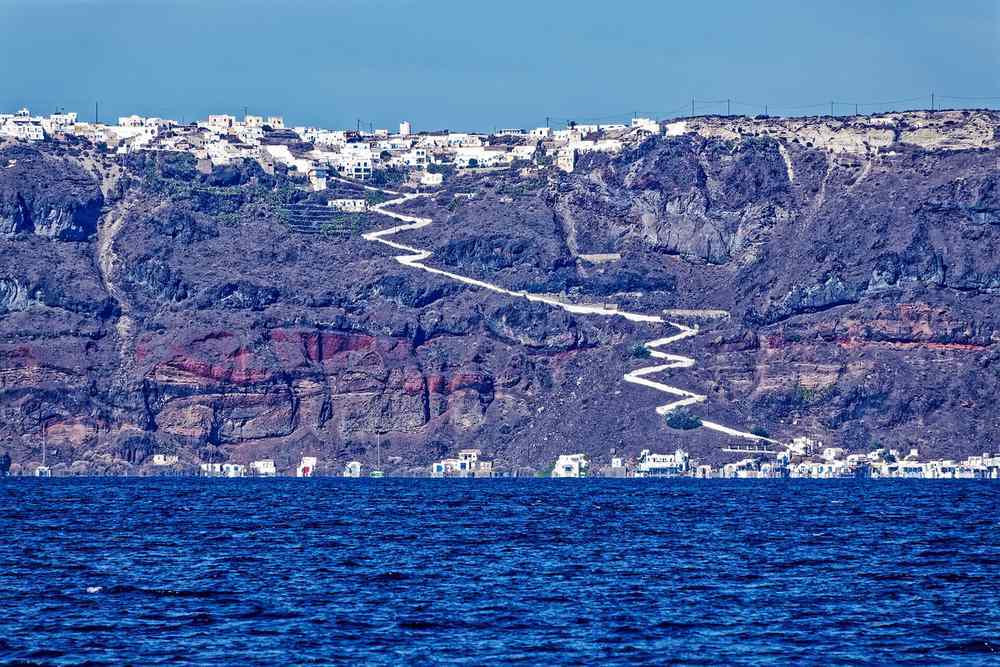
Thirassia rewards gentle exploration. From the port, steps climb the cliff to Manolas, the main village perched on the caldera rim, a peaceful place of whitewashed Cycladic houses, sleepy streets and tavernas, with magnificent views back across the water to Oia and the caldera. The island holds around twenty churches and chapels to discover, the most notable being the Monastery of the Assumption of the Virgin. Quiet trails link Manolas with the hamlets of Agrilia and Potamos and the chapel of Prophet Elias, perfect for unhurried walking through an untouched landscape. Near the port of Riva there is a beach for a swim, set out alongside the guide to Santorini’s own villages. Dining is simple and lovely.
How do you get to Thirassia?
You reach Thirassia by ferry from the Old Port below Fira or from Ammoudi Bay below Oia. The crossing to the port of Riva takes about 10 to 15 minutes. Caldera cruises also stop at Thirassia.
Getting to Thirassia is a short, scenic hop across the caldera. Small ferries and boats cross from the Old Port beneath Fira or, more conveniently for Oia, from Ammoudi Bay, taking roughly 10 to 15 minutes to reach Thirassia’s main port at Riva. The Ammoudi boat typically runs around three times a day in season, so it pays to check the timetable and plan your return. Alternatively, Santorini’s caldera and volcano boat cruises often include a stop at Thirassia, usually for lunch, making it an easy add-on to a day on the water. Either way, the approach with the cliffs rising ahead is memorable, set out alongside the guides to Ammoudi Bay and Santorini boat tours. A little planning helps.
What should you know before going?
Bring water, sun protection and good shoes, as Thirassia is quiet with limited facilities and a steep climb from the port to Manolas. Check the ferry times to plan your return, and allow a half to full day.
Thirassia is a place to slow down, so come prepared for simplicity. The island has a small number of cafés and tavernas, no real tourist infrastructure and a steep climb of steps or a winding road from the port up to Manolas, so sturdy shoes, water, sun protection and a relaxed attitude are essential. Most importantly, check the ferry timetable in both directions before you go, as services run infrequently and missing the last boat is a real risk. Visit for the tranquillity, the views and the sense of an older, untouched Cyclades rather than sights or activities, allowing a half to full day to savour it, set out alongside the guide to the best time to visit Santorini. The questions below cover the points travellers ask most.
What are the villages of Thirassia?
Thirassia has a handful of small settlements. Manolas is the clifftop main village and administrative centre, Riva or Korfos is the little port, and Potamos and Agrilia are quieter inland and coastal hamlets, partly abandoned, scattered across the island.
The island’s villages are its quiet heart. Manolas sits on the caldera rim as the main village and the place where most residents live, its whitewashed houses and blue-domed church looking straight across to Oia. Below it, the port of Riva, also called Korfos, is where boats arrive, with a cluster of tavernas built into the cliff base and a short beach alongside. Potamos lies inland in a green hollow away from the cliffs, a traditional farming hamlet with cave houses cut into the volcanic rock. Agrilia to the south is largely abandoned, its old cave dwellings and chapel offering a haunting glimpse of past island life. Walking between these settlements is the classic way to know Thirassia and the wider Santorini caldera.
Where do you stay on Thirassia?
Thirassia offers only a small selection of guesthouses and rooms, mostly around Manolas and near the port. Choose it for a quiet overnight escape, but most travellers visit on a day trip and stay on Santorini itself, where accommodation is far wider.
Staying overnight on Thirassia is possible but deliberately simple. A limited number of family-run guesthouses and rented rooms cluster around Manolas and near the port, offering caldera views and true peace once the day boats leave. An overnight stay lets you watch the sunset over the water and wake to an empty island, a rare experience in the caldera. Most travellers, though, base themselves on Santorini and cross for the day, returning to Oia or Fira in the evening. If you do stay, book ahead, as rooms are scarce and fill quickly in high season, and plan meals around the island’s handful of tavernas, which keep short hours.
What are the beaches of Thirassia like?
Thirassia’s beaches are quiet, unspoilt and volcanic, with dark sand and pebbles and clear water. The main swimming spot sits beside the port at Riva, while other small coves along the coast stay empty and are best reached by boat or on foot.
Thirassia rewards travellers who love a peaceful swim. The most accessible beach lies right by the port at Riva, a strip of dark volcanic sand and pebbles with tavernas behind and calm, clear water in front, ideal after the steep walk down from Manolas. Elsewhere the coastline hides small, secluded coves reached only by boat or by scrambling down rough paths, and these stay almost deserted even in high summer. The water everywhere is clean and deep, coloured by the volcanic seabed, and the absence of crowds makes the island’s shore one of the most tranquil swimming spots in the whole Santorini caldera.
Is Thirassia worth a day trip?
Thirassia is well worth a day trip for travellers seeking quiet, authentic Cyclades scenery. You gain caldera views, traditional villages and empty beaches without the crowds, though it suits slow, relaxed visitors rather than those wanting nightlife or busy attractions.
A day on Thirassia is one of the most rewarding escapes in Santorini. The island delivers the same jaw-dropping caldera panorama as Oia, yet with almost no other visitors, letting you experience the Cyclades as they once were. You climb to Manolas, linger over lunch with a view, swim in an empty cove and walk trails past old chapels and cave houses. The pace is slow and the facilities are basic, which is precisely the point. Travellers wanting shops, bars and lively resorts should stay on Santorini, but anyone craving calm and authenticity will find Thirassia a highlight of their Santorini boat tours and their whole trip.
Frequently Asked Questions
What is Thirassia island?
Thirassia is the small island of about 270 people across the caldera from Santorini, once part of the same landmass before the great eruption. It is a quiet, unspoilt escape with the clifftop village of Manolas, old churches and tavernas, far from the crowds of Oia and Fira.
How do you get to Thirassia from Santorini?
You reach Thirassia by ferry from the Old Port below Fira or from Ammoudi Bay below Oia, a crossing of about 10 to 15 minutes to the port of Riva. The Ammoudi boat runs around three times a day, and caldera cruises also include a stop at Thirassia.
Is Thirassia worth visiting?
Thirassia is well worth visiting for a quiet, authentic day away from Santorini’s crowds, with the same dramatic caldera views from the clifftop village of Manolas, old churches and peaceful trails. Bring water and good shoes, and check the ferry times for your return.
Can you stay overnight on Thirassia?
You can stay overnight on Thirassia in a small selection of family-run guesthouses and rooms around Manolas and the port. Book well ahead, as rooms are scarce, and plan around the island’s short taverna hours. Most travellers instead visit for the day and sleep on Santorini.
How long do you need on Thirassia?
Allow a half to full day on Thirassia. That gives time to cross by boat, climb to Manolas, walk a trail or two past the old chapels, enjoy a slow taverna lunch with caldera views and swim near the port before catching the return ferry to Santorini.