
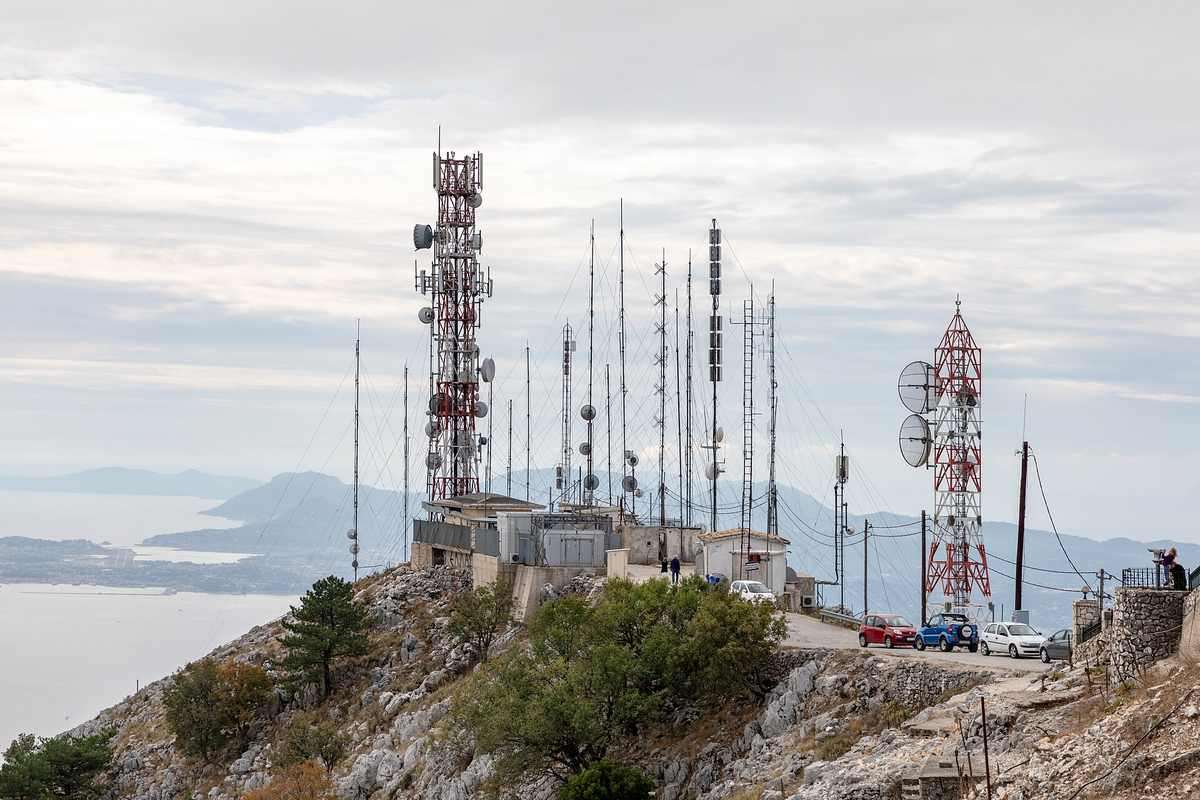
Mount Pantokrator Corfu is the island’s highest peak, rising to 906 metres above the north-east coast and crowned by a monastery. Its summit gives a 360-degree view over all of Corfu, the Ionian Sea, the Albanian mountains and, on a clear day, the heel of Italy. This guide covers how to reach the top, the hike and visiting tips. Plan the whole trip with Greece Tours.
The mountain is a scenic highlight of the green north, a memorable part of the wider Corfu tours and travel guide. It towers over the villages of the north-east. The sections below cover the visit.
What is Mount Pantokrator?
Mount Pantokrator is the highest mountain on Corfu, reaching 906 metres above the north-east of the island. Its name means “the Almighty”, and its summit holds a small active monastery, a telecommunications mast and island-wide views.
Pantokrator dominates the north of Corfu. Rising to 906 metres, the green, rocky massif looms over the villages and resorts of the north-east coast, its slopes scattered with old stone hamlets, including the ghost village of Old Perithia. The peak takes its name, “the Almighty”, from the monastery that has crowned it since Byzantine times. From the top, the panorama is unmatched on the island: the entire length of Corfu spreads below, ringed by the Ionian Sea, with the mountains of Albania close to the east and, on the clearest days, the distant heel of Italy. It is the island’s natural viewpoint, set within the wider Corfu villages. Reaching it takes some care.
How do you get to the summit?
You reach the summit by car or scooter up a steep, winding road, by an organised jeep safari, or by taxi. The final stretch is paved but narrow, with hairpin bends and steep drops, so it suits confident drivers only.
Driving is the usual way up, but the road demands respect. A surfaced road climbs from the north-east coast through the mountain villages to the summit, but its final section is very narrow and steep, with tight hairpin bends and sheer drops that make it unsuitable for nervous or inexperienced drivers. A small car or scooter copes best with the tight turns.
Those who would rather not drive can join one of the popular jeep safari tours that include the peak, a stress-free option, or arrange a taxi or private transfer straight to the top. The reward at the summit is the same spectacular view, set out alongside the guide to Corfu car rental. Walkers have another option.
Can you hike Mount Pantokrator?
You can hike Mount Pantokrator, most popularly from Old Perithia, a roughly 8 to 10 kilometre return route with significant climbing that takes four to six hours. It is a serious mountain walk over rough, rocky terrain.
The mountain is a fine hike for the well prepared. The classic route starts in the historic village of Old Perithia and climbs to the summit and back over about 8 to 10 kilometres, with considerable elevation gain, taking most walkers four to six hours. The terrain is rough and rocky with long, exposed stretches.
The route calls for good fitness, sturdy hiking boots, plenty of water and the ability to navigate, as paths are not always clearly marked. The reward is a sense of achievement and the ever-expanding view as you climb. The shoulder months are far better than the summer heat, set out alongside the guide to the best time to visit Corfu. The summit itself holds the monastery.
What is at the top?
At the top stands the Pantokrator Monastery, a small active monastery open to respectfully dressed visitors, alongside a large telecommunications mast. A small shop and café often sell refreshments, and entry to the summit and monastery is free.
The summit is modest but atmospheric. The Pantokrator Monastery, founded in the 14th century and still active, occupies the highest point, its courtyard and little church open to visitors who dress respectfully with covered shoulders and knees. Beside it rises a large telecommunications mast, an incongruous but unmissable landmark. A small shop and seasonal café usually offer drinks and snacks, welcome after the climb or the drive. Best of all, visiting the summit and entering the monastery are completely free, leaving only the view to pay you back, and what a view it is, set out alongside the guide to a Corfu itinerary. A few tips help the trip.
When is the best time to visit?
The best time to visit is from May to June and in early October, before and after the summer heat, when temperatures are cooler and visibility is clearest. Go early in the day for the sharpest views and calmest roads.
Timing makes a big difference on the mountain. The shoulder months of May, June and early October offer cooler air for the climb or drive and, crucially, the clearest visibility, when the view can stretch as far as Italy. The intense heat of July and August is best avoided for hiking, and summer haze can blur the distant horizon. Whatever the month, mornings tend to bring the sharpest air and the quietest roads, before cloud or afternoon winds build. Bring layers, as it is noticeably cooler and breezier at the summit than at the coast, set out alongside the guide to things to do in Corfu. The questions below cover the points travellers ask most.
What can you see from the summit of Mount Pantokrator?
From the summit you see the whole of Corfu, the surrounding Ionian Sea and its islands, and the mountains of Albania to the east. On the clearest days the view stretches south to the heel of Italy.
The panorama is the reason most people make the climb. The entire length of Corfu unrolls beneath the peak, from the northern beaches to the southern lagoons, patched with olive groves and white villages. The Ionian Sea rings the island, dotted with the smaller islands of Erikoussa, Othonoi and Mathraki off the north-west coast.
Eastward, the mountains of Albania rise close across the narrow strait, their ridges sharp in the morning light. On rare clear days the horizon reveals the faint outline of Italy far to the south. Early risers catch the sun climbing over the mainland, while evening visitors watch it sink into the sea, turning the water gold.
What should you bring to Mount Pantokrator?
Bring layers, since the summit is cooler and windier than the coast, along with plenty of water, sturdy shoes and sun protection. Modest clothing that covers shoulders and knees is needed to enter the monastery.
Simple preparation makes the visit far more comfortable. A light jacket or fleece matters even in high summer, as the exposed peak catches a steady breeze and the temperature drops noticeably with height. Carry water and a snack, especially for the hike, when the shop and café may be closed.
Solid walking shoes grip the rough ground far better than sandals, whether you drive or climb. A hat, sunglasses and sunscreen guard against the strong Ionian light on the treeless summit. Pack a scarf or light layer to cover shoulders and knees before stepping inside the monastery courtyard and church.
Frequently Asked Questions
How high is Mount Pantokrator in Corfu?
Mount Pantokrator is 906 metres high, making it the highest peak on Corfu. Its summit, crowned by a monastery, gives a 360-degree view over the whole island, the Ionian Sea, the Albanian mountains and, on the clearest days, the distant heel of Italy.
Can you drive up Mount Pantokrator?
You can drive up Mount Pantokrator by a steep, winding road, though the final stretch is narrow with hairpin bends and steep drops, suiting confident drivers only. Jeep safari tours and taxis also reach the summit for those who prefer not to drive it themselves.
Is there an entrance fee for Mount Pantokrator?
No entrance fee applies at Mount Pantokrator. Visiting the summit and entering the Pantokrator Monastery are completely free, though a small shop and seasonal café sell refreshments. Respectful dress with covered shoulders and knees is required inside the monastery.
How long does it take to drive up Mount Pantokrator?
Driving up Mount Pantokrator takes roughly 30 to 45 minutes from the north-east coast, depending on your starting village and the traffic on the narrow upper road. The climb is short in distance but slow, as the tight hairpin bends and steep gradients near the summit demand a careful, unhurried pace.