
Evros tours cover the north-eastern corner of Greece: Alexandroupoli with its lighthouse and seafront, the wetlands of the Evros Delta National Park, the black vultures of the Dadia forest, the silk town of Soufli, the Byzantine and Ottoman town of Didymoteicho, the church of Kosmosoteira at Feres and the island of Samothrace. Plan the rest of the trip with Greece Tours.
This page covers the Evros tours you can arrange from Alexandroupoli, what the delta, the forest, the towns and the island hold, the best seasons for birds, the Thracian kitchen, and how to plan four to six days.
What do Evros tours cover?
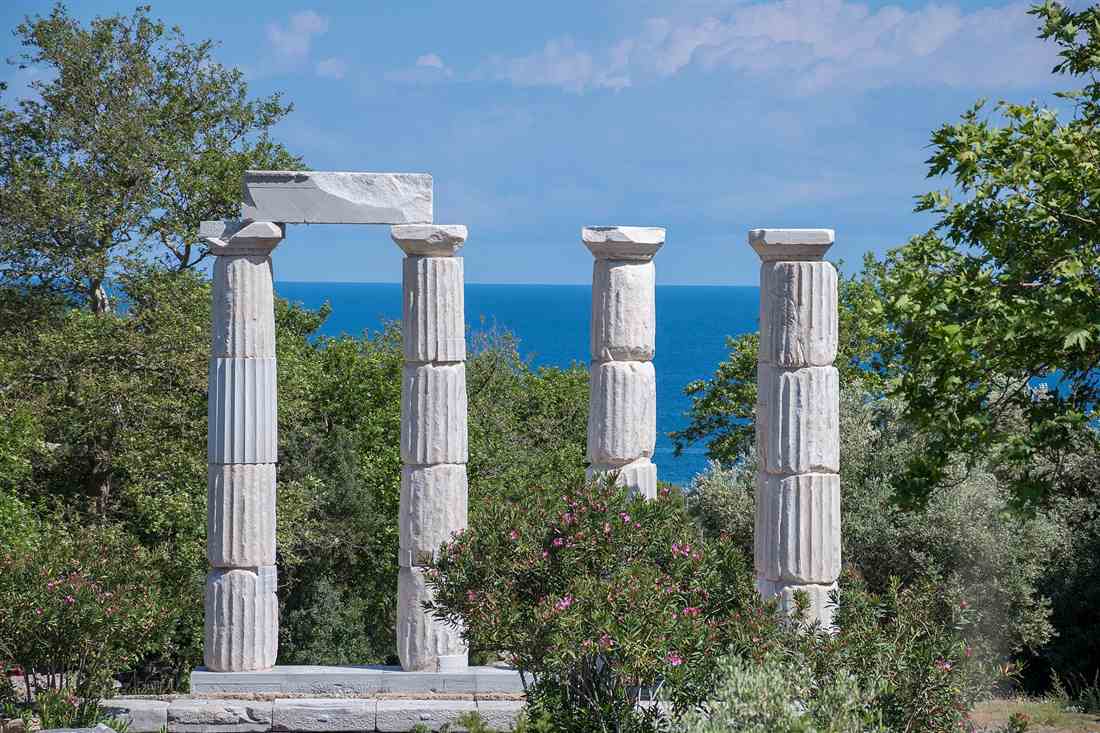
Evros tours cover the port town of Alexandroupoli and its lighthouse, the wetlands of the Evros Delta National Park, the vulture colonies of the Dadia forest, the silk town of Soufli, the Byzantine and Ottoman town of Didymoteicho, the Byzantine church at Feres, and the island of Samothrace with the Sanctuary of the Great Gods.
Evros is the north-eastern corner of Greece, the regional unit that runs along the Evros river from the Thracian Sea to the borders with Turkey and Bulgaria. It is a long strip of river plain, forest and low hills, with the island of Samothrace offshore.
The unit sits far from the usual routes of foreign visitors, which keeps its forests, wetlands and towns quiet. Its draw is nature, above all birds, and a history shaped by Byzantium, the Ottoman Empire and the refugees of the 20th century.
- Alexandroupoli – the capital, the lighthouse and the port for Samothrace.
- Evros Delta – the wetland national park at the mouth of the river.
- Dadia forest – the national park of the black vultures.
- Soufli – the silk town on the Evros.
- Didymoteicho – the Byzantine castle-town and first Ottoman capital in Europe.
- Samothrace – the island of the Great Gods and the Winged Victory.
Our Thrace tours page covers the wider region and the Rodopi tours page the unit to the west. Evros tours work as four to five days from Alexandroupoli.
What do Evros tours see in Alexandroupoli?
Evros tours in Alexandroupoli see the lighthouse of 1880 on the seafront, the symbol of the town, the waterfront promenade of cafés and fish tavernas, the cathedral of Agios Nikolaos with its museum of church art, the Ethnological Museum of Thrace, and the port where the ferries leave for Samothrace.
Alexandroupoli is a young town. It grew from a fishing village in the 1870s, when the railway to Constantinople reached the coast here, and it took its present name in 1920 in honour of King Alexander of Greece. Its streets run in a grid behind a long seafront, and the lighthouse stands at the centre of the promenade.
The Ethnological Museum of Thrace, in a restored mansion, shows the costumes, crafts, music and daily life of the Thracian peoples, and the church museum at Agios Nikolaos keeps icons and vestments brought by the refugees from Eastern Thrace and Asia Minor.
- Lighthouse – the tower of 1880, the landmark of the seafront.
- Seafront promenade – the cafés and fish tavernas along the water.
- Agios Nikolaos – the cathedral and its museum of church art.
- Ethnological Museum of Thrace – the costumes and crafts of the region.
- Samothrace ferry – the port for the island crossing.
- Named in 1920 – the town renamed for King Alexander.
Evros tours base the trip in Alexandroupoli and walk the seafront at sunset.
What do Evros tours see in the Evros Delta?
Evros tours in the Evros Delta see one of the most important wetlands in Europe, a national park of lagoons, reed beds, salt marsh and riverine forest where the Evros river meets the sea on the Turkish border, with more than 300 bird species recorded, from pelicans and flamingos to rare geese and birds of prey.
The delta spreads over the flat land south-east of Feres, where the river splits into branches before the sea. Its mix of fresh and salt water, open lagoons and dense reeds feeds huge numbers of birds, both breeding in summer and wintering in the cold months, when tens of thousands of ducks and geese gather.
Much of the delta lies inside a military border zone, so visits run through the visitor centre at Loutra Traianoupolis, which arranges permits, minibus trips and boat tours through the channels. The boats slip between the reeds to lagoons where pelicans, herons and cormorants feed.
- National park – the protected delta of the Evros river.
- More than 300 bird species – recorded in the wetland.
- Pelicans and flamingos – the large birds of the lagoons.
- Wintering geese – the flocks of the cold months.
- Visitor centre – the base at Loutra Traianoupolis.
- Boat tours – the trips through the channels and reeds.
Evros tours book the delta boat trip a day ahead with the visitor centre, since the permits are needed for the border zone.
What do Evros tours see in the Dadia forest?
Evros tours in the Dadia forest see the national park of pine and oak woods north of Feres that holds the only breeding colony of black vultures in the Balkans, along with griffon and Egyptian vultures and 36 of the 38 day-flying birds of prey of Europe, watched from a hide above the feeding station.
The Dadia-Lefkimi-Soufli forest covers low hills of pine and oak with clearings, streams and rocky ridges. The mix of old trees for nesting and open land for hunting made it a stronghold for birds of prey, and the park protects the core of the forest from logging and roads.
The eco-centre in the village of Dadia runs a minibus to the observation hide, which looks over a clearing where the park staff leave food for the vultures. The great black vultures, with wingspans close to 3 m, land beside the griffons, and eagles and kites circle overhead.
- Black vultures – the only breeding colony in the Balkans.
- Griffon and Egyptian vultures – the other vultures of the park.
- 36 of 38 raptors – the day-flying birds of prey of Europe.
- Observation hide – the shelter above the feeding station.
- Dadia eco-centre – the visitor base in the village.
- Pine and oak forest – the woods of the national park.
Evros tours reach the hide in the morning, when the vultures come to feed, and walk the forest trails from the village in the afternoon.
What do Evros tours see in Soufli?
Evros tours in Soufli see the silk town of Greece on the Evros river, with the silk museum in a 19th-century mansion, the old mulberry groves and silk houses, the shops that still sell silk scarves and fabrics, and views across the river into Turkey.
Soufli grew rich on silk in the 19th century. Almost every house raised silkworms on the leaves of the mulberry trees around the town, and the merchants built tall mansions with rooms for the worms on the upper floors. The trade declined in the 20th century, but the town kept the skills and the buildings.
The silk museum shows the whole process, from the eggs and the worms feeding on mulberry leaves to the cocoons, the reeling of the thread and the weaving of cloth. The town’s shops sell scarves, ties and fabrics, and the streets of old mansions climb the hill above the river.
- Silk museum – the story of sericulture in a 19th-century mansion.
- Silkworms – the worms raised on mulberry leaves.
- Mulberry groves – the trees that fed the silk trade.
- Silk mansions – the tall houses with worm rooms upstairs.
- Silk shops – the scarves and fabrics of the town.
- Evros views – the river and the Turkish bank below.
Soufli lies 65 km north of Alexandroupoli. Evros tours pair it with the Dadia forest, a short drive to the south-west.
What do Evros tours see in Didymoteicho?
Evros tours in Didymoteicho see the Byzantine castle-town on its hill, with walls, towers and churches, the great mosque of the early 15th century, one of the oldest Ottoman mosques in Europe, and the memory of the town’s years as the first Ottoman capital in Europe in the 14th century.
Didymoteicho, the double wall, grew on a hill above the Erythropotamos river near its meeting with the Evros. The Byzantine emperors made it a fortress and a residence, and emperors were born and crowned here. The Ottomans took it in the 14th century and made it their capital in Europe for a few years, before they moved the court to Adrianople.
The mosque in the town square, built under Mehmed I, is one of the oldest Ottoman mosques in Europe and the largest in Greece, with a pyramid-shaped roof, and is under restoration after a fire. Above it the castle hill keeps its walls, gates, Byzantine churches and rock-cut storage chambers.
- Castle hill – the Byzantine walls, towers and gates.
- Byzantine churches – the churches inside the walls.
- Great mosque – one of the oldest Ottoman mosques in Europe.
- First Ottoman capital – the town’s role in the 14th century.
- Erythropotamos – the river below the castle hill.
- Imperial town – the birthplace of Byzantine emperors.
Didymoteicho lies 100 km north of Alexandroupoli. Evros tours spend half a day on the castle hill and in the square.
Which Byzantine monuments do Evros tours visit?
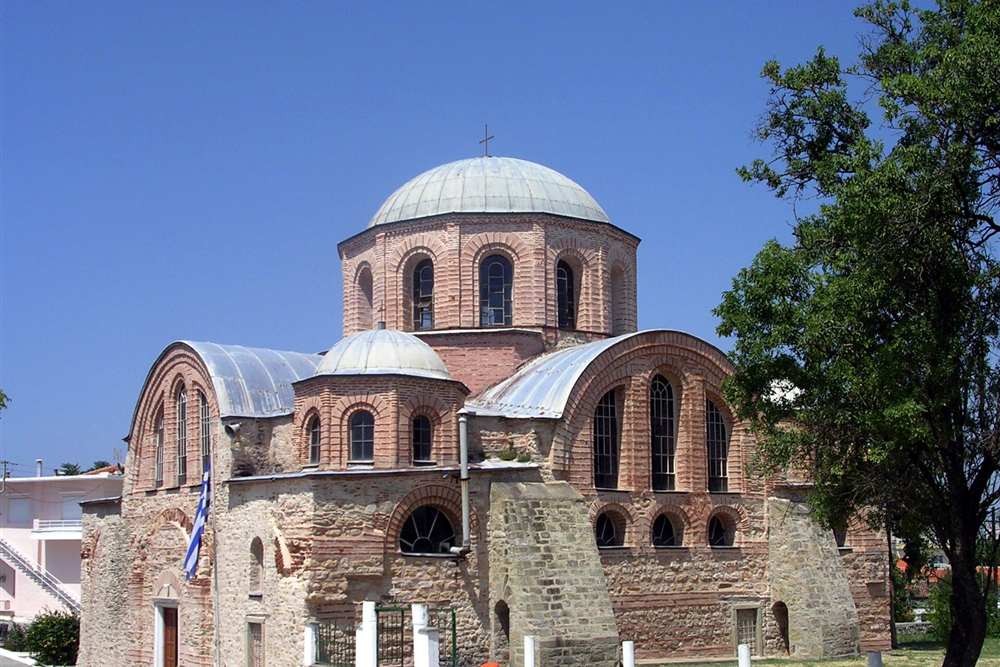
Evros tours visit the church of Panagia Kosmosoteira at Feres, founded in 1152 by the Byzantine prince Isaac Komnenos, the castle of Pythio built by the emperor John VI Kantakouzenos in the 14th century, and the walls and churches of Didymoteicho, the main Byzantine stronghold of the Evros valley.
The Kosmosoteira was the church of a large monastery that Isaac Komnenos, son of the emperor Alexios I, founded as his own burial place. It stands in the centre of Feres with five domes and fragments of its 12th-century frescoes, and parts of the monastery walls survive around it.
The castle of Pythio stands on a hill near the Evros, north of Didymoteicho. Kantakouzenos built it as a fortress and treasury during the civil wars of the 14th century, and its tall keep is one of the best-preserved Byzantine towers in Greece.
- Panagia Kosmosoteira – the five-domed church of 1152 at Feres.
- Isaac Komnenos – the Byzantine prince who founded it.
- 12th-century frescoes – the surviving paintings of the church.
- Pythio castle – the 14th-century fortress of Kantakouzenos.
- Byzantine keep – the tall tower of Pythio.
- Didymoteicho walls – the stronghold of the Evros valley.
Feres lies 30 km east of Alexandroupoli. Evros tours stop at the Kosmosoteira on the way to the delta or the Dadia forest.
Which ancient sites do Evros tours visit on the coast?
Evros tours on the coast visit the cave of the Cyclops at Makri, with a Neolithic settlement beside it, the ancient city of Mesimvria-Zone, founded by settlers from Samothrace, and Traianoupoli, the Roman city of the emperor Trajan, with its Ottoman inn and thermal baths.
Makri, a village on the hill above the sea west of Alexandroupoli, holds a cave that local tradition names as the home of the Cyclops Polyphemus, and excavations nearby uncovered a Neolithic settlement among the oldest in Thrace. Further west, Mesimvria-Zone kept its walls, houses and a sanctuary of Apollo on the shore.
Traianoupoli, east of the town, was a Roman city on the Via Egnatia, founded by Trajan in the early 2nd century. Its ruins lie beside an Ottoman inn, and its hot springs still feed the baths of Loutra Traianoupolis, used since Roman times.
- Cyclops cave – the cave at Makri tied to Polyphemus.
- Makri Neolithic settlement – one of the oldest villages in Thrace.
- Mesimvria-Zone – the city of the Samothracian settlers.
- Sanctuary of Apollo – the temple on the shore at Zone.
- Traianoupoli – the Roman city of Trajan on the Via Egnatia.
- Thermal baths – the hot springs of Loutra Traianoupolis.
Makri lies 12 km west of Alexandroupoli and Traianoupoli 14 km east. Evros tours cover both in one day along the coast.
What do Evros tours see on Samothrace?
Evros tours on Samothrace see the Sanctuary of the Great Gods, where the Winged Victory now in the Louvre was found in 1863, Mount Fengari, the 1,611 m peak of the island, the waterfalls and rock pools of the Fonias river, the hill village of Chora and the hot springs of Therma.
Samothrace belongs to the Evros unit and lies two hours by ferry from Alexandroupoli. In antiquity its sanctuary was the centre of a mystery cult of the Great Gods, and kings and commoners came from across the Greek world to be initiated. The ruins stand in a green valley below the mountain, and the museum on the site holds the finds and a cast of the Winged Victory.
The island is wild and green, with plane forest, streams and few roads. The Fonias river drops through a chain of waterfalls into deep pools, the vathres, and walkers climb to them from the coast road; Mount Fengari, where Homer placed Poseidon watching the Trojan War, rises straight above.
- Sanctuary of the Great Gods – the site of the ancient mystery cult.
- Winged Victory – the statue found in 1863, now in the Louvre.
- Mount Fengari – the 1,611 m peak above the island.
- Fonias waterfalls – the vathres pools of the river.
- Chora – the hill village and castle ruins.
- Therma – the hot springs and the forest resort.
Evros tours give Samothrace at least two nights, since the ferry runs a few times a day and the island rewards slow days.
What do Evros tours see in Orestiada and the north?
Evros tours in the north see Orestiada, the planned town founded in the 1920s by refugees from Karagatch on the edge of Adrianople, the riverside forests and farmland of the upper Evros valley, and the border crossings to Turkey at Kastanies and to Bulgaria at Ormenio.
When the Treaty of Lausanne fixed the border on the Evros, the Greek families of Karagatch, across the river from Adrianople, crossed into Greece and founded a new town on a grid plan, named after Orestes of the myth. Orestiada is a young town of wide streets, squares and parks.
The northern Evros valley is farming country of wheat, sugar beet, sunflowers and asparagus, crossed by the river and its bands of riverside forest. The motorway runs north along the river to the borders, and the villages keep the customs and dishes of the refugees of Eastern Thrace.
- Orestiada – the planned town of the Karagatch refugees.
- Grid plan – the wide streets and squares of the new town.
- Upper Evros valley – the farmland and riverside forest.
- Asparagus – the crop of the northern plain.
- Kastanies – the border crossing to Edirne in Turkey.
- Ormenio – the crossing to Bulgaria at the northern tip.
Orestiada lies 20 km north of Didymoteicho. Evros tours pass through it on the way to the border crossings.
Which day trips cross the border from Evros?
Day trips from Evros cross into Turkey to Edirne, the old Ottoman capital of Adrianople, a short drive from the Kastanies border, with the Selimiye mosque of the architect Sinan, a UNESCO World Heritage Site, the covered bazaars and the old bridges over the Tundzha and Maritsa rivers.
Edirne was the capital of the Ottoman Empire for almost a century before the conquest of Constantinople, and its mosques are among the finest in Turkey. The Selimiye, built for Sultan Selim II, is the work Sinan himself called his masterpiece, with a dome that rivals Hagia Sophia and four slender minarets.
The town also holds the Old Mosque, the Mosque of the Three Balconies, the Ali Pasha bazaar and the Ottoman bridges, and it is known for the oil wrestling festival of Kirkpinar in early summer. Visitors from Greece cross with a passport and return the same evening.
- Edirne – the old Ottoman capital of Adrianople.
- Selimiye mosque – Sinan’s masterpiece and a UNESCO site.
- Old Mosque – the early mosque of the Ottoman capital.
- Ali Pasha bazaar – the covered market of the town.
- Ottoman bridges – the crossings of the Tundzha and Maritsa.
- Kastanies crossing – the border gate north of Orestiada.
Evros tours plan Edirne as a full day from Orestiada or Didymoteicho, with passports ready at the border.
What do Evros tours eat and drink?
Evros tours eat the Thracian kitchen of the refugees of Eastern Thrace and Asia Minor, with cured pastourmas and soutzouki, kavourmas, pies and pastries, the fish and shellfish of the Thracian Sea in Alexandroupoli, asparagus from the north, goat on Samothrace, and the wines of the Evros valley.
The refugees who settled Evros brought a kitchen of spiced cured meats, rich pastries and slow-cooked stews. Pastourmas and soutzouki hang in the butchers of Didymoteicho and Orestiada, and kavourmas, meat preserved in its own fat, goes into eggs and pies.
Alexandroupoli is a fish town, with tavernas along the seafront serving the catch of the Thracian Sea. On Samothrace the dish is goat, raised free on the mountain and roasted or stuffed, and the vineyards of the Evros valley make red and white wines that the small wineries pour for visitors.
- Pastourmas and soutzouki – the cured meats of Thrace.
- Kavourmas – meat preserved in its own fat.
- Thracian pies – the pastries of the refugee kitchen.
- Alexandroupoli fish – the catch of the Thracian Sea.
- Samothrace goat – the free-range goat of the island.
- Evros wines – the reds and whites of the valley wineries.
Evros tours eat fish on the Alexandroupoli seafront and the meat dishes in the towns of the north.
Which outdoor activities do Evros tours offer?
Evros tours offer birdwatching in the delta and the Dadia forest, boat trips through the delta channels, forest walks on the marked trails of Dadia, cycling along the Evros valley, canyoning and hiking to the waterfalls of Samothrace, and swimming on the long beaches of the Thracian Sea.
Birdwatching is the main reason naturalists travel to Evros. The delta and the forest together hold one of the richest bird lists in Europe, with spring and autumn migration bringing waves of storks, pelicans, raptors and small birds along the coast and the river.
On Samothrace the streams of Mount Fengari cut gorges that guides descend with ropes, and the walks to the vathres pools suit families. The beaches west of Alexandroupoli, at Makri and Dikella, are long and quiet, with warm shallow water in summer.
- Birdwatching – the delta and the forest in every season.
- Delta boat trips – the channels, lagoons and reeds.
- Dadia trails – the marked forest walks from the village.
- Cycling – the flat roads of the Evros valley.
- Samothrace canyoning – the guided descents of the island gorges.
- Thracian beaches – Makri, Dikella and the coast west of the town.
Evros tours plan the birdwatching for April, May and September, the peak months of migration.
Which beaches do Evros tours visit?
Evros tours visit the long sand beaches west of Alexandroupoli at Makri, Dikella and Mesimvria, the town beach on the seafront, and on Samothrace the sandy bay of Pachia Ammos, the pebble beach of Kipos at the eastern end and the cove of Vatos, reached by boat.
The coast of Evros faces south onto the Thracian Sea, with long, open beaches of sand and fine pebble and warm, shallow water in summer. The strip west of Alexandroupoli is lined with camping sites, beach bars and fish tavernas, and it stays quieter than the resort coasts of the south of Greece.
Samothrace has fewer beaches, since the mountain drops steeply into the sea, but they are wild and clear. Pachia Ammos is the only long sand beach of the island, reached by a winding road; Kipos, at the end of the south-east road, is a bay of grey pebbles facing the island of Imbros; and Vatos is a hidden cove reached only by the island’s boat tours.
- Makri – the beach below the village of the Cyclops cave.
- Dikella and Mesimvria – the long beaches near ancient Zone.
- Alexandroupoli seafront – the town beach beside the lighthouse.
- Pachia Ammos – the sand bay of Samothrace.
- Kipos – the pebble beach at the eastern end of the island.
- Vatos – the cove reached by boat.
Evros tours plan the beaches from June to September and the island boat tour on a calm day.
When do Evros tours see the most birds?
Evros tours see the most birds in April and May, when the spring migration brings storks, pelicans, raptors and waders along the coast and the river, and again in September; winter brings the great flocks of geese and ducks to the delta, and summer the breeding vultures of Dadia and the bee-eaters and rollers of the valley.
Evros sits on one of the main migration routes of Europe, where birds from the Balkans and the Black Sea funnel along the coast toward Asia Minor and Africa. In spring the delta fills with waders and herons, and white storks return to their nests on the roofs, poles and church towers of the valley villages.
Summer is the breeding season in the forest, when the vultures raise their young and the eagles hunt over the clearings. Winter belongs to the delta, where geese and ducks arrive from the north in huge numbers and draw birdwatchers from across Europe.
- Spring migration – April and May, the peak season.
- White storks – the nests on the village roofs and towers.
- Summer breeding – the vultures and eagles of Dadia.
- Bee-eaters and rollers – the colourful birds of the valley.
- Autumn migration – September on the coast and the river.
- Winter flocks – the geese and ducks of the delta.
Evros tours match the season to the site: the delta in winter and spring, the forest in spring and summer.
How do visitors reach Evros, and how do Evros tours plan the days?
Visitors reach Alexandroupoli by air from Athens, by the Egnatia motorway from Thessaloniki, about 345 km west, and by train from Thessaloniki. Evros tours plan a day for the town and the coast, a day for the delta and Feres, a day for Dadia and Soufli, a day for Didymoteicho, and two for Samothrace.
A car is the practical way to cover the unit, since the sites spread along 150 km of the river valley. Alexandroupoli works as a base for the south and the coast, Soufli or Didymoteicho for the north, and the ferry port for the island crossing.
Spring and autumn are the best seasons, with bird migration, mild weather and green forest. Summer suits Samothrace and the beaches, and winter brings the great flocks of geese and ducks to the delta.
- Thessaloniki to Alexandroupoli – about 345 km on the Egnatia.
- Alexandroupoli airport – flights from Athens.
- Alexandroupoli to Soufli – 65 km north.
- Alexandroupoli to Didymoteicho – 100 km north.
- Samothrace ferry – about two hours from the port.
- Where to stay – Alexandroupoli, Soufli, Didymoteicho or Samothrace.
Evros tours join Rodopi and Xanthi for a full week across Thrace.
Frequently Asked Questions
Where is Evros?
In the far north-east of Greece, along the Evros river on the borders with Turkey and Bulgaria, with Alexandroupoli as its capital and Samothrace offshore.
Where can visitors see vultures in Evros?
In the Dadia forest national park, from the hide above the feeding station, reached by minibus from the eco-centre in Dadia village.
Can visitors tour the Evros Delta?
Yes, through the visitor centre at Loutra Traianoupolis, which arranges the border-zone permits, minibus trips and boat tours.
How do visitors reach Samothrace?
By ferry from the port of Alexandroupoli, a crossing of about two hours.
Is Samothrace part of Evros?
Yes. The island belongs to the Evros regional unit and is reached only by sea from Alexandroupoli.
When is the best time for Evros tours?
April, May and September for the bird migration, June to September for Samothrace and the beaches, and winter for the geese and ducks of the delta.