
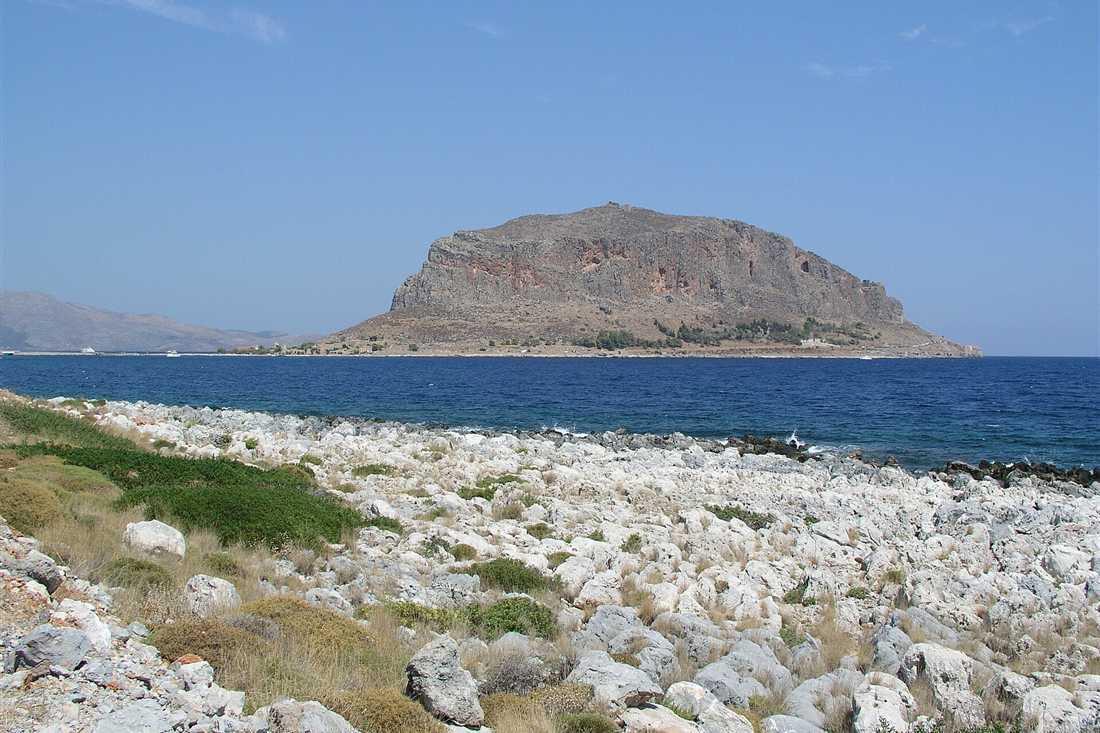
A Monemvasia wine tasting pours the Laconian varieties at the winery beside the rock, built on the Malvasia wine that Venetian merchants shipped from this port and that carries the town’s own name. Plan the rest of the trip with Greece Tours.
This page covers the tastings: the grapes, the history behind the name, where the sessions run, the food served with the wine, the walk into the fortified town and how a tasting fits a day in Laconia.
What does a Monemvasia wine tasting include?
A Monemvasia wine tasting includes a hosted session at the Monemvasia winery near the rock, with pours of local Laconian wines and small local delicacies. The stop covers the revival of the ancient Monemvasia-Malvasia wine and the grapes grown around Laconia.
The tasting moves through dry whites and a red made from Laconian grapes, with the winery team explaining the grape sources and the cellar work behind each bottle.
The winery, also called Tsimbidi, revived the ancient Monemvasia-Malvasia wine in Laconia. It offers tours and tastings at its estate on the mainland near the rock, and the session sits inside that working estate.
The town of Monemvasia is nicknamed the Gibraltar of the East, and the wine stop looks toward that same rock from the mainland side of the causeway, close to Gefyra.
Which grapes are poured at a Monemvasia wine tasting?
A Monemvasia wine tasting pours the Monemvasia white variety first, then other Laconian grapes beside it. The line-up includes Kydonitsa, Assyrtiko, Agiorgitiko and Mavroudi, so the glasses move from white styles to red wines.
Monemvasia white is the local variety tied to the old Malvasia trade, and it leads the white side of the tasting with a dry, direct character from Laconian vineyards.
Kydonitsa adds a fuller white body from inland Laconian plots, while Assyrtiko brings a sharp mineral edge and a long clean finish to the glass.
Agiorgitiko and Mavroudi give the red side of the tasting. Staff tell you where each grape grows and how the wine changes in the mouth from first smell to finish.
What was Malvasia and why did the town give it its name?
Malvasia was the Italian form of the name Monemvasia. Venetian merchants shipped wine from this fortified port across Europe, and it took the town’s name. The word Malvasia then spread through Mediterranean trade and named wines far beyond Greece.
The Greek name Monemvasia means single entrance, from the words moni emvasis. The rock island had one controlled land entry and a walled sea side.
Medieval Venetian traders used the town as a port, and wine loaded here reached Italian markets under the name Malvasia. The trade name travelled with the barrels.
Other wine regions later used the Malvasia name for their own wines, but the link begins with this rock town off the east coast of Laconia in the Peloponnese.
Where does a Monemvasia wine tasting take place?
A Monemvasia wine tasting takes place at the Monemvasia winery, also known as Tsimbidi, on the mainland near the rock. The estate sits close to Gefyra and the causeway, outside the old fortified town.
The winery uses Laconian vineyards near its mainland site, and visitors reach the tasting room by car or local taxi from the causeway end.
The estate stands on flat land close to the coast road, and the rock of Monemvasia is visible from the grounds. The rock and the vines share the same coastal landscape.
Cars stay outside the old town gate, but the winery has room to park on the mainland. That makes the wine stop simple before or after the fortress walk, and the gate is only a short drive away.
What food is served with the wine at a Monemvasia wine tasting?
A Monemvasia wine tasting serves local delicacies beside the wine pours. The food plates come in small portions and are chosen to match the dry whites and reds of Laconia. The tasting with local delicacies is listed on GetYourGuide from Monemvasia.
The local delicacies clear the palate between wines, and each small plate sits with a specific pour or a pair of wines from the same grape family.
Foods served at the winery come from Laconian producers, which keeps the whole tasting tied to the region around the rock and its mainland plots.
The wine remains the centre of each round. The plates support the grape character without covering it or rushing the pour.
How do you walk into the fortified town before a Monemvasia wine tasting?
You park outside the west gate and walk through the single land entrance on the causeway road. Inside the walls, stone and stepped streets carry visitors on foot. No cars enter the gate, so the fortress walk is entirely pedestrian.
The rock island joins the mainland by a causeway and a short bridge, and the modern mainland settlement of Gefyra sits at the near end of the causeway on the east coast of Laconia.
The west gate is the entry point to the town. The name Monemvasia means single entrance, and this gate still holds that role.
After a wine tasting at the mainland winery, return to the gate and enter the lower town, where the stone lanes begin right behind the wall and climb toward the central square.
What do you see in the lower town and Middle Street?
The lower town holds Middle Street, the main street of the Byzantine period, and the old agora beside it. Stone houses and shops line the lane between the west gate and the central square of the old settlement.
Middle Street was the commercial spine of the lower town, and the old agora stood beside it as the public market and meeting space inside the walls.
The lane passes under vaulted rooms and opens onto small squares, so visitors walk the same route without cars, on stone and stepped lanes.
The lower town sits between the sea wall and the cliff, and side lanes branch off Middle Street and climb toward the upper plateau.
Why visit the church of Elkomenos Christos?
The church of Elkomenos Christos stands in the central square of the lower town. It is the main church of the old settlement and a focal point inside the fortified walls. Visitors reach it on foot from Middle Street.
The church marks the civic centre of the medieval lower town, and its square gathers the lanes that run from the west gate and the sea wall.
Inside, the church holds Orthodox icons and stonework tied to the town’s past. The building shows the depth of the fortified settlement and its civic life.
From the church square, lanes lead toward the upper town path and the sea side, so it is a clear meeting point during the fortress walk.
What stands in the upper town at Agia Sofia and the acropolis?
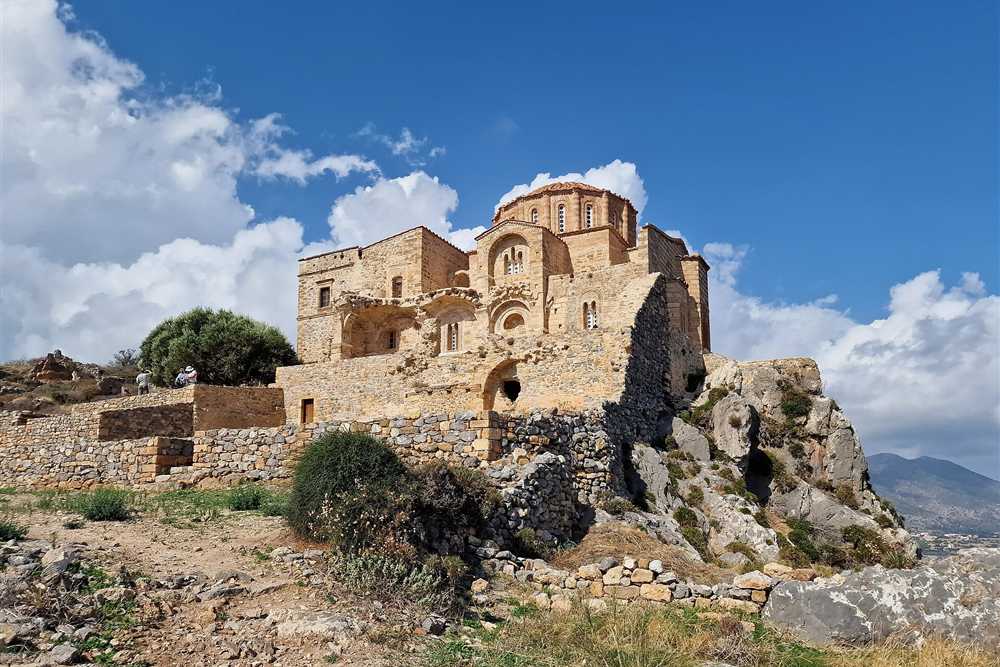
The upper town on the plateau holds the church of Agia Sofia on the cliff edge and the remains of the acropolis. The acropolis is an enclosure with four corner towers above the lower town and the sea.
Agia Sofia sits on the cliff edge of the plateau and looks over the water, and the path from the lower town climbs steeply to this upper level.
The acropolis enclosure has four corner towers, and its walls guarded the top of the rock island and controlled the high ground above the lower town.
The upper plateau is barer than the lower town, and wind and open rock mark the walk between the church and the fortified enclosure.
How does a Monemvasia wine tasting fit a day in the town?
A Monemvasia wine tasting fits as a mainland stop before or after the fortress walk. You taste at the winery near Gefyra, then park outside the west gate and enter the old town on foot to see the lanes and churches.
The wine stop works well at the start of the day, filling the late morning on the mainland while the old town fills the afternoon from the west gate to the upper path.
You can reach the rock from Athens on a Monemvasia day trip from Athens, then join the wine stop near the causeway.
The order also works in reverse, because you can walk the fortress first and then sit at the winery after the climb and the heat leave you ready for a cool pause.
What defines the wider Laconian wine country around a Monemvasia wine tasting?
The wider Laconian wine country runs from coastal vineyards near the rock to inland plots around Sparta and Mystras. The wine tasting shows one corner of that region, but the local grape list reaches much further inland.
Laconian vineyards grow the Monemvasia white variety along with Kydonitsa, Assyrtiko, Agiorgitiko and Mavroudi, and the mix spans the coastal strip and the inland hills.
The rock of Monemvasia is the coastal landmark, while vineyards lie on the mainland around it and inland toward Sparta and Mystras.
Winemakers in Laconia build their range from native varieties. The tasting room explains how that local grape list shapes the region’s reds and whites.
When does the harvest run for Monemvasia wine tasting grapes?
The harvest for local wine grapes runs from late summer into autumn. White grapes ripen first, and red grapes follow through the warm weeks. The winery is busy with picking and pressing during this stretch.
The exact start moves with the weather and the variety, because Monemvasia white and Assyrtiko come in before Agiorgitiko and Mavroudi.
The winery receives grapes in small loads from Laconian plots, and sorting and pressing fill the cellar with fresh juice during the busiest stretch of the cellar year.
Visitors during harvest see active winemaking around the tasting room. The pours continue while the team works through the grape intake, and the air near the cellar carries the scent of pressed grapes.
How do the seasons change a Monemvasia wine tasting visit?
A Monemvasia wine tasting changes with the seasons. Summer brings heat and strong light, autumn brings harvest activity, winter offers quiet sessions, and spring shows green growth on the vines. The wines stay tied to the same local grapes.
In summer, the stone town holds heat and the winery offers a cooler mainland pause, so a midday tasting feels slower inside the shaded room away from the brightest heat.
In autumn, the vineyard work surrounds the visit. The smell of crushed grapes fills the cellar and red grapes arrive for sorting.
In winter and spring, the rock is quieter. The wine room gives a warm or fresh stop with the same pours and local plates.
How does a Monemvasia wine tasting combine with Sparta and Mystras?
A Monemvasia wine tasting combines with Sparta and Mystras on one inland loop. You taste wine on the coast, then drive toward the Byzantine city of Mystras and the plain of Sparta. The route links the sea with Laconian history.
Sparta and the Byzantine city of Mystras lie inland from Monemvasia, and both appear on private day trips with castles, legends and local flavours.
The road from Monemvasia to Sparta passes through Laconian hill country and vineyard land, so the wine tasting marks the coastal start of that route.
You can join one of the Mystras tours that visit the Byzantine site after the coastal wine stop.
How does a Monemvasia wine tasting fit with Gefyra?
Gefyra is the mainland village at the near end of the causeway, where the hotels, the car parks and the winery estate sit, so a tasting there is a short drive or walk from the bridge to the rock.
The causeway carries the only road across to the gate.
A shuttle runs along it in the season for guests who leave the car behind.
The rock stands in full view from the Gefyra waterfront.
Which hours suit a Monemvasia wine tasting?
Late morning or the hour before sunset, leaving the middle of the day for the walk inside the walls, where the stone streets hold heat through the afternoon.
Sessions are booked ahead in summer, when the town fills with day visitors.
Spring and autumn are the quietest months on the rock.
The upper town closes earlier than the lower town in winter.
Frequently Asked Questions
Which grape is Monemvasia?
A white Laconian variety, the base of the historic Malvasia wine that took the town name.
Where does a Monemvasia wine tasting take place?
At the winery estate on the mainland near the rock, outside the fortified town.
Can you drive into the old town?
No. Cars stay outside the west gate and the streets inside are walked on foot.