
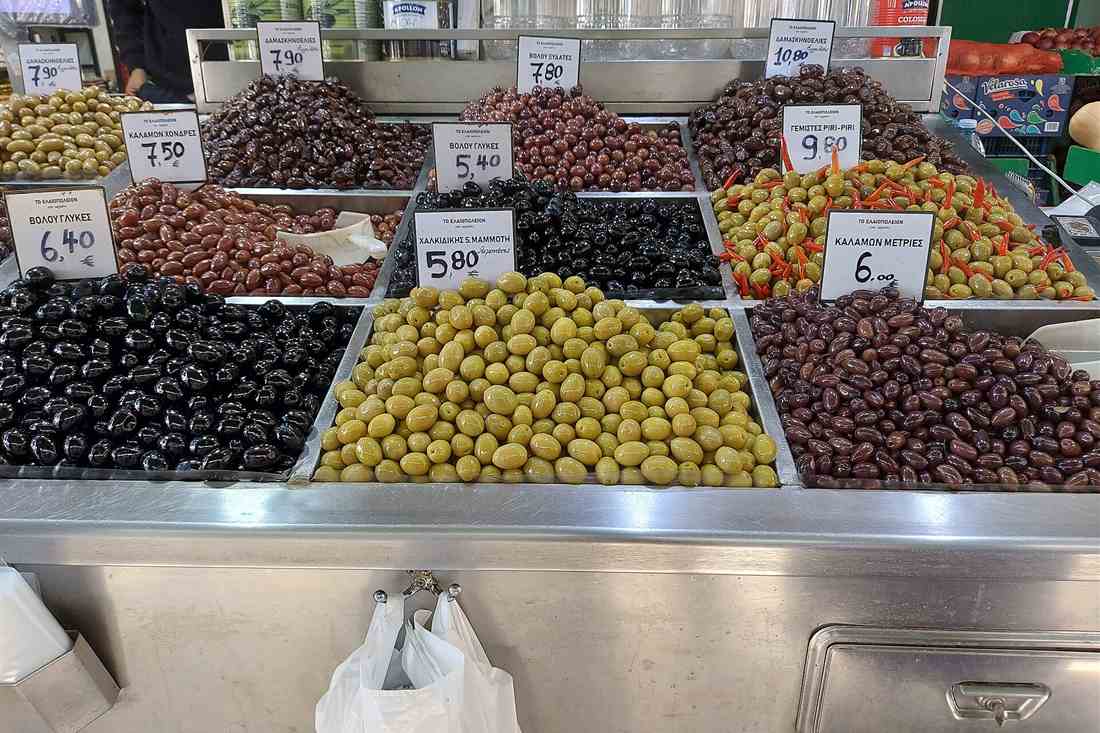
A Kalamata food tour walks the central market and the streets around it, tasting olives, olive oil, pasteli, cheese and Messinian dishes. Plan the rest of the trip with Greece Tours.
What does a Kalamata food tour include?
A walk through the historic centre with tastings of more than 20 Messinian products at family-owned shops and workshops, Greek coffee at a grinding shop, meze at a coffee shop and ouzo tavern, cheese, Kalamata olives and olive oil, local wine and spirits, and a light lunch.
Guides tell the history of the city along the way.
Stops include a traditional workshop making local specialities.
A spice shop sells herbs from Mount Taygetus.
A family shop sells olive oil, honey and dried figs.
A wine shop pours local wines and spirits.
The walking side sits at Kalamata walking tour.
How long does a Kalamata food tour take?
Three hours for the introduction to Kalamata’s food and for the market walk, and four hours for the traditional food tour with lunch, which sometimes runs a little longer, with two extra hours when the farmers’ market visit is added.
The farm-to-table experience runs three to four hours.
The market visit takes about two hours.
The olive tasting seminar takes about an hour.
Walking between stops is short.
Lunch closes the longer tour.
Guests plan no other lunch that day.
Where does a Kalamata food tour start?
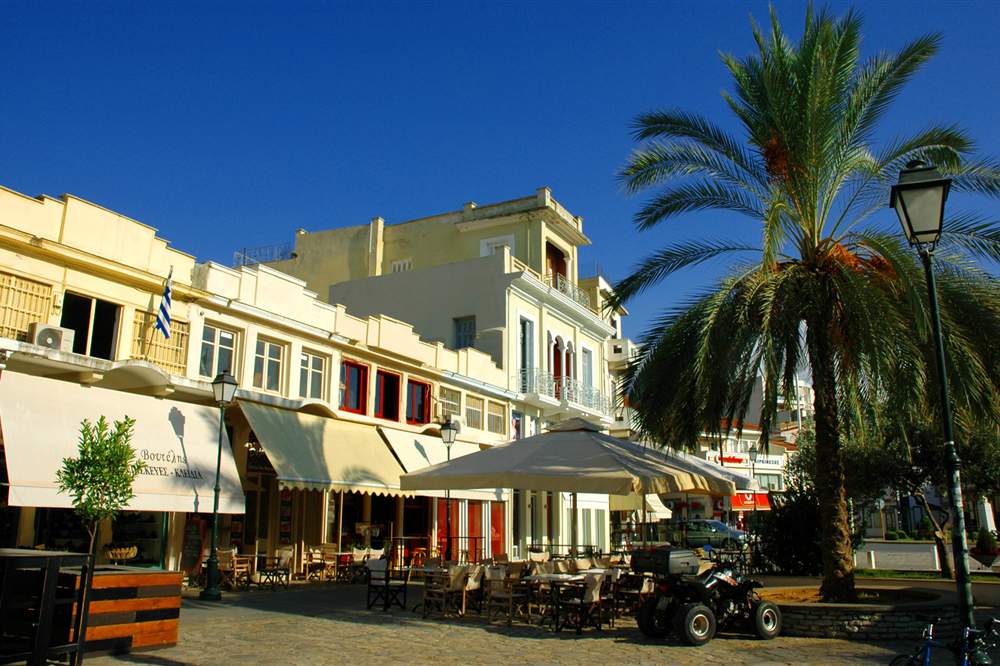
At the central Vasileos Konstantinou Square in front of the statues of the Messinian heroes of 1821 for the traditional food tour, and in front of the church of Ypapanti at the foot of the castle for the market walk.
Ypapanti is the largest Greek Orthodox church in the town.
The castle of Kalamata stands above the old town.
The market sits a short walk from Ypapanti.
Meeting points are named on the booking.
The historic centre is walkable.
The tours of the city sit at Kalamata tours.
What are the stops on the traditional food tour?
A traditional workshop making Messinian specialities, a shop of spoon sweets and Corinthian raisins, a coffee grinding shop, homemade products from Mani, a coffee shop and ouzo tavern, a cheese stop, an olive oil shop, a wine and spirits shop, and a light lunch.
The tour lists nine stops.
Giorgos at the coffee shop shows how Greek coffee is prepared.
A mama from Mani makes the homemade cookies.
The lunch uses traditional recipes from Messinia and Mani.
The restaurant sits in the heart of the city.
Guests taste more than 20 products.
What is the Kalamata olive?
A large, dark purple olive with a smooth, meaty texture, named after the city and protected with PDO status in the EU, so that the name is used only for olives and oil from the region around Kalamata.
The same variety grown elsewhere is sold as Kalamon.
They are preserved in wine vinegar or olive oil.
They are used mainly as table olives.
Almost every tree outside the city is an olive tree.
An olive tasting seminar teaches how to spot the authentic ones.
Greece has more than 90 olive varieties according to the tour operator.
What is the olive oil tasting on the tour?
A 30 to 40 minute tasting inside a family-owned shop selling olive oil, honey and dried figs, where one owner is a professional olive oil taster who tests oil from farm to farm and guides guests through different types and grades.
Guests taste the difference between grades.
The talk covers the olive oil industry of Messinia.
Honey tasting follows the oil.
The honeys carry lavender, pine or vanilla notes.
Products can be bought after the tasting.
The olive oil side sits at Kalamata olive oil tasting.
What are lalagia and diples?
Two traditional fried pastries of the Peloponnese made by a group of local women at a small workshop on the tour: lalagia, a local fried dough treat, and diples, thin sheets of dough fried, folded and dipped in honey or sugar syrup.
Guests try their hands at shaping the dough.
Diples are made in bow ties and spirals.
They are served at weddings and at New Year.
Some diples are topped with walnuts and cinnamon.
The makers send guests off with samples.
Lalagia appear among the local appetizers in taverns.
What is pasteli?
A classic Greek snack of sesame seeds bound with pure Greek honey, pressed into bars, which guests chew on at the stop for homemade products from Mani while hearing old stories from the woman who makes the cookies.
Small shops in the historic centre sell it.
Visit Peloponnese lists it among the city’s famous delicacies.
It is made of honey and sesame seeds.
The texture runs from chewy to crisp.
It is pressed into bars.
It is one of the famous products of Kalamata.
What is the Kalamata farmers’ market?
The central open-air farmers’ market, held on Wednesdays and Saturdays and counted among the best in Greece, where farmers, fishermen, butchers and cheese makers sell cheeses, herbs, olives, Kalamata figs and the produce of Messinia.
The market walk can be combined with the food tour.
Herb sellers bring plants from the Taygetus mountains.
Fish stalls sell anchovies, sardines, snapper and swordfish on ice.
A market cellar pours wine and tsipouro.
Guests taste cheese, honey and olives at the stalls.
What is the Messinian gastronomy trilogy?
Cheese, Kalamata olives and extra virgin olive oil, tasted together at one stop of the traditional food tour, with two famous cheeses made exclusively from sheep or goat milk by small family farms.
The cheeses come from family farms.
The olives come from the Kalamata region.
The oil is extra virgin.
The three are served side by side.
Guides explain how they are made.
Shops sell all three for travel.
What meze does the ouzo tavern serve?
Chickpea patties called revithokeftedes, stuffed courgette flowers, oven-baked sardines, aubergine dip with fresh basil, and kagianas, a local omelette with tomato and cured meat, served at a traditional coffee shop and ouzo tavern.
The stop shows how locals spend an afternoon.
Ouzo is poured with the meze.
The dishes are typical Messinian appetizers.
Guests fill up here before the wine.
Portions are shared.
Vegetarian dishes are part of the spread.
What smoked meats does the tour taste?
Loukaniko, a pork sausage flavoured with orange, and pasto, smoked slow-cooked pork, at a shop specialising in smoked meat, plus slow-roasted pork belly and crackling from a small chophouse on some tours.
Greek loukaniko is flavoured with orange peel and fennel.
Its name goes back to the Roman lucanica.
It is served sliced and fried as meze.
Pasto is tender enough to slice easily.
Shops sell both for home.
The chophouse also supplies local restaurants.
What sweets does the tour taste?
Spoon sweets, Corinthian raisins, lalagia, diples, pasteli, homemade cookies from Mani, mini cheese pies called lihnarakia and portokalopita, an orange cake soaked in syrup, from small pastry shops and workshops.
A pastry shop bakes a limited amount each day.
Everything is baked from scratch.
Spoon sweets are fruit preserved in syrup.
The orange cake is mildly sweet.
Lihnarakia are made with a local cheese.
Guides pick the shops.
What are Corinthian raisins?
Small, sweet, seedless raisins of the Black Corinth grape, called Zante currants or Corinth raisins, grown in Messinia and tasted with spoon sweets at a spice and delicacy shop on the tour.
The name comes from raisins de Corinthe.
Zakynthos was once the main producer.
They are not related to currant berries.
They are tasted at the spice and delicacy shop.
The grape is Black Corinth.
They come from Messinia on this tour.
What Greek coffee does the tour serve?
Unfiltered black Greek coffee at a coffee grinding shop that has been in Kalamata for over 100 years, where guests see and smell the beans and learn how the coffee is prepared.
Greek coffee is strong.
It is served unfiltered.
Freddo espresso and freddo cappuccino are the iced alternatives.
The coffee stop restores energy mid-tour.
The owner shares the shop’s history.
Coffee can be bought to take home.
What wines does the tour pour?
Local wines and traditional spirits at a wine shop, with grapes including Fokiano, Assyrtiko, Mandilaria and Moschofilero and blends with foreign varieties into white, rose and red wines, and wine with the closing lunch.
Moschofilero is an aromatic grape of the Peloponnese.
It has a rose garden bouquet.
Tsipouro is similar to Italian grappa.
Ouzo is poured at the tavern stop.
Locals shop at the wine shop during the tasting.
Non-drinkers are offered alternatives.
What is the vegetarian food tour?
A local vegetarian food tour with light lunch in Kalamata, built around the plant-forward side of Messinian cooking, run by the same operator as the traditional food tour.
The tour follows the vegetarian side of Messinia.
Meze includes chickpea patties and courgette flowers.
Cheese and olive oil feature at every meal.
Dietary needs go on the booking.
Lunch is included.
The operator also runs the traditional food tour.
What other food experiences run from Kalamata?
An organic olive grove tour with olive oil tasting and lunch, a wine tour and tasting at a small family winery 35 kilometres from Kalamata, a private dining and cooking class with a head chef, a farm-to-table experience, and a full-day private tour of Messinia.
The family winery has 35-year-old vineyards.
The winery tour lasts three hours.
The cooking class with a head chef lasts three hours.
The farm-to-table experience runs three to four hours.
A village cooking class runs in Arcadia.
A sightseeing walking tour runs for three hours.
What is Kalamata?
The second most populous city of the Peloponnese after Patras, capital and chief port of Messinia on the Nedon river at the head of the Messenian Gulf, with 58,816 people in the city proper in 2021, known for the Kalamatianos dance, Kalamata olives and olive oil.
The wider municipality counted 72,906 people.
The Greek War of Independence began here on 23 March 1821.
The Folklore Museum occupies a two-storey mansion in the centre.
Mount Taygetus rises behind the city.
The Peloponnese was named the world’s second best food destination by Taste Atlas.
The sea side of the city sits at Kalamata catamaran cruise.
What is Mount Taygetus?
It was named after the nymph Taygete.
It was also called Pentadaktylos, five-fingered.
Herb sellers gather therapeutic plants on its slopes.
Its scent fills the spice shop on the tour.
The name appears in the Odyssey.
Profitis Ilias is its highest peak.
Is a Kalamata food tour a full meal?
Yes: the traditional food tour’s operator says guests will not need to worry about lunch, with more than 20 tastings, meze at the ouzo tavern and a light lunch of Messinian dishes to finish.
Guests arrive hungry.
The meze stop is filling.
Wine comes later in the tour.
Lunch is light but filling.
Dinner comes later in the evening.
Shorter tours are lighter.
Can dietary needs be met on the tour?
Needs are named at booking.
Meat appears at the smoked meat and chophouse stops.
Wheat is in the pastries and pies.
Alcohol is optional at every stop.
Guides adapt the tastings.
Private tours set their own menu.
Is a Kalamata food tour good for families?
Family packages are offered.
Juice replaces wine and spirits.
The walk is short between stops.
Four hours is long for small children.
The three-hour tour suits younger families.
Private tours set a family pace.
When is the best time for a Kalamata food tour?
A Wednesday or Saturday morning, when the farmers’ market runs and can be added to the tour, and the cooler months, since one visitor found the midday heat hard on a summer climb to the castle after the tour.
Morning tours catch the shops at their busiest.
Summer afternoons are hot.
The market runs on Wednesdays and Saturdays.
The cooler months suit walking.
Booking ahead secures a guide.
Tours run four times a week with one operator.
What do you bring on a Kalamata food tour?
An empty stomach, comfortable shoes for the historic centre, water and a hat in summer, a bag and cash for olive oil, honey, raisins and pasteli from the shops, and room in the luggage for the purchases.
Olive oil travels best in tins.
Small shops prefer cash.
Honey jars go in hold luggage.
The walk is at an easy pace.
A light layer helps in winter.
Phones capture the workshop visit.
What are the common Kalamata food tour mistakes?
Eating breakfast before the tour, booking lunch the same day, skipping the market days, not naming dietary needs, and filling up on wine before eating at the meze stop.
The tastings replace lunch.
The market runs only on two days.
Needs named late are hard to meet.
The wine comes after the meze.
Morning tours catch the shops open.
The purchases add weight to luggage.
How do you book a Kalamata food tour?
Book online on the booking platforms or directly with the operators, choose the three-hour or four-hour tour, add the market, museum or olive tasting on request, and give dietary needs and group size at booking.
Private and group tours are available.
Family packages are offered.
Confirmation gives the meeting point.
Tailor-made tours are arranged in advance.
The wider region sits at Ancient Messene tour.
What does a Kalamata food tour taste?
Kalamata olives and olive oil, pasteli made with sesame and honey, sfela cheese, lalangia fritters, cured pork and Messinian dishes cooked with the same oil.
The Kalamon olive takes its name from the city and is cured whole in brine.
Sfela is a firm, salty cheese from Messinia.
Lalangia are fried dough strips eaten at feasts.
Where does a Kalamata food tour walk?
Through the central market and the streets around it, then into the old town below the castle, with stops at oil shops, bakeries, delis and tavernas.
The market sits beside the river bed in the centre of the city.
Stalls sell oil, olives, honey, figs and dried herbs.
The old town climbs towards the Frankish castle on its hill.
Why is Kalamata known for olive oil?
Messinia grows olives across its whole plain and the surrounding hills, and the region’s oil carries protected status for the area around the city.
The harvest runs from November into January.
Mills press through the winter and sell direct.
The oil is peppery and green when it is new.
What is pasteli?
A bar of sesame seeds set in honey, made in Messinia for centuries and cut into strips at the counter.
Some versions add almonds or orange peel.
It keeps without refrigeration, which is why it travelled.
The city holds a long tradition of making it.
How long does a Kalamata food tour take?
Three to four hours on foot, with five to seven stops and enough food between them to replace a meal.
Groups stay small so the tables fit the party.
The route is flat except for the climb to the old town.
Evening tours finish after dark.
Does a Kalamata food tour suit families?
Yes. The route is short, the stops are frequent and the dishes are plain: bread, cheese, olives, honey, pies and grilled meat.
Portions are shared at the table.
Dietary needs are given at booking.
Markets are busiest in the morning.
Frequently Asked Questions
How much is a food tour in Kalamata?
Which days does the farmers’ market run?
Wednesdays and Saturdays, and a two-hour market visit can be added to the food tour on request.
Do you need lunch after the tour?
No. The traditional food tour ends with a light lunch after more than 20 tastings.