
A Thessaloniki e-bike tour is a two to three and a half hour guided ride on a pedal-assist bicycle through the Roman monuments, the waterfront and the Ano Poli hill, in groups of four to twelve with a helmet, a headset and a coffee stop. Plan the rest of the trip with Greece Tours.
This page covers the ride: where the route goes, what it costs, how hard the riding is, the traffic, Ano Poli, the monuments on the way, the new waterfront, the food stops, self-guided hire, the season and how to book.
What is a thessaloniki e-bike tour?
A two to three and a half hour guided ride on a pedal-assist bicycle through the old town, the Roman monuments, the waterfront and the Ano Poli hill, in groups of four to twelve with a helmet, a headset and a stop for coffee.
The motor is the reason the format works here. Thessaloniki rises from the sea to the Byzantine walls at 120 metres, and the climb to Ano Poli defeats most riders on an ordinary bicycle. A thessaloniki e-bike tour operator states this at booking and puts it on the voucher.
Every tour opens with fifteen minutes of setup: saddle height, brake check, an explanation of the assist levels and a short loop before the group joins traffic. A thessaloniki e-bike tour starts with this settled at the meeting point.
The bikes are city e-bikes with 250-watt motors and a range of 60 to 80 kilometres, which is far more than any tour uses. A thessaloniki e-bike tour fills first on that count in July and August.
Guides talk at the stops rather than while riding, and the larger groups use radio headsets so nobody misses the commentary.
Where does the route go?
The waterfront and the White Tower, the Rotunda and the Arch of Galerius, the Roman Forum, Aristotelous Square, the Ano Poli lanes and the Byzantine walls, the Trigonion tower, and the new seafront gardens towards the Concert Hall.
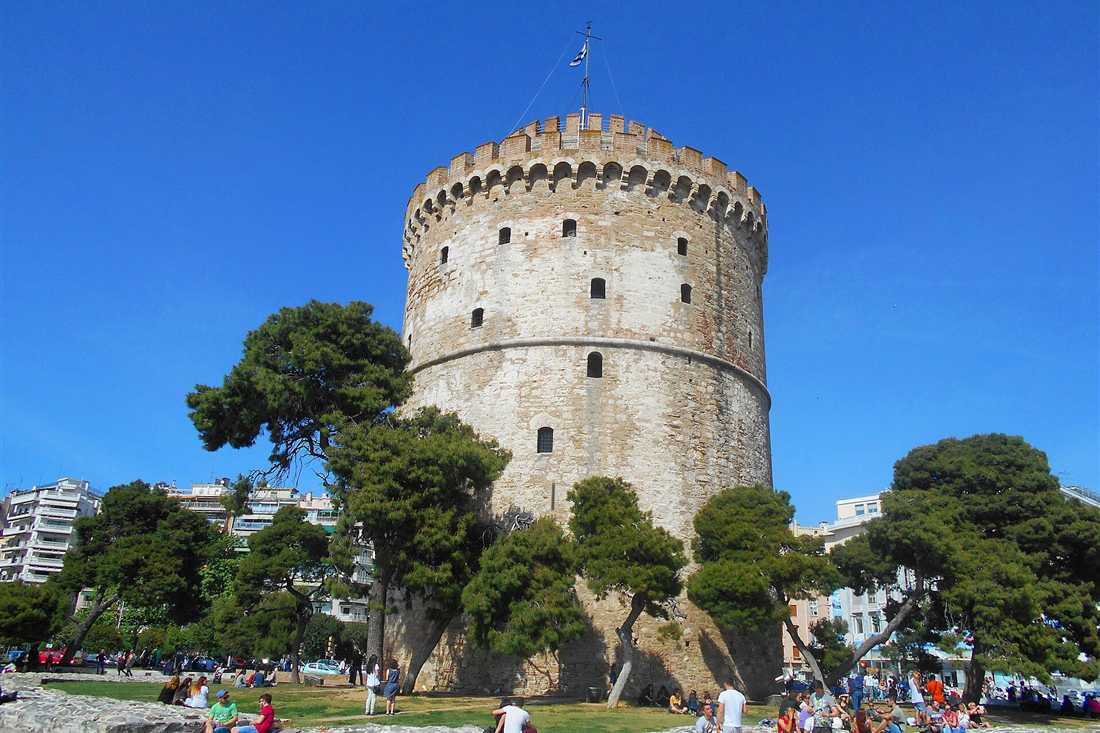
The White Tower is the city’s symbol, a 34-metre Ottoman fortification of the fifteenth century on the site of a Byzantine wall, and it is where most tours start. Every thessaloniki e-bike tour is planned around it before the group sets off.
The Rotunda was built around 306 AD as part of the palace complex of the emperor Galerius, and it has served as a mausoleum, a church and a mosque. The thessaloniki e-bike tour timetable is built on it rather than on the clock.
The Roman Forum sits below Ano Poli with its restored odeon and the cryptoporticus beneath, excavated after a car park was dug in 1966. The thessaloniki e-bike tour route is set by it more than by distance.
Ano Poli is the upper town that survived the fire of 1917, with Ottoman timber houses, small Byzantine churches and the walls above it.
The new waterfront runs 3.5 kilometres east from the White Tower in a sequence of themed gardens, entirely flat and closed to traffic.
What does a thessaloniki e-bike tour cost?
From 45 to 70 euros for a two to three hour shared tour with the bike, helmet and guide, 75 to 110 euros for a longer version with food tastings, and 180 to 350 euros for a private departure for two to four.
The bike hire, the helmet and the insurance come with every rate, and the price bands turn on the hours and on whether food is included. A thessaloniki e-bike tour is sold on that, and the listing says so plainly.
Food versions stop for bougatsa, koulouri, a coffee and sometimes an ouzo, which adds 30 to 45 minutes and 20 to 40 euros. Guides brief it through the headset before a thessaloniki e-bike tour rolls out.
Self-guided e-bike hire runs 25 to 45 euros a day from the same operators, with a route map and no guide. Riders on a thessaloniki e-bike tour meet it within the first ten minutes.
Nothing else is charged. The monuments on the route are seen from outside, and the Rotunda ticket is separate at 4 euros.
How hard is the riding?
Easy on the flat and manageable on the climb, because the assist does the work. The route covers 10 to 15 kilometres with about 120 metres of ascent, and the guides set the pace to the slowest rider.
Pedal assist means the motor adds power as you pedal rather than replacing the pedalling, and the levels run from eco to turbo. This is what a thessaloniki e-bike tour delivers between the sea and the walls.
The climb to Ano Poli is the only real gradient and it lasts about ten minutes, on quiet residential streets rather than the main roads. It decides which thessaloniki e-bike tour format fits the party.
Anyone who can ride a bicycle can ride these, and the setup loop exists so the group finds out before it leaves the square. That is the thessaloniki e-bike tour difference against a walking circuit.
The descent is where the brakes matter, and the guides brief the group to keep speed down on the cobbled sections.
What is the traffic like?
Busy on the main avenues and quiet almost everywhere the tours go. The routes use the seafront promenade, the pedestrianised squares, the Ano Poli lanes and a short cycle lane, avoiding Egnatia and Tsimiski at peak hours.
Thessaloniki has limited dedicated cycling infrastructure, which is exactly why a guided route is worth more here than in a city built for bicycles. The thessaloniki e-bike tour fleet is prepared for it year round.
The seafront is car-free for its whole length and it carries the flat half of every itinerary. The thessaloniki e-bike tour price reflects it, hour by hour.
Ano Poli’s lanes are narrow, steep and lightly used, and the guides take them at walking pace. A thessaloniki e-bike tour carries the helmets and the water for it.
Helmets are supplied and worn, and high-visibility vests are added on the evening departures.
What is Ano Poli?
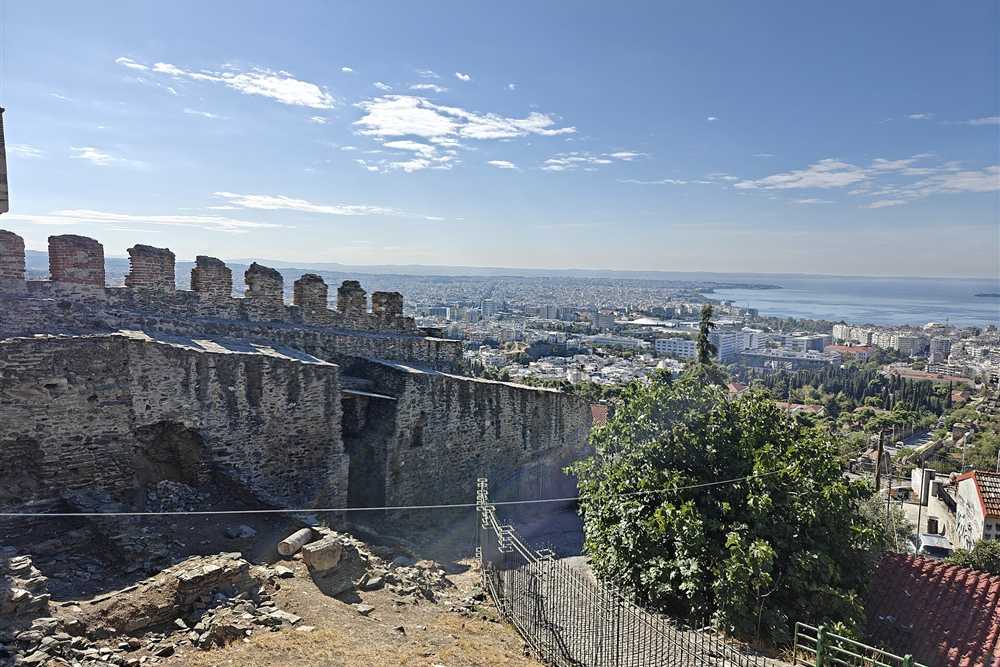
The upper town inside the Byzantine walls, the part of Thessaloniki that survived the great fire of 1917, with Ottoman houses, Byzantine churches, the Trigonion tower and the best view over the gulf to Mount Olympus.
The fire destroyed 32 percent of the city and left 70,000 people homeless, and the reconstruction below produced the grid and the squares of the modern centre. A thessaloniki e-bike tour starts with this settled at the meeting point.
The walls date from the late fourth century and run about four kilometres, with the Heptapyrgion fortress at the top used as a prison until 1989. A thessaloniki e-bike tour fills first on that count in July and August.
Osios David, Agios Nikolaos Orfanos and the Vlatadon monastery hold frescoes and mosaics from the fifth to the fourteenth centuries. The thessaloniki e-bike tour season turns on this more than on the calendar.
The Trigonion tower is the viewpoint, and on a clear day Mount Olympus stands across the gulf at 2,918 metres.
Riding down from here is the part of the tour people remember, through the lanes with the sea ahead.
How long does the tour take and when does it run?
Two to three and a half hours, with departures at 10:00, 14:00 and 17:30 or 18:00 in summer. Tours run year round, with the evening slot dropped from November to March.
The sunset departure is the one that fills first, finishing on the waterfront as the light goes over the gulf. The thessaloniki e-bike tour timetable is built on it rather than on the clock.
Thessaloniki runs 32 to 36 degrees in July and August, and the morning and evening blocks exist for that reason. The thessaloniki e-bike tour route is set by it more than by distance.
Winter riding continues at 8 to 14 degrees and the city is at its quietest, which suits photographers. A thessaloniki e-bike tour operator states this at booking and puts it on the voucher.
Rain cancels and the operators reschedule or refund, since wet cobbles on the Ano Poli descent are the one condition they will not ride.
What do you wear and bring?
Closed flat shoes, trousers or shorts that allow pedalling, the supplied helmet, sunglasses, sun cream and water. Skirts and sandals are refused, and a small bag goes in the basket rather than on your back.
Footwear is the rule that catches people out, and flip-flops slip off a pedal on a descent. Guides brief it through the headset before a thessaloniki e-bike tour rolls out.
Water is carried by the guide on the longer rides and there are fountains on the seafront. Riders on a thessaloniki e-bike tour meet it within the first ten minutes.
Anything loose on the back unbalances a rider on a cobbled lane, which is why the bikes carry a front basket. Every thessaloniki e-bike tour is planned around it before the group sets off.
An evening tour in spring or autumn wants a light layer, since the waterfront cools quickly after sunset.
Who does a thessaloniki e-bike tour suit?
First-time visitors who want the geography of the city in one go, travellers with two days, families with teenagers, cruise passengers on a short call, and anyone who wants Ano Poli without the climb.
The argument is coverage. Three hours on an e-bike takes in the Roman, Byzantine, Ottoman and modern city, which a walking tour cannot do in the same time. It decides which thessaloniki e-bike tour format fits the party.
Families with children over twelve ride the standard tours, and the operators carry smaller frames on request. That is the thessaloniki e-bike tour difference against a walking circuit.
Cruise passengers use it as a survey, since the port sits a ten-minute ride from the White Tower. A thessaloniki e-bike tour is sold on that, and the listing says so plainly.
It is the wrong product for anyone who wants to go inside the monuments, because the tour covers the outside of everything.
The walking version sits at Thessaloniki walking tour.
How do you book a thessaloniki e-bike tour?
Two to five days ahead from May to September and a day ahead outside it, stating the party size, ages and heights. Free cancellation to 24 hours is standard and the groups cap at eight to twelve riders.
Heights are asked because the frames come in two or three sizes, and a rider under 1.5 metres needs the small one reserved. The thessaloniki e-bike tour price reflects it, hour by hour.
Evening slots go first in July and August, and a booking made on the day gets the morning departure or nothing. A thessaloniki e-bike tour carries the helmets and the water for it.
Confirm whether the tour is guided or self-guided, since the price difference is largely the guide. This is what a thessaloniki e-bike tour delivers between the sea and the walls.
Meeting points are at the White Tower or Aristotelous Square, both central and easy to find on foot. The city’s food side sits at Thessaloniki food tour.
What is the White Tower and why does every tour start there?
A 34-metre cylindrical tower on the seafront, built around 1450 under Ottoman rule on the line of the Byzantine sea wall, used as a garrison and a prison, whitewashed in 1890 and now a museum of the city’s history over six floors.
It was called the Tower of Blood while it held the prison, and the whitewashing was a deliberate rebranding when the Ottoman period ended. A thessaloniki e-bike tour fills first on that count in July and August.
The museum inside runs a spiral ramp with a floor for each era, and the roof terrace gives the best view of the waterfront. The thessaloniki e-bike tour season turns on this more than on the calendar.
Entry is 6 euros and it takes an hour, which is why the tours meet outside it rather than going in. The thessaloniki e-bike tour fleet is prepared for it year round.
It stands where the sea wall met the eastern wall, so it marks the corner of the medieval city and the start of the modern seafront.
Every bus, every taxi driver and every map uses it as the reference point, which is the practical reason it is the meeting place.
What is the Rotunda?
A cylindrical brick building of about 306 AD, 24.5 metres across with walls 6 metres thick, built as part of the palace of Galerius, converted to a church in the late fourth century, used as a mosque from 1590, and now a monument with fourth-century mosaics.
It is one of the oldest buildings in the city still standing to full height, and the dome is original Roman brickwork. The thessaloniki e-bike tour route is set by it more than by distance.
The mosaics in the dome show martyrs against gold architectural fantasies, and they are among the earliest Christian mosaics anywhere. A thessaloniki e-bike tour operator states this at booking and puts it on the voucher.
The minaret beside it is the only one left standing in Thessaloniki, kept as a monument rather than in use. A thessaloniki e-bike tour starts with this settled at the meeting point.
Entry is 4 euros and it forms part of the UNESCO listing of the city’s Palaeochristian and Byzantine monuments, inscribed in 1988.
The e-bike tours stop outside it, since the interior needs a separate ticket and twenty minutes.
What is the Arch of Galerius?
A triumphal arch of about 299 AD raised for Galerius after his victory over the Persians, standing on the Via Egnatia with two of its original eight pillars, carved with reliefs of the campaign and the imperial family.
Locals call it Kamara and use it as the meeting point of the eastern half of the centre, in the way the White Tower serves the seafront. Riders on a thessaloniki e-bike tour meet it within the first ten minutes.
The reliefs run in four bands and show battle, submission, sacrifice and the tetrarchy, and they are the best-preserved Roman narrative sculpture in Greece. Every thessaloniki e-bike tour is planned around it before the group sets off.
The arch stood over the main road and connected the palace to the Rotunda in a single ceremonial axis. The thessaloniki e-bike tour timetable is built on it rather than on the clock.
Excavations behind it have exposed the palace complex itself, with an octagonal hall and mosaic floors.
The tours ride the pedestrian axis between the arch and the Rotunda, which is a two-minute link on a bike.
What is the Roman Forum?
The second-century administrative centre of the city, with a paved square, a double stoa, an odeon restored for summer performances, and a cryptoporticus of vaulted galleries beneath, found by accident during a car park excavation in 1966.
The site sits between Ano Poli and the modern centre and covers about two hectares, which is a large open space for a dense city. That is the thessaloniki e-bike tour difference against a walking circuit.
The odeon seats around 400 and hosts concerts in summer, which is unusual for a Roman structure of that size in Greece. A thessaloniki e-bike tour is sold on that, and the listing says so plainly.
The museum on the site is underground and holds the mosaics and sculpture from the excavation. Guides brief it through the headset before a thessaloniki e-bike tour rolls out.
The car park that produced it was never built, and the city gained a forum instead.
Entry to the open area is free, which suits a tour that stops rather than enters.
What is Aristotelous Square?
The city’s main square, designed by the French architect Ernest Hébrard in the 1917 reconstruction plan, opening from Egnatia to the sea in a broad axis with arcaded buildings on both sides.
Hébrard’s plan replaced the burnt Ottoman quarter with a European grid, and the square is the centrepiece that survived the compromises. A thessaloniki e-bike tour carries the helmets and the water for it.
The buildings carry deep arcades at street level, which is why the cafes work in both rain and August heat. This is what a thessaloniki e-bike tour delivers between the sea and the walls.
It opens directly onto the waterfront, so the sea is visible from the top of the square, which was the whole point of the design. It decides which thessaloniki e-bike tour format fits the party.
Political rallies, concerts and the Christmas tree all happen here, and it is the city’s living room.
The tours cross it rather than stop long, since it is flat and central and the cycling is easy.
What is the new waterfront?
A 3.5-kilometre redesigned promenade running east from the White Tower to the Concert Hall, opened in stages from 2006, built as a sequence of themed gardens with no cars and a continuous cycling surface.
The gardens run in order: the Garden of the Sand, of the Mediterranean, of the Afternoon Sun, of the Roses, of Sculptures, of Memory, of Music and of the Alexander statue. The thessaloniki e-bike tour season turns on this more than on the calendar.
The Umbrellas sculpture by George Zongolopoulos stands on the water’s edge and is the most photographed object on the front. The thessaloniki e-bike tour fleet is prepared for it year round.
The project won European architecture awards and it changed how the city uses its own seafront, which locals will tell you unprompted. The thessaloniki e-bike tour price reflects it, hour by hour.
It carries walkers, runners, cyclists and skaters at all hours, and it is busiest between 18:00 and 22:00.
Every e-bike tour uses it, because it is flat, safe and gives the length of the city in one stretch.
What do you see from Ano Poli?
The Trigonion tower, the Heptapyrgion fortress, the Vlatadon monastery, Osios David with its fifth-century mosaic, Ottoman timber houses, and a view across the gulf to Mount Olympus on a clear day.
Osios David holds a mosaic of the Vision of Ezekiel from about 500 AD, hidden under plaster through the Ottoman centuries and uncovered in 1921. A thessaloniki e-bike tour operator states this at booking and puts it on the voucher.
The Vlatadon monastery has been in continuous operation since the fourteenth century and keeps peacocks in its garden. A thessaloniki e-bike tour starts with this settled at the meeting point.
Heptapyrgion, the seven-towered fortress at the summit, served as the city prison from 1890 until 1989 and is now partly open. A thessaloniki e-bike tour fills first on that count in July and August.
The Ottoman houses here are timber-framed with projecting upper floors, a type the fire below destroyed entirely.
The descent from the Trigonion runs down through the lanes with the gulf ahead, which is the ride people remember.
What food stops do the tours make?
Bougatsa in the morning, koulouri from a street cart, a freddo espresso, trigona panoramatos in Ano Poli, and on the food versions a stop for souvlaki or a small meze with tsipouro.
Bougatsa is the city’s signature breakfast, filo with semolina cream or minced meat, and Thessaloniki argues with Serres about who makes it best. Every thessaloniki e-bike tour is planned around it before the group sets off.
Trigona panoramatos are cream-filled filo triangles invented in the Panorama suburb in the 1960s, and they are sold across Ano Poli. The thessaloniki e-bike tour timetable is built on it rather than on the clock.
The freddo espresso is not a tourist affectation here. Thessaloniki drinks more coffee per head than almost any city in Europe. The thessaloniki e-bike tour route is set by it more than by distance.
Tsipouro with meze rather than beer is the local evening order, and the tours that include it stop in the Ladadika or Modiano district.
The full food itinerary is a separate product, and the e-bike versions sample rather than cover it.
How does an e-bike compare with walking or the hop-on bus?
An e-bike covers 10 to 15 km including Ano Poli in three hours. A walking tour covers 3 to 4 km and goes inside monuments. The hop-on bus covers the route in 50 minutes with no stops on the upper town lanes.
The bus cannot enter Ano Poli’s lanes, which is the part of the city the e-bike exists to reach. A thessaloniki e-bike tour is sold on that, and the listing says so plainly.
The walking tour is the better buy for anyone who wants the Rotunda, the crypt of Agios Dimitrios and the museums from the inside. Guides brief it through the headset before a thessaloniki e-bike tour rolls out.
The e-bike wins on geography. Three hours gives the shape of the city from the sea to the walls, which nothing else does in that time.
Parties take the bike on day one and the walk on day two, which is the sequence the guides recommend.
The walking version sits at Thessaloniki walking tour.
Can you hire an e-bike without a guide?
Yes. Self-guided hire runs 25 to 45 euros a day from the tour operators and from two or three city shops, with a helmet, a lock, a map and a suggested route, and a deposit held on a card.
The waterfront is straightforward alone. Ano Poli is where a guide earns the difference, because the lane network is confusing and the gradients are uneven. This is what a thessaloniki e-bike tour delivers between the sea and the walls.
Battery range is 60 to 80 kilometres, which covers a full day of city riding with the assist on. It decides which thessaloniki e-bike tour format fits the party.
Locks matter. Bicycle theft is a real problem in the centre and the shops brief on where to leave a bike and where not to.
A one-way hire to the airport or the eastern suburbs is not offered, so the bike comes back to the shop.
The city has a bike-share scheme as well, though the machines are conventional rather than electric.
When is the best time of year to ride?
April to June and September to October. Spring gives 18 to 25 degrees and the city in flower, autumn gives warm evenings and the festival season, and July and August run 32 to 36 degrees with the humidity of the gulf.
Thessaloniki is more humid than Athens because of the bay, and a summer afternoon feels hotter than the number suggests. The thessaloniki e-bike tour fleet is prepared for it year round.
Winter riding is comfortable at 8 to 14 degrees, and the operators run a reduced timetable from November to March. The thessaloniki e-bike tour price reflects it, hour by hour.
The Thessaloniki International Film Festival in November and the Dimitria festival in October fill the city and the seafront.
Rain comes in short bands and the tours reschedule rather than ride the Ano Poli cobbles wet.
The vardaris, the cold north-west wind off the Axios valley, blows in winter and makes the seafront stretch harder work than it looks.
Frequently Asked Questions
What does a Thessaloniki e-bike tour cost?
From 45 to 70 euros for a two to three hour shared tour with the bike, helmet and guide, 75 to 110 euros for a version with food tastings, and 180 to 350 euros for a private departure for two to four.
How hard is the riding?
Easy. The route covers 10 to 15 kilometres with about 120 metres of ascent, and the pedal assist does the work on the climb to Ano Poli. Anyone who can ride a bicycle can ride these.
Does the tour reach Ano Poli?
Yes, and that is the point of the electric motor. The upper town inside the Byzantine walls sits 120 metres above the sea, and the hop-on bus cannot enter its lanes at all.