
Crete transfers are pre-booked road journeys from the island’s three airports and five ports to a hotel, villa or town address, driven for a fixed fare by a driver who meets the flight or the ferry with a name board. Plan the rest of the island with Greece Tours.
This guide covers the whole picture: which airports and ports run them, what a private car and a shared seat cost on every corridor, what the fare includes, how the ferry and cruise pickups work, what the intercity runs cost against the KTEL coach, child seats and kit, and how far ahead to book.
What are Crete transfers and how do they work?
Crete transfers are pre-booked road journeys between an arrival point and an address on the island: a driver waits at the terminal or quay with a name board, loads the luggage, and drives straight to the door for a fixed fare agreed at booking.
Crete transfers are booked with a flight number rather than a street corner. The booking carries a flight number or a ship name. The operator tracks the arrival, and the driver stands in the hall once the aircraft is on the stand or the ramp is down. Payment is settled at booking or in the car, and the fare covers the whole vehicle rather than each seat on the private product. Three airports and five ports set the shape of Crete transfers.
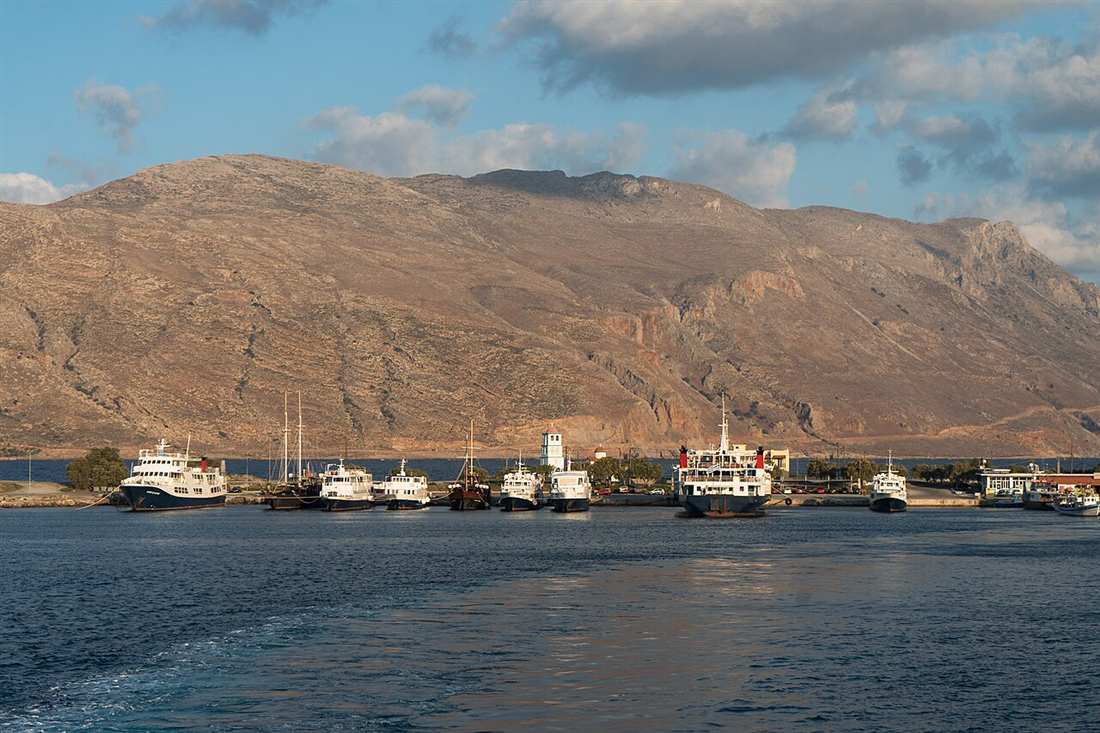
Souda quay is where the western Crete transfers begin at first light. The island runs this trade at scale because its three airports sit far from the resorts that fill them. Heraklion feeds the north coast from Hersonissos to Elounda, Chania feeds the west from Platanias to Kissamos, and Sitia serves the far east. A road journey follows every landing, and the whole business exists to make that journey fixed, priced and driven by someone who knows the route.
Which airports and ports do Crete transfers serve?
Three airports and five working ports. Heraklion, Chania and Sitia on the air side; Heraklion port, Souda near Chania, Rethymno, Kissamos and Agios Nikolaos on the water side, each with its own set of Crete transfers to the towns and resorts inland.
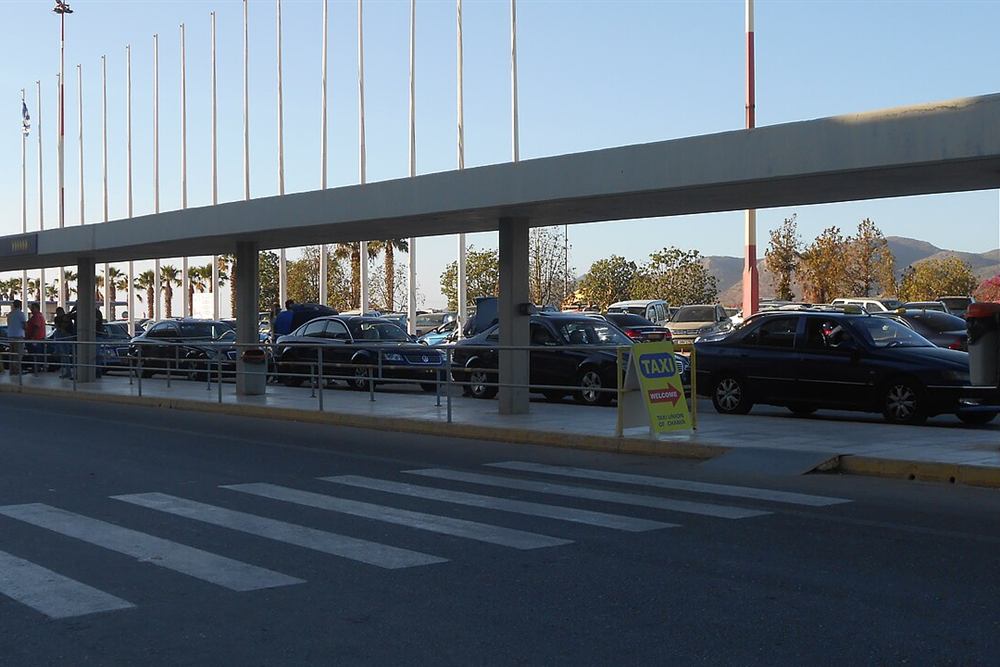
Three airports and five ports set the shape of Crete transfers. Heraklion Nikos Kazantzakis sits 5 km east of the city and handles the largest share of arrivals. Chania Ioannis Daskalogiannis sits on the Akrotiri peninsula, 14 km from Chania town. Sitia airport sits on the eastern edge of the island beside Sitia itself, minutes from the harbour. Each airport has its own arrival hall meeting point, and each has a taxi rank alongside. Heraklion feeds the north coast that most Crete transfers serve.
Heraklion port puts the ferry arrivals into Crete transfers at dawn. The ports change the picture. Heraklion port takes the overnight ferries from Piraeus and the cruise ships that call for Knossos. Souda, 7 km east of Chania, takes the Piraeus boats for the west. Rethymno port sits inside the town. Kissamos in the far west runs the Balos and Gramvousa boats and the Kythira line. Agios Nikolaos takes the eastern Dodecanese route. Full detail on the airport side sits in Heraklion airport transfers and Chania airport transfers.
How much do Crete transfers cost across the island?
A private car runs from about 25 to 35 euros for a short hop such as Heraklion airport to the city, 35 to 55 euros to Hersonissos, 85 to 135 euros to Agios Nikolaos or Elounda, and 160 to 220 euros for the long west run to Chania.
Heraklion feeds the north coast that most Crete transfers serve. Distance sets the number. From Heraklion airport the road reaches Hersonissos in 25 km, Agios Nikolaos in 65 km, Elounda in 75 km, Rethymno in 80 km and Chania in 145 km. From Chania airport the road reaches Chania town in 14 km, Platanias in 25 km, Georgioupoli in 45 km and Rethymno in 70 km. The fare climbs with each of those steps. Chania airport sends Crete transfers west to Platanias and Kissamos.
Cruise callers use Crete transfers to reach Knossos and return in time. Shared seats undercut the private car on the busy corridors. A seat on a shared shuttle between Heraklion airport and Rethymno runs from about 15 to 35 euros per person, which beats the private fare for two travellers and loses to it for four. Minibuses for six to eight passengers run from about 60 euros on the short routes and from about 200 euros on the Heraklion-to-Chania run.
What is included in a private Crete transfer?
The whole vehicle, the driver, the meeting service inside the terminal, all luggage, tolls and parking, plus child seats on request. The quoted fare is the fare paid, with no meter running and no surcharge for a late-night landing on the fixed-price products.
Chania airport sends Crete transfers west to Platanias and Kissamos. The vehicle is matched to the party at booking. A saloon takes three passengers and three cases. An estate takes four with room for a pushchair. A minivan takes six to eight with the luggage stacked behind the last row. Larger groups take a minibus, and the operator states the seat count before the money is taken. Sitia handles the eastern end of the Crete transfers map.
The old national road carries the intercity Crete transfers. Drivers hold professional plates and speak working English. The private product is the one to hold when a family lands after midnight, when the party carries golf clubs or diving kit, or when the address is a villa down an unsigned track above Almyrida or Vamos. The driver finds the door; a hire car at that hour does not.
How do shared shuttle Crete transfers differ from private ones?
A shared shuttle sells one seat at a time and fills a minibus before it leaves, so the price per head drops and the waiting time rises. It runs the main resort corridors on a timetable pinned to flight banks rather than to a single booking.
Sitia handles the eastern end of the Crete transfers map. The wait after landing runs from twenty minutes to an hour while the vehicle fills. The run then calls at hotels in sequence, so the last address on the list reaches its door well after the first. Two travellers heading to a mainstream resort save real money; four travellers heading to a villa do not. A private car is the core product among Crete transfers.
KTEL coaches are the cheap alternative to booked Crete transfers. The shared product works the corridors with volume: Heraklion airport to Hersonissos, Stalis and Malia; Heraklion airport to Rethymno; Chania airport to Platanias, Georgioupoli and Rethymno. Off those lines it thins out and the private car takes over.
How do Crete transfers work from the ferry ports?
The Piraeus boats dock at Heraklion port at dawn and at Souda near Chania at first light. A pre-booked driver waits at the vehicle ramp or the passenger gate, which matters at six in the morning when the taxi rank empties in minutes.
A private car is the core product among Crete transfers. Heraklion port sits a fifteen-minute walk from the city centre and 5 km from the airport, so a booked car reaches a Hersonissos hotel inside half an hour. Souda sits 7 km from Chania town and 20 km from Platanias, and the fare from the quay runs from about 25 to 35 euros into Chania. Rethymno port sits inside the town itself, which puts most hotels within a five-euro hop. Shared seats undercut the private car on the busiest Crete transfers.
August charter banks are the reason Crete transfers are booked early. Kissamos is the outlier. The port sits 42 km west of Chania and serves the Balos and Gramvousa boats, so the transfer market there runs the other way \u2014 a morning run out from the resorts and an afternoon run back. Georgioupolis to Kissamos port is a booked coach seat rather than a private car for most travellers.
How do cruise passengers arrange Crete transfers?
Ships calling at Heraklion tie up 1.5 km from the city walls, and the Knossos site sits 6 km inland. A booked car at the quay covers the round trip and holds the return time against the all-aboard call, which a rank taxi does not guarantee.
Shared seats undercut the private car on the busiest Crete transfers. The call is short \u2014 six to nine hours alongside \u2014 and the queue at the rank absorbs the first hour of it. A driver holding a board at the gate turns the day into the palace, the archaeological museum and a lunch in the old town rather than a wait on the apron. Ships calling at Souda face the same arithmetic with Chania old town and the Venetian harbour at the other end. Distance sets the fare on every one of the Crete transfers.
A tracked flight means a late landing costs nothing on Crete transfers. The one rule that matters is the return buffer. Ninety minutes between the last stop and the all-aboard time absorbs a slow road and a busy gate, and the driver builds that in when the ship name is on the booking.
What do Crete transfers between the towns cost?
Heraklion to Rethymno covers 80 km in about an hour and ten minutes for 90 to 130 euros by private car. Rethymno to Chania covers 60 km in fifty minutes for 80 to 110 euros. Heraklion to Chania covers 145 km in two hours for 160 to 220 euros.
Distance sets the fare on every one of the Crete transfers. The old national road along the north coast carries all three runs. It is a fast two-lane highway with long straight sections between Malia and Rethymno, and it slows through the Kalyves and Georgioupoli junctions. Traffic thickens around Heraklion at the start and end of the working day, and the driver builds that into the quoted time. Tolls, parking and luggage sit inside the price quoted for Crete transfers.
Villas down unsigned tracks are the strongest case for Crete transfers. The south coast is a different road and a different fare. Heraklion to Matala covers 70 km through Agioi Deka and takes an hour and a half. Rethymno to Plakias climbs the Kourtaliotiko gorge in 40 km and takes an hour. Chania to Paleochora runs 77 km over the mountains in an hour and forty minutes. The kilometre count understates every one of them, which is why a booked fare beats a meter here. The road detail sits in driving in Crete.
How do the KTEL buses compare with booked Crete transfers?
The KTEL coach network links the north-coast towns hourly for a fraction of the fare \u2014 Heraklion to Rethymno for about 9 euros, Heraklion to Chania for about 16 \u2014 and stops at the bus station rather than the hotel door.
Tolls, parking and luggage sit inside the price quoted for Crete transfers. The trade-off is the last mile and the luggage. A coach reaches Rethymno bus station in ninety minutes; a taxi from that station to a hotel in the old town adds a fare and a wait. Two travellers with cabin bags win on the coach. A family of four with cases and a pushchair loses. Child seats ride with the Crete transfers booked for a family.
Golf clubs, bicycles and dive gear set the vehicle class for Crete transfers. The airport link is the sharper case. Bus 1 runs from Heraklion airport into the city for about 1.50 euros and takes fifteen minutes to the bus station, from where the KTEL coaches leave for the whole north coast. That chain works for a traveller with time and a light bag, and it collapses on a late arrival when the last coach has gone.
What do families and travellers with kit need to book?
Child seats, a booster, space for a pushchair and a vehicle that takes four cases at once. Every one of those is a booking field rather than a request made at the kerb, and the seat is fitted before the driver leaves the depot.
Child seats ride with the Crete transfers booked for a family. Greek rule puts a child under 135 cm in an appropriate restraint. Operators carry infant carriers, group-one seats and boosters, and they fit them free on the private product. The field is filled at booking because a driver cannot conjure a seat in an arrivals hall.
Cancellation inside twenty-four hours returns the deposit on Crete transfers. Sports kit changes the vehicle class. Golf bags, dive gear, bicycles and surfboards each need a van rather than a saloon, and the booking states the item count. A party arriving for a walking week in the Samaria area with four rucksacks and poles fits an estate; the same party with bikes does not.
When do you book, and what happens if the flight is late?
Book two to four weeks ahead for July and August and a few days ahead outside those months. A tracked flight number means a delayed landing costs nothing: the driver waits, and the waiting time is included on the fixed-price products.
The name board in the arrivals hall marks where Crete transfers start. August is the pinch. Charter banks land within the same ninety minutes at Heraklion and Chania, the rank empties, and the unbooked traveller waits. A booking made in spring for an August landing holds the fare and the vehicle class against that rush.
South-coast Crete transfers take longer than their kilometre count suggests. Cancellation terms run to twenty-four hours free on most operators, and the deposit returns in full inside that window. A changed flight number is a message rather than a rebooking. The east of the island runs the same system on a smaller scale, covered in Sitia airport transfers, and the island overview sits at Crete.
Frequently Asked Questions
How much do Crete transfers cost from Heraklion airport?
From about 25 to 35 euros by private car into Heraklion city, 35 to 55 euros to Hersonissos, 90 to 130 euros to Rethymno, and 160 to 220 euros to Chania. A shared seat runs from about 15 to 35 euros per person.
Do Crete transfers wait for a delayed flight?
Yes. The booking carries the flight number, the operator tracks the landing, and the driver meets the aircraft whenever it arrives. Waiting time is included on the fixed-price private products.
Are child seats included in Crete transfers?
Yes, on the private product, fitted free when the age and height are stated at booking. Greek rule puts a child under 135 centimetres in an appropriate restraint, and operators carry infant carriers, group-one seats and boosters.