
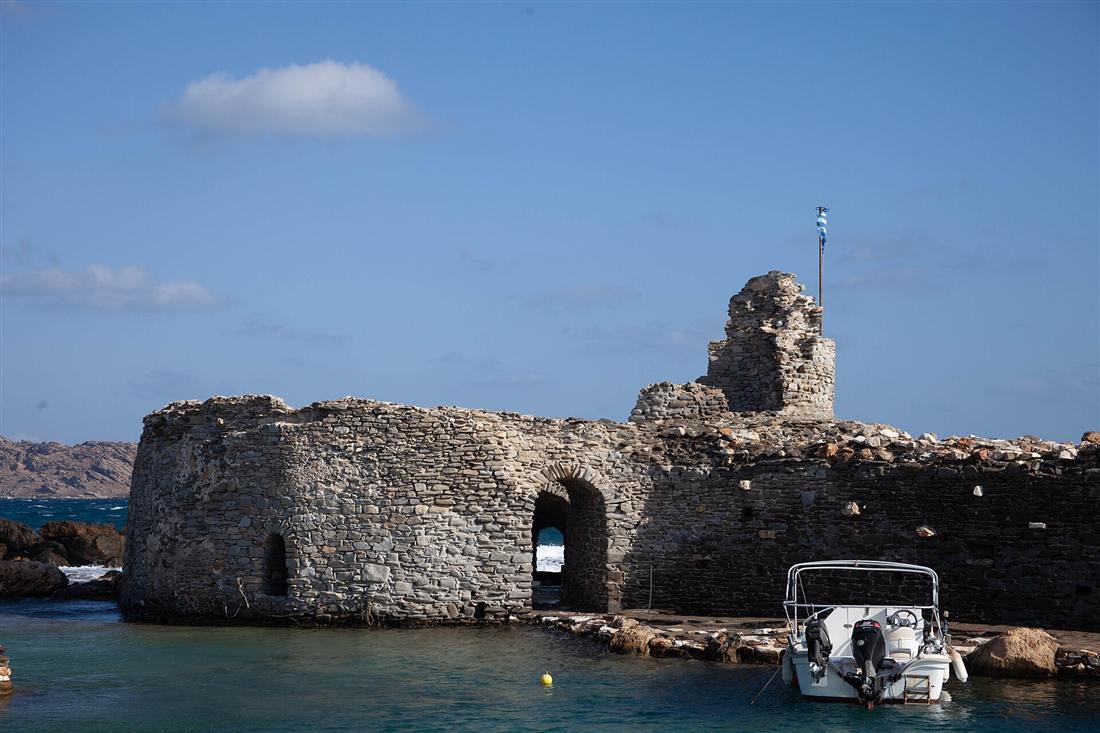
Paros snorkeling runs as a guided boat cruise out of Naoussa and Parikia to the granite bays of Kolymbithres and Monastiri and the sea caves off the headland, and as a free shore entry at the rocky points between the sandy beaches. Plan the whole trip with Greece Tours.
This guide covers Paros snorkeling in full: the boat cruises from each harbour, the crossing to Antiparos, the best spots on the north, south and east coasts, the sea caves, what you see underwater, the season and the visibility, the equipment, what it costs, safety for families, and how to book.
What is Paros snorkeling and what does a guided boat trip include?
Paros snorkeling means swimming the surface with a mask, snorkel and fins along the island’s coves and bays; a guided boat trip adds a captain, crew, snorkel gear, life jackets and two to four sheltered swim stops in one outing.
Paros snorkeling is booked ahead for a fixed, agreed price per person. A three-hour route runs from Naoussa marina on the north coast or from Parikia on the west, with the captain setting stop order from the wind and swell on the day. A full-day version crosses to a second island and adds lunch at anchor.
Paros snorkeling includes the snacks and drinks on the cruises that carry them. Gear is loaded before departure: masks, snorkels and fins sized on the dock by shoe size, life jackets under every bench, and pool noodles for anyone who wants flotation without a full vest. The crew checks each mask seal at the first stop.
Booking Paros snorkeling ahead secures the date and the place on the boat. Snacks, fruit and cold water sit in a cooler at the stern, refilled at the midpoint on longer trips, and a canvas awning gives shade between stops. A boarding ladder at the stern lets swimmers climb back aboard, with the crew standing ready at every stop.
None of this replaces supervision. Every crew treats Paros snorkeling as a guided activity from first stop to last, calling swimmers back before the anchor lifts and keeping count of heads.
Do you need experience to go Paros snorkeling?
No experience is needed: crews fit every mask and fin on the dock, hand out noodles and vests on request, run a short safety briefing before the first stop, and keep weak swimmers within arm’s reach of the guide in the water.
For a first time in the water, Paros snorkeling starts with the mask fit and the briefing. The briefing covers three things: clearing the snorkel tube with a sharp exhale, signaling the boat if a strap slips, and where the swim boundary sits at that stop. It runs in under five minutes, before anyone is handed gear.
The wind-carved granite at Kolymbithres is a set piece of Paros snorkeling. Fin sizing matters more than it seems. A loose fin rubs a blister within minutes; a tight one cramps the arch of the foot. Crews carry a spread of sizes and swap a pair on request, the same for a leaking mask.
Paros snorkeling ends with the run back to the marina and the gear handed in. A guide swims alongside anyone who asks, keeping pace at the surface rather than leading a fast lap. Children and nervous adults get a noodle under each arm, holding the body flat without a full vest.
A guest tells the crew at booking or at the dock that swimming is not strong, and the boat adjusts the stop and supervision. This is why Paros snorkeling suits families and mixed groups, not only confident swimmers.
What Paros snorkeling boat trips run from Naoussa?
From Naoussa marina on the north coast, a wooden boat runs a three-hour Paros snorkeling cruise around the bay, calling at Kolymbithres, Monastiri, Lageri, Tourkou Ammos and the islet of Agia Kali, with snorkel gear and snacks carried aboard.
The choice of Paros snorkeling comes down to the boat, the route and the stops. The wooden caiques on this route sit low to the water under a canvas awning, and departures cluster in the morning, when the bay inside Naoussa is flat before any afternoon breeze builds. The format stays inside the sheltered bay rather than the open coast.
Every Paros snorkeling cruise starts with the safety briefing on board. Kolymbithres is the first or second stop, chosen for wind-carved granite boulders that shelter narrow sandy channels; the rock underwater continues the same shapes seen above the surface at a shallow, comfortable depth. Monastiri, a short run along the coast, adds a rockier shoreline and a small chapel.
The crew on Paros snorkeling hand out masks, fins and noodles at each stop. Lageri and Tourkou Ammos sit further round the headland, quieter than the beaches close to town and used as a mid-route stop where the crew serves fruit and water. Agia Kali, the small islet off this stretch, closes the loop, clear water on its sheltered side.
Every stop on this route sits inside the same bay, which is why crews list Naoussa first when a guest books through Paros boat tours for a first outing: the water stays calmer here than on the open west coast on a breezy day.
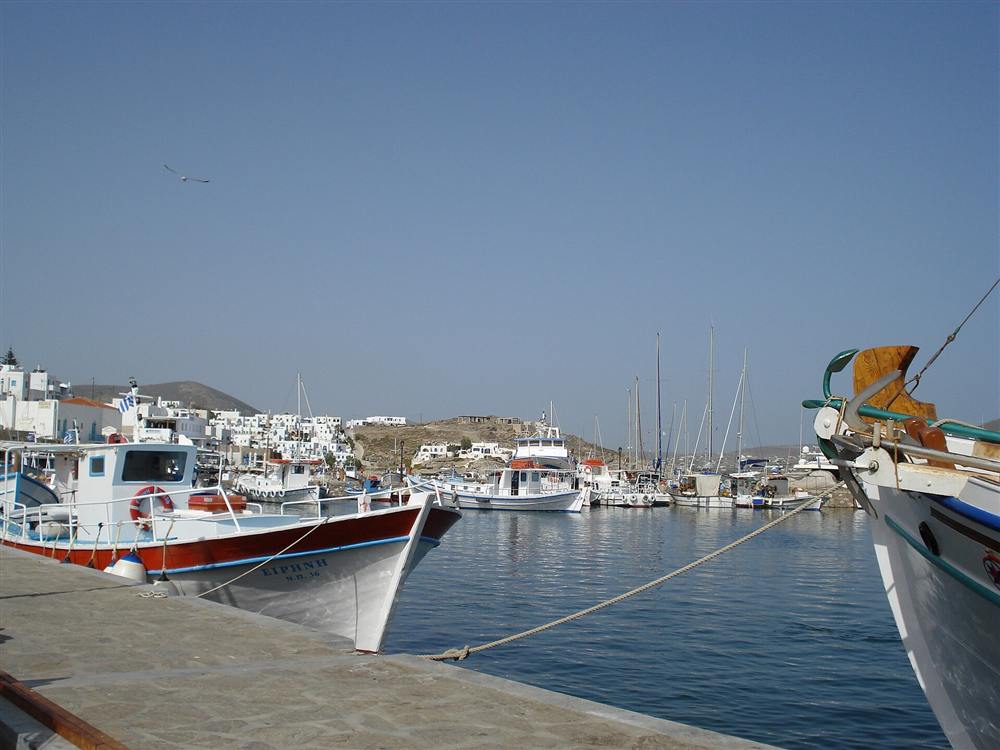
What Paros snorkeling boat trips run from Parikia?
From Parikia on the west coast, a bay cruise for Paros snorkeling calls at Agios Fokas, Agios Spyridonas, the sea caves along the headland, Martsello and Krios beach, with a sunset-timed departure added in the warmer months.
A private charter keeps Paros snorkeling to one group for the cruise. Parikia sits on a broad, open bay rather than the tucked-in shelter of Naoussa, so boats here stay close along the headland where the coastline breaks the swell. Agios Fokas, a chapel-marked point south of the port, is a common first stop, rock dropping quickly into clearer water.
Paros snorkeling carries flotation aids for every guest on the boat. Agios Spyridonas continues the same rocky coast, and the sea caves along this headland are folded into most routes as a slow pass, the boat idling close to the rock so passengers look into the shallow caverns. Martsello, a beach on the same stretch, serves as a longer anchor.
Paros snorkeling passes seagrass meadows, granite boulders and sand channels. Krios, reached by a short crossing, is one of the larger beaches on this side of the island and works as either a final stop or the sole destination on a shorter half-day trip, a shaded break from rock coves.
A sunset departure runs the same stops in reverse light, timed so the boat is on open water for the last hour, and this format sells out first in midsummer because it doubles as an evening cruise rather than only a swim trip.
What Paros snorkeling trips cross to Antiparos?
A full-day boat tour crosses to Antiparos for Paros snorkeling that includes lunch and drinks aboard, a stop at the blue lagoon, a pass along the islet of Despotiko, and a run along the cave coast before the return crossing.
The morning departure for Paros snorkeling fills first in high season. The short ferry crossing from Pounta, on the mainland side of Paros, to Antiparos town takes only minutes by car ferry, and boats running the full-day circuit either depart from this point or pick up passengers from Parikia as part of the route.
The set price on Paros snorkeling covers the boat, the crew and the gear. The blue lagoon is the headline stop on this route: a narrow, current-free inlet with pale sand underwater lifting the color of the shallows toward turquoise, shallow enough for a non-swimmer to stand in. Boats anchor here for the longest stop of the day.
For stronger swimmers, Paros snorkeling opens the deeper water off the points. Despotiko, the uninhabited islet off Antiparos, is passed or briefly landed on depending on the operator, valued for a rocky, undeveloped shoreline and an archaeological site visible on certain routes. The cave coast further south adds low cliffs and shallow caverns worked in as a slow pass close to shore.
Lunch and drinks are served at anchor, timed close to the blue lagoon stop, and the return crossing closes a route that runs longer than either bay cruise and covers open water between two islands rather than a single coastline.
Where are the best Paros snorkeling spots on the north coast?
The north coast holds the strongest cluster of Paros snorkeling spots: the wind-carved granite of Kolymbithres, the sheltered rock at Monastiri, the reef fringing Santa Maria, the quieter cove at Lageri, the harbor edge at Ambelas, and the calm water inside Naoussa bay itself.
Families take Paros snorkeling for the sheltered bays and the buoyancy aids. Kolymbithres is the name most tied to this coast, and the reputation holds underwater: the same wind and sea action that carved the granite boulders above the surface continues below it, cutting shallow channels and low arches a swimmer passes through at a comfortable depth.
Planning Paros snorkeling ahead beats the scramble for a summer date. Santa Maria, on the eastern side of the same headland, adds a reef running out from the beach rather than isolated boulders, with sand and rock drawing a wider spread of small fish than the exposed points nearby. Lageri and Ambelas offer calmer, shallower water for a slower swim.
The mask and the fins are fitted before Paros snorkeling begins. Inside Naoussa bay, the water stays flat on all but the windiest days, protected by the headlands on either side of the harbor mouth, so boats based here run a full three-hour route even when the open west coast is choppy.
Taken together, this stretch of coast is the reason first-time visitors plan their Paros snorkeling around Naoussa rather than any other base on the island.
Where are the best Paros snorkeling spots in the south and east?
The south and east coast add a different set of spots: the reef and rock points at Aliki, the shallow cove at Faragas, the harbor edges at Piso Livadi and Molos, and the long sandy run of Golden Beach and Tserdakia, broken by rocky points between the bays.
Paros snorkeling runs from Naoussa marina and from the harbour at Parikia. Aliki, near the island’s small airport, pairs a working fishing harbor with a rocky point that drops into clear water beyond the moored boats, a contrast between shallow sand and deeper rock that keeps locals returning outside the main routes among the island’s Paros beaches.
Paros snorkeling is booked ahead for a fixed, agreed price per person. Faragas, a cove backed by tamarisk trees a short drive from Aliki, sits more sheltered than the open beaches nearby, with a shallow sandy entry that turns to rock along both sides, suited to a slower swim close to shore.
Paros snorkeling includes the snacks and drinks on the cruises that carry them. Piso Livadi and Molos, near the smaller east-coast harbors, offer rockier entries than the wide sand beaches further south, with clearer water close to the harbor walls outside summer. Golden Beach and Tserdakia run as a long stretch favored for windsurfing, rocky points at either end holding better visibility.
None of these spots carry boat trips as consistently as the north coast, so visitors reach them by car or scooter, keeping the water quieter outside peak weeks.
What are the sea caves at Parikia like?
The sea caves along the Parikia headland are shallow, sunlit caverns cut into the rock at the base of the cliff, entered on calm days at a depth that stays swimmable throughout, with the boat holding position at the entrance rather than anchoring inside.
The price of Paros snorkeling covers the boat, the crew and the equipment. The caves sit at water level rather than deep inside the cliff face, so light reaches most of the interior even without a torch, catching the pale rock as the swell moves through each opening. Nothing here requires ducking below the surface.
For a first time in the water, Paros snorkeling starts with the mask fit and the briefing. Depth at the cave mouths stays shallow enough for a swimmer to see the bottom clearly, and the rock walls narrow gradually rather than closing into a dark passage. Crews skip the caves when the wind is up.
The wind-carved granite at Kolymbithres is a set piece of Paros snorkeling. Boats do not anchor inside the caves themselves. The captain holds the vessel just outside the entrance, engine idling, while swimmers make the short approach and return in small groups, keeping the narrow opening clear.
The caves work best as one stop within a longer Parikia route rather than a destination on their own, since the swim time inside each one runs only minutes before the group moves back out to the next anchorage.
What do you see when Paros snorkeling?
Paros snorkeling turns up dense beds of Posidonia seagrass, schools of salema and damselfish, wrasse and sea bream over the sand, octopus and moray eels tucked into rock crevices, and sea urchins and starfish scattered across the granite boulders and sand channels.
Paros snorkeling runs as a three-hour cruise or a full-day crossing. Posidonia seagrass meadows are the backbone of the shallow water around most bays, rooted in sandy patches between rock outcrops, and they carry more life than bare sand: small crustaceans and juvenile fish shelter among the blades, taking a moment of stillness to spot.
The choice of Paros snorkeling comes down to the boat, the route and the stops. Salema and damselfish are the fish a swimmer notices first, moving in loose schools close to the rock and close enough to the surface to see without diving. Wrasse, in a spread of colors, and sea bream over the sand round out a single swim.
Every Paros snorkeling cruise starts with the safety briefing on board. Octopus and moray eels are the harder sightings, tucked into rock crevices rather than open water, easiest to find by a den mouth ringed with shell fragments. Sea urchins cluster on shaded rock, and a bare foot against one is the most common injury on any trip.
Starfish sit more openly on sand and low rock, and the granite boulders, cut through with sand channels where the current has scoured a path, give the underwater landscape its shape.
How clear is the water for Paros snorkeling?
Visibility for Paros snorkeling is clearest in early morning and on calm days, and drops when the meltemi wind stirs sediment along the exposed north coast, with a rocky granite point holding clearer water on a breezy day than a shallow sandy bay nearby.
The stops on Paros snorkeling reach the bays and caves no road serves. Across the season, visibility on sheltered bays lets a swimmer see the bottom clearly at depths past arm’s reach, holding true on most mornings before wind has built through the day. Captains schedule the first stop of any route in that early window.
A private charter keeps Paros snorkeling to one group for the cruise. The meltemi, the seasonal north wind that builds through summer, stirs loose sand along shallow beaches on the exposed north coast and cuts visibility on its strongest days, while the same wind barely touches a sheltered south-facing cove. A captain reading the forecast picks the stop to match.
Paros snorkeling carries flotation aids for every guest on the boat. Granite points hold clarity better than sandy bays in a breeze because there is less loose sediment to stir; a hard rocky bottom stays visible when a nearby beach has turned cloudy from wave action. Kolymbithres and Monastiri keep working through windier weeks for this reason.
When is the best season for Paros snorkeling?
May through October gives comfortable water for Paros snorkeling, with the warmest, calmest swimming in June and September, water temperature climbing through midsummer, a wetsuit worth wearing in the shoulder months, and the meltemi in July and August favoring the sheltered south coast over the open north.
Booking Paros snorkeling ahead secures the date and the place on the boat. Water temperature in May and early June sits on the cool side, comfortable for a short swim but cold enough after twenty minutes that a shorty wetsuit adds real comfort. By July the sea has warmed through, and August holds the warmest water, letting a swimmer stay in for an hour without a wetsuit.
The morning departure for Paros snorkeling fills first in high season. September carries summer warmth forward while the wind eases from its peak, one of the most comfortable stretches for a boat trip, and October still holds swimmable water on a calm day as fewer boats keep a full daily schedule.
The set price on Paros snorkeling covers the boat, the crew and the gear. July and August are the meltemi’s strongest weeks, pushing captains toward the sheltered water inside Naoussa bay or routes on the south and east coast over the open granite points that work well in calmer months. A trip booked for these weeks benefits from flexibility on the coast.
Outside this window, water temperature drops enough that a swim turns into a short, cold dip rather than a relaxed one, and boat operators wind the daily schedule down to the warmest hours or stop trips until the following season.
What equipment do you need for Paros snorkeling?
Paros snorkeling calls for a mask, snorkel and fins as the core kit, plus a rash vest or shorty wetsuit for warmth, reef shoes for rocky entries, a float for open water, and a dive flag where local rules require one; boats supply all of it.
Paros snorkeling ends with the run back to the marina and the gear handed in. A mask and snorkel matter most for comfort, since a leaking seal or a tube that traps water turns even the clearest bay into a frustrating swim. Fins add speed and control, letting a swimmer cover more ground and hold position against a light current.
Families take Paros snorkeling for the sheltered bays and the buoyancy aids. A rash vest cuts sun exposure during a long swim, while a shorty wetsuit adds warmth in the shoulder months without the bulk of a full-length suit; neither is required but both change how long a swimmer stays comfortable. Reef shoes matter most at rocky entries like Kolymbithres.
Planning Paros snorkeling ahead beats the scramble for a summer date. A float, either a small inflatable buoy on a line or a pool noodle, gives a resting point mid-swim and doubles as a visibility marker for boat traffic; a dive flag serves the same purpose for anyone swimming from shore rather than a supervised boat.
Every boat running an organized route carries a full set of masks, snorkels and fins sized on the dock, along with noodles and vests, so a guest arrives without owning any gear and still leaves fully equipped for the day.
How do you fit a mask and clear a snorkel?
Fit a mask with the suction test — press it to the face without the strap and inhale through the nose, and it holds on its own; position the strap flat across the back of the head, keep hair clear of the skirt, and clear a flooded snorkel by blowing out hard through the tube.
The crew on Paros snorkeling hand out masks, fins and noodles at each stop. The suction test is the fastest check on a seal: hold the mask against the face, breathe in gently through the nose, and let go. A good seal holds in place for a few seconds; one that slides or drops air needs a different size.
Paros snorkeling runs from Naoussa marina and from the harbour at Parikia. Strap position matters as much as the seal itself. The strap sits flat and low across the back of the head rather than up near the crown, stopping the mask tilting forward, and hair tucked clear of the silicone skirt avoids the most common cause of a slow leak.
Paros snorkeling is booked ahead for a fixed, agreed price per person. Defogging before entry stops the fogged-lens problem before it starts: a drop of defog solution or diluted baby shampoo rubbed across the lens, rinsed briefly, keeps a mask clear better than adjusting mid-swim. A dry-top snorkel with a splash guard cuts water entering the tube.
Clearing a flooded tube is a single sharp exhale through the mouthpiece, forceful enough to push water out the top. A purge valve at the base of the tube, fitted on most rental snorkels, drains water out the bottom instead of needing the full length blown clear.
What do Paros snorkeling trips cost and what is included?
Shared Paros snorkeling cruises are priced per person while a private charter is priced per boat, both agreed directly with the operator at booking; the fee covers the boat, the crew, the snorkel gear, and on longer routes the onboard snacks and drinks.
Paros snorkeling passes seagrass meadows, granite boulders and sand channels. A shared boat trip pools passengers from different bookings onto one vessel running a fixed route and time, keeping the per-person rate lower than chartering a boat outright; this is the format most first-time visitors book for a half-day route out of Naoussa or Parikia.
The price of Paros snorkeling covers the boat, the crew and the equipment. A private charter reserves the whole boat for one group, sets its own timing and stop order within reason, and is priced as a single fee rather than per head. What counts as included varies by operator, worth confirming at booking rather than assuming.
Shorter bay cruises bundle the boat, the crew and the full set of snorkel gear into one fee, while the longer full-day routes to Antiparos add lunch and drinks aboard as part of the same package rather than an extra charge.
Extras beyond the standard package tend to be a private charter’s flexibility on stop order, an early or late departure, or added food beyond the standard snack service. Booking ahead in the peak weeks locks in the departure time before a route sells out.
Is Paros snorkeling safe for children and families, and what are the rules?
Paros snorkeling suits families when children stay within arm’s reach of an adult, wear a flotation aid rather than swim free, never enter the water alone, and stay clear of sea urchins, weever fish and boat traffic; operators set a minimum age for the boat trips themselves.
For stronger swimmers, Paros snorkeling opens the deeper water off the points. Boats running organized routes set a minimum age for boarding, aimed at children old enough to sit still through a moving vessel and follow crew instruction, and parents confirm the age limit with the operator. Once aboard, a child gets a properly fitted vest rather than adult-sized gear.
Paros snorkeling runs as a three-hour cruise or a full-day crossing. The buddy system applies to every swimmer: nobody enters the water alone, and every pair stays within sight of the boat or the guide. A marked swim zone, set at each stop with a floating line, keeps swimmers clear of the propeller and other vessels in the anchorage.
Sea urchins cluster on shaded rock and are the most common injury on any trip, spines breaking off under the skin on contact; the weever fish, a sand-dwelling species with a venomous dorsal spine, buries itself in shallow sand, avoided by not walking barefoot. Reef shoes cut the risk from both.
The rule that covers nearly everything else is simple: touch nothing underwater, since coral-like formations, urchins and marine life carry risk of injury or habitat damage on contact. Reef-safe sun cream, applied before boarding, protects both skin and the marine environment.
How do you book Paros snorkeling and where does it fit in a trip?
Book Paros snorkeling ahead of the date, especially the morning departure that fills first in high season, confirm swimming ability and the exact meeting point with the operator beforehand, and plan around a three-hour cruise leaving the rest of the day open for a beach or a meal in town.
The mask and the fins are fitted before Paros snorkeling begins. Morning departures sell out first through the peak weeks, since the calmest water and clearest visibility favor an early start, and a booking made a day or two ahead secures a seat a same-day walk-up frequently cannot. Booking ahead also gives time to confirm a child’s age or a weak swimmer.
The stops on Paros snorkeling reach the bays and caves no road serves. Confirming the meeting point matters as much as the date, since Naoussa and Parikia each host multiple jetties, and an operator’s exact departure point is not always obvious to a first-time visitor. A message ahead of the trip clears this up before anyone stands on the wrong quay.
A three-hour bay cruise, the shortest common format, still leaves most of a day free, pairing easily with a beach afternoon, a walk through Paros‘s old town, or a late lunch at the port rather than eating the whole day. A full-day route to Antiparos is worth building a day around instead.
Either format works best booked early in a trip’s planning rather than left to the last morning, since a fully booked slot on one day still leaves room to shift to the next with flexibility in the schedule.
Frequently Asked Questions
Do you need experience for Paros snorkeling?
No. The crew fit the mask and the fins on board, give a briefing before the first stop and carry noodles and buoyancy aids. Weak swimmers wear a flotation aid and stay beside the guide.
Where is the best Paros snorkeling?
Kolymbithres and its wind-carved granite hold the clearest shallow rock on the island. Monastiri, Santa Maria and Lageri cover the sheltered north, and Aliki and Faragas the calmer south coast.
When is the best season for Paros snorkeling?
May to October holds comfortable water, with the warmest sea from late July into early October. The morning stays calmest, and the meltemi decides which coast works through July and August.