
A Rhodes cooking class is a hands-on Greek cookery experience on Rhodes, run in village farmhouses, family kitchens and rural estates inland from Rhodes Town, where you cook a full Rhodian menu and then sit down and eat it with wine. Plan the whole trip with Greece Tours.
This guide covers the Rhodes cooking class in full: what a class includes and costs, the dishes you cook from dolmades and pitaroudia to melekouni, where the classes are held around Archangelos and Theologos, how a session runs, the wine tasting, options for families, children and special diets, and how to book. Pair it with a day on the water on a Rhodes yacht charter.
What Is a Rhodes Cooking Class and What Does It Include?
A Rhodes cooking class is a hands-on cookery session held in a village kitchen, farmhouse or family home on the island, pairing guided preparation of traditional Dodecanese dishes with a shared sit-down meal, wine tasting, transfers and take-home recipe cards. The format sets it apart from a restaurant meal or a passive demonstration: guests wear an apron, stand at a countertop or outdoor cooking station, and prepare each dish from raw ingredients under the direction of a home cook or a small family team. Nothing is pre-chopped or staged for the camera; the dough is kneaded from flour and water, the vegetables are diced at the table, and the fillings for pies and dolmades are mixed by hand.
A Rhodes cooking class runs as a half-day session or a longer farm-to-table day. A Rhodes cooking class is booked ahead for a fixed, agreed price per person. The included transfer removes the need for a rental car or a taxi search: a driver collects guests from a hotel in Rhodes Town, Faliraki, Ialysos or Lindos and returns them at the close of the meal. Once on site, the host walks the group through the day’s menu, points out the ingredients gathered from the garden or the local market, and assigns tasks so every guest has a station to work at, from rolling filo to stuffing vine leaves.
Every Rhodes cooking class starts with the ingredients, from the garden or the market. Booking a Rhodes cooking class ahead secures the date and the kitchen. An apron is standard kit, and a printed or digital recipe card set travels home with each guest, so the dishes prepared during the session are repeatable in a home kitchen. Wine from the estate or from a nearby Rhodian producer accompanies the cooking and the meal, poured without an extra charge inside the package price. The finished spread is eaten together at a long table, family-style, with the host seated among the guests rather than serving from a separate kitchen.
The set price on a Rhodes cooking class covers the food, the drinks and the recipes. Group sizes stay small by design, which keeps every guest within arm’s reach of the stove, the oven or the outdoor grill, and it gives the host time to correct technique one-on-one rather than lecture to a crowd. The whole experience, door to door, fills half a day and leaves guests with both a full stomach and a working recipe set for Rhodian home cooking.
What Dishes Do You Cook in a Rhodian Cooking Session?
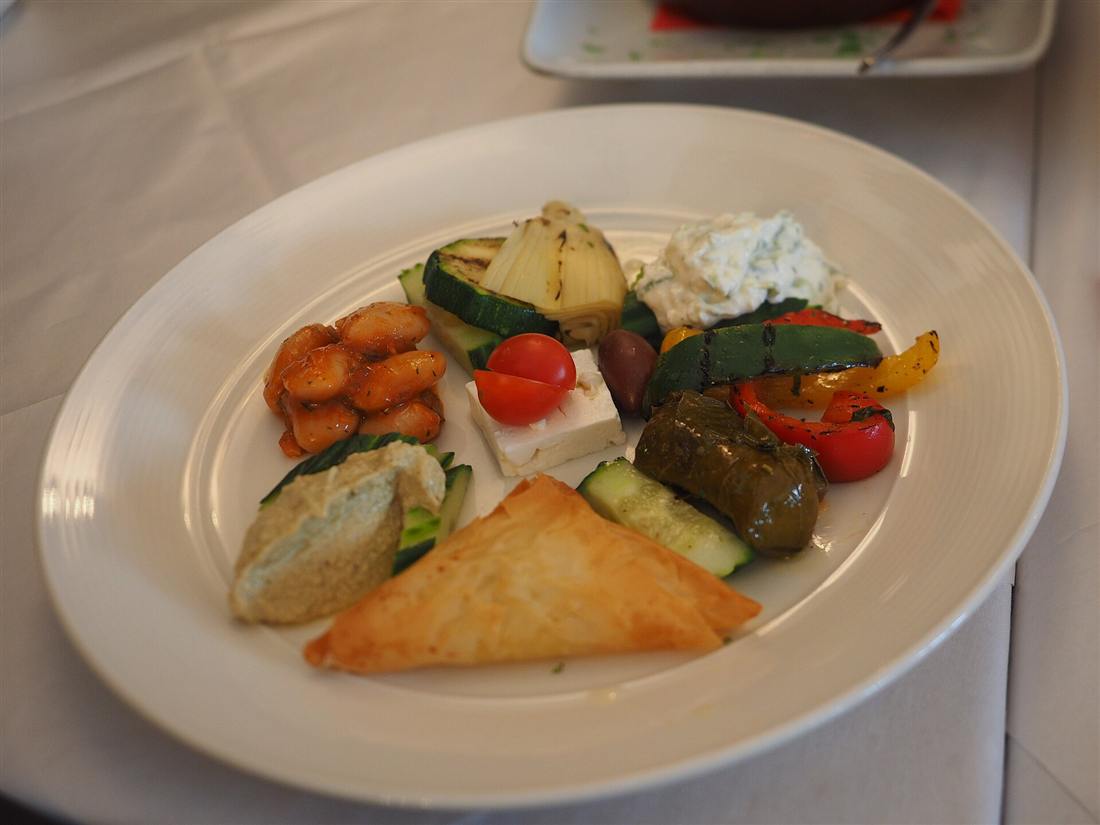
A Rhodes cooking class teaches dolmades, tzatziki, moussaka, souvlaki, pitaroudia — the Rhodian chickpea fritter — melekouni, the island’s sesame-honey sweet, handmade filo pies, and baklava, covering the full arc of a Rhodian meal from starter through dessert. Dolmades on Rhodes use vine leaves picked from the property, stuffed with rice, herbs and, in the meat version, minced lamb or pork, then simmered slowly until the leaf turns tender. Tzatziki is grated cucumber folded into strained yoghurt with garlic, dill and olive oil, prepared fresh at the start of the session so it has time to rest before serving.
The menu on a Rhodes cooking class builds from dolmades to pitaroudia and melekouni. For couples and families, a Rhodes cooking class is a hands-on afternoon in a village kitchen. Moussaka is built in layers: fried aubergine and potato, a spiced meat sauce, and a béchamel top that is baked until golden, and guests handle every layer themselves rather than watching it assembled. Souvlaki preparation covers marinating the meat, threading the skewers and grilling them over open coals, paired with pita made from scratch on the same stove.
A Rhodes cooking class is the clearest way to learn the Rhodian kitchen in one sitting. A Rhodes cooking class ends at the table, eating everything the group has cooked. Pitaroudia is a Rhodian specialty rarely found outside the island: a fritter of soaked chickpeas, onion, herbs and spices, blended and fried until the outside is crisp and the inside stays soft. Handmade filo pies fill the sweet and savory range, from a spinach and cheese pie to a courgette pie, with the filo itself rolled thin by hand rather than bought pre-made, a skill the host teaches step by step.
Planning a Rhodes cooking class ahead beats the scramble for a summer date. Dessert closes the class with melekouni, a firm sesame-and-honey sweet traditionally served at Rhodian weddings, and baklava, layered filo with chopped nuts and a honey syrup poured over the top while it is still warm from the oven. Every dish on the menu is a Rhodian staple, chosen because it appears on the island’s own tables, not because it photographs well.
Where Do These Cooking Sessions Take Place on Rhodes?
Rhodes cooking classes run in village farmhouses, family homes, a restored 1950s eco farmhouse set among olive groves, and a women’s agricultural cooperative, with the bulk of the venues sitting inland from Rhodes Town near Archangelos and Theologos. These villages hold onto a rural character that Rhodes Town has largely lost, with stone farmhouses, working olive presses and kitchen gardens that supply the day’s menu directly. A cooking class in this setting is as much a visit to the Rhodian countryside as it is a lesson in technique.
Booking a Rhodes cooking class ahead secures the date and the kitchen. The choice of Rhodes cooking class comes down to the venue, the menu and the group size. The restored eco farmhouse venue keeps its original stone walls and wood-beamed ceiling, and the surrounding olive grove supplies the oil used in the cooking itself. A women’s agricultural cooperative near Archangelos runs its own version of the class, staffed by local women who have cooked these recipes for decades and who fold the class income directly into the village economy, a detail that distinguishes it from a tourist-facing operation run for profit alone.
The set price on a Rhodes cooking class covers the food, the drinks and the recipes. The host on a Rhodes cooking class explains each dish as the group works. Family homes host a smaller, more intimate version of the format, where the kitchen is the same one the family uses every day and the recipes are the ones passed down inside that household rather than a standardized script. This style of class suits guests who want direct contact with a Rhodian family over a guests-plus-crowd experience.
A Rhodes cooking class is booked ahead for a fixed, agreed price per person. Guests based in Lindos reach the Archangelos-area venues in a short transfer, since the acropolis town sits on the same eastern coast road as the inland villages. Anyone planning a stay on Rhodes books the transfer from Rhodes Town, Faliraki or the resort strip along the east coast, and the pickup point adjusts to match the guest’s accommodation.
How Long Does a Rhodes Cooking Class Run and How Is a Session Structured?
A Rhodes cooking class runs three to four hours from pickup to drop-off, structured across a welcome with coffee or a cold drink, a market or garden harvest, the hands-on cooking itself, the shared table, and a wine tasting. The welcome sets the tone: guests arrive at the farmhouse or family home, meet the host, and are handed an apron before the day’s menu is explained dish by dish.
A Rhodes cooking class ends at the table, eating everything the group has cooked. A private Rhodes cooking class is exclusive to your party, with the host cooking alongside you. The harvest stage sends the group into the garden or a short walk through the property to gather herbs, vegetables or olives, connecting the ingredients on the counter to the ground they grew in rather than treating them as items pulled from a delivery box. On days when the class runs near a village market, the harvest stage becomes a market walk instead, with the host pointing out the stalls that supply the freshest produce and cheese.
Planning a Rhodes cooking class ahead beats the scramble for a summer date. A Rhodes cooking class pairs the meal with wine from the Rhodian vineyards. The cooking stage is the core of the session and takes up the largest block of time, with each guest assigned a dish or a component and the host moving between stations to correct grip, timing or seasoning. Ovens and stovetops run in parallel so the whole spread finishes near the same moment, timed so nothing sits cold while another dish catches up.
For couples and families, a Rhodes cooking class is a hands-on afternoon in a village kitchen. The table stage brings everyone together at once: the food guests cooked is served family-style, the host sits down with the group, and the wine tasting runs alongside the meal rather than as a separate add-on. The pace stays unhurried through the whole structure, and no stage of the class feels rushed to fit a tight schedule.
What Does the Cooking Session Cost on Rhodes and What Is Included in the Price?
A Rhodes cooking class is priced as a single whole-experience package covering the cooking session, the ingredients, the shared meal, wine and round-trip transfers, with a lower per-person rate for a group booking and a higher rate for a private, family-only session. The package structure means there is no separate line item for ingredients, corkage or transport; one price covers the entire door-to-door experience.
The host on a Rhodes cooking class explains each dish as the group works. The afternoon slot on a Rhodes cooking class fills first in high season. Group bookings join guests from different hotels into a single class at a set departure time, which brings the per-person price down because the host’s time and the ingredient cost split across a larger table. Private bookings reserve the entire session for one family or one travel party, remove the fixed departure time in favor of a slot the guest chooses, and carry a higher total price because the venue, the host and the ingredients are dedicated to one group alone.
A Rhodes cooking class is booked ahead for a fixed, agreed price per person. For vegetarians, a Rhodes cooking class swaps the meat dishes for garden vegetables. Children pricing runs lower than the adult rate on the majority of listings, reflecting a smaller appetite and a lighter hands-on role at the stove, and infants under a set age join free in a number of packages. Transfers are folded into the headline price rather than charged as an add-on, covering pickup from Rhodes Town, Faliraki, Ialysos, Lindos and the wider resort belt along the coast.
The choice of Rhodes cooking class comes down to the venue, the menu and the group size. The price bracket sits below a restaurant tasting menu of equal length once the cooking lesson, the ingredients, the wine and the transfer are counted together, and the take-home recipe cards add value beyond the day itself. Advance booking secures the lower group rate, while a private session booked close to the date still runs, subject to venue availability.
What Ingredients Define Rhodian Cooking?
Rhodian cooking is built on estate olive oil, local sheep and goat cheeses, thyme honey, wild and cultivated herbs, seasonal vegetables from village gardens, and seafood pulled from the surrounding Aegean and Mediterranean waters. Olive oil is the backbone ingredient: pressed from groves that surround the farmhouse venues, it goes into the dough, the marinades, the salads and the finishing drizzle on almost every dish that leaves the kitchen.
A Rhodes cooking class pairs the meal with wine from the Rhodian vineyards. Families take a Rhodes cooking class for the hands-on kneading, rolling and shaping. Local cheese ranges from a soft, mild curd used inside filo pies to a firmer aged wheel that is grated over pasta or sliced onto a plate alongside olives and bread. Thyme honey, gathered from hives kept on the same rural properties that host the classes, sweetens melekouni and baklava and is drizzled over yoghurt as a simple dessert on its own.
For couples and families, a Rhodes cooking class is a hands-on afternoon in a village kitchen. The recipes from a Rhodes cooking class go home on printed cards. Herbs grow wild across the Rhodian hillsides and in the kitchen gardens attached to the farmhouses: oregano, thyme, dill, mint and bay leaf season everything from the meat marinade to the dolmades filling, picked fresh in the harvest stage of the class rather than pulled from a dried jar. Seasonal vegetables — courgette, aubergine, tomato, pepper and wild greens — change with the calendar, so the exact menu shifts across the year while the technique stays the same.
A private Rhodes cooking class is exclusive to your party, with the host cooking alongside you. Seafood enters the Rhodian table through the island’s coastal fishing villages, supplying octopus, small fish for frying and shellfish for a seafood-forward version of the class menu offered by venues close to the coast. Together, these ingredients give Rhodian food a lighter, herb-forward profile that separates it from the heavier mainland Greek kitchen.
Does a Rhodes Cooking Class Include Wine Tasting?
A Rhodes cooking class includes a wine tasting poured from the host estate or a nearby Rhodian producer, served alongside the cooking stage and the final meal rather than as a separate paid activity. Rhodes carries a wine tradition that runs back centuries, and the island’s inland villages, including Embonas and the slopes near Archangelos, grow the grape varieties that supply the pours used in the class.
For vegetarians, a Rhodes cooking class swaps the meat dishes for garden vegetables. A Rhodes cooking class runs in the villages inland from Rhodes Town. White wine, made from the Athiri grape, accompanies the lighter dishes on the menu — the dips, the fried pitaroudia and the seafood plates — with a crisp, dry profile that cuts through olive oil and fried batter. Red wine, made from Mandilaria, pairs with the moussaka and the grilled souvlaki, carrying enough body to stand up to the meat and the spiced sauce.
The choice of Rhodes cooking class comes down to the venue, the menu and the group size. A Rhodes cooking class includes the transfer from the hotel where the operator offers it. The host pours the wine through the cooking stage itself, not only at the table, so a glass sits within reach while dough is kneaded or a pot is stirred, matching the relaxed, unhurried pace of the rest of the session. A short explanation of each wine’s origin and grape accompanies the pour, giving guests a working vocabulary for Rhodian wine beyond the glass in front of them.
The afternoon slot on a Rhodes cooking class fills first in high season. Non-drinkers are handed a non-alcoholic alternative on request, and the wine component never carries an extra charge on top of the package price. The pairing turns the shared meal into a full tasting experience rather than a simple lunch, closing the loop between what guests cooked and what they drink alongside it.
Is the Cooking Session Suitable for Families and Children on Rhodes?
A Rhodes cooking class is built for families, with hands-on tasks scaled to a child’s ability, a farmhouse or garden setting that gives children room to move, and a lower children’s price on the majority of listings. Kneading dough, rolling dolmades and shaping melekouni are tasks a child manages with a short demonstration, and hosts hand these simpler jobs to younger guests while adults take on knife work and the stovetop.
The recipes from a Rhodes cooking class go home on printed cards. The price of a Rhodes cooking class covers the ingredients, the meal and the wine. The outdoor setting of the farmhouse venues gives children a garden or a courtyard to explore between tasks, a contrast to a restaurant kitchen or a cramped indoor cooking studio where a child has nowhere to go when attention wanders. A number of venues keep animals on the property — chickens, goats or a family dog — which turns the wait between cooking stages into an added attraction for younger guests.
A private Rhodes cooking class is exclusive to your party, with the host cooking alongside you. The farmhouse setting gives a Rhodes cooking class its olive groves and garden beds. Family bookings run through the same group or private structure as any other class: a family group books a private session to keep the pace flexible for nap times and shorter attention spans, or joins a scheduled group departure at a lower per-person rate. Hosts adjust the spice level and the portion size of a dish on request, so a children’s version of the menu sits alongside the adult one without a separate cooking station.
Families take a Rhodes cooking class for the hands-on kneading, rolling and shaping. The shared table at the close of the class seats children next to adults, and the take-home recipe cards give a family a project to repeat once they are home, extending the experience past the day itself. The format suits a multi-generational group as readily as a couple traveling with young children.
Are There Vegetarian and Dietary Options in the Cooking Session?
A Rhodes cooking class accommodates vegetarian, vegan and gluten-sensitive guests, since the core Rhodian menu already leans on vegetables, legumes, cheese and olive oil, and hosts adjust the meat-based dishes on request when notified ahead of the booking. Dolmades, pitaroudia, filo pies and a majority of the salads and dips on the standard menu carry no meat at all, which gives a vegetarian guest a full plate without a single substitution.
A Rhodes cooking class includes the transfer from the hotel where the operator offers it. A Rhodes cooking class runs as a half-day session or a longer farm-to-table day. A vegan version removes the cheese from the filo pies and swaps the yoghurt base of tzatziki for a plant alternative, while the moussaka is rebuilt with lentils or extra vegetable layers in place of the meat sauce. Hosts ask for dietary notes at the time of booking so the ingredient list is adjusted before the session starts, rather than improvised at the counter on the day.
Every Rhodes cooking class starts with the ingredients, from the garden or the market. Gluten-sensitive guests face the biggest adjustment on a Rhodian menu built on handmade filo and fresh bread, and hosts substitute a gluten-free flour blend for the pastry dishes when the request is flagged in advance. Nut allergies are managed by holding back the walnuts or almonds used in baklava and swapping them for a nut-free filling.
A Rhodes cooking class runs in the villages inland from Rhodes Town. Because the class is cooked to order rather than plated from a fixed restaurant menu, dietary accommodation is built into the format itself: guests prepare their own adjusted version of each dish alongside the standard one, so no one at the table eats a separate, lesser meal. Flagging a dietary need at booking, rather than on arrival, gives the host time to source the right substitute ingredients from the local market.
When and How Do You Book a Rhodes Cooking Class?
A Rhodes cooking class runs across the island’s tourist season, from spring through autumn, and is booked online ahead of travel by choosing a group or private slot, confirming the pickup hotel, and flagging group size and dietary needs at the time of reservation. Booking ahead secures the lower group rate and the preferred date, since farmhouse venues cap the number of guests per session to keep the hands-on format intact.
The farmhouse setting gives a Rhodes cooking class its olive groves and garden beds. The menu on a Rhodes cooking class builds from dolmades to pitaroudia and melekouni. Peak summer months fill the group departures fastest, so a class booked for July or August benefits from an early reservation, while shoulder-season dates in spring and autumn keep more slots open closer to the travel date. Group size at booking determines pricing: a couple or solo traveler joins a scheduled group departure, while a family or a travel party of four or more books a private session outright.
A Rhodes cooking class is the clearest way to learn the Rhodian kitchen in one sitting. The pickup hotel address is entered at booking so the transfer driver has an exact location, and guests staying in Rhodes Town, Faliraki, Ialysos or Lindos confirm their pickup point during the same step. Dietary needs, allergies and children’s ages are flagged at this stage as well, giving the host time to prepare substitute ingredients or adjusted portions before the group arrives.
The price of a Rhodes cooking class covers the ingredients, the meal and the wine. What to bring is minimal: comfortable closed shoes for a farmhouse or garden setting, weather-appropriate clothing, and an appetite, since the apron, the ingredients and the wine are supplied on site. Confirmation arrives with the exact meeting time and the transfer details, closing the booking loop so nothing is left to sort out on the morning of the class.
Frequently Asked Questions
How much is a Rhodes cooking class?
A Rhodes cooking class is priced per person for the whole experience, agreed at booking. The price covers the ingredients, the hands-on cooking, the shared meal you cook, the wine or drinks, and hotel transfers where the operator includes them; private classes are priced for the group.
What do you cook in a Rhodes cooking class?
A Rhodes cooking class teaches dolmades, tzatziki, moussaka and handmade filo pies, plus the Rhodian specialities: pitaroudia, the chickpea fritter of the island, and melekouni, the sesame-and-honey sweet served at weddings.
Where are Rhodes cooking classes held?
Rhodes cooking classes are held in village farmhouses and family kitchens inland from Rhodes Town, around Archangelos and Theologos, on rural estates with olive groves and gardens, and at a women’s agricultural cooperative.