
The museums of Chania in Crete range from the Archaeological Museum with its finds from ancient Kydonia to the Maritime Museum of Crete in the Firka Fortress, the Byzantine collection, the Folklore Museum and the War Museum, most within the old town. Plan the whole trip with Greece Tours.
This guide covers the Chania museums in full: the Archaeological Museum in Halepa, the Maritime Museum in the Firka Fortress, the Byzantine and Post-Byzantine Collection, the Folklore Museum and the Cretan House, the War Museum, the printing museum, the smaller collections and the Venizelos house on Akrotiri, where they are and how to visit them, the tickets and hours, which are worth it, and how they fit the things to do in Chania.
What museums are in Chania?
Chania holds the Archaeological Museum of Chania, the Maritime Museum of Crete, the Byzantine and Post-Byzantine Collection, the Folklore Museum (Cretan House), the War Museum, the Typography Museum near Souda, and the Eleftherios Venizelos house-museum on Akrotiri.
The city carries a dense museum map because it served as a Minoan settlement, a Venetian port and an Ottoman administrative seat in turn. Each layer left objects, buildings and archives behind, and the museums divide that inheritance by theme: antiquity, the sea, Orthodox faith, Cretan home life, wartime history and industrial craft. The result is a compact circuit where a visitor moves from a Minoan clay tablet to a Venetian fortress to a printing press within a single day.
Most of these institutions sit inside the old town or a short ride from it. The Archaeological Museum stands in the Halepa district, the Maritime Museum occupies the harbour fortress, the Byzantine Collection fills a former Venetian church, and the Folklore and War museums lie among the narrow lanes. The outliers, the Typography Museum at the Souda industrial park and the Venizelos house on the Akrotiri peninsula, reward a dedicated trip. To place the museums inside the wider destination, the Chania hub gathers the district, the harbour and the surrounding excursions in one guide.
What is the Archaeological Museum of Chania?
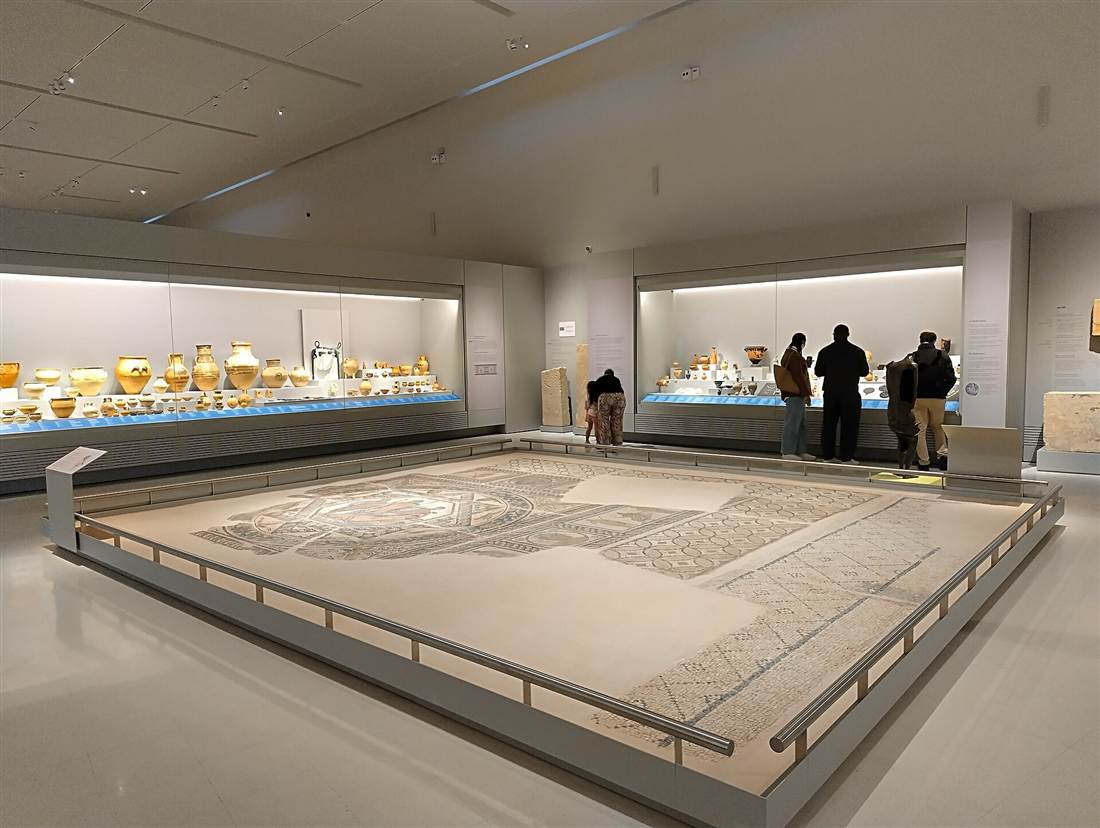
The Archaeological Museum of Chania is the city’s antiquities collection, housed in a purpose-built modern building in the Halepa district. It presents finds from ancient Kydonia and the wider prefecture, spanning the Minoan, Geometric, Archaic, Classical, Hellenistic and Roman phases in one chronological route.
The museum’s centrepiece material comes from Kydonia, the ancient city that lies beneath the modern streets of Chania. Excavations on the Kastelli hill above the harbour produced Minoan clay tablets inscribed in Linear A and Linear B, sealings and pottery that tie Chania directly into the palatial world of Knossos and Phaistos. The display sets these administrative documents beside domestic and ritual objects, so the visitor reads both the bureaucracy and the daily life of the Bronze Age port.
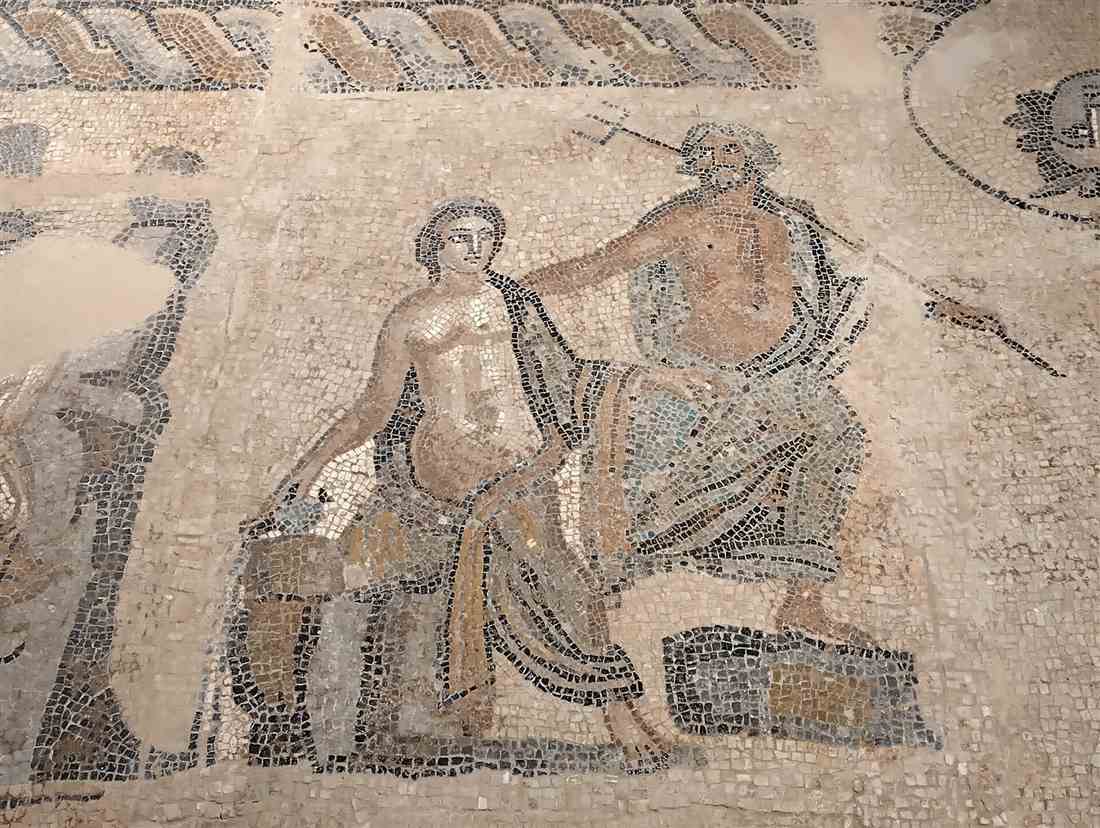
Roman Kydonia contributes the museum’s floor mosaics, lifted from villa excavations and mounted for close viewing. Alongside them the galleries hold sculpture, painted sarcophagi, bronze figurines, gold jewellery and a coin cabinet that tracks the city’s minting across centuries. The building’s clean, daylight-rich halls replace the museum’s earlier home in the Venetian church of San Francesco, and the extra space lets the collection breathe. A garden courtyard displays larger stone pieces, inscriptions and column fragments in the open air.
What is the Maritime Museum of Crete?
The Maritime Museum of Crete stands inside the Firka Fortress at the north-west corner of the Venetian harbour. It traces Cretan and Greek naval history through ship models, navigation instruments, maps, weapons and a dedicated Battle of Crete hall.
The setting is part of the exhibit. The Firka Fortress guarded the harbour entrance opposite the lighthouse, and its thick stone chambers now hold scale models that run from Bronze Age vessels and ancient triremes through Byzantine dromons to sailing ships and modern warships. Instruments, ropework, shipwright’s tools and photographs fill out the story of how Cretans built, sailed and fought at sea. Amphorae and finds recovered from the seabed link the maritime theme back to antiquity.
The upper hall concentrates on the Battle of Crete and the naval dimension of the wider conflict, with uniforms, documents, weapons and models of the ships engaged around the island. From the fortress ramparts the visitor looks straight across the water to the lighthouse and the Venetian arsenals, so the museum and its view teach the harbour’s defensive logic at the same moment. The building also carries a plaque marking the raising of the Greek flag over the fortress. The wider harbour walk sits at the heart of the Chania old town circuit.
What is the Byzantine and Post-Byzantine Collection of Chania?
The Byzantine and Post-Byzantine Collection of Chania fills the church of San Salvatore, a Venetian-era building set against the western walls near the Firka Fortress. It gathers icons, wall-painting fragments, mosaics, coins, sculpture and inscriptions from the Early Christian period onward.
The collection charts Cretan religious art across the long span between the Early Christian basilicas and the flowering of the Cretan School of icon painting under Venetian rule. Detached frescoes and mosaic floors from ruined churches sit beside portable icons on wood, and the arrangement lets a visitor watch the style shift from austere Byzantine models toward the refined Cretan manner that fed the workshops of the island. Ceramics, jewellery and everyday objects place the sacred art inside its material world.
San Salvatore itself belongs to the exhibition. The Franciscan monastery church preserves its vaulted stonework and traces of its Venetian and Ottoman phases, so the shell frames the art it protects. Standing just inside the sea walls, the museum forms a natural pairing with the Maritime Museum a few steps along the fortifications, and the two together read the harbour’s Venetian defences from the inside.
What is the Folklore Museum (Cretan House) of Chania?
The Folklore Museum, known as the Cretan House, sits on Halidon Street in the old town beside the Catholic church. It recreates a traditional Cretan dwelling, room by room, and displays weaving, embroidery, farm tools and household objects of rural Crete.
The museum’s method is the reconstructed home. Furnished rooms show the hearth, the loom, the marriage bed, the storage jars and the kitchen ware of a Cretan family, laid out as they stood in use rather than pinned behind glass. The textile holdings dominate: woven blankets, embroidered cloths, lacework and costumes demonstrate the patterns and dyes of Cretan handcraft, and a working loom stands ready to explain how the cloth took shape.
Because the collection lives inside a genuine old-town house reached through a quiet courtyard, the building teaches the domestic architecture of Chania at the same time as its crafts. Agricultural implements, ceramics, copperware and religious items round out the picture of village life before mechanisation. The museum functions as a counterweight to the grand harbour monuments, turning the focus onto the ordinary Cretan household.
What is the War Museum of Chania?
The War Museum of Chania occupies a former Italian barracks near the Public Garden. It documents Cretan military history with a strong focus on the Battle of Crete, displaying uniforms, weapons, medals, maps, photographs and personal effects of the fighters.
The core narrative is the airborne assault on Crete and the resistance that followed. Display cases hold the small arms, helmets, insignia and field equipment of the forces engaged, set beside operational maps and photographs that reconstruct the sequence of the fighting around Chania, Maleme and Souda Bay. Documents and personal objects from soldiers and civilians carry the human weight of the campaign and the occupation that came after it.
Earlier chapters of Cretan military history frame the wartime centrepiece. Material from the island’s revolts against Ottoman rule, the Balkan campaigns and the broader Greek struggle for independence lines the earlier rooms, so the visitor reads the Battle of Crete as one episode in a long record of Cretan arms. The museum’s position beside the Public Garden links it easily to the rest of the town-centre museum walk.
What is the Typography (Printing) Museum near Chania?
The Typography Museum sits in the industrial park of Souda, a short drive east of the old town. It is Greece’s museum of printing, and it displays working presses, typecases, engraving equipment and the full trade of the printer from movable metal type to lithography.
The collection assembles the physical history of the printed word: hand presses, cylinder presses, linotype and monotype machines, composing sticks, wooden and metal type in ranked cases, and the tools of bookbinding and engraving. The machines stand in working order, and the layout follows the workflow of a print shop, so a visitor moves from setting type to inking, pressing and finishing a sheet. A gallery of historic newspapers, posters and documents shows what the presses produced.
The museum grew from a private founder’s lifelong gathering of printing equipment, and it now anchors the Souda business park with a cultural hall and space for temporary exhibitions and printmaking events. Its distance from the harbour makes it a deliberate outing rather than a stop on the old-town stroll, and it pairs naturally with a wider day of touring outside the centre. The broader menu of excursions and activities appears in the things to do in Chania guide.
What smaller museums and collections does Chania have?
Beyond the headline institutions, Chania holds the Eleftherios Venizelos house-museum on Akrotiri, the school-life museum, a chemistry and science collection tied to the local schools, the municipal art collections, and the historical archive of Crete with its documents and manuscripts.
The Eleftherios Venizelos residence stands on the Akrotiri peninsula near the Venizelos family graves, on a rise that looks back across the bay to the city. The statesman who shaped modern Greece grew up in Chania, and the house preserves his memory alongside the panoramic terrace where his tomb and that of his son mark the hilltop. The site joins a personal biography to the sweep of Cretan and national history.
Inside the town and its schools sit a cluster of specialist holdings: a museum of school life that reconstructs the old classroom with desks, slates and readers; a chemistry and physics collection of historic laboratory instruments; and the ecclesiastical and municipal art holdings that surface in temporary shows. The Historical Archive of Crete, one of the country’s principal regional archives, guards manuscripts, maps, photographs and administrative records that scholars consult for the island’s modern history. Together these smaller nodes fill the gaps between the flagship museums.
Where are the Chania museums and how do you visit them?
The core museums cluster inside and around the old town and the Venetian harbour, walkable within minutes of each other. The Archaeological Museum lies in the Halepa district east of the centre, and the two outliers, the Venizelos house on Akrotiri and the Typography Museum at Souda, sit a drive away.
A single walking loop links the harbour-side and old-town institutions. From the Firka Fortress at the north-west corner, the Maritime Museum and, a few steps inside the walls, the Byzantine Collection open the route. Halidon Street then leads inland past the Folklore Museum, and the War Museum stands near the Public Garden at the edge of the centre. The whole chain unfolds on foot through the same lanes that carry the harbour promenade.
The Archaeological Museum’s home in Halepa places it a pleasant twenty-minute walk or a brief taxi ride east, through the district of neoclassical mansions. The Venizelos house-museum rewards a drive up Akrotiri for its terrace and graves, and the Typography Museum at Souda suits a car trip east toward the bay. Sturdy footwear handles the old town’s uneven paving, and the flat harbour front eases movement between the central sites.
How much do the Chania museums cost and what are the hours?
Entrance fees at the Chania museums stay modest, with the state-run Archaeological Museum and Byzantine Collection charging the standard low ticket and the independent Maritime, Folklore, War and Typography museums setting their own small admissions. Reduced rates apply to students, seniors and children.
The state museums, the Archaeological Museum and the Byzantine and Post-Byzantine Collection, follow the national ticketing system of the Greek Ministry of Culture. That system offers reduced admission to eligible visitors, free entry to children and to specified categories, and, at the main archaeological sites, combined tickets that bundle related monuments. Confirm the current figure at the ticket desk, because the ministry revises its tariffs and its free-entry days on its own schedule.
The independent museums each keep their own price and calendar. The Maritime Museum, the Folklore Museum, the War Museum and the Typography Museum charge separate small fees and set their own opening blocks, and their winter hours contract compared with the summer season. Most sites close on the day the ministry designates for state museums, so a visitor confirms the day’s opening in advance rather than assuming a uniform schedule across the town.
Which Chania museums are worth visiting?
Match the museum to the interest. Antiquity points to the Archaeological Museum, the sea and wartime naval history to the Maritime Museum, Orthodox art to the Byzantine Collection, home crafts to the Folklore Museum, the Battle of Crete to the War Museum, and industrial craft to the Typography Museum.
For a first visit with limited time, the Maritime Museum and the Archaeological Museum carry the widest appeal: the former marries a dramatic fortress setting on the harbour to models and the Battle of Crete story, and the latter delivers the Minoan tablets, mosaics and sculpture of ancient Kydonia in a spacious modern hall. The Byzantine Collection next door to the Firka Fortress extends the harbour circuit with its icons and detached frescoes.
A visitor drawn to Cretan identity heads for the Folklore Museum and its reconstructed home, while a reader of modern history pairs the War Museum with the Venizelos house on Akrotiri to trace the island’s twentieth-century struggles and the statesman who led the nation. The Typography Museum suits a specialist in printing, design or craft, and it rewards the drive to Souda with a hall of working presses found nowhere else in the country.
What does the Kastelli hill reveal about ancient Kydonia?
The Kastelli hill above the Venetian harbour holds the buried core of ancient Kydonia. Excavations there uncovered Minoan houses, Linear A and Linear B tablets, sealings, workshops and imported pottery, and the finds feed directly into the displays of the Archaeological Museum of Chania.
Kastelli is the oldest inhabited ground in Chania, occupied without a break from the Bronze Age to the present street. The Minoan settlement on the hill was a working town with storerooms, a shrine and administrative offices, and the clay tablets recovered there prove that scribes kept accounts in the same script used at Knossos. This makes Chania one of the confirmed centres of the Mycenaean-era administration of Crete, not a peripheral outpost.
Later Kydonia grew into a powerful independent city that minted its own coins, resisted its neighbours and traded across the Aegean, before Rome absorbed it and laid the villas whose mosaics now hang in the museum. Walking the Kastelli lanes above the harbour, a visitor stands on the layered ruins the museum interprets, and the two experiences, the open hill and the curated hall, complete each other.
Are the Chania museums good for families?
The Chania museums suit families well. The ship models and fortress ramparts of the Maritime Museum, the furnished rooms and working loom of the Folklore Museum, and the uniforms and weapons of the War Museum hold a child’s attention through objects that tell a clear, direct story.
The Maritime Museum leads for younger visitors. Rows of scale ships, from ancient galleys to modern warships, turn naval history into something a child reads at a glance, and the walk along the Firka Fortress walls adds the thrill of a real castle above the sea. The Battle of Crete hall extends the visit for older children with maps, models and the drama of the island’s defence.
The Folklore Museum’s reconstructed Cretan home invites children to picture daily life without a machine or a screen, and the loom, the hearth and the storage jars make the past tangible. The Typography Museum, with its presses in motion and its printmaking activities, offers a hands-on outing for families willing to drive to Souda. Compact size across the town-centre sites keeps each visit short enough to hold young attention, so a family strings two or three museums into one relaxed morning.
Frequently Asked Questions
What museums are in Chania?
Chania has the Archaeological Museum in Halepa, the Maritime Museum of Crete in the Firka Fortress, the Byzantine and Post-Byzantine Collection, the Folklore Museum (Cretan House), the War Museum, a printing museum near Souda, and the Eleftherios Venizelos house-museum on Akrotiri.
What is the best museum in Chania?
The Archaeological Museum ranks first for its Minoan-to-Roman finds and mosaics from ancient Kydonia, while the Maritime Museum in the harbour Firka Fortress wins for families and Battle of Crete history. Together they cover the deepest and the widest appeal.
Where are the Chania museums?
Most Chania museums cluster in and around the old town: the Maritime Museum at the harbour Firka Fortress, the Byzantine collection by the walls, the Folklore Museum in the lanes. The Archaeological Museum sits in the Halepa district, and the Venizelos house on Akrotiri.