
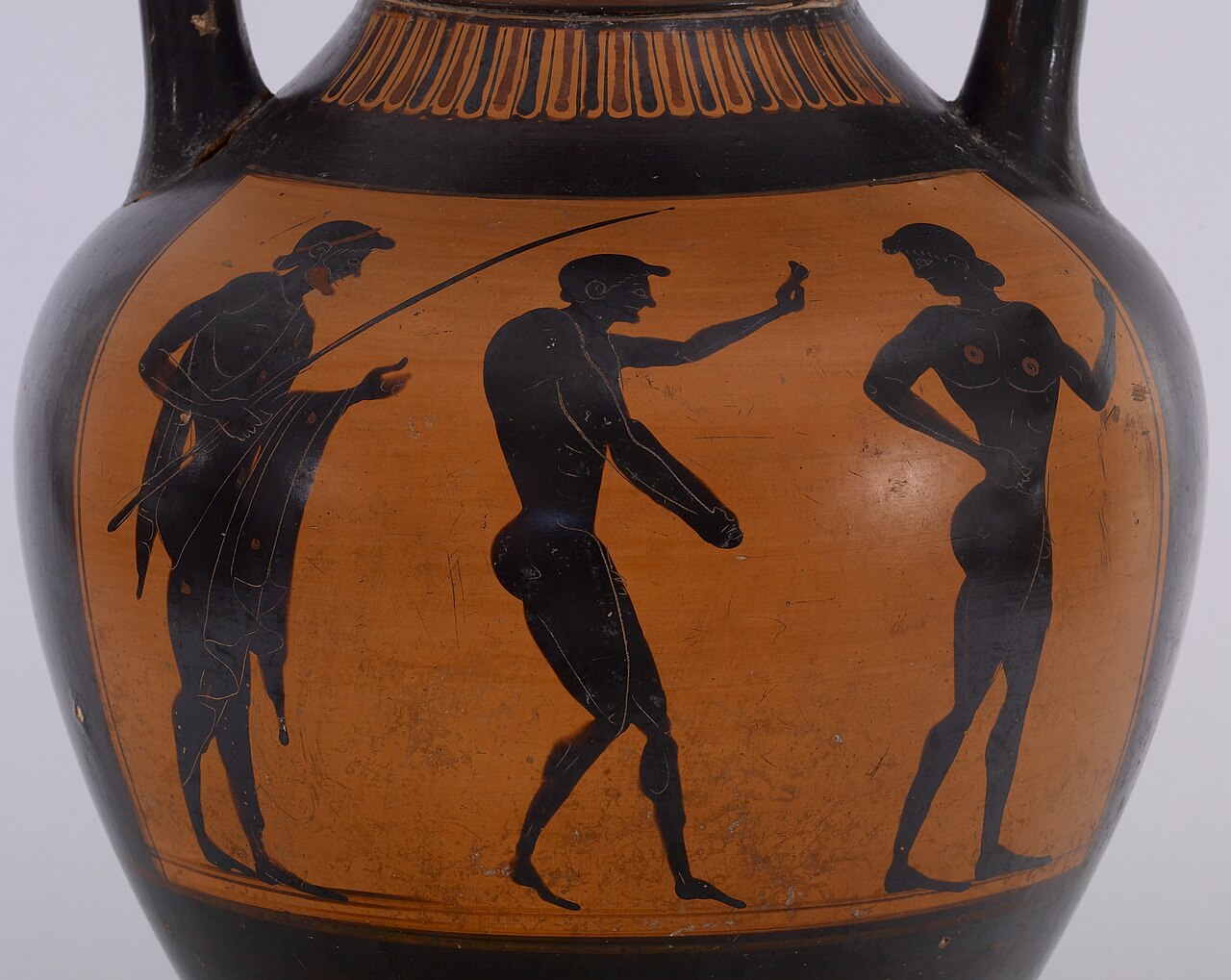
The ancient Olympic Games were the greatest sporting festival of the ancient world, held at Olympia in the western Peloponnese every four years for nearly twelve centuries. Far more than a contest, they were a religious festival in honour of Zeus that drew athletes and spectators from every corner of the Greek world, halted wars through a sacred truce, and crowned its champions with nothing more than a wreath of wild olive. From the single foot race of the first Games to a five-day programme of running, wrestling, boxing, the pentathlon and thundering chariot races, the Olympics shaped Greek identity and gave the modern world its own Olympic Games.
This guide covers the ancient Olympic Games in full: their origins and founding myths, when and where they were held, the five-day programme, every event, the athletes and their training, the olive-crown prize, the sacred truce, the judges, the famous champions, and the end and revival of the Games. Read it beside the full Ancient Olympia guide, the Ancient Stadium of Olympia and the Temple of Zeus at Olympia.
What were the ancient Olympic Games?
The ancient Olympic Games were a religious and athletic festival held at Olympia in honour of Zeus, the king of the Greek gods. Staged every four years from 776 BC, they were the oldest and most prestigious of the four great Panhellenic games, drawing free-born Greek men from every city to compete for a crown of wild olive and lasting glory.
They honoured Zeus. The Games were the athletic heart of a festival for Zeus at his sanctuary of Olympia, so sport and worship were bound together, and the contests were themselves an act of devotion.
They united the Greeks. Competitors and spectators came from every Greek city and colony, so the Games were a rare gathering of the whole Greek world in one place every four years.
They were the greatest games. Of the four Panhellenic festivals, Olympia was the oldest and most honoured, so an Olympic victory was the highest prize open to an ancient athlete.
When and where were the ancient Olympic Games held?
The ancient Olympic Games were held at Olympia, a sanctuary in the region of Elis in the western Peloponnese, every four years. The traditional date of the first Games is 776 BC, and they continued for nearly twelve centuries until they were abolished in the late fourth century AD, an unbroken cycle that measured Greek time itself.
Olympia was the setting. The Games took place in the sacred precinct of Olympia, among its temples, altars and the stadium, so the festival was rooted in one holy place rather than moving between cities.
They ran every four years. The Games were held once every four years, and the interval between them, the Olympiad, became a unit for counting years across the Greek world.
They lasted twelve centuries. From 776 BC until their abolition in the late fourth century AD, the Games ran for almost a thousand two hundred years, so they were among the longest-lived institutions of antiquity.
How did the ancient Olympic Games begin?
The origins of the ancient Olympic Games mix history and myth. Legend credits the hero Herakles with founding the Games and laying out the stadium, and another myth ties them to the chariot victory of Pelops over King Oinomaos. The first recorded Games date to 776 BC, when a cook named Koroibos won the single foot race, the only event of the earliest festival.
Herakles founded them by legend. One tradition holds that Herakles established the Games in honour of Zeus and paced out the length of the stadium himself, so the hero was seen as their divine founder.
Pelops gave another myth. A second legend links the Games to the chariot race in which Pelops won his bride and a kingdom, so the founding myth is carved on the east pediment of the Temple of Zeus.
The first winner was Koroibos. The earliest recorded victor, in 776 BC, was Koroibos of Elis, a cook who won the single foot race, so the history of the Games opens with one runner and one event.
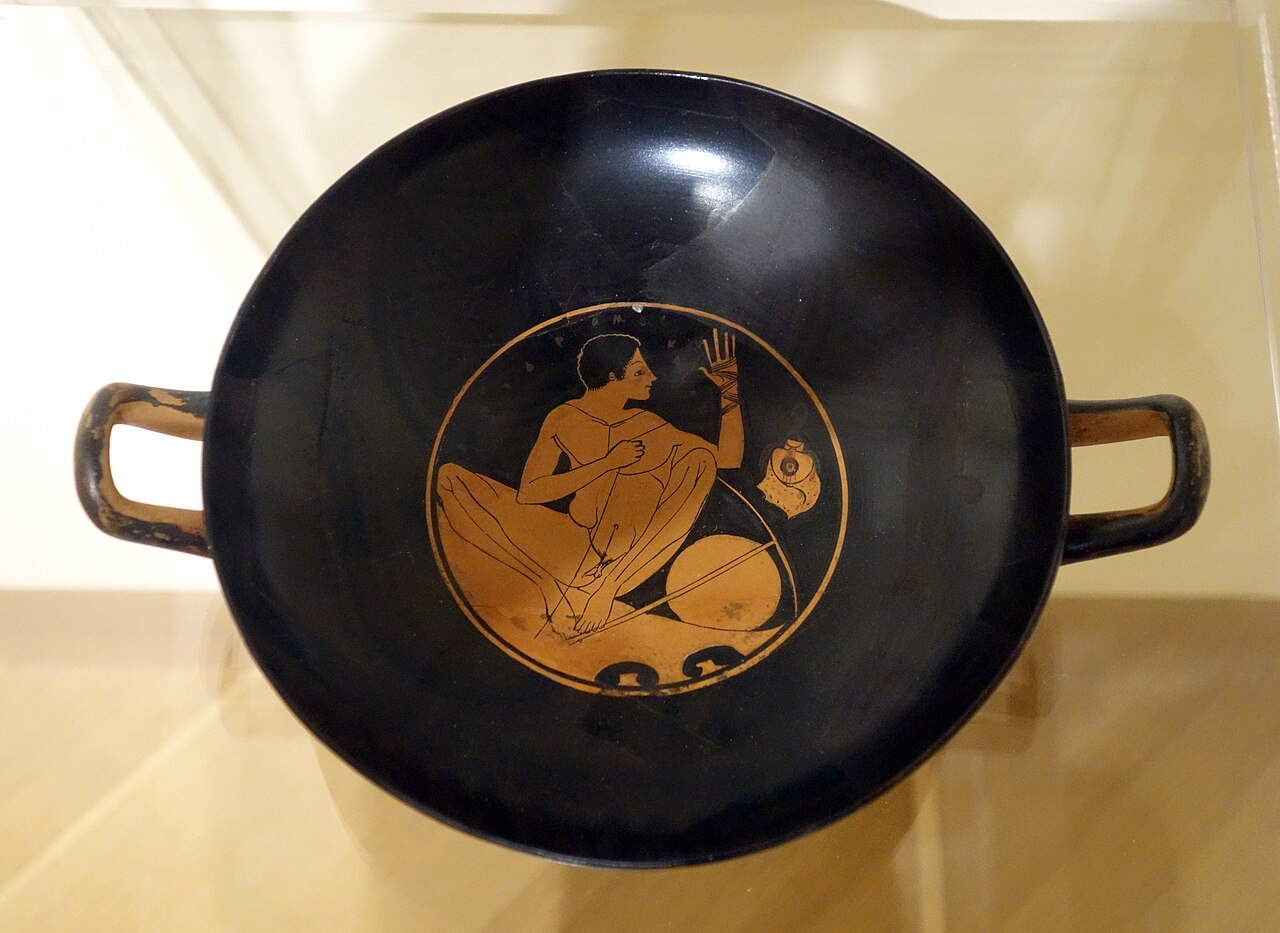
What was the programme of the ancient Olympic Games?
By their height the ancient Olympic Games filled five days. The first day was given to oaths, sacrifices and the swearing-in of athletes, the middle days to the contests of running, combat, the pentathlon and the chariot and horse races, and the final day to the crowning of victors and a great feast of thanksgiving to Zeus.
The first day was sacred. Athletes and judges swore oaths before the statue of Zeus and made sacrifices, so the Games opened as a solemn religious ceremony rather than a contest.
The middle days held the events. Running, wrestling, boxing, the pankration, the pentathlon and the equestrian races filled the central days, so the heart of the festival was packed with competition.
The last day crowned the victors. Winners received their olive crowns before the Temple of Zeus and the festival closed with a banquet, so the Games ended in celebration and thanksgiving.
What events were in the ancient Olympic Games?
The ancient Olympic Games grew from a single foot race to a full programme of events: the running races, the pentathlon, wrestling, boxing, the pankration, the race in armour, and the chariot and horse races of the hippodrome. Each was contested by free-born Greek men, and victory in any of them brought an olive crown and lasting fame.
Running races came first. The stade sprint, the two-length diaulos and the long dolichos were run in the stadium, so foot racing was the oldest and most prestigious part of the Games.
Combat and pentathlon followed. Wrestling, boxing, the fierce pankration and the five-event pentathlon tested strength and skill, so the Games rewarded the all-round athlete as well as the sprinter.
Chariot races crowned the festival. The four-horse and two-horse chariot races and the horse races ran in the hippodrome, so the grandest and wealthiest contests drew the largest crowds.
What was the pentathlon in the ancient Olympic Games?
The pentathlon was a five-event contest of the ancient Olympic Games, combining the long jump, the discus throw, the javelin throw, a foot race and wrestling. It rewarded the complete athlete, balanced in speed, strength and skill, and its winner was admired as the finest all-round competitor at Olympia, the ideal of the Greek athletic body.
It had five events. The long jump, discus, javelin, sprint and wrestling together made the pentathlon, so a single athlete had to master a wide range of skills.
Jumpers used weights. Long jumpers swung hand-held stone or metal weights, the halteres, to gain distance, so the event had its own distinctive technique.
It prized the all-rounder. The pentathlon champion was celebrated as the most balanced athlete, so the event embodied the Greek ideal of harmony between speed and strength.
What were the combat sports of the ancient Olympic Games?
The combat sports of the ancient Olympic Games were wrestling, boxing and the pankration. Wrestling was won by throwing an opponent three times, boxing was fought with leather-bound hands and no rounds, and the pankration was a brutal blend of wrestling and boxing that allowed almost everything but biting and gouging, ending only when a fighter gave in.
Wrestling needed three throws. A wrestler won by forcing his opponent to the ground three times, so the sport combined strength with technique and balance.
Boxing was bare and hard. Boxers wrapped their hands in leather thongs and fought without rounds or a ring until one man yielded, so the event demanded endurance as much as power.
The pankration allowed almost all. This fierce mix of wrestling and boxing barred only biting and eye-gouging, so it was the most violent and thrilling contest of the Games.
What were the chariot and horse races at Olympia?
The chariot and horse races were the grandest events of the ancient Olympic Games, held in the hippodrome south of the stadium. The four-horse chariot race was the most prestigious of all, and uniquely the olive crown went not to the driver but to the owner of the team, so wealthy citizens and even women won Olympic victories.
The hippodrome held them. A long open racecourse, the hippodrome, staged the chariot and horse races, so these events needed the largest space of the whole sanctuary.
The owner won the crown. Victory went to the owner of the horses rather than the driver, so the chariot race was the one event in which the rich, and even women as owners, became Olympic victors.
They were dangerous and grand. Crashes were common as many chariots rounded the turning posts, so the races combined spectacle, danger and prestige above every other event.
Who competed in the ancient Olympic Games?
Only free-born Greek men competed in the ancient Olympic Games. Slaves and non-Greeks were barred, and married women were forbidden even to watch on pain of death. Athletes trained for ten months before the Games and swore an oath of fair play, competing naked in most events as an ideal of the Greek athletic body.
Free Greek men competed. Only free-born Greeks were allowed to enter, so the Games were open to citizens from every Greek city but closed to slaves and foreigners.
Women were barred from watching. Married women were forbidden to attend the Games, though unmarried women and the priestess of Demeter were exceptions, so the stadium crowd was almost entirely male.
Athletes trained hard. Competitors trained for ten months and swore an oath before Zeus to compete fairly, so the Games demanded long preparation and strict honesty.
What did winners of the ancient Olympic Games receive?
Winners of the ancient Olympic Games received a wreath of wild olive, the kotinos, cut from a sacred tree beside the Temple of Zeus. There was no prize of money at Olympia, only the crown and eternal glory, but victors returned home to statues, poems, free meals for life and rich rewards from their grateful cities.
The prize was an olive crown. The sole award at Olympia was the wreath of wild olive, so the honour itself, rather than any material reward, defined an Olympic victory.
Glory was the true reward. Victors were celebrated across Greece in poetry and statues, so an Olympic crown brought fame that lasted a lifetime and beyond.
Cities enriched their champions. Home cities gave winners money, free meals and honours, so the modest olive crown opened the way to real and lasting rewards.
What was the Olympic Truce?
The Olympic Truce, the ekecheiria, was a sacred truce declared across the Greek world before and during the ancient Olympic Games. It protected athletes and spectators travelling to Olympia, halted warfare around the sanctuary and allowed safe passage through hostile territory, so the Games became a rare force for peace among the constantly warring Greek city-states.
It protected travellers. The truce guaranteed safe passage to and from Olympia, so athletes and pilgrims crossed even enemy lands unharmed to reach the Games.
It halted war. Fighting near the sanctuary and against Olympia itself was forbidden during the truce, so the Games imposed a pause on the endless wars of the Greek world.
It was sacred. Breaking the truce brought heavy fines and religious disgrace, so the ekecheiria carried the authority of Zeus himself and was rarely violated.
Who ran and judged the ancient Olympic Games?
The ancient Olympic Games were organised and judged by the Hellanodikai, elected officials from Elis who controlled the sanctuary. Dressed in purple robes, they oversaw the athletes’ training, enforced the rules, disqualified and fined cheats, and awarded the olive crowns, watching the contests from a stone stand in the stadium.
They came from Elis. The Hellanodikai were chosen from the people of Elis, so the local state held authority over the whole Panhellenic festival.
They enforced the rules. The judges supervised training, checked eligibility and punished cheating with fines that paid for the Zanes, statues of Zeus lining the way to the stadium, so discipline was strict.
They crowned the victors. From their stand the Hellanodikai awarded the olive wreath, so they were the final authority on every Olympic result.
Who were the famous champions of the ancient Olympic Games?
The famous champions of the ancient Olympic Games included Milo of Croton, the greatest wrestler of antiquity, who won six Olympic crowns; Leonidas of Rhodes, a runner who took twelve victories across four Games; and Diagoras of Rhodes, a boxer whose sons and grandsons also became Olympic victors, celebrated in the odes of the poet Pindar.
Milo of Croton dominated wrestling. The wrestler Milo won at six Olympiads and became a legend of strength, so his name stood for athletic power across the ancient world.
Leonidas of Rhodes ruled the track. The runner Leonidas won all three foot races at four successive Games for twelve crowns, so he was among the most successful athletes in Olympic history.
Champions were immortalised. Victors like Diagoras and his family were honoured with statues at Olympia and praised in the victory odes of Pindar, so the greatest champions won lasting fame.
How did the ancient Olympic Games end and revive?
The ancient Olympic Games ended in the late fourth century AD, when the Roman emperor banned pagan festivals and the sanctuary of Olympia was abandoned. After nearly twelve centuries the Games fell silent, and earthquakes and floods buried the site. The modern Olympic Games revived the ancient festival in Athens in the late nineteenth century, reconnecting the world with Olympia.
A ban ended them. The Roman state outlawed pagan festivals in the late fourth century AD, so the Games ceased and the sanctuary of Zeus was abandoned.
The site was buried. Earthquakes toppled the temples and river silt covered the ruins, so Olympia and its stadium were lost for centuries beneath the ground.
The Games returned. The modern Olympic movement revived the festival, and the Olympic flame is still lit at Olympia before each Games, so the ancient contest lives on across the world, as the Ancient Olympia guide describes.
What running races were held at the ancient Olympic Games?
The ancient Olympic Games held four running races: the stade, a single length of the stadium of about 192 metres; the diaulos, two lengths there and back; the dolichos, a long-distance race of many laps; and the hoplitodromos, a sprint run in bronze helmet and greaves carrying a shield. The stade was the oldest and most prestigious of them all.
The stade was the sprint. A single length of the track, the stade, was the original event of the Games, so its winner gave his name to the whole Olympiad.
The dolichos tested stamina. The long race covered around twenty laps of the stadium, so it demanded endurance rather than pure speed.
The race in armour closed the running. The hoplitodromos, run in helmet, greaves and shield, linked athletics to war, so it was often the final foot race of the Games.
What role did religion play in the ancient Olympic Games?
Religion was at the very heart of the ancient Olympic Games. They were a festival in honour of Zeus, and worship framed every day: athletes swore oaths before his statue, a hundred oxen were sacrificed on the great ash altar, and victors dedicated their crowns and statues to the god. Sport and sacrifice were inseparable, so the Games were an act of devotion as much as competition.
The Games honoured Zeus. The whole festival was dedicated to Zeus at his sanctuary, so the contests were offerings to the king of the gods.
Sacrifice framed the days. The great sacrifice of oxen on the Altar of Zeus stood at the centre of the festival, so the smoke of offerings rose beside the events.
Victory was dedicated to the god. Champions gave thanks and dedicated statues to Zeus, so an Olympic win was owed to the god as much as to the athlete.
Were there other Panhellenic games like the Olympics?
Yes, the ancient Olympic Games were the oldest of four great Panhellenic games. The others were the Pythian Games at Delphi in honour of Apollo, the Isthmian Games near Corinth in honour of Poseidon, and the Nemean Games in honour of Zeus. Together they formed a four-year cycle, and an athlete who won all four was honoured as a periodonikes.
Delphi held the Pythian Games. The Pythian Games at Delphi honoured Apollo and added music and poetry to athletics, so they were the most cultured of the four festivals.
Corinth and Nemea held the others. The Isthmian Games near Corinth honoured Poseidon and the Nemean Games honoured Zeus, so the four festivals spread across the Greek year.
A grand-slam winner was honoured. An athlete who won at all four games became a periodonikes, a circuit-winner, so this rare feat was among the highest athletic honours in Greece.
Were there women’s games at Olympia?
Yes, women held their own festival at Olympia called the Heraia, in honour of the goddess Hera. Separate from the men’s Olympic Games, the Heraia featured foot races for unmarried women on a shortened track in the stadium, and its winners received olive crowns and a share of a cow sacrificed to Hera, along with the right to dedicate their portraits.
The Heraia honoured Hera. The women’s festival was dedicated to Hera, so it paralleled the men’s Games with its own goddess and rites.
It held foot races. Unmarried women raced on a track shortened to about five-sixths of the men’s length, so the Heraia had its own athletic contest in the stadium.
Winners were honoured. Victors received olive crowns and portraits dedicated in the sanctuary, so the Heraia gave women their own share of Olympic glory.
How did athletes train for the ancient Olympic Games?
Athletes trained for the ancient Olympic Games for ten months, the final month at Olympia itself under the eyes of the judges. They practised in the Palaestra and Gymnasium of the sanctuary, followed strict diets and training regimes set by professional trainers, and swore an oath that they had trained properly before they were allowed to compete.
Training lasted ten months. Competitors prepared for the best part of a year, so only the dedicated and well-supported reached the Games.
The last month was at Olympia. Athletes trained the final weeks at Olympia under the Hellanodikai, so the judges assessed and screened them before the contests.
Trainers guided them. Professional trainers set diet and exercise for the athletes, so preparation for the Games was as expert and demanding as the events themselves.
What was it like to attend the ancient Olympic Games?
Attending the ancient Olympic Games meant joining tens of thousands of spectators camped in the summer heat around the sanctuary. Visitors slept in tents, endured dust, flies and crowded conditions, drank from the rivers, and filled the days with the contests, sacrifices, feasts, and a fair of traders, poets and philosophers who came to perform and sell to the crowds.
Crowds camped in the heat. Spectators pitched tents around Olympia in the height of summer, so the Games were a hot, crowded and uncomfortable gathering as much as a spectacle.
A great fair grew up. Traders, food-sellers, poets and philosophers gathered to perform and sell, so the Games were also a marketplace of goods and ideas.
The atmosphere was electric. Tens of thousands roared in the stadium and celebrated the victors, so the Games were the most thrilling public event in the Greek calendar.
How were cheaters punished at the ancient Olympic Games?
Cheaters at the ancient Olympic Games were fined heavily and publicly disgraced. The fines paid for bronze statues of Zeus called Zanes, set along the path to the stadium, each inscribed with the cheat’s name and offence. Every athlete passed this row of warnings on the way to compete, so shame and the authority of Zeus enforced fair play.
Fines punished the guilty. Athletes caught bribing or cheating were fined by the judges, so wrongdoing carried a real and public cost.
The Zanes shamed them. The fine money paid for statues of Zeus naming the cheats and their offences, so their disgrace was made permanent in bronze.
Warnings lined the way. The Zanes stood along the entrance to the stadium, so every competitor faced the consequences of cheating just before entering the arena.
What equipment did ancient Olympic athletes use?
Ancient Olympic athletes used simple equipment: a bronze or stone discus, wooden javelins with a leather throwing loop, hand-held stone or metal jumping weights called halteres, and leather thongs wrapped around boxers’ hands. Athletes rubbed their bodies with olive oil, dusted themselves with fine sand, and scraped off the mixture afterwards with a curved bronze tool, the strigil.
Throwers had their tools. The discus was cast in bronze or stone and the javelin thrown with a leather loop for extra spin, so each field event had its own equipment.
Jumpers swung weights. Long jumpers carried halteres, swinging the stone or metal weights to lengthen their leap, so the jump had a technique unlike the modern event.
Oil and the strigil finished the day. Athletes coated themselves in olive oil and sand for training and scraped it off with a strigil, so the oil flask and scraper were the athlete’s constant companions.
How do the modern Olympic Games relate to the ancient Games?
The modern Olympic Games are a direct revival of the ancient Olympic Games. Founded in the late nineteenth century and first held in Athens, they took their name, their four-year cycle and their ideals from Olympia. The Olympic flame is still kindled at the Temple of Hera in Olympia before every Games and carried by torch relay to the host city.
They revived the ancient festival. The founders of the modern Games looked back to Olympia for their model, so the ancient contest was reborn for the modern world.
They kept the four-year cycle. The modern Games are held every four years like the ancient Olympiads, so the rhythm of Olympia still governs them.
The flame links them to Olympia. The Olympic flame is lit at Olympia and relayed to each host city, so every modern Games begins at the ancient sanctuary, as the Ancient Olympia guide describes.
Frequently Asked Questions About the Ancient Olympic Games
When were the first ancient Olympic Games held?
The first recorded ancient Olympic Games were held in 776 BC at Olympia. The only event was the stade, a single foot race the length of the stadium, won by Koroibos of Elis. From this single race the Games grew over the centuries into a five-day festival of many events.
The date of 776 BC became the starting point for counting Olympiads, so the first Games marked the beginning of a shared Greek calendar used by historians across the ancient Greek world.
How often were the ancient Olympic Games held?
The ancient Olympic Games were held every four years, a cycle known as an Olympiad. The four-year interval was so important that the Greeks used it to measure and date events, counting time in Olympiads from the first Games of 776 BC onward.
The modern Olympic Games kept this four-year cycle, so the rhythm of the ancient festival, counted in Olympiads, still shapes the Games held around the world today.
Why did the ancient Olympic Games end?
The ancient Olympic Games ended because the Roman state banned pagan religious festivals in the late fourth century AD. As a festival in honour of Zeus, the Games did not continue once such worship was outlawed, so after nearly twelve centuries they ceased and the sanctuary of Olympia fell into ruin.
The Games stayed silent for around fifteen hundred years until the modern Olympics revived them, so their end was long but not final.
Where does the word Olympics come from?
The word Olympics comes from Olympia, the sanctuary in the western Peloponnese where the Games were held, which was itself named in honour of Zeus, lord of Mount Olympos. The Games were never held on Mount Olympos, the mythical home of the gods, but took their name from the sacred site of Olympia dedicated to their king.
Olympia and Mount Olympos are different places, so the name links the Games to the god Zeus rather than to the mountain home of the gods far to the north.
How many people attended the ancient Olympic Games?
Tens of thousands of people attended the ancient Olympic Games, with the stadium alone holding up to 45,000 spectators on its grass banks. Visitors came from every Greek city and colony, camping around the sanctuary in the summer heat, so the Games were among the largest gatherings of people anywhere in the ancient world.
The vast crowd, drawn from across the Greek world every four years, made the Games a unique meeting place for a people otherwise divided into rival cities.