
Argos is one of the oldest continuously inhabited towns in the world, lived in for some seven thousand years, and a great power of the ancient Greek world. Only a short drive from Nafplio, it holds one of the largest ancient theatres in Greece, cut into the hillside and seating twenty thousand, along with Roman baths, an ancient agora, and above the town the great Larissa castle with its layers of ancient, Byzantine, Frankish and Venetian walls. Rich in myth and history yet far quieter and cheaper than the famous sites, Argos is a rewarding and authentic day trip in the heart of the Argolid.
This guide covers Argos in full: the ancient theatre and its acoustics, the agora and Roman baths, the Larissa castle and the Aspida hill, the museum, the town’s place in Greek myth, and how to visit from Nafplio, with the tickets, hours and best time. Read it beside the full Nafplio travel guide and the guide to day trips from Nafplio.
What is Argos?
Argos is a town in the Argolid, a few kilometres from Nafplio, and one of the oldest continuously inhabited towns in the world. A great power of ancient Greece, it holds a huge ancient theatre, Roman baths, an agora and the Larissa castle above, so it is a rich and authentic historical destination.
It is one of the oldest towns on earth. Argos has been inhabited for some seven thousand years, without a break, so it is among the oldest continuously occupied places in the world, a town whose history reaches back to the dawn of Greek civilisation.
It was a great ancient power. In the ancient Greek world Argos was a leading city, rivalling Sparta and Athens, so its ruins reflect a long and important history, from the Bronze Age through the classical and Roman periods.
It is close to Nafplio. Argos lies only about twelve kilometres from Nafplio, a short drive, so it makes an easy day trip from the town, often combined with the citadels of Mycenae and Tiryns nearby, as the guide to day trips from Nafplio describes.
Why is Argos one of the oldest towns in the world?
Argos is one of the oldest towns in the world because it has been inhabited without a break for around seven thousand years, since the Neolithic age. Occupied through the Bronze Age, the classical period, Roman and medieval times to today, it has never been abandoned, making it a rare living link to deep antiquity.
It has never been abandoned. Unlike many ancient cities that were destroyed or deserted, Argos has been lived in continuously since the Neolithic age, so its streets have been walked without a break for some seven thousand years, an extraordinary continuity.
It spans every age. Argos was important in the Bronze Age world of Mycenae, a great power in classical Greece, a Roman town and a medieval stronghold, so its layers of history run unbroken from prehistory to the present day.
It lives on today. Argos is still a busy working town, so its ancient sites sit among the streets and squares of a modern Greek town, a place where deep antiquity and everyday life exist side by side, unlike the deserted ruins of many famous sites.
What is the ancient theatre of Argos?
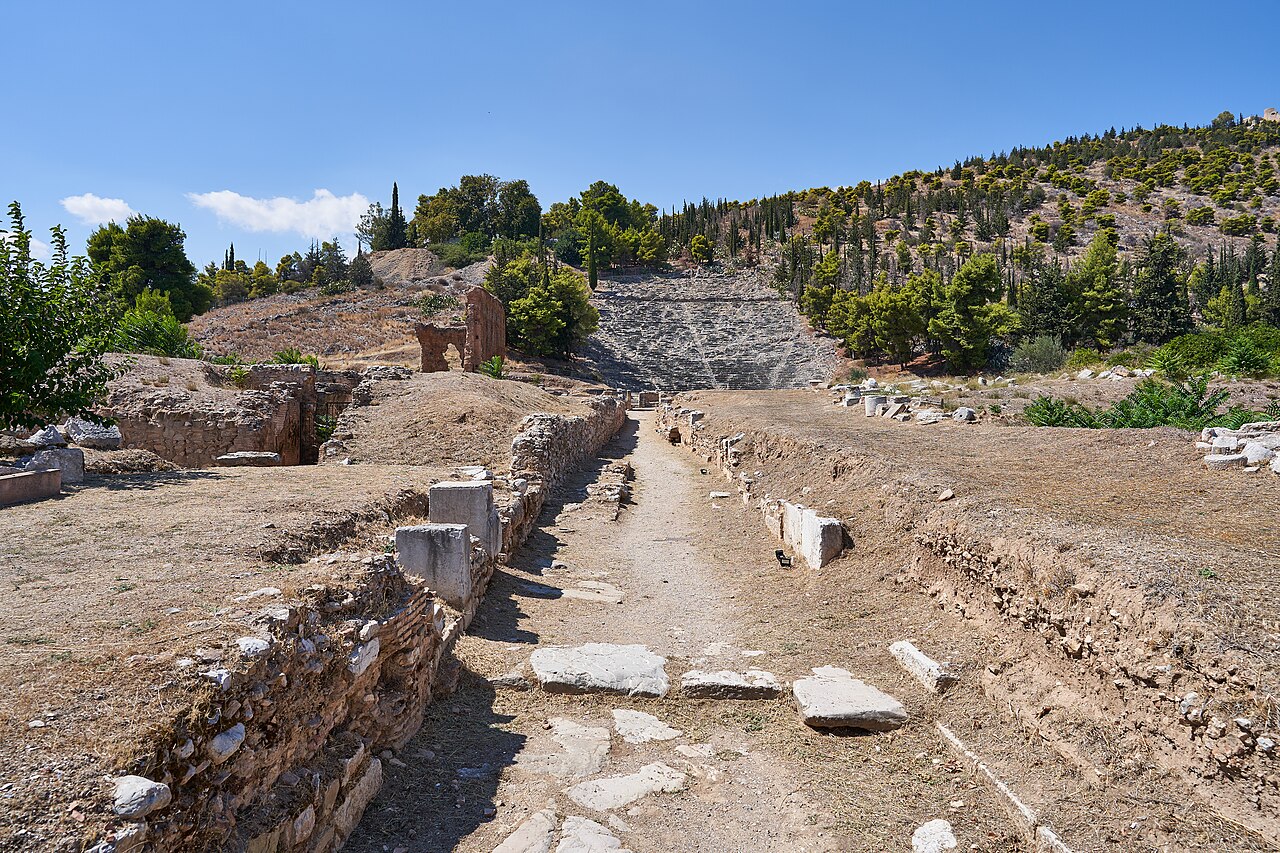
The ancient theatre of Argos is one of the largest in Greece, cut into the slope of the Larissa hill and seating around twenty thousand spectators. Dating from the Hellenistic period, it hosted music and drama contests, and its steep tiers of stone seats survive, giving a sense of its vast scale.
It is among the largest in Greece. The theatre of Argos, carved into the hillside below the Larissa castle, seated about twenty thousand people, so it was one of the biggest theatres of the ancient Greek world, far larger than most that survive.
It dates from the Hellenistic age. Built in the Hellenistic period, the theatre hosted music and drama competitions, some connected to the Nemean Games and to festivals in honour of the goddess Hera, so it was a major venue of ancient culture.
Its scale still impresses. The steep tiers of stone seats, cut directly into the rock of the hill, rise high above the orchestra, so even in ruin the theatre conveys the vast scale of ancient Argos and the crowds it once held, a striking sight.
Why are the acoustics of the Argos theatre famous?
The acoustics of the ancient theatre of Argos are considered among the finest in Greece, rivalling those of Epidaurus, so that voices carry clearly from the orchestra to the highest of its twenty thousand seats. Its design, cut into the natural slope of the hill, gives it this remarkable clarity of sound.
They rank with the best. The acoustics of the Argos theatre are held to be among the best of all ancient and modern Greek theatres, so despite being less famous than Epidaurus, it shares that quality of carrying sound clearly across its vast bowl.
The hillside gives the effect. Cut directly into the steep natural slope of the Larissa hill, the theatre uses the shape of the ground to carry the voices of performers up through its tiers, so the setting itself is part of the acoustic design.
It served great gatherings. Because sound carried so well, the huge theatre hosted the music and drama contests and public assemblies of ancient Argos, so its acoustics were not just a marvel but a practical necessity for a theatre of such size.
What is the ancient agora of Argos?
The ancient agora of Argos was the marketplace and public heart of the ancient city, spread below the theatre. Its ruins include the foundations of stoas, a council house, a small odeon and other public buildings, so it gives a picture of the civic life of one of the great cities of ancient Greece.
It was the city’s public heart. The agora was the central square of ancient Argos, where trade, politics and public life came together, so its ruins, below the theatre, mark the very centre of the ancient city.
Its buildings survive in outline. The foundations of stoas, a bouleuterion or council house, a small odeon and other structures can be traced, so a walk through the agora reveals the civic buildings that served the citizens of ancient Argos.
It lies with the theatre. Because the agora sits close to the great theatre and the Roman baths, the three form a single archaeological area, so a visit takes in the marketplace, the theatre and the baths together, the core of ancient Argos.
What are the Roman baths of Argos?
The Roman baths, or thermae, of Argos are among the best-preserved ruins of the ancient city, dating from the second century AD. Their brick walls, arches and heated rooms survive to a good height beside the theatre, so they give a vivid picture of Roman Argos and its public bathing.
They date from Roman times. The baths were built in the second century AD, when Argos was a Roman town, so they belong to the Roman rather than the Greek city, adding another layer to the site’s long history.
They are well preserved. The brick walls, arches and the rooms of the bath complex, with their systems for heating water and floors, survive to a good height, so the baths are among the most substantial and impressive ruins at Argos.
They sit beside the theatre. Because the Roman baths stand next to the great theatre and the agora, they are easily seen together, so a visit to the archaeological area of Argos takes in the theatre, the baths and the marketplace in one walk.
What is the Larissa castle of Argos?
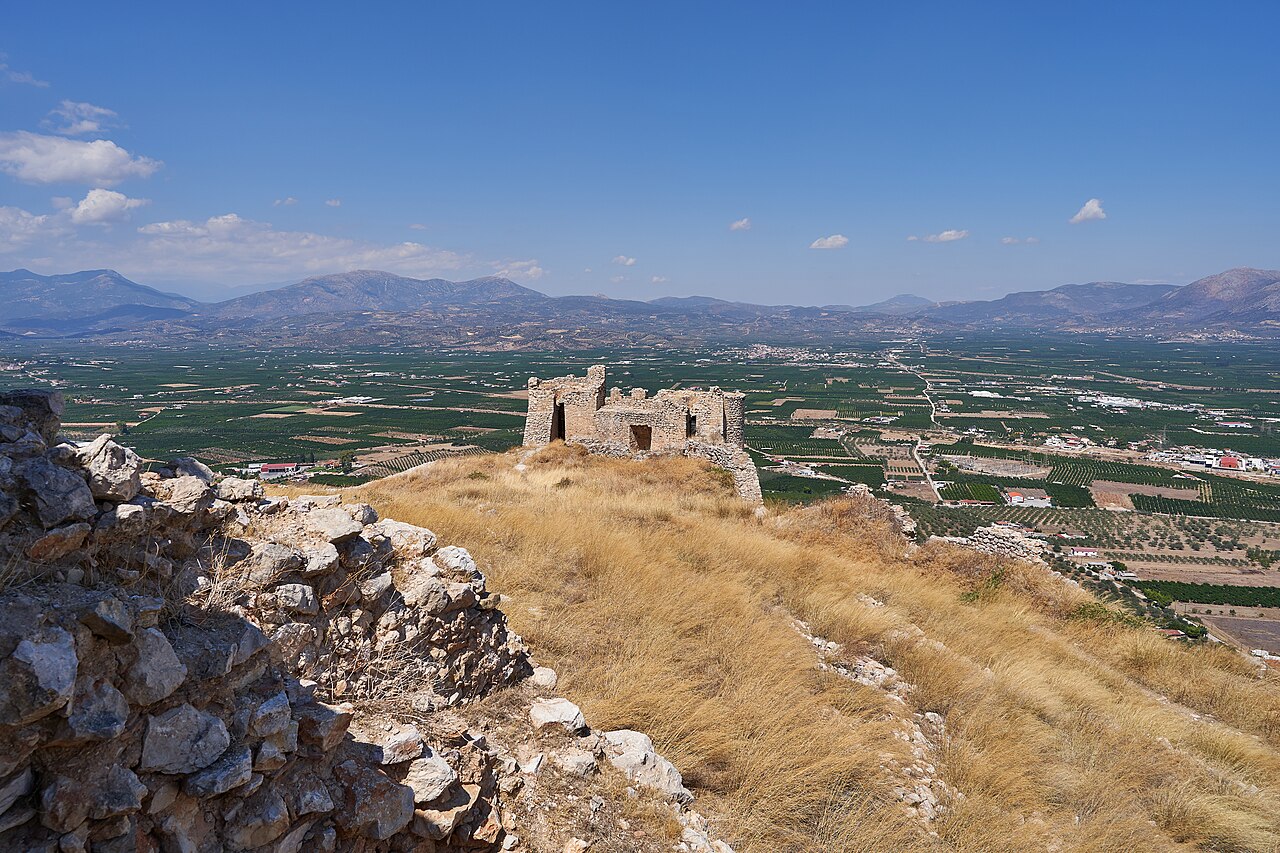
The Larissa castle is the great fortress crowning the hill above Argos, one of the oldest and most historic castles in Greece. Built on ancient foundations and rebuilt by Byzantines, Franks, Venetians and Ottomans, it commands sweeping views over the Argolid plain, the town and the Argolic Gulf.
It crowns the town. The Larissa castle stands on the higher of the two hills above Argos, on the site of the ancient acropolis, so it has been the citadel and refuge of the town since antiquity, dominating the plain below.
Its walls span the ages. The fortress was built and rebuilt by every power that held Argos, ancient Greek, Byzantine, Frankish, Venetian and Ottoman, so its walls and towers are a layered record of the medieval and ancient Mediterranean, like Acrocorinth and the fortresses of Nafplio.
The views are sweeping. From the castle the whole Argolid plain, the town of Argos, Nafplio and the Argolic Gulf spread out below, so the climb or drive to the Larissa is rewarded with one of the finest panoramas in the region.
What is the Aspida hill and its Mycenaean tombs?
The Aspida is the lower of the two hills above Argos, crowned by ancient walls and holding Mycenaean chamber tombs of the Bronze Age. With its prehistoric remains and Cyclopean walls, the Aspida shows the deep antiquity of Argos, from long before the classical city below.
It is the second acropolis. The Aspida, named for its shield-like shape, is the lower hill beside the Larissa, and it was fortified in ancient times, so it formed part of the defences of Argos alongside the higher castle.
It holds Bronze Age tombs. On and around the Aspida are Mycenaean chamber tombs of the fourteenth and thirteenth centuries BC, so the hill preserves the burials of the Bronze Age town, a link to the world of Mycenae nearby.
It shows Argos’s deep past. With its prehistoric remains and stretches of Cyclopean walls, huge unworked stones like those of Tiryns and Mycenae, the Aspida reveals the antiquity of Argos long before the great classical city, deepening the sense of its age.
What is the Archaeological Museum of Argos?
The Archaeological Museum of Argos, in the town centre, displays finds from the town and the Argolid: prehistoric and Mycenaean pottery, classical sculpture, Roman mosaics, and objects spanning the long history of Argos. Small but rich, it brings the ruins and the town’s deep past to life.
It holds the finds of the region. The museum gathers pottery, sculpture, mosaics and everyday objects from Argos and the surrounding Argolid, so it traces the town’s history from prehistory through the classical and Roman periods.
Its Roman mosaics stand out. Among its treasures are fine Roman mosaics found in the town, so the museum shows the wealth and art of Roman Argos alongside the earlier Greek and prehistoric finds.
It sits in the town. The museum stands in the centre of modern Argos, near the main square, so it is easily combined with the archaeological area and the castle, a rewarding stop on a visit to the town.
What is the role of Argos in Greek myth?
Argos is one of the great cities of Greek myth, home of the hero Perseus who slew the Gorgon Medusa, of the many-eyed giant Argus, and of the king Danaos and his daughters. The whole region, the Argolid, and even the Greeks themselves in Homer, are named for Argos, so deep is its place in legend.
It was the city of Perseus. Argos was the home of Perseus, the hero who killed the Gorgon Medusa and founded Mycenae, so it stands at the centre of one of the greatest cycles of Greek myth, tied to the heroes of the Bronze Age.
It gave its name to the region. The Argolid, the whole region around Argos, takes its name from the town, and in Homer the Greeks themselves are sometimes called Argives, so the name of Argos runs deep through Greek myth and literature.
Its legends are many. From the many-eyed giant Argus to the king Danaos and his fifty daughters, the Danaids, Argos is woven through the oldest Greek stories, so the town carries a mythical past as rich as any in Greece.
What was the Argive Heraion?
The Argive Heraion was the great sanctuary of the goddess Hera, the most important religious centre of Argos, on a hillside a few kilometres from the town. One of the oldest and most revered sanctuaries in Greece, its ruins of temples and terraces survive, and it was central to the religious life of the Argolid.
It was Hera’s great sanctuary. The Heraion was dedicated to Hera, queen of the gods and patron of Argos, so it was the chief sanctuary of the town and one of the most important centres of her worship in the whole Greek world.
It was ancient and revered. Among the oldest sanctuaries in Greece, the Heraion was central to the religious life of the Argolid for centuries, so its terraces, temples and altars, now in ruins, mark a place of deep and long-lasting sanctity.
It lies near the town. The Argive Heraion stands on a hillside a few kilometres from Argos, between the town and Mycenae, so it can be added to a visit to the region, a quieter and less-known site rich in history.
What was the power and history of ancient Argos?
Ancient Argos was one of the leading powers of Greece, dominant in the Argolid and a rival of Sparta for control of the Peloponnese. Powerful in the Bronze Age and again in the classical period, it declined under Sparta and later Rome, but remained an important town through every age.
It led the Argolid. Argos was the dominant power of the Argolid, controlling the fertile plain and its towns, so it was one of the strongest states of the region, its influence reaching across the northeast Peloponnese.
It rivalled Sparta. In the classical period Argos was a great rival of Sparta for leadership of the Peloponnese, so its history is bound up with the wars and alliances of ancient Greece, a major player in the affairs of the Greek world.
It endured through decline. Though it lost its dominance to Sparta and later came under Rome, Argos was never destroyed or abandoned, so it endured through every age as an important town, its long survival part of what makes it remarkable.
What is the Argos-Mycenae festival?
The Argos-Mycenae festival is a summer season of culture held in and around Argos, from July to mid-September, with theatrical performances, concerts, traditional feasts and other events. It brings the ancient sites and the town to life in the warm months, adding a cultural dimension to a visit.
It fills the summer. The festival runs through the height of summer, from the beginning of July to the middle of September, so a summer visit to Argos can be timed to include a performance or event, adding to the experience of the town.
It celebrates the region. With theatre, music, feasts and side events held in Argos and the surrounding area, the festival celebrates the culture and history of the Argolid, so it connects the modern town to its ancient past.
It complements the sites. Because the festival takes place in the season when the ancient sites are busiest, it adds a living cultural dimension to a visit, so travellers in summer can combine the ruins with the events of the festival.
How do you get to Argos from Nafplio?
You get to Argos from Nafplio in about fifteen minutes by car, covering some twelve kilometres, or by frequent local bus. The two towns are very close, so Argos is one of the easiest trips from Nafplio, and a car makes it simple to combine with Mycenae and Tiryns nearby.
It is very close. Argos lies only about twelve kilometres from Nafplio, a drive of around fifteen minutes, so it is the nearest of the ancient towns and one of the easiest excursions from Nafplio, reachable in minutes.
Buses run often. Frequent local buses connect Nafplio and Argos through the day, so the town is easily reached without a car, a short and cheap ride between the two, with services more regular than to the outlying sites.
A car links the sites. With a car, Argos combines easily with the citadels of Mycenae and Tiryns and the Argive Heraion, all close by, so a day can take in several of the great sites of the Argolid, as the guide to day trips from Nafplio sets out.
How do you get to Argos from Athens?
You get to Argos from Athens in about two hours by car, some 130 kilometres via the Corinth Canal and the Argolid, or by direct KTEL bus from the Kifissos terminal. Argos sits on the main route into the Argolid, so it is reached the same way as Nafplio, just before it.
The drive is straightforward. Argos lies about 130 kilometres from Athens, around two hours by car on the motorway through Corinth and into the Argolid, so it is reached by the same route as Nafplio, which lies a little beyond it.
Buses serve it directly. Direct KTEL buses run from the Kifissos terminal in Athens to Argos, taking around two hours, so the town is reachable by public transport, with Argos a main stop on the way to Nafplio.
It is a gateway to the Argolid. Because Argos sits at the entrance to the Argolid plain, it is a natural first stop for those arriving from Athens, so travellers can see it on the way to or from Nafplio and the other sites.
What are the tickets and hours for the ancient sites of Argos?
The archaeological area of Argos, with the theatre, agora and Roman baths, charges a modest admission, and the Larissa castle is free to enter. The sites generally open from the morning, with longer hours in summer, so it is worth checking the current times, especially out of season.
The archaeological area is cheap. Admission to the main archaeological site, with the great theatre, the agora and the Roman baths, is modest, and tickets are bought at the site, so the ancient heart of Argos is inexpensive to visit.
The castle is free. The Larissa castle on the hill above is free to enter, so the climb or drive to the fortress costs nothing, a fine free addition to a visit, with its sweeping views over the plain.
Hours vary by season. The sites open from the morning, with longer hours in summer and shorter ones in winter, so it is worth checking the current times before a visit, particularly out of season when hours are reduced.
How long do you need in Argos?
You need about two to three hours to see the main sights of Argos: the ancient theatre, the agora and Roman baths, and the museum. Adding the Larissa castle on the hill takes a further hour or two, so a half-day covers the town, or a full day with the nearby sites.
The archaeological area takes a couple of hours. Walking the great theatre, the agora and the Roman baths, with a visit to the museum in the town, takes two to three hours, so the main sights of Argos fill a good half-morning or afternoon.
The castle adds time. Reaching the Larissa castle on the hill and exploring its walls and views takes a further hour or two, so seeing the fortress as well makes a fuller half-day or more.
A day suits the wider area. Because Argos lies among the great sites of the Argolid, a full day can combine the town with Mycenae, Tiryns or the Heraion, so how long you need depends on whether you see Argos alone or as part of a wider tour.
When is the best time to visit Argos?
The best time to visit Argos is spring and autumn, from April to June and September to October, for mild weather and comfortable exploring, and the early morning or late afternoon in summer to avoid the heat. Summer also brings the Argos-Mycenae festival to the town and its ancient sites.
The shoulder seasons are ideal. In spring and autumn the weather is mild and the sites pleasant to walk, without the heat of high summer, so April to June and September to October are the best months for the theatre, the town and the climb to the castle.
Summer needs timing. The sites are exposed and the climb to the Larissa castle hard in the heat, so a summer visit is best made early or late in the day, with water and sun protection, avoiding the fierce midday sun.
Summer brings the festival. The Argos-Mycenae festival runs through the summer, so those visiting in the warm months can add a performance or event, balancing the heat with the cultural life of the season.
Where do you eat in Argos?
You eat in Argos in the tavernas and cafes of the town centre, around the main square, which serve traditional Peloponnesian food at local prices, without the tourist mark-up of the famous towns. As a working Greek town, Argos offers authentic and good-value dining.
The town centre has the tavernas. The squares and streets of central Argos hold tavernas, cafes and ouzeries serving the hearty cooking of the region, so a visit easily includes a meal in the heart of the town.
Prices are local. Because Argos is a working Greek town rather than a tourist resort, its food is good value and authentic, without the inflated prices of the famous destinations, so it is a fine place for an honest, cheap Greek meal.
It suits an unhurried lunch. The relaxed cafes and tavernas of the main square make a pleasant place to rest between the ancient sites, so a leisurely lunch in Argos is part of the pleasure of a visit, as the guide to Nafplio food notes for the region.
Can you combine Argos with Mycenae and Tiryns?
Yes, Argos combines easily with the citadels of Mycenae and Tiryns and the Argive Heraion, all within a short drive in the Argolid. A day can take in the great theatre and castle of Argos, the Bronze Age citadels and the sanctuary of Hera, with Nafplio as the base.
The sites are close. Mycenae, Tiryns and the Heraion all lie within a few kilometres of Argos in the Argolid plain, so the great sites of the region cluster close together, easily linked in a day by car.
They tell one story. Argos, Mycenae and Tiryns were the great centres of the Bronze Age and later Greek world, so seeing them together reveals the history of the whole Argolid, from the age of heroes to the classical city.
Nafplio is the base. Because the beautiful town of Nafplio sits at the heart of these sites, it is the ideal base for a day or two exploring Argos and its neighbours, returning to the town each evening, as the guide to the Nafplio itinerary describes.
What is the best way to see Argos in a day?
The best way to see Argos in a day is to start at the archaeological area with the great theatre, agora and Roman baths, visit the museum in the town centre, climb or drive to the Larissa castle for the views, and end with lunch in the central square, combining the town with nearby Mycenae if time allows.
Begin with the ancient area. Start at the archaeological site with the huge theatre, the agora and the well-preserved Roman baths, the ancient heart of Argos, so the morning covers the classical and Roman city at its core.
Add the museum and castle. Visit the Archaeological Museum in the town centre for the finds and mosaics, then climb or drive to the Larissa castle for its walls and sweeping views, so the day takes in both the museum and the fortress above.
End in the square and beyond. Finish with lunch in the lively central square among locals, and if time allows drive the short distance to Mycenae or Tiryns, so a day in Argos combines the town’s own sights with the great citadels of the Argolid, as the guide to the Nafplio itinerary describes.
What was Argos’s role in the Greek War of Independence?
Argos played an important part in the Greek War of Independence, hosting national assemblies of the new state and standing near the first capital at Nafplio. Its Larissa castle was fought over, and the town was a centre of the revolution in the Argolid, tied to the birth of modern Greece.
It hosted national assemblies. During the War of Independence, Argos was one of the places where the assemblies of the emerging Greek nation met, so it played a part in the founding of the modern Greek state alongside nearby Nafplio.
Its castle was contested. The Larissa castle above Argos was fought over during the revolution, as control of the fortresses of the Argolid was vital to the war, so the town saw the struggles that won Greek independence.
It stood by the first capital. Because Argos lies so close to Nafplio, the first capital of independent Greece, it was at the heart of the region where the new nation took shape, so its modern history is bound up with the birth of Greece.
How do you climb the Larissa castle of Argos?
You reach the Larissa castle of Argos by a road that winds up the hill to near the gates, or on foot by paths from the town, a climb of around forty minutes. The castle is free to enter, and the summit gives sweeping views over the Argolid plain, the town, Nafplio and the Argolic Gulf.
A road climbs the hill. A surfaced road winds up the Larissa hill to near the entrance of the castle, so those with a car or a taxi can drive most of the way up, avoiding the climb, which is the easier option in the heat of summer.
Paths lead up on foot. For walkers, paths climb from the town up the hill to the castle, a steep ascent of around forty minutes, so the energetic can reach the fortress on foot, with changing views over the plain as they rise.
The views crown the climb. From the walls of the Larissa the whole Argolid plain, the town of Argos, distant Nafplio and the Argolic Gulf spread out below, so the effort of reaching the free-to-enter castle is well rewarded with one of the great panoramas of the region.
What is the pyramid of Hellinikon near Argos?
The pyramid of Hellinikon is an unusual ancient stone structure near Argos, one of the so-called pyramids of Greece. Built of large limestone blocks in a pyramid-like form, its purpose is debated, perhaps a fort, tomb or watch-post, and it is one of the curiosities of the Argolid worth seeking out.
It is a rare Greek pyramid. The structure at Hellinikon is one of the few pyramid-like buildings in Greece, built of large limestone blocks, so it is an unusual and intriguing monument, unlike anything else in the region.
Its purpose is debated. Scholars have argued that the pyramid was a small fort, a tomb or a watch-post guarding the road, so its true function remains uncertain, adding to the mystery that surrounds it.
It is a curiosity near Argos. The pyramid stands a short drive from Argos, so it can be added to a tour of the Argolid for those drawn to its lesser-known and more curious sites, a quiet and unusual stop.
What makes Argos different from the other ancient sites?
Argos differs from the other ancient sites of the Argolid in being a living town rather than a deserted ruin, far quieter and cheaper than famous Mycenae, Epidaurus or Nafplio. Its ancient theatre, baths and castle sit among modern streets, offering authentic history without crowds or tourist prices.
It is a living town, not a ruin. Unlike the deserted citadels of Mycenae and Tiryns or the sanctuary of Epidaurus, Argos is a working town where the ancient sites stand among everyday streets, so it offers a different, living experience of antiquity.
It is quiet and uncrowded. Because Argos draws far fewer visitors than the famous sites, its theatre, baths and castle are peaceful and uncrowded, so it appeals to those who want to explore great ancient monuments without the crowds.
It offers value and authenticity. With its local prices, honest tavernas and unpolished character, Argos gives an authentic and affordable experience, so it rewards travellers who value depth and everyday Greek life over tourist comforts, a fine complement to nearby Nafplio.
Can you reach Argos and the Argolid by public transport?
Yes, Argos is well served by KTEL buses from Athens and from Nafplio, and it is a transport hub for the Argolid. From Argos, local buses reach Nafplio, Mycenae and other towns, so the region can be explored by bus, though a car makes reaching the outlying ancient sites far easier.
Buses link it to Athens and Nafplio. Direct KTEL buses run from Athens to Argos and frequent local buses connect it with Nafplio, so the town is easily reached by public transport, a main stop on the routes into the Argolid.
It is a regional hub. Argos serves as a transport hub for the Argolid, with buses to Nafplio, Mycenae and other towns, so travellers without a car can use it as a base for reaching some of the region’s sites by bus.
A car helps for the sites. While the towns are linked by bus, the outlying ancient sites such as the Heraion, Lerna and the pyramid are harder to reach without a car, so a hire car makes exploring the whole Argolid far simpler, as the guide to day trips from Nafplio notes.
What is the history of Argos through the ages?
Argos was a major Bronze Age settlement, a leading power of classical Greece rivalling Sparta, a Roman town enriched with baths and mosaics, a Byzantine and Frankish stronghold, and an Ottoman town, before playing its part in the Greek War of Independence. Through every age it endured, never abandoned.
It was great in the Bronze Age. Argos was an important centre in the Bronze Age world of Mycenae and Tiryns, so its history reaches back to the age of heroes, and the tombs of the Aspida hill preserve the burials of that distant time.
It led classical Greece. In the classical period Argos was one of the leading city-states, a rival of Sparta for the leadership of the Peloponnese, so it played a major part in the wars and politics of ancient Greece.
It endured through every ruler. Roman, Byzantine, Frankish, Venetian and Ottoman rulers each held Argos, and it shared in the Greek War of Independence, so the town carries the marks of every age of Greek history, unbroken to the present.
Who was Perseus of Argos?
Perseus was the great hero of Argos in Greek myth, son of Zeus and the Argive princess Danae. He slew the Gorgon Medusa, whose gaze turned men to stone, rescued Andromeda from a sea monster, and founded the citadel of Mycenae, so he links Argos to the greatest legends of the Argolid.
He was born of Argos. Perseus was the son of Danae, daughter of the king of Argos, and of Zeus, so the hero belonged to the royal house of Argos, and his story begins in the town before carrying him across the Greek world.
He slew Medusa. Perseus’s greatest deed was the killing of the Gorgon Medusa, whose look turned men to stone, using a mirrored shield to strike without meeting her gaze, so he became one of the most celebrated of all Greek heroes.
He founded Mycenae. In legend Perseus went on to found the citadel of Mycenae, so the hero of Argos links the town to its great Bronze Age neighbour, tying together the two most famous sites of the Argolid in a single mythical line.
What is the myth of the Danaids?
The Danaids were the fifty daughters of Danaos, the legendary king of Argos, who fled with them from Egypt. Forced to marry their cousins, all but one killed their husbands on the wedding night, and for this were condemned in the underworld to carry water forever in leaking vessels, a famous Argive myth.
Danaos brought them to Argos. The king Danaos fled from Egypt to Argos with his fifty daughters, the Danaids, and became king of the town, so the myth ties Argos to Egypt and to one of the darkest of Greek legends.
They killed their husbands. Forced to marry the fifty sons of their uncle, all but one of the Danaids killed their husbands on the wedding night on their father’s orders, so the story is one of the great tragedies of Greek myth.
They carry water forever. For their crime the Danaids were condemned in the underworld to carry water eternally in jars full of holes, so their name became a byword for endless, futile labour, like that of Sisyphus at Corinth.
What was the Argive school of sculpture?
The Argive school of sculpture was one of the great traditions of ancient Greek art, led by the master Polykleitos, who worked in bronze and set the canon of ideal proportions for the human figure. His famous statues, such as the Doryphoros, made Argos a centre of classical sculpture rivalling Athens.
Polykleitos led it. The sculptor Polykleitos of Argos was one of the greatest of ancient Greece, so the town was a centre of the art of sculpture, its masters famous across the Greek world for their skill in bronze.
He set the canon. Polykleitos wrote a treatise on the ideal proportions of the human body and embodied it in his statues, so the Argive school gave classical art its canon of proportion, one of the foundations of Western sculpture.
It rivalled Athens. In the art of sculpture Argos rivalled Athens, so the town’s contribution to Greek culture went beyond its power and history to the very shaping of classical art, adding to its long list of distinctions.
What is the modern town of Argos like?
Modern Argos is a busy working Greek town, the largest in the Argolid, with a lively central square, markets, shops and tavernas. Unpolished and authentic rather than touristy, it is a real Greek town where ancient sites sit among everyday streets, offering good food and value away from the tourist trail.
It is a real working town. Argos is a busy market town, the largest in the Argolid, so it has the everyday life of a Greek town rather than the polish of a tourist resort, which gives it an authentic and unpretentious character.
Its square is the heart. The central square of Argos, with its cafes, church and the covered market nearby, is the social heart of the town, so it is a lively place to sit, watch the life of the town and eat among locals.
The ancient sits among the modern. Because Argos has never been abandoned, its ancient theatre, baths and castle stand among the streets of the modern town, so a visit mixes the deep past with the present in a way few places match.
What is there near Argos?
Near Argos are the great sites of the Argolid: the citadels of Mycenae and Tiryns, the sanctuary of the Argive Heraion, the prehistoric site of Lerna, and the town of Nafplio. The plain around Argos holds the richest concentration of ancient sites in Greece, all within a short drive.
Mycenae and Tiryns are close. The Bronze Age citadels of Mycenae and Tiryns lie within a few kilometres of Argos, so the great sites of the age of heroes cluster around the town, easily seen together in a day.
The Heraion and Lerna add more. The sanctuary of the Argive Heraion and the prehistoric site of Lerna, linked in myth to the Hydra slain by Hercules, lie near Argos, so the area holds lesser-known sites as well as the famous ones.
Nafplio is a short drive. The beautiful town of Nafplio, with its fortresses and old town, is only about fifteen minutes away, so Argos and Nafplio are easily combined, and the town makes the ideal base for exploring the whole Argolid.
What is Lerna and its myth?
Lerna is a prehistoric site on the coast near Argos, famous in myth as the home of the Hydra, the many-headed water serpent slain by Hercules as the second of his labours. The archaeological site preserves an important early Bronze Age building, the House of the Tiles, one of the oldest in Greece.
It was home to the Hydra. In legend the marshes of Lerna were the lair of the Hydra, a monstrous many-headed serpent that grew two heads for each one cut off, killed by Hercules with the help of fire, so Lerna holds a famous place in the labours of Hercules.
It has a Bronze Age palace. The archaeological site of Lerna preserves the House of the Tiles, a large and important building of the early Bronze Age, one of the oldest monumental structures in Greece, so the site is significant to prehistory as well as myth.
It lies near Argos. Lerna is on the coast a short drive from Argos, so it can be added to a tour of the Argolid, a quieter and lesser-known site that rewards those interested in myth and the earliest Greek history.
How does Argos compare to Mycenae?
Argos and Mycenae are close neighbours with different characters: Mycenae is a deserted Bronze Age citadel famous for its Lion Gate and royal tombs, while Argos is a living town with a great classical theatre and castle. Seeing both shows the Argolid from the age of heroes to the classical city.
Mycenae is the Bronze Age citadel. Mycenae is a deserted hilltop fortress of the Bronze Age, the seat of Agamemnon, famous for its Lion Gate, walls and beehive tombs, so it belongs to the age of heroes and Homeric legend.
Argos is the living town. Argos, by contrast, is a town that has lived on for seven thousand years, with a great classical theatre, Roman baths and a medieval castle, so it shows the later, classical and living side of the Argolid.
Together they tell the story. Because the two lie so close, seeing both reveals the whole sweep of the region’s history, from the Bronze Age citadel of Mycenae to the enduring classical town of Argos, so they complement each other perfectly.
Where do you stay near Argos?
Most visitors stay in nearby Nafplio rather than Argos itself, as the beautiful town is only fifteen minutes away and offers the best hotels, food and atmosphere in the Argolid. Argos has simple hotels for those who prefer to stay in a working town, but Nafplio is the base of choice.
Nafplio is the base of choice. The elegant town of Nafplio, with its fortresses, old town and boutique hotels, is only about fifteen minutes from Argos, so most visitors base themselves there and see Argos as a short trip.
Argos has simple options. The working town of Argos has a few plain hotels for those who prefer to stay among everyday Greek life rather than in a tourist town, so it is possible to stay there, though the choice is limited.
The region is easily toured. Because Nafplio, Argos and the ancient sites all lie close together, a base in Nafplio puts the whole Argolid within easy reach, so staying there and touring by car or bus is the simplest plan, as the guide on where to stay in Nafplio sets out.
What to bring for a visit to Argos?
For Argos bring sturdy shoes for the ancient theatre and the climb to the Larissa castle, sun protection and water for the exposed sites, and cash for the tavernas and the modest site admission. Allow a half-day, start early in summer, and combine the town with the nearby sites of the Argolid.
Wear good shoes. The steep tiers of the theatre and the rough path up to the Larissa castle need sturdy shoes, so comfortable, closed footwear makes walking the sites and the hill far easier and safer.
Bring sun protection. The archaeological sites and the castle are exposed and shadeless, so a hat, sunscreen and water are important, especially in summer when the heat is fierce on the open ground and the climb.
Plan the visit. Allowing a half-day lets you see the theatre, the baths, the museum and the castle without rushing, and starting early in summer beats the heat, so a little planning makes the most of a rich and rewarding town.
What is the difference between Argos and Nafplio?
Argos is an ancient working town of great historical depth but few tourists, while Nafplio is an elegant, beautiful town built for visitors, with fortresses, an old town and fine hotels and food. Argos offers authentic history and value; Nafplio offers beauty, atmosphere and comfort, and the two lie close together.
Argos is authentic and historic. Argos is a real Greek town of enormous age, with its ancient theatre, baths and castle, but little tourist polish, so it appeals to those who want history and authenticity over comfort and beauty.
Nafplio is elegant and geared to visitors. Nafplio, by contrast, is a beautiful town of marble streets, fortresses and boutique hotels, made for visitors, so it offers the atmosphere, dining and comfort that Argos lacks.
They complement each other. Because the two towns lie only fifteen minutes apart and offer such different experiences, they are best seen together, with Nafplio as the base and Argos as a rewarding historical excursion, so a visitor enjoys both beauty and depth.
Frequently Asked Questions
Is Argos worth visiting?
Yes, Argos is well worth visiting, especially for those interested in history, and it makes an easy and authentic day trip from Nafplio, only about fifteen minutes away. As one of the oldest continuously inhabited towns in the world, lived in for some seven thousand years, and a great power of ancient Greece, it carries a deep and important history. Its ancient theatre is one of the largest in Greece, seating twenty thousand and famous for acoustics that rival those of Epidaurus, and beside it lie the ancient agora and the well-preserved Roman baths. Above the town rises the Larissa castle, free to enter, with layers of ancient, Byzantine, Frankish and Venetian walls and sweeping views over the Argolid, while the lower Aspida hill holds Mycenaean tombs and Cyclopean walls. A good museum, a rich place in Greek myth as the city of Perseus, and the nearby sanctuary of the Argive Heraion complete the picture. Far quieter and cheaper than the famous sites, and easily combined with Mycenae and Tiryns, Argos rewards those who seek it out.
How do you get from Nafplio to Argos?
Argos lies only about twelve kilometres from Nafplio, a drive of around fifteen minutes, which makes it the nearest of the ancient towns and one of the easiest trips from Nafplio. By car it is a short and simple journey, and a car makes it easy to combine Argos with the citadels of Mycenae and Tiryns and the sanctuary of the Argive Heraion, all close by in the Argolid plain. Frequent local KTEL buses also connect Nafplio and Argos through the day, so the town is easily reached without a car, a short and cheap ride between the two, with services more regular than those to the outlying archaeological sites. Because the two towns are so close, some visitors even combine them in a single outing, seeing the sights of Argos in a half-day and returning to Nafplio for the evening. From Athens, Argos is about two hours by car or direct KTEL bus, sitting on the main route into the Argolid just before Nafplio.
How old is Argos exactly?
Argos has been continuously inhabited for around seven thousand years, since the Neolithic age, which places its foundation deep in prehistory, long before the classical Greece of Athens and Sparta. This makes it one of the oldest continuously inhabited towns not just in Greece but in the whole of Europe and among the oldest in the world. The key word is continuously: many ancient cities were founded early but later destroyed or abandoned, whereas Argos has never been deserted, its streets walked without a break from the Neolithic through the Bronze Age of Mycenae, the classical and Roman periods, the Byzantine, Frankish, Venetian and Ottoman ages, and on to the busy modern town of today. This extraordinary continuity is part of what makes Argos remarkable, and it is why its ancient theatre, Roman baths and medieval castle stand among the streets of a living town rather than in a deserted archaeological park. Standing in Argos, a visitor is in a place that has been home to people for some seven millennia without interruption.
What is Argos famous for?
Argos is famous above all for being one of the oldest continuously inhabited towns in the world, lived in for around seven thousand years without a break, and for its place as a great power of ancient Greece. It is known for its huge ancient theatre, one of the largest in the country with room for twenty thousand spectators and acoustics ranked among the finest in Greece, and for the Larissa castle crowning the hill above, with its layers of ancient, Byzantine, Frankish and Venetian walls. Argos is famous too in Greek myth as the city of the hero Perseus, who slew the Gorgon Medusa, and it gave its name to the whole region of the Argolid and, in Homer, to the Greeks themselves as Argives. The nearby sanctuary of the Argive Heraion, dedicated to the goddess Hera, was one of the most revered in Greece. Together with its Roman baths, its agora, its museum and its Mycenaean tombs, these make Argos a town of extraordinary historical depth.