
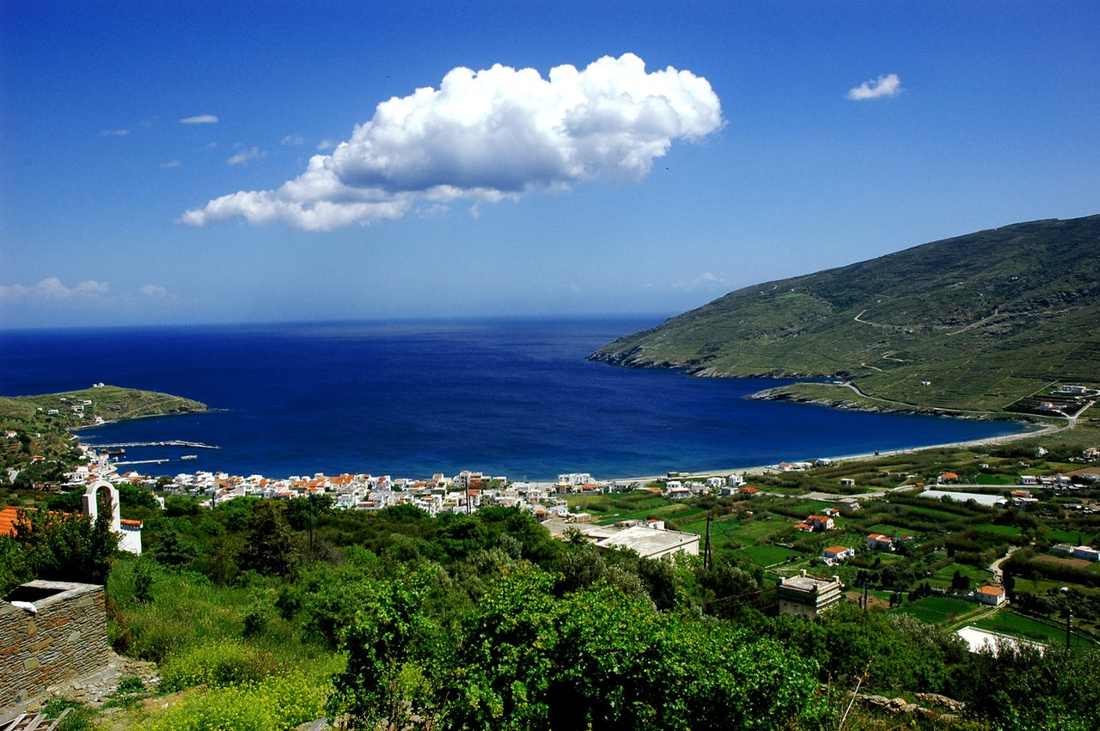
Andros has a Mediterranean climate of warm, dry summers and mild. Wet winters. As the greenest of the Cyclades it stays cooler and more comfortable than its bare neighbours, and the meltemi wind blows across it through the summer. When you visit decides whether you find quiet green trails and flowing waterfalls, warm beaches and swimming, or a shuttered island out of season. Plan the whole trip with Greece Tours.
This guide breaks the year down by season and by what you want from the island: the best months for the beach. For hiking. For quiet, along with the weather to expect and what happens in the off-season. Read it beside the guides to things to do in Andros and hiking in Andros to plan your dates around what matters most.
When is the best time to visit Andros?
The best time to visit Andros is late May to early July and mid-September to October, when the weather is warm and settled and the crowds are thinner.
For most travellers the shoulder months either side of high summer offer the ideal balance. Late May, June and September bring warm, settled weather, comfortable sea temperatures and far fewer visitors than the peak. Along with lower prices. They suit both the beaches and the island’s green interior. These are the sweet-spot months for a first visit.
The exact best time depends on what you want. Spring, from April into June, is the greenest and finest season for hiking, with wildflowers and flowing waterfalls, while July and August are the warmest and driest for the beaches but also the busiest and priciest. Autumn, into October, keeps the sea warm and the crowds thin.
Unusually for the Cyclades, Andros stays comfortable even in high summer, since its size and its green landscape keep it from feeling as parched or as packed as the smaller islands. The sections below break down the seasons and the activities so you can match your dates to your plans, whether beaches, walking or quiet.
What is the weather like in Andros by season?
Andros has warm, dry summers around 27 to 30°C, mild springs and autumns of 18 to 25°C, and cool, wet winters near 14°C.
Summer, from June to September, is warm and almost rainless, with daytime highs commonly around 27 to 30°C and peaks into the low thirties in July, the hottest month. The defining feature is the meltemi, the dry northerly wind that strengthens through July and August, tempering the heat but churning the exposed north and east coasts.
Spring and autumn are milder and gentler. Spring, from March to May, warms from cool to pleasant, roughly 15 to 25°C, with the island at its greenest, its wildflowers out and its waterfalls flowing. Autumn, through September and October, holds warm days and the year’s warmest sea, easing gradually toward the first rains. These shoulder seasons offer the most comfortable weather.
Winter, from November to March, is cool and wet by Greek-island standards. With temperatures around 14°C and the year’s rain concentrated in these months, though it is this rain that keeps Andros green. The island is windy for much of the year, and its higher mountains and springs make it cooler and lusher than the bare Cyclades throughout the seasons.
Is spring a good time to visit Andros?
Spring, from April to June, is one of the best times to visit Andros, especially for hiking.
Spring is the finest season on Andros, above all for walkers. From April into early June the island is lush and green, the wildflowers carpet the slopes. The springs and waterfalls of the interior run at their fullest. Making it the ideal time to hike the celebrated trails and explore the valleys and gorges in comfortable temperatures.
The weather in spring is mild and pleasant, warming from the cool of early April to genuinely warm by June. With the sea warming enough for swimming toward the end of the season. Crowds are minimal in the earlier months, prices are lower, and the island feels fresh and unhurried before the summer visitors arrive.
For travellers whose priority is the island’s green landscapes, its hiking and its natural beauty rather than beach days, spring is the season to come. Late spring, in late May and June, adds warm beach weather to the green scenery, making it the best all-round time to experience both sides of Andros.
What is September and October like in Andros?
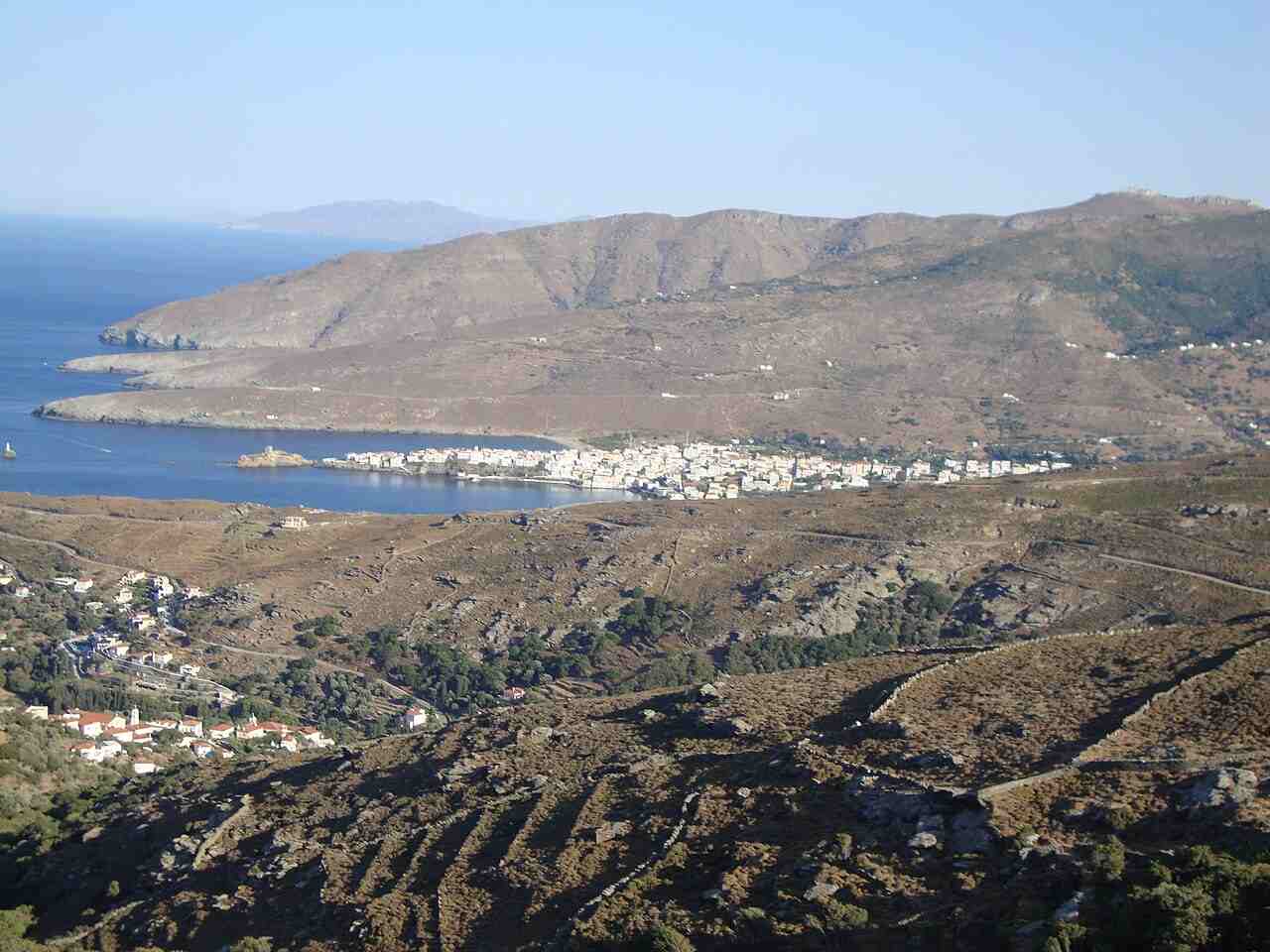
September and October are excellent months in Andros: warm, sunny days, the warmest sea of the year, thinning crowds after August, and lower prices. The meltemi eases, and the cooler weather is ideal for hiking again.
September rewards travellers with the best sea of the year. After a long summer of heating, the water is at its warmest and most inviting, while the days stay warm and reliably sunny. The fierce heat of high summer softens. The heavy August crowds thin out once the month passes its middle, and prices for flights, ferries and rooms fall from their peak.
The meltemi wind tends to weaken through September, calming the exposed north and east coasts and opening up more of the island’s beaches, while the gentler temperatures make walking pleasant again after the summer heat. This makes early autumn a superb time for combining beaches and hiking. With the warm sea a welcome bonus for a swim at the end of a long day on the trails.
October continues the trend, cooler and quieter, ideal for hiking and sightseeing as the island greens again after the summer, with warm days and the occasional first rains. For travellers who can avoid the school-holiday peak, the early autumn window is among the very best times to visit Andros.
What are July and August like in Andros?
July and August are the warmest, busiest and most expensive months in Andros, with reliable sun, warm sea and the strongest meltemi wind. The island stays less crowded than the smaller Cyclades, but the wind can churn the exposed coasts.
The height of summer brings reliable heat and sunshine, with temperatures often around 30°C and into the low thirties in July, and virtually no rain. These are the peak months for the beaches, when the sea is warm and the swimming at its best. Also the busiest and most expensive, when both Greek and international visitors fill the island and rooms are dearest.
The meltemi is at its strongest now, blowing hard from the north, which tempers the heat but churns the exposed north and east coasts. Pushing swimmers toward the sheltered west-coast beaches around Batsi on the windiest days. The wind is a defining feature of an Andros summer, welcome for the cooling it brings but worth planning beach days around.
Despite the peak-season crowds, Andros stays noticeably less packed than the smaller, more famous Cyclades, as its size and its beaches and villages spread the visitors thin. It rarely feels overwhelmed even in August, so summer remains a fine time for a beach-focused visit, provided you book ahead and favour the sheltered coast when the wind blows.
When is the best time for the beach in Andros?
The best time for the beach in Andros is June to September, when the sea is warm and the weather reliably hot and sunny. September offers the warmest water, while the meltemi shapes which coast to choose in midsummer.
The beach season on Andros runs from June through September, the stretch when the sea is warm enough for comfortable swimming and the weather dependably hot and dry. June opens it with warm water and green surroundings, the peak of July and August delivers guaranteed sunshine. September closes it with the warmest sea of the year, so any of these months serves a beach holiday well.
The variable to plan around is the wind. Because the meltemi blows hardest in July and August, hitting the exposed north and east beaches such as Zorkos and Vitali, the calmest swimming on windy days is found on the sheltered west coast at Batsi, Agios Petros and Golden Beach. In the shoulder months the wind is lighter and more coasts stay calm.
For the best mix of warm sea and manageable conditions, June and September stand out, offering hot beach days without the fiercest wind or the thickest crowds. The sea stays swimmable into October, so an early-autumn visit still rewards beach lovers, especially on the sheltered western side of the island.
When is the best time for hiking in Andros?
The best time for hiking in Andros is spring, from March to May, and autumn, in September and October, when the island is green, the waterfalls flow and the temperatures are comfortable. High summer is hot for long walks.
Andros is the finest walking island in the Cyclades, and the best time to enjoy its trails is outside the summer heat. Spring, from March to May, is ideal: the island is at its greenest, the wildflowers are out. The springs and waterfalls run at their fullest. The temperatures are comfortable for long walks through the valleys and gorges.
Autumn offers a second window, as the fierce heat of summer fades and the walking becomes pleasant again. With warm but no longer punishing temperatures and the added reward of a warm sea for a swim afterward. September and October suit both the mountain routes and the gentler valley and coastal walks of the island’s celebrated network.
High summer, in July and August, is the least comfortable time for long walks, as the heat and strong sun make the climbs demanding despite the island’s greenery. Summer hikers start early and keep to shorter or shadier routes near water. For a walking holiday, spring and autumn are the clear choices, as the guide to hiking in Andros explains.
Is Andros worth visiting in the off-season or winter?
Andros in the off-season is quiet and green but limited: hotels, tavernas and services close, the ferries thin out, and the sea is too cold to swim. It suits travellers after solitude and green landscapes, not beaches.
From late autumn into spring, Andros turns quiet and inward. The weather cools to around 14°C, the winter rains arrive. The sea becomes too cold for swimming, so the beach holiday that draws most visitors is out of the question. The island sheds its visitors and returns to its everyday rhythm, and the winter rain keeps its valleys and slopes greener than at any other time of year.
The practical limitations are real. Many hotels, tavernas and services close for the winter. The ferry schedule from Rafina thins out, though the daily service continues, so reaching and getting around the island takes more planning. Anyone considering an off-season visit check what is open before committing to dates and a base.
For a particular kind of traveller, though, the quiet has its appeal: green landscapes. Comfortable walking weather in the milder spells. A chance to see the island as its residents live it rather than as a summer destination. It suits those after solitude and nature over sun and sea, and willing to work around the reduced services.
When is the meltemi wind strongest in Andros?
The meltemi, the strong northerly wind of the Aegean, blows hardest in July and August, though Andros is breezy for much of the year. It cools the summer heat but churns the exposed north and east coasts.
The meltemi is a defining feature of the Aegean summer, and Andros feels it strongly. This dry northerly wind builds through July and August, sometimes blowing hard for days on end. While it tempers the fierce summer heat and keeps the air clear. It kicks up swell on the north and east coasts and can make the exposed beaches uncomfortable on the windiest days.
On windy midsummer days, the answer is to head for the sheltered west coast around Batsi. Where the beaches stay calmer. To swim in the morning before the wind builds through the afternoon. The exposed beaches of the north, such as Zorkos and Vitali, are best kept for the calmer. Less windy spells. It pays to check the wind forecast the night before and choose your beach accordingly.
Andros is breezy for much of the year, not only in high summer. Which is part of its character and helps keep it cooler and fresher than the still, baking heat of islands. The wind rarely spoils a visit, but knowing that the meltemi is strongest in July and August, and planning beach days around it, makes for a smoother summer stay.
When is the best time for a quiet visit to Andros?
For a quiet visit, come in late spring, from April to June, or in autumn, from late September into October, when the weather is warm but the crowds are thin.
Travellers seeking quiet are well served by the shoulder seasons on Andros. Late spring, from April into June, offers warm, green, uncrowded days ideal for walking and exploring before the summer visitors arrive, while autumn, from late September into October, brings warm sea and settled weather with the peak-season crowds gone and prices lower.
Even in high summer, Andros is a comparatively quiet island. Its large size and its beaches and villages spread the visitors thin. It never feels as packed as the smaller. More famous Cyclades, and outside the peak of August it stays genuinely relaxed. Basing away from the resort of Batsi, in Chora or the villages, adds to the sense of calm.
For the quietest experience of all, the edges of the season, April and October, or a visit to the green interior and the traditional villages. Reward those willing to trade the guaranteed beach weather of midsummer for real solitude, space and greenery. The island’s green landscapes are at their most peaceful in these gentler, less-crowded months.
What is the best month overall to visit Andros?
June and September are the best months overall, combining warm weather, a swimmable sea, comfortable hiking and thinner crowds. Spring is best for walkers and greenery, high summer for guaranteed beach weather, and the shoulder months for value.
June and September stand out as the best all-round times to visit Andros. Both offer warm, settled weather, a sea comfortable for swimming, and temperatures gentle enough for hiking, along with thinner crowds and lower prices than the July and August peak. June adds the greenery of late spring, while September brings the warmest sea of the year.
For travellers whose priority is walking and the island’s green landscapes, spring, from April to early June, is the finest choice, when the waterfalls flow and the wildflowers bloom. For those set on guaranteed hot beach weather and a warm sea, July and August deliver in full. At the cost of the biggest crowds, the highest prices and the strongest wind of the year.
The beauty of Andros is that its size and green interior give it a long. Rewarding season and something rewarding to offer in every single month from early spring right through to late autumn. Matching the timing to your priorities, walking, beaches or value, is the key; see the wider Andros travel guide for planning a trip around the seasons.
Frequently Asked Questions
What is the best month to visit Andros?
June and September are the best months overall, combining warm, settled weather, a sea comfortable for swimming. Gentle temperatures for hiking. Thinner crowds and lower prices than the July and August peak. September has the warmest sea of the year, while June adds the greenery of late spring. Spring is best for walkers, high summer for guaranteed beach weather.
When is the best time to hike in Andros?
The best months for hiking in Andros are spring, from March to May. Autumn, in September and October, when the island is green, the waterfalls flow and the temperatures are comfortable. High summer is hot for long walks on the island’s trails, so summer hikers start early and keep to shorter or shadier routes near water.
Is July or August too hot and busy in Andros?
July and August are the warmest, busiest and most expensive months, often around 30°C, and they bring the strongest meltemi wind, which can churn the exposed north and east coasts. However, Andros stays noticeably less crowded than the smaller Cyclades thanks to its size. Summer remains a fine time for a beach visit if you book ahead and favour the sheltered west coast.
Can you visit Andros in winter?
You can, but the beach season is over. Winter brings cool temperatures around 14°C, the year’s rain, and a sea too cold for swimming, and hotels, tavernas and services close, while the ferries thin out. An off-season visit suits travellers after quiet, green landscapes and comfortable walking weather rather than sun and sea, provided they check what is open.