
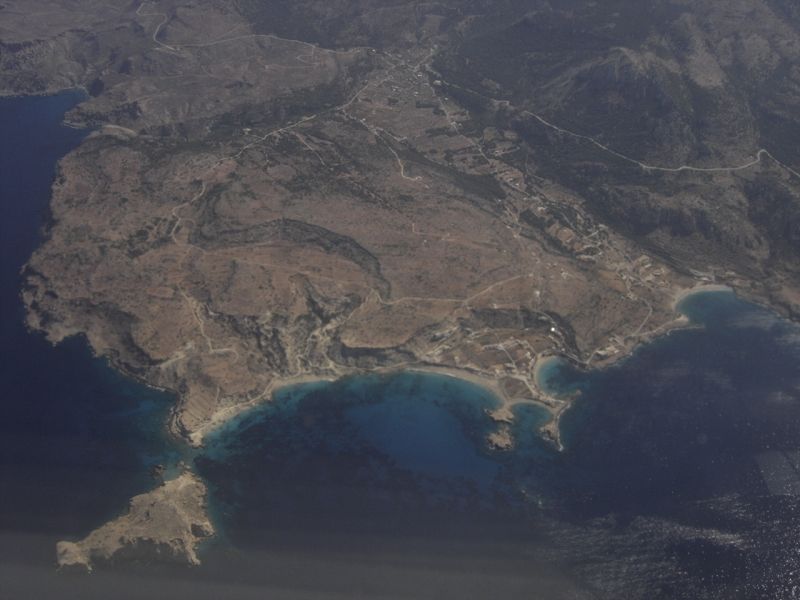
Lefkos is a relaxed seaside village on the west coast of Karpathos, built around three linked coves of pale sand and shallow. Clear water sheltered from the wind by low headlands and offshore islets. Once a quiet fishing settlement, properly called Kato Lefkos, it has grown into a low-key beach resort with tavernas. Rooms and some of the finest sunsets on the island, while keeping its calm, traditional character. Plan the whole trip with Greece Tours.
This guide covers Lefkos in full: its beaches, how to reach it, what the swimming is like, why it works so well when the meltemi blows. The ancient ruins and other things to do, where to stay and eat. The best time to visit. Read it beside the wider guides to Karpathos beaches and where to stay in Karpathos to fit a west-coast stay into a trip.
What is Lefkos in Karpathos?
Lefkos, properly Kato Lefkos, is a seaside village on the west coast of Karpathos, about 31 kilometres north-west of Pigadia. Built around three sheltered sandy coves, it is a relaxed, low-key beach resort with tavernas and rooms.
Lefkos sits on the west coast of Karpathos, roughly 31 kilometres and a 45-minute drive north-west of the capital, Pigadia, and close to the village of Mesochori. Its full name is Kato, or Lower, Lefkos, though almost everyone uses simply Lefkos for the coastal village. It grew from a quiet fishing settlement into a peaceful seaside resort, and it keeps a relaxed, traditional atmosphere far from the busier south-east of the island.
The village is built around a cluster of coves where low headlands and offshore islets break the sea into sheltered, shallow bays of pale sand. This setting gives Lefkos its calm, family-friendly beaches and its reputation as one of the most pleasant places to stay on the island for a slow beach holiday. With tavernas, cafes and accommodation gathered close to the sand.
Lefkos looks straight out at the sunset and stays sheltered from the prevailing north wind, two qualities that set it apart from the celebrated east-coast coves. It suits travellers who want quiet, scenery and easy beach days over nightlife and crowds, and it makes an appealing base for exploring the west and centre of Karpathos.
What are the beaches of Lefkos?
Lefkos has several linked beaches: Gialou Chorafi, the main organised bay, the sheltered Panagias Limani, the longer Frangolimnionas, and the quieter coves of Potali. All share pale sand, shallow water and pine-fringed shelter.
The main beach is Gialou Chorafi, a virtually enclosed bay of fine yellow sand and green-blue water, well organised and calm, protected from the wind by the surrounding hills. Its soft sand and shallow, sheltered water make it the heart of the resort and the most popular of the coves, with sunbeds, tavernas and facilities close at hand.
Beside it, Panagias Limani is the smallest and most sheltered of the bays, a peaceful spot well suited to families, while Frangolimnionas is the largest, a longer stretch of sand that is partly organised and can catch a little more swell on a breezy day. Together the three principal coves are separated by strips of land and fringed with pine trees, which shelter the sand from the hot summer sun.
A little apart, the twin coves of Potali are quieter still, and one quiet section is popular with naturists. Between them, the beaches of Lefkos offer a range from busy and organised to secluded and calm. All within a short walk, which is a large part of the village’s appeal. For the wider picture of the island’s coast, see the guide to Karpathos beaches.
How do you get to Lefkos?
Lefkos is about 31 kilometres north-west of Pigadia, a drive of some 45 minutes across the island to the west coast, passing near Mesochori.
By car, the drive from Pigadia to Lefkos takes about 45 minutes. Crossing the island to the west coast on good roads and passing close to the dramatic village of Mesochori on the way. The route runs through the mountainous interior before dropping to the coast. It is a scenic drive in its own right. With wide views over the green west of the island.
A hire car or scooter is the practical way to reach and enjoy Lefkos. Given its distance from the capital and the airport. It allows you to combine the village with the west-coast beaches and the interior villages. Fuel up before setting out, as stations are scarce outside the main towns, and take the mountain roads at a steady pace.
Public buses do serve Lefkos, running times a week from Pigadia. Which is enough for a day trip or a one-way journey but too infrequent to rely on for touring. For most visitors, especially those staying in Lefkos rather than day-tripping, a car is the sensible choice; the guide to how to get to Karpathos covers island transport in full.
Why is Lefkos good when the meltemi blows?
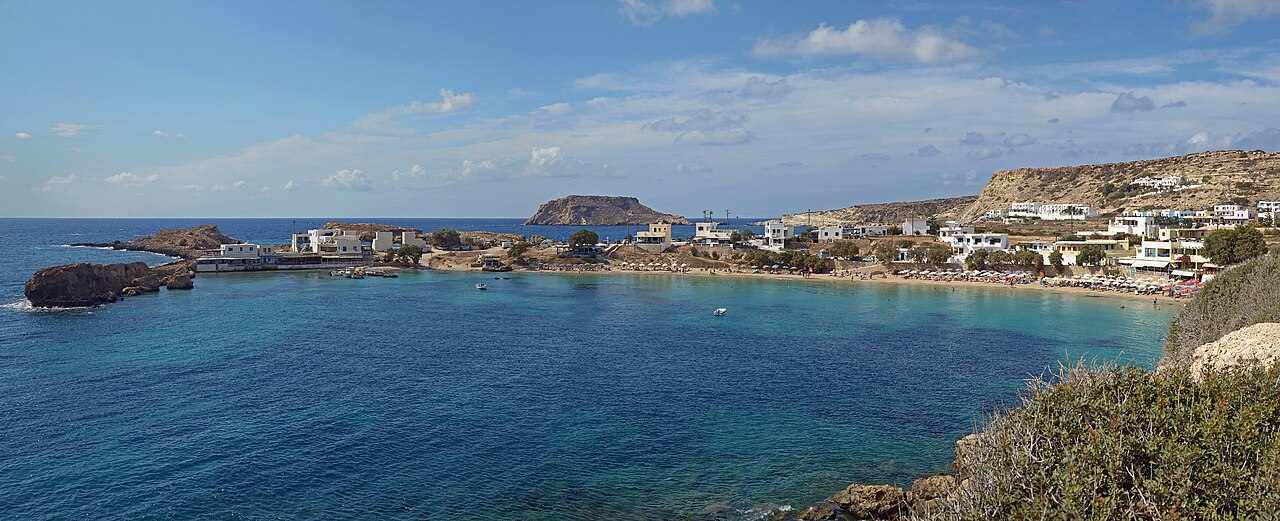
Lefkos faces west and is sheltered by low headlands and offshore islets, so it usually stays calm and swimmable when the north meltemi churns the exposed east and south coasts. It is the go-to beach base in a blow.
The meltemi, the strong northerly wind that blows hardest through July and August. Hits the east and south coasts of Karpathos hardest, kicking up swell and dragging sand into the wind. Lefkos, tucked on the sheltered west coast behind low headlands and offshore islets, usually keeps flat. Swimmable water on those days, which makes it a reliable alternative when the famous eastern coves turn rough.
This shelter is one of the main practical reasons to head for Lefkos. On a windy day, when Apella and the east coast are choppy and the surf bays of the south are wild. Crossing the island to Lefkos often finds calm, clear water and a comfortable beach day. Knowing this lets you plan around the wind and salvage a beach day when the exposed coast is unusable.
The same sheltered aspect that keeps Lefkos calm also makes it warm and inviting for swimming through the season. Its westward face means the wind rarely spoils an afternoon on the sand. For travellers basing themselves on the island in high summer, when the meltemi is strongest, a west-coast base like Lefkos is the safest bet for reliable swimming.
What is there to do in Lefkos besides the beach?
Beyond the beaches, Lefkos offers snorkelling, paddleboarding and boat trips, sunsets over the sea, hiking in the surrounding hills, and the ancient ruins and early-Christian catacombs on the headland above the coves.
The clear, sheltered water of Lefkos suits more than swimming. Snorkellers explore the rocky edges of the coves. Where squid and octopus are sometimes spotted. Paddleboards and kayaks rent by the hour on the calm bays, best used in the morning. Beach volleyball and small boat trips to secluded nearby coves add to the mix, and the sheltered water makes all of it easy and safe.
The setting adds interest beyond the sand. On the headland above the coves stand the remains of the ancient settlement and the rock-cut catacombs and early-Christian basilica of the area. A short walk from the beach and worth exploring for a sense of the island’s long history. The surrounding hills and olive groves offer walks with wide views over the west coast.
Above all, Lefkos is known for its sunsets. Its westward aspect gives it some of the finest sunset views on Karpathos. Watched from a taverna table as the sun drops into the sea behind the offshore islets. A sunset dinner here is one of the pleasures of a west-coast stay. Together these give Lefkos enough to fill days beyond the beaches themselves.
What ancient ruins are near Lefkos?
On the headland above Lefkos stand the remains of an ancient settlement, rock-cut early-Christian catacombs and a basilica, while the offshore islet of Sokastro carries a ruined medieval fort. All lie a short walk from the coves.
Lefkos was inhabited in antiquity, and the low headland above the coves preserves the traces. Scattered remains of an ancient settlement and its walls survive on the rise. Cut into the soft rock nearby are early-Christian catacombs. Chambers carved as tombs and places of worship in the first centuries of Christianity on the island. They are open and unfenced, a short walk from the beach, and give a quiet sense of the deep history behind the modern resort.
Close to the catacombs stand the low remains of an early-Christian basilica, its floor and walls marking a substantial early community on this sheltered coast. Together with the ancient settlement, these sites make an easy and rewarding excursion between swims. Needing only a little care on the rough ground and repaying the short walk with a glimpse of the layered past of Karpathos.
Just offshore, the small islet of Sokastro rises from the sea in front of Lefkos. Crowned by the ruins of a medieval fort built to guard the coast in the Venetian period. It forms a striking silhouette against the evening sunset, and on calm days the islet can be reached by a short swim or a small boat. The ruins on land and the fort on its islet give Lefkos an unusual depth of history for a beach village.
Is Lefkos good for families?
Yes. Lefkos is well suited to families, with sheltered, shallow sandy coves like Panagias Limani, calm water protected from the wind, and tavernas and rooms close to the sand.
The sheltered coves of Lefkos are among the safest swimming on the island for young children. The bays are protected from the wind by the surrounding hills and offshore islets. The water stays calm and shallow. And the fine sand and gentle entry suit paddling and first swims. Panagias Limani in particular, the smallest and most enclosed of the coves, is a natural choice for families with toddlers.
The practical side supports a family stay too. Tavernas, cafes and small shops sit close to the sand. Food, shade and supplies are always within reach. And the range of accommodation from studios to beachfront hotels makes it easy to find rooms near the beach. The calm, low-key atmosphere, without the crowds or nightlife of busier resorts, suits a relaxed family holiday.
Beyond the swimming, the sheltered water makes activities like snorkelling. Paddleboarding and small boat trips easy and safe for older children. The short walks to the nearby ruins add interest on a break from the beach. The combination of safe coves, facilities close at hand and a gentle pace is why Lefkos is a long-standing favourite with families on Karpathos.
Where can you stay and eat in Lefkos?
Lefkos is a well-organised resort with tavernas, cafes and a range of accommodation from guesthouses to beachfront hotels, all close to the sand. Its tavernas serve fresh seafood and Greek dishes, and it suits families and long stays.
Thanks to its beaches, Lefkos has grown into a comfortable seaside resort with a good spread of accommodation. From cosy guesthouses and studios to beachfront hotels, most of them within a short walk of the sand. This makes it easy to base yourself here for a beach holiday, waking steps from the water, and its calm, family-friendly character suits longer stays.
The village has tavernas and cafes gathered around the coves, serving fresh seafood landed nearby, gyros. Traditional Greek and Karpathian dishes, often with a view over the water. Eating out here is relaxed and good value, and the sunset-facing tables make an evening meal a highlight, with the sun dropping into the sea as you dine.
Lefkos suits travellers who want a quiet, scenic west-coast stay built around beaches, sunsets and calm days, rather than nightlife or easy access to the airport and the sights. For a comparison with the other bases on the island, from lively Pigadia to the traditional north, see the guide to where to stay in Karpathos.
When is the best time to visit Lefkos?
The best times are late May, June and September, when the weather is warm, the sea calm and the crowds thinner. July and August are busiest, so visit the beaches in the late afternoon, which also catches the famous sunset.
Lefkos is at its best in the shoulder months of late May, June and September, when the weather is warm. The sea calm and inviting. The village far quieter than at the height of summer. These months give comfortable beach days and easy availability of rooms and tavernas, with September pairing warm water and thinning crowds, ideal for a relaxed west-coast stay.
In July and August the beaches, especially the main Gialou Chorafi, grow crowded. Visiting in the late afternoon is a good strategy. Both to avoid the busiest hours and to catch the sunset for which Lefkos is known. The sheltered west coast stays comfortable even when the meltemi is churning the rest of the island, which adds to its appeal in high summer.
Whatever the month, the evenings are the special time at Lefkos, when the light softens over the sea and the sunset draws diners to the waterfront tavernas. Timing a visit around the sunset, and choosing the shoulder season where possible, gives the best of this relaxed west-coast village. See the guide to Karpathos for how it fits into a wider trip.
Frequently Asked Questions
Where is Lefkos in Karpathos?
Lefkos, properly called Kato Lefkos, is a seaside village on the west coast of Karpathos. About 31 kilometres and a 45-minute drive north-west of the capital, Pigadia, close to the village of Mesochori. It is built around three sheltered sandy coves and has grown into a relaxed, low-key beach resort.
What are the beaches of Lefkos like?
Lefkos has several linked beaches of pale sand and shallow, clear water, sheltered by headlands and offshore islets. The main one, Gialou Chorafi, is an enclosed. Organised bay. Panagias Limani is a small sheltered family cove. Frangolimnionas is the largest. And the Potali coves are quieter, with a naturist section. All are fringed with pine trees.
Is Lefkos good for a beach holiday?
Yes. Lefkos is a relaxed, family-friendly resort with sheltered, shallow beaches, a good range of tavernas and accommodation close to the sand, and some of the finest sunsets on the island. Its west-coast position keeps it calm when the meltemi churns the east coast, making it a reliable base for a quiet beach holiday, though a car helps.
How do you get to Lefkos from Pigadia?
Lefkos is about a 45-minute drive north-west from Pigadia, crossing the island’s mountainous interior to the west coast and passing near the village of Mesochori. A hire car or scooter is the practical way to reach it, though a public bus runs times a week from Pigadia. Enough for a day trip but too infrequent to rely on for touring.