
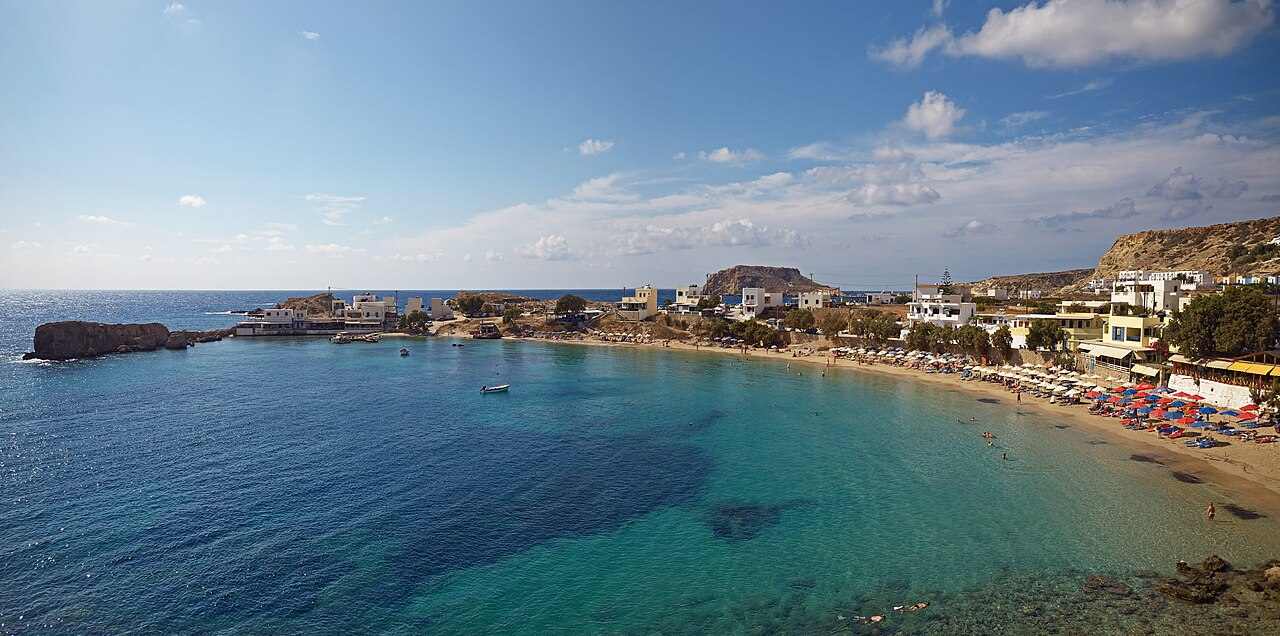
Karpathos is long, mountainous and slower to cross than it looks on a map, so where you base yourself shapes the whole trip. A stay in the lively port of Pigadia feels very different from a quiet week on the west coast at Lefkos. A beach base at Amoopi, a windsurfing stay by the southern bays, or a night high in the traditional village of Olympos. Each area suits a different kind of traveller, and picking the right one saves hours of driving. Plan the whole trip with Greece Tours.
This guide compares the main places to stay in Karpathos, area by area, by their beaches, atmosphere. Suitability for families and couples. How easy each makes the rest of the island to reach. It also covers the types of accommodation on offer, what they cost, whether you need a car, and when to book. Read it beside the guide to things to do in Karpathos to match your base to what you most want to see.
Where you stay in Karpathos?
Most visitors are best based in Pigadia, the capital, for its restaurants, port and central position. Amoopi suits a beach holiday, Lefkos and Arkasa the quiet west, Afiartis windsurfers, and Olympos those after tradition.
The island splits into a handful of distinct bases, each with its own character. Pigadia, the port and capital on the south-east coast, is the most practical and the usual choice for a first visit. With the widest range of restaurants, shops and services and the easiest access to buses, car hire and boats. Just south, Amoopi is the main beach resort, a cluster of sandy coves that suits families and swimmers.
The west coast offers a slower pace. Lefkos, with its linked sandy coves and sunset tavernas, and Arkasa, greener and quieter still, appeal to travellers who want scenery and calm over nightlife. In the south by the airport, Afiartis is the base for windsurfers drawn to its famous bays, while in the far north the traditional village of Olympos and the small port of Diafani give a remote, atmospheric stay for those willing to make the journey.
Your choice of base has a real effect on how much driving your days involve. The sections below take each area in turn. You can weigh its beaches, atmosphere and convenience. And settle on the one that best fits the trip you have in mind, whether that is a beach week, a touring holiday or a windsurfing stay.
Why is Pigadia the best base in Karpathos?
Pigadia, the capital and port, is the most convenient base, with the widest choice of restaurants, shops and accommodation and the easiest access to buses, car hire and boat trips. It suits first-time visitors best.
Pigadia wraps around a natural harbour on the south-east coast and is the beating heart of the island. Its seafront promenade is lined with tavernas, cafes and bars. The shops stock everything from groceries to local honey and woven cloth. The harbour is where the ferries, the excursion boats and the day cruisers all tie up. For a traveller who wants life, choice and convenience close at hand, no other part of Karpathos comes close.
The practical advantages are just as important. The bus station, the taxi rank and the car-hire desks all sit near the harbour. The ticket kiosks for the Saria and beach boats are on the quay, so Pigadia is the natural launch point for exploring the rest of the island. The long town beach of Vrondi runs north of the centre within walking distance, giving a sand-and-shingle swim without a drive.
Accommodation in Pigadia spans the full range, from simple rooms and studios to beachfront hotels facing the Aegean, so it covers most budgets. This mix, combined with the central position. Is why Pigadia is the standard recommendation for a first visit and for anyone who plans to tour widely rather than settle on one beach. It is the base that makes the whole island easiest to reach.
Is Amoopi a good place to stay in Karpathos?
Amoopi is the best base for a beach holiday, a cluster of sheltered sandy coves about seven kilometres south of Pigadia. Its calm, shallow water and tavernas beside the sand suit families and swimmers.
Amoopi lies a short drive south of Pigadia and is the island’s main beach resort, though a low-key one by Aegean standards. It is made up of several small sandy bays linked by low rocks. The sheltered. Shallow water makes it one of the safest and calmest places to swim on the island. Rooms, studios and small hotels sit right behind the sand, with tavernas and shops within easy reach.
The setting suits families with young children particularly well, since the gentle entry into the sea and the facilities close to the beach take the effort out of a day by the water. Beachfront accommodation here, including some larger resort-style hotels above the coves, offers pools and sea-view balconies, while simpler studios keep costs down. The atmosphere is quiet and relaxed rather than busy or loud.
Amoopi’s southern position also puts it close to the airport and the windsurf bays of Afiartis. It works as a base that combines calm family beaches with easy access to arrival and the sport. The main trade-off is that it is a resort rather than a town. For a wider choice of restaurants and nightlife a short drive into Pigadia is needed. And a car helps for reaching the rest of the island.
Should you stay in Arkasa or the west coast of Karpathos?
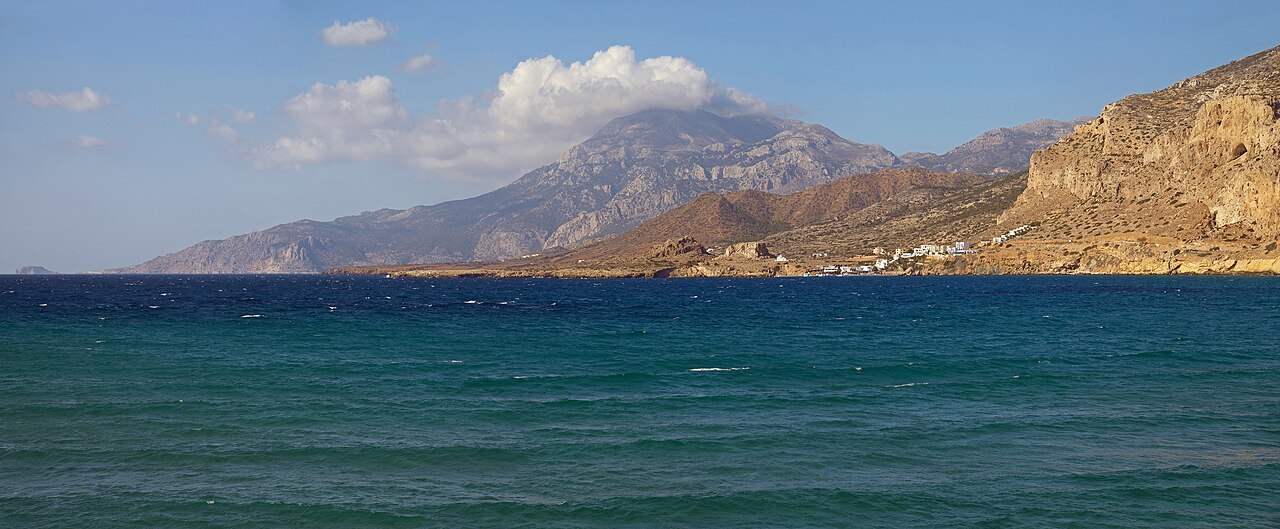
Arkasa, on the south-west coast, suits travellers wanting a quiet, green base with sandy beaches and ancient ruins nearby. It is calmer than Pigadia and faces the sunset, but a car is essential from here.
Arkasa sits on the south-western side of the island, about sixteen kilometres from Pigadia, and it offers a markedly quieter stay than the port or the beach resorts. The village is surrounded by greenery and looks out over the sea to the west. Nearby the long sandy bay of Agios Nikolaos gives an uncrowded beach with shallow water. On the low cape of Paleokastro above the village stand the mosaics and walls of an early-Christian basilica.
This is a base for travellers who value calm, scenery and a sense of the real island over restaurants and nightlife. Accommodation is mostly small hotels, studios and rooms rather than resorts, and the pace is gentle, with the westward aspect delivering fine sunsets over the sea. It suits couples and anyone happy to spend evenings over a quiet taverna dinner rather than seeking out a lively scene. The village of Finiki, a little to the north, adds a small fishing harbour with seafood tavernas that make an easy outing from an Arkasa base.
The one requirement is a car. From Arkasa the beaches, villages and the north of the island are all a drive away. The bus service is too thin to rely on, so a hire vehicle is essential to make the most of a west-coast base. For visitors who have one and want to escape the busier south-east, Arkasa and the wider west coast reward the extra distance with space and quiet.
What is it like to stay in Lefkos, Karpathos?
Lefkos, on the west coast, is a small resort built around three linked sandy coves with clear, sheltered water and sunset tavernas. It suits a relaxed beach stay away from the busier south-east, but needs a car.
Lefkos sits roughly halfway up the west coast, where a low headland and offshore islets shape three linked coves of pale sand and shallow, clear water. Because it faces away from the prevailing north wind, it often stays calm and swimmable when the east coast is churned up, which makes it a reliable beach base. A small village of tavernas, rooms and studios backs the coves, enough for a comfortable stay without any crowding.
The appeal of Lefkos is a slow, scenic beach holiday. The westward aspect gives it some of the best sunsets on the island. Watched from a taverna table over dinner. The sheltered coves suit swimming and easy days by the water. Nearby, the remains of an early-Christian basilica and rock-cut catacombs on the headland add a touch of history a short walk from the sand.
Lefkos rewards those with a car, since it is a fair drive from Pigadia, the airport and the north. The village itself covers the essentials of beach, food and a place to sleep, so days can be spent locally, but reaching the wider island’s sights means driving. For a quiet, sunset-facing base built around beaches, Lefkos is among the best choices on Karpathos.
Can you stay in Olympos or the north of Karpathos?
Yes. Olympos and the port of Diafani offer a remote, traditional base in the far north, with small guesthouses and rooms. Staying here suits travellers after atmosphere and walking, but it is a long way from the south.
The far north of Karpathos gives the most distinctive stay on the island. The medieval village of Olympos, strung along a mountain ridge, has a handful of small guesthouses and rooms. Often in restored traditional houses. Staying overnight lets you experience the village after the day-trippers leave. Below it, the small port of Diafani has more rooms, tavernas and its own quiet beaches, making it the practical base for the north.
This is a base for a particular kind of traveller: one drawn to tradition, walking and remoteness rather than convenience. From the north you can hike the old footpaths, take the boat to the uninhabited islet of Saria, and immerse yourself in the culture of Olympos, described in full in the guide to Olympos village. The atmosphere in the evenings, once the crowds have gone, is the reward for the long journey up.
The trade-off is distance. The north is about two hours by mountain road from Pigadia and the airport. Or a two-hour boat from the capital. It is poorly placed for touring the south or darting between coasts. Most visitors treat the north as a night or two within a longer trip rather than a base for the whole holiday, combining it with a stay further south.
Where you stay for windsurfing in Karpathos?
Windsurfers stay in the south, at Afiartis by the airport or nearby Amoopi. The surf centres, rental kit and accommodation cluster along the Afiartis shore beside the island’s famous windsurf bays.
The windsurfing on Karpathos is concentrated at Afiartis on the flat southern tip, beside the airport, so riders base themselves there or at nearby Amoopi. Simple rooms, studios and small hotels line the Afiartis shore. Many of the surf centres offer packages that combine accommodation with equipment and lessons. Keeping the kit and the water within easy reach through a stay.
Amoopi, a little up the coast, gives a slightly softer base for windsurfers travelling with family, since its sheltered sandy coves offer calm swimming for non-surfing companions while the wind bays are only a short drive away. Either way, the compact south means the beaches, the centres and the airport all sit within a short radius. Which is a large part of why a windsurfing holiday here is simple to organise.
For the full picture of the bays, the wind season and the schools, see the guide to Karpathos windsurfing. The main point for choosing a base is that the sport lives in the south: staying near Afiartis or Amoopi puts you on the doorstep of the wind, while a base in Pigadia or further north means a daily drive to reach it.
Where families stay in Karpathos?
Families are best based at Amoopi for its calm, shallow beaches and facilities on the sand, or in Pigadia for the range of services and the town beach. Both keep young children close to safe swimming.
Amoopi is the standout choice for families. Its cluster of small, sheltered sandy coves gives shallow, calm water that is safe for young children. The tavernas. Rooms and shops sit right behind the beach, so shade, food and facilities are always close at hand. The relaxed, low-key atmosphere suits a family holiday built around easy beach days rather than sightseeing or nightlife.
Pigadia is the other strong option, trading the beach-resort setting for the convenience of a town. The long, gently shelving town beach of Vrondi is within walking distance, and the range of restaurants, shops and services makes daily life with children straightforward. Being central, it also shortens the drives to other family-friendly beaches and to the boat trips that older children enjoy.
Whichever base a family chooses, the island’s winding roads and the need for a car are worth bearing in mind, as is the long journey to reach Karpathos in the first place. Once there, the calm southern beaches, the boat trips and the gentle pace make it a rewarding family destination, with Amoopi and Pigadia the two bases that keep everything easiest.
What types of accommodation does Karpathos have?
Karpathos offers family-run hotels, studios, apartments and rooms rather than large resort complexes. A few beachfront hotels exist at Amoopi and Pigadia, but the island stays low-key and uncommercial compared with busier destinations.
Accommodation on Karpathos reflects the island’s uncommercial character. The bulk of it is small and family-run: studios and apartments with kitchenettes, simple rooms, and modest hotels, many with a pool and sea-view balconies. This suits independent travellers and families who want space and self-catering options, and it keeps the atmosphere personal rather than packaged.
Larger, resort-style hotels do exist but are the exception, found mainly at Amoopi and along the Pigadia seafront, where a handful offer pools, restaurants and beachfront settings. Even these stay relatively low-rise and low-key, and the island has nothing like the sprawling all-inclusive complexes of the busier Greek destinations. In the villages and the north, the choice narrows to guesthouses and rooms.
This mix means Karpathos rewards travellers who are happy with comfortable, unpretentious accommodation over luxury and entertainment. Booking directly with the small hotels and studios is common. The personal welcome and the local knowledge of the owners are part of the experience. And hosts often help with car hire, boat tickets and taverna recommendations. For a first visit, matching the type of accommodation to the base, a town hotel in Pigadia or a beach studio at Amoopi, is the simplest approach.
How much does accommodation cost in Karpathos?
Karpathos is moderately priced and cheaper than islands like Santorini or Mykonos. Simple studios and rooms are inexpensive, mid-range hotels are good value, and prices peak in July and August, especially around the mid-August festival.
Compared with the marquee Greek islands, Karpathos is easy on the budget. Its relatively low profile with international tourism keeps accommodation prices moderate, and simple studios, apartments and rooms can be had inexpensively, especially outside the peak weeks. Mid-range family-run hotels offer good value, and even the more comfortable beachfront options cost far less than their equivalents on Santorini or Mykonos.
Prices rise with the season. July and August are the most expensive months, when demand from both Greek and international visitors peaks. Rates climb further around the mid-August festival of the Dormition, when returning islanders fill every bed. Booking well ahead for those dates is essential, both to secure a room and to avoid the highest prices, particularly in and around Olympos.
The shoulder months of late May, June and September offer the best value, with warm weather, lower rates and more availability. For travellers who can choose their dates, avoiding the peak not only cuts the cost of accommodation but also brings quieter beaches and roads. Across the board, Karpathos delivers a lot for the money by the standards of the Greek islands. Because so much of the accommodation is small and family-run, booking directly with the owners often secures the best rate. A longer stay can bring a further discount out of the peak weeks.
Do you need a car if you stay in Karpathos?
In most bases a car is close to essential, since the beaches and villages spread across a large island and buses are infrequent. Only a stay in Pigadia, using boats and buses, can partly manage without one.
Karpathos is large and its attractions are scattered, so for most bases a hire car or scooter is the practical way to get around. From the west coast, the south or the north, the beaches. Villages and sights are all a drive away. The bus service runs only times a day, which is too infrequent to rely on for touring. Car-hire desks cluster in Pigadia and at the airport.
The one base where a car is less essential is Pigadia. From the capital you can reach the town beach on foot. Take the daily boats to the east-coast coves and Saria. Use the buses for the occasional trip to a main village. A traveller content to build their days around the town, the boats and a couple of bus outings can manage a Pigadia stay without hiring a vehicle.
Even so, most visitors treat a car as part of the cost of a Karpathos holiday, since it unlocks the west coast, the mountain villages and the north that no bus reaches conveniently. Picking one up at the airport on arrival is the simplest approach. It turns the island’s size from a frustration into the freedom to explore both coasts at your own pace.
Which side of Karpathos you stay on?
The south-east around Pigadia and Amoopi is the most convenient and lively side, close to the airport and services. The sheltered west at Lefkos and Arkasa is quieter, faces the sunset, and stays calm when the meltemi blows.
The two coasts offer a real trade-off. The south-east, taking in Pigadia, Amoopi and the airport, is where the island’s life. Services and easiest access concentrate. It suits first visits, families and anyone who wants restaurants, boats and arrival all close at hand. Its beaches are among the finest, though the famous eastern coves catch the meltemi and can turn rough on windy midsummer days.
The west coast, centred on Lefkos and Arkasa, is the quieter, more scenic choice. It faces away from the prevailing north wind. Its beaches often stay calm and swimmable when the east is churned up. And it looks straight out at the sunset for long, golden evenings. The trade-off is distance: the west is farther from the airport, the port and the services, so a car is essential and daily life is more spread out.
For visitors the deciding factor is the wind and the pace they want. Those after convenience, nightlife and easy touring lean to the south-east, while those seeking calm water, sunsets and quiet lean west. Knowing that the meltemi hits the east hardest in July and August helps: a west-coast base is the safer bet for reliable swimming at the height of summer, while the south-east stays the better all-rounder for a first trip that mixes beaches with sightseeing and boat trips.
Where couples stay in Karpathos?
Couples are best suited to the quiet west coast at Lefkos or Arkasa for sunsets and calm, or a night in the traditional village of Olympos for atmosphere. Pigadia works for those who also want restaurants and life.
For a romantic, scenic stay, the west coast is the natural choice. Lefkos and Arkasa offer calm, sheltered beaches, quiet tavernas and some of the best sunsets on the island, watched over dinner as the sun drops into the sea. The pace is unhurried and the setting green and peaceful, which suits couples who want scenery and calm over nightlife and crowds.
A night or two in the north adds atmosphere of a different kind. Staying in Olympos, high on its mountain ridge, gives couples the village to themselves once the day-trippers leave. With the light turning gold over the stone houses and windmills at dusk. It is remote and simple rather than luxurious, but memorable, and it pairs well with a stay further south.
Couples who also want restaurants, a lively seafront and easy access to boat trips find Pigadia a comfortable base. Trading the seclusion of the west for the conveniences of a town. The right choice comes down to the balance a couple wants between quiet romance and sociable convenience, and the island offers bases at both ends of that scale.
Should you split your stay in Karpathos?
Splitting your stay works well on Karpathos, since the island is large and the north is a long way from the south.
Spending a whole holiday in one base can mean long drives to see the far ends of the island, especially the north. Splitting the stay solves this: nights in a convenient southern base such as Pigadia or Amoopi for the beaches, the boats and the airport. Followed by a night or two in the north around Olympos and Diafani, cuts out the two-hour round trips and lets each area be enjoyed properly.
The north in particular rewards an overnight rather than a rushed day trip. Staying in Olympos or Diafani lets you see the village after the crowds leave. Walk the old footpaths. Take the Saria boat trip at a relaxed pace, none of which fits easily into a single day from the south. A short northern stay turns the most distant part of the island from a chore into a highlight.
For a week or more on Karpathos, a two-part stay is often the most rewarding structure. It matches the island’s geography, keeps driving to a minimum, and gives a taste of both its lively, beach-focused south and its remote, traditional north. Shorter trips are usually better kept to a single southern base with day trips, saving the split for a longer holiday.
What is the nightlife like where you stay in Karpathos?
Nightlife in Karpathos is low-key and centred on Pigadia, where seafront bars and tavernas stay lively into the night. The beach resorts and villages are quiet, with evenings built around dinner rather than clubs.
Karpathos is not an island for big nightlife, and that is part of its appeal. What there is concentrates in Pigadia, where the seafront bars, cafes and tavernas fill on summer evenings and stay lively well into the night. Giving a relaxed, sociable scene rather than the loud club culture of the busier Greek islands. For visitors who want some evening life, the capital is the clear base.
The beach resorts and the villages are markedly quieter. Amoopi, Lefkos and the west-coast bases wind down after dinner. With evenings spent over a long taverna meal and a drink rather than out on the town, while the mountain villages and the north are quieter still. This suits couples, families and anyone after peace, but those seeking a buzz base in or near Pigadia.
Even in Pigadia the atmosphere stays easygoing rather than raucous, in keeping with the island’s uncommercial character. The pleasure of a Karpathos evening is more often a waterfront dinner. A stroll along the promenade and a nightcap by the harbour than a late night out. The choice of base mainly decides how much of even that low-key life is on your doorstep in the evenings after a day on the beach.
When you book accommodation in Karpathos?
Book well ahead for July and August, and far in advance for the mid-August festival, when rooms fill months out, especially in Olympos. Late May, June and September have more availability and lower prices.
The timing of a booking matters most in high summer. July and August are the busiest months, when both the best-value and the most sought-after rooms go early, so reserving weeks or months ahead is wise. The single tightest date is the mid-August feast of the Dormition, when returning islanders and visitors pack the accommodation, and rooms anywhere near Olympos are booked months in advance.
Outside the peak, the pressure eases considerably. Late May, June, September and into October bring warm weather with far more availability and lower rates, so shorter lead times are fine and last-minute stays become possible. These shoulder weeks are the sweet spot for travellers who want a good room without the summer scramble or the premium prices.
In the quiet months from late autumn into spring, hotels, studios and tavernas close. The choice narrows sharply, so anyone visiting off-season check what is open before travelling. For the main season, matching the booking window to the dates, well ahead for August, more relaxed for the shoulders, keeps both the choice and the cost in your favour. See the guide to Karpathos beaches to help choose which coast to base near.
Frequently Asked Questions
Where is the best place to stay in Karpathos for a first visit?
Pigadia, the capital and main port, is the best base for a first visit. It has the widest choice of restaurants, shops and accommodation, the town beach of Vrondi within walking distance. The easiest access to buses. Car hire and the boat trips, making it the most convenient place from which to explore the rest of the island.
Where you stay in Karpathos for beaches?
For a beach holiday, Amoopi in the south is the best base, with a cluster of sheltered, shallow sandy coves ideal for families and swimmers. On the west coast, Lefkos offers a quieter beach stay built around sunsets and calm, clear coves, and works well when the meltemi wind churns up the east coast. Pigadia, with the long town beach of Vrondi within walking distance, is the easiest base for those who also want restaurants and services close at hand.
Is Karpathos expensive to stay in?
No. Karpathos is moderately priced and considerably cheaper than islands like Santorini or Mykonos. Simple studios and rooms are inexpensive, and mid-range family-run hotels are good value. Prices are highest in July and August, and peak around the mid-August festival, while late May, June and September offer the best value.
Do you need a car in Karpathos?
For most bases, yes. The beaches and villages spread across a large. Mountainous island and buses run only times a day. A hire car or scooter is close to essential from the west coast, the south or the far north of the island. A stay in Pigadia, using the town beach, the daily boats and the buses, can partly manage without one, though even there a car unlocks the west coast and the north that no bus reaches conveniently.
Can you stay in Olympos village?
Yes. Olympos has a handful of small guesthouses and rooms, often in restored traditional houses, which let you stay overnight and see the village after the day-trippers leave. The port of Diafani below has more rooms and its own beaches. Both are remote, about two hours from the south, so they suit a night or two rather than a whole holiday. Staying overnight also lets you catch the village at its quietest, in the early morning and the evening once the day boats have gone.